

AI + Synthetic Biology: How Does Zhuo Hong Chao Yuan Crack the Code for Mass Production of Natural Products?
In traditional extraction processes, obtaining a sufficient amount of high-purity tanshinol requires waiting for Salvia miltiorrhiza to grow in the ground for two to three years. However, in the laboratory of Zhuo Hong Chaoyuan Biotechnology Co., Ltd. (hereinafter referred to as "Zhuo Hong Chaoyuan"), this process has been shortened to just 48 hours.
In a 50-liter fermenter, genetically edited microorganisms continuously convert basic raw materials into target molecules. These invisible cellular factories have a single-tank production capacity equivalent to the total extraction yield of several thousand mu of Salvia miltiorrhiza cultivated over multiple years in traditional methods.
Behind this disruptive efficiency lies the unique interdisciplinary vision of founder Cai Yujie. The company he founded, Zhuo Hong Chaoyuan, is committed toAI and synthetic biology deeply couple to systematically solve traditional bottlenecks in the extraction efficiency, purity, and cost of natural products by remolding microbial cell factories.。
With a background rooted in bioengineering for both his bachelor's and master's degrees, Cai Yujie later shifted to artificial intelligence during his Ph.D., focusing on partial differential equation solving and process modeling. This unique "bio + AI" combination laid the groundwork for him to later tackle biomanufacturing challenges with an engineering mindset.
During his years teaching at Jiangnan University, Cai Yujie has long been deeply engaged in the field of synthetic biology to accelerate the extraction of traditional Chinese medicine substances. From achieving the mass microbial fermentation production of the rare medicinal herb *Shiraia bambusae*, to independently developing intelligent purification equipment, Cai Yujie’s early work has always focused on the question of "how to achieve."
However, the real turning point lies in Salvianic Acid. This active molecule, which has significant efficacy in cardiovascular and cerebrovascular diseases, accounts for only about one-thousandth of the content in Salvia miltiorrhiza. Traditional extraction methods are costly and result in unstable purity, leaving the market "priced but unavailable" for a long time. Cai Yujie's team successfully synthesized Salvianic Acid in the lab, extracting it in 48 hours using microbial fermentation from what would normally take two to four years for the plant to mature.
But what follows is the realistic gap in the transformation of achievements:How to Convert "Gram-Level" Success in the Lab into Stable "Ton-Level" Output in the Factory?Who would be willing to invest in this untested, brand-new path?
The gap between theory and industry made Cai Yujie deeply realize that the true value of a technology lies not in publishing top papers but in whether it can solve real industry pain points. It was this understanding that brought him together with his partner Zhang Xiaoyuan, who has rich experience in industrial operations and resource integration.
In 2022, Xi'an Zhuohong Chaoyuan Biotechnology Co., Ltd. was established, positioning itself as an "Ecological Service Provider for Microbial Intelligent Manufacturing of Natural Products." Its goal is to address the ultimate demand of the industry: converting cutting-edge synthetic biology technology into stable, low-cost, and scalable green productivity.
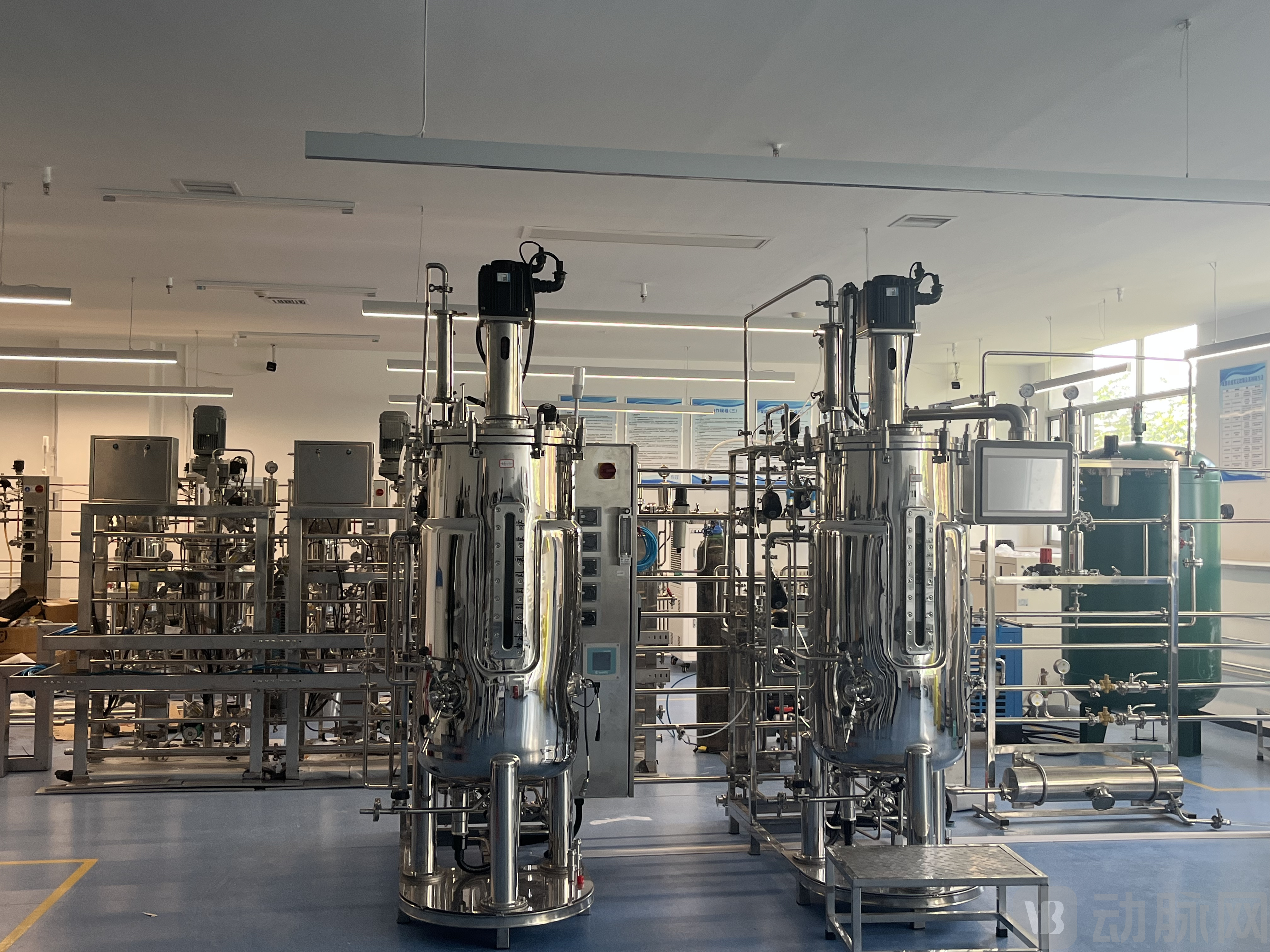 Overview of Zhuo Hong Chao Yuan Laboratory Equipment From: Zhuo Hong Chaoyuan
The field of synthetic biology is not without challenges, especially for terpenoids, which are bioactive substances with diverse properties. "Most terpenoids have anti-inflammatory and antibacterial effects, and we use microbial chassis to achieve directional, green, and large-scale synthesis of high-value terpenoids."
Traditionally, the production of such compounds mainly relies on plant extraction or chemical synthesis. The former faces issues such as long cultivation cycles, extremely low content of active ingredients, and susceptibility to heavy metal and pesticide residue contamination; the latter has drawbacks including the risk of benzene residue causing cancer, high energy consumption and pollution, and exorbitant costs for niche products. Meanwhile, emerging microbial synthesis methods, represented by *E. coli* or yeast, have struggled to achieve large-scale production due to the poor tolerance of strains to terpenoid products.
The solution from Zhuo Hongchaoyuan is to screen a microorganism from nature that can tolerate terpenoid toxicity. After years of screening and systematic engineering modifications, the team successfully constructedThe world's only "broad-spectrum anti-terpenoid toxicity chassis strain" centered on Serratia marcescens HBQA7.
The significance of this breakthrough goes far beyond a single strain. It means aHighly versatile and scalable "Super Microbial Manufacturing Platform"The birth. According to Cai Yujie, the platform's tolerance is more than 100 times higher than that of traditional E. coli and yeast. It is not only resistant to terpene toxicity but also exhibits superior resistance to other cytotoxic substances such as methanol and spermidine.
Moreover, it has a unique substrate spectrum, enabling the efficient utilization of various inexpensive carbon sources from glucose to methanol. Its ability to utilize one-carbon compounds like methanol offers a pathway to significantly reduce costs and achieve green carbon recycling.
More importantly, based on this broad-spectrum toxin tolerance, the same chassis cell can quickly adapt to the production of dozens of high-value terpenoid compounds by simply replacing different synthetic modules, truly realizing a flexible manufacturing capability of "one platform, multiple products."
This platform has a clear technical iteration path, from the first generation's polysaccharide utilization, to the breakthrough with one-carbon raw materials such as methanol in the second generation, and onto the planned third-generation intracellular and extracellular synergy technology, demonstrating a strong ability for continuous evolution.
Having only the chassis strain is not enough. ZHUO HONG CHAO YUAN has deeply integrated artificial intelligence into the entire R&D process, building a "smart brain." Through its self-built high-performance computing platform and proprietary algorithms, it has achieved full-chain intelligence from intelligently designing synthetic pathways, predicting enzyme protein modifications, to optimizing fermentation processes, significantly improving R&D efficiency.
"We laid out a high-performance computing cluster two years ago and built a local knowledge base based on open-source large models. Combined with our self-developed quantum optimization algorithm, we have formed a secure and efficient intelligent R&D system," Cai Yujie added.
The product pipeline of Zhuo Hong Chao Yuan is based on a deep understanding of traditional Chinese medicine theory. "We have our own philosophy and direction we are committed to," emphasized Cai Yujie, stating that the company does not blindly chase market trends but instead develops truly effective molecules based on an understanding of traditional Chinese medicine concepts such as the "Monarch, Minister, Assistant, and Messenger" principle.
In the terpenoids raw materials sector, the company is targeting the B-end raw materials market worth hundreds of billions. The platform can efficiently produce dozens of compounds, including the star product bisabolol. Among them, the fermentation yield of cosmetic-grade bisabolol has exceeded 100 grams per liter, and related products have entered the top-tier brand supply chain access review stage in the cosmetics industry. A complete product pipeline covers from hundreds of tons of geraniol, thousands of tons of caryophyllene to tens of thousands of tons of limonene, with applications spanning across fragrance, cosmetics, biofuels, and other fields.
In the large health product sector, the company has locked onto billion-dollar C-end markets such as cardiovascular and cerebrovascular health and anti-aging. Phenolic products like Danshensu are benchmarks, with these compounds boasting powerful antioxidant and anti-inflammatory activities. Taking Danshensu as an example, by employing microbial synthesis technology, Zhuohong Chaoyuan has reduced production costs to less than 500 yuan/kg compared to the high cost of 20,000 yuan/kg and inconsistent purity of traditional extraction methods, while increasing purity to 99.9%. The output from a 50-liter fermenter running for 48 hours equals the total extraction volume of 1,000 mu (approx. 66.7 hectares) of Salvia miltiorrhiza over 2-4 years using traditional methods, with higher purity and no risk of pesticide residues or heavy metals.
Globally, Zhuo Hong Chaoyuan is the first to advance microbially synthesized salvianolic acid into the FDA approval stage, marking a pivotal step from plant extraction to synthetic bio-manufacturing. Another core product, spermidine, has also achieved a technological breakthrough and is about to enter FDA approval. Additionally, the company has achieved leading results in the production of phenolic products such as hydroxytyrosol and phenylethyl alcohol.
In terms of market expansion, Zhuo Hong Chaoyuan demonstrates a clear international perspective and a pragmatic localization strategy: externally, the company has reached strategic cooperation with well-known overseas trading companies (such as Japan's CBC Trading Company), leveraging their mature channel networks to focus on developing high-end markets in Japan, Europe, and the United States; internally, it has signed agreements with leading domestic industry partners (such as Shandong Nuoxin Trading Co., Ltd.) to accelerate the commercialization process of its products in the Chinese market.
The natural products sector that Zhuo Hong Chao Yuan focuses on is encountering structural market opportunities. Driven by the dual forces of the global "natural, green" consumption trend and the bottlenecks in plant extraction, microbial intelligent manufacturing is facing a structural substitution window. Within this sector, the competitive landscape has already emerged: on one side are industry giants like Givaudan, which leverage channels and scale to maintain an advantage, and on the other side are numerous emerging forces relying on technological innovation to enter the market.
At the same time, strong policy support is accelerating the maturation of the synthetic biology industry ecosystem, with technical service platforms and industrial chain support improving day by day, providing critical support for Zhuo Hong Chaoyuan to move from technological breakthroughs to scaled production.
Facing opportunities and competition, Zhuo Hong Chaoyuan chooses to build competitive barriers with unique core technologies. Its self-developed broad-spectrum anti-toxic chassis strain is regarded as a highly scarce core biological asset. The company has constructed an intellectual property moat around this, including 3 international invention patents and 24 Chinese invention patents. Relevant research findings have also been published in authoritative journals such as "ACS Synthetic Biology," establishing its technical discourse power in the niche field.
Despite the rising popularity of the synthetic biology track in recent years, in Cai Yujie's view, technological breakthroughs are just the starting point. The real challenge lies in commercialization capabilities—namely, how to transform laboratory results into stable, low-cost products that meet market standards and successfully sell them.
To this end, Zhuo Hong Chaoyuan is actively transforming its technological leadership into industrial layout. The company plans to put the pilot plant into operation by early 2026 and accelerate financing to expand production capacity, aiming to quickly convert its technological advantage into dual leadership in scale and market.
"At this stage, the biggest need is funding. We need to move faster," said Cai Yujie. In his plan, within the next three to five years, Zhuohong Chaoyuan will grow from a technology breakthrough company into a benchmark enterprise in the global microbial intelligent manufacturing of natural products.
From the laboratories of Jiangnan University to the industrialization base in Xi'an, the story of Cai Yujie and Zhuo Hongchaoyuan serves as a vivid footnote of how a Chinese scientist transforms cutting-edge interdisciplinary research achievements into core productivity and new quality productive forces. In their hands, invisible microorganisms are continuously converting sustainable carbon sources into high-value compounds that drive a green future.