

Second Phase of High-Risk Lysosomal Storage Disorders Screening Program Launches Nationwide in China

Sanofi
Pharmaceutical R&D Developer

PerkinElmer
Diagnostic Product Provider
SHANGHAI, July 31, 2021 /PRNewswire/ -- Today, the second high-risk screening program for Lysosomal Storage Disorders (LSDs), hosted by the Executive Committee of the Beijing Health Promotion Association and co-organized by Sanofi and PerkinElmer, was officially launched. While continuing to focus on LSDs and providing free screening and monitoring for high-risk populations, the program has also introduced a familial screening component to help establish a comprehensive ecosystem for the full-course management of rare diseases, encompassing screening, diagnosis, and treatment.
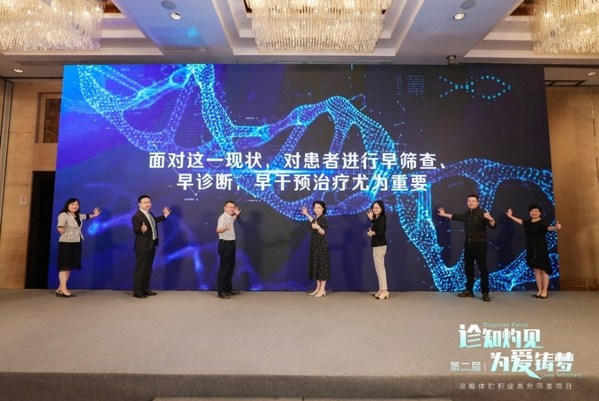
Mr. Wang Haofei, Executive President of the Beijing Health Promotion Associationstated: “In recent years, the government has introduced a series of initiatives to promote and advance the diagnosis and treatment of rare diseases; however, the management of these conditions still faces severe challenges. Timely implementation of rare disease screening, which facilitates early detection, early intervention, and early treatment, holds significant social importance. Over the past year, the inaugural high-risk screening program for lysosomal storage disorders has achieved outstanding results, demonstrating that we are on the right track. We look forward to the upgraded second phase of the program building on this success to further help elevate the overall standards of diagnosis and treatment for lysosomal storage disorders.”
Advancing Standardized Screening and Diagnosis/Treatment Systems for Rare Diseases to Facilitate Early Diagnosis and Early Treatment
Given China's large population base, rare diseases are not rare. The number of patients with rare diseases in China exceeds 20 million.[1], and are often difficult to diagnose, readily leading to delayed treatment due to missed or misdiagnosis. Currently, fewer than 40% of rare disease patients receive a definitive diagnosis, with an average time to diagnosis exceeding five years. Taking Gaucher disease as an example, according to the *2019 Survey Report on the Living Conditions of Gaucher Disease Patients*, 61.9% of patients have experienced misdiagnosis, and 27.9% require 1 to 5 years to obtain a confirmed diagnosis. “Early diagnosis of rare diseases has long been a critical challenge that the medical community strives to overcome. The high-risk screening program for lysosomal storage disorders addresses this issue from the source, establishing the first line of defense in rare disease prevention and control. This is of paramount importance for improving early diagnosis rates and ensuring standardized diagnostic protocols in subsequent stages.”Professor Zhang Aihua, Chair of the Rare Diseases Branch of the Jiangsu Medical Association and Vice President of the Children's Hospital of Nanjing Medical University, stated.
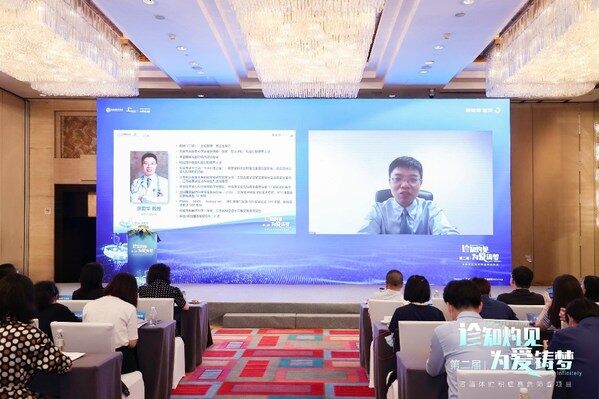
In June last year, the inaugural high-risk screening program for lysosomal storage diseases (LSDs) was launched. As of April this year, the program has provided free testing for over 3,200 blood samples, identifying approximately 250 patients, and has covered 244 hospitals across 29 provinces and regions in China. With the launch of this year's second phase, the scope of targeted diseases has expanded from the initial Gaucher disease and Pompe disease to a combined screening panel for four conditions: Gaucher disease, Pompe disease, Fabry disease, and mucopolysaccharidosis type I. Concurrently, the number of participating clinical departments has increased from two to eleven, enabling multidisciplinary collaboration in the screening and differential diagnosis of multiple disorders. Additionally, the "LSDs Testing" feature within the WeChat mini-program "Mu Haitang" was officially launched in July, providing patients with a convenient "one-stop" screening service.
Screening can effectively prevent various genetic disorders. It not only enables the early detection of affected infants and timely intervention to alleviate diagnostic and therapeutic challenges, but will also positively promote healthy reproduction and child-rearing in China.Professor Xu Hong, Chief Physician of the Department of Nephrology, Children's Hospital of Fudan University, emphasized:“Preventive efforts for rare diseases should be elevated to the level of early screening. Given that most rare diseases are genetic disorders and molecular biology technologies are advancing rapidly, it is crucial to recognize that early detection can be achieved through genetic testing. Raising awareness of rare diseases among healthcare professionals and the general public is the foundation, implementing the three-tier prevention system is the key, and multidisciplinary clinical collaboration in the diagnosis, treatment, and management of rare diseases serves as the essential safeguard.”
Professor Zhang Liansheng, Director of the Gansu Provincial Key Laboratory of Hematological Diseases, stated:“Rare diseases require the collective efforts of ‘you, me, and everyone,’ including the media, clinicians, and socially responsible enterprises, to jointly advance the standardized diagnosis and treatment of lysosomal storage disorders. The clinical manifestations of lysosomal storage disorders are highly diverse and complex, often necessitating a multidisciplinary approach for diagnosis. We physicians will stand at the forefront, and we hope that more hospitals and departments will participate in the future by implementing a multidisciplinary collaborative model for early screening and diagnosis, ultimately helping countless patients and their families restore happiness.”
80% of Rare Diseases Are Genetic Defects, Familial Screening Promotes Healthy Birth and Childrearing
China is a country with a high incidence of birth defects. According to the 《Report on the Prevention and Control of Birth Defects in China》 released by the Ministry of Health in 2012, the incidence rate of birth defects in China is approximately 5.6%. Including rare diseases, approximately 900,000 new cases of birth defects occur annually. Among rare diseases, over 80% are genetic defects.[2]。
The family screening for Fabry disease within this program further targets pathogenic genes in the family to conduct cascade screening, providing a basis and reference for the future planning of patients and their relatives.Professor Zhu Wenhua, Associate Chief Physician in the Department of Neurology at Huashan Hospital Affiliated to Fudan University, introduced: “Implementing early screening is the most cost-effective means of preventing rare diseases. Lysosomal storage disorders are recessive genetic conditions. If this information can be promptly communicated to patients and parents within the same family, they may have the opportunity to have healthy children, helping their families move toward a hopeful future and promoting healthy births and child development. This represents the profound significance of our screening program.”
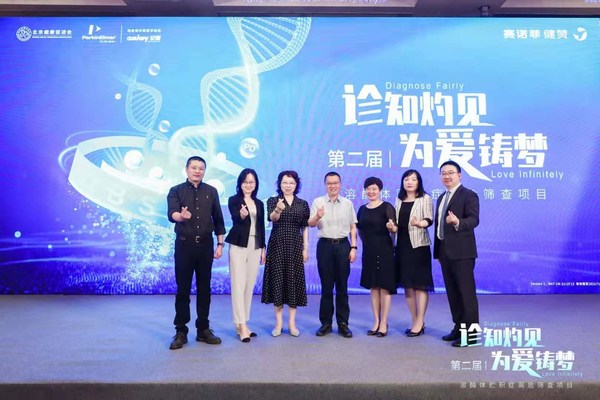
Ms. Xu Ye, General Manager of the Diagnostics Business, Greater China, PerkinElmer, stated:“Over a year since its launch, the project has already achieved remarkable results. By establishing an integrated rare disease diagnosis and treatment model of ‘high-risk screening–diagnosis’, the efficiency of rare disease screening and diagnosis has been further enhanced. Moving forward, we will continue to deliver exceptional services and testing technologies to better serve clinical practice and benefit patients, families, and society.”
The launch, development, and continuous expansion to primary care settings of high-risk screening programs for lysosomal storage disorders will effectively alleviate the current situation characterized by high rates of misdiagnosis and missed diagnosis, as well as a heavy disease burden among patients.Mr. Li Jian, Head of Medical Affairs at Sanofi Genzyme China, stated,“Patients with lysosomal storage disorders need to minimize unnecessary detours during their diagnostic journey, while clinicians require simple and practical diagnostic tools. The high-risk screening program for lysosomal storage disorders takes addressing real-world clinical pain points as its starting point, coordinates resources, bridges patients and healthcare providers, and promotes early screening, early diagnosis, and early intervention for this category of rare diseases.”
Ms. Yu Lei, Head of Rare Diseases and Rare Blood Disorders, Sanofi Genzyme China, stated“The most challenging aspect of diagnosing and treating rare diseases is the diagnosis itself, which requires precise diagnostic testing, as well as medical education initiatives to raise awareness among more physicians and patients regarding the importance of screening. We look forward to broader participation in the screening and diagnosis of diagnosable and treatable lysosomal storage disorders, with the goal of establishing a new screening model. Sanofi is willing to play an active role in this endeavor, collaborating with all stakeholders to co-build an ecosystem, enhance the accessibility of rare disease diagnosis and treatment, and benefit more patients.”
[1] http://www.xinhuanet.com/politics/2019-03/09/c_1124211779.htm
[2] http://hn.people.com.cn/n2/2020/0629/c371273-34120198.html