

Raising $27 Million, This Company Uses Nanoparticles to Pioneer a Third Path in Brain-Computer Interfaces

Subsense
Brain-Computer Interface Device Manufacturer
Recently, Subsense, a U.S.-based neurotechnology company, secured an additional $10 million in funding. This comes just about 10 months after the company completed its initial round of financing in February 2025, raising $17 million. Within a short year, the total amount raised through seed funding has reached $27 million.
Since its public debut in early 2025, this Palo Alto, California-based startup has quickly captured market attention. The company is dedicated to developing the world's first non-surgical, nanoparticle-based bidirectional brain-computer interface technology—using engineered nanoparticles to cross the blood-brain barrier, enabling two-way communication between the brain and external devices.
The field of brain-computer interfaces has long been plagued by a dilemma: the difficulty of achieving both signal precision and minimal invasiveness. While implantable electrode arrays can capture high-quality neural signals, they come with the risks and trauma of craniotomy; on the other hand, non-invasive methods like electroencephalography (EEG), which read signals through the skull, suffer from "noise" and poor spatial resolution.
Facing this common industry challenge, Subsense has chosen a new path. Established in 2022, Subsense set its sights on a novel technical approach from the outset: developing a non-surgical, nanoparticle-based bidirectional brain-computer interface.
"Invasive brain-computer interfaces still pose significant limitations for the broader audience because they involve surgery," said Tetiana Aleksandrova, the company's CEO and co-founder, when explaining the original intention. "We are trying to find a way to create a device that achieves the same level of neural signal accuracy as invasive brain-computer interfaces but requires no surgery at all. This is why we are developing nanoparticles."
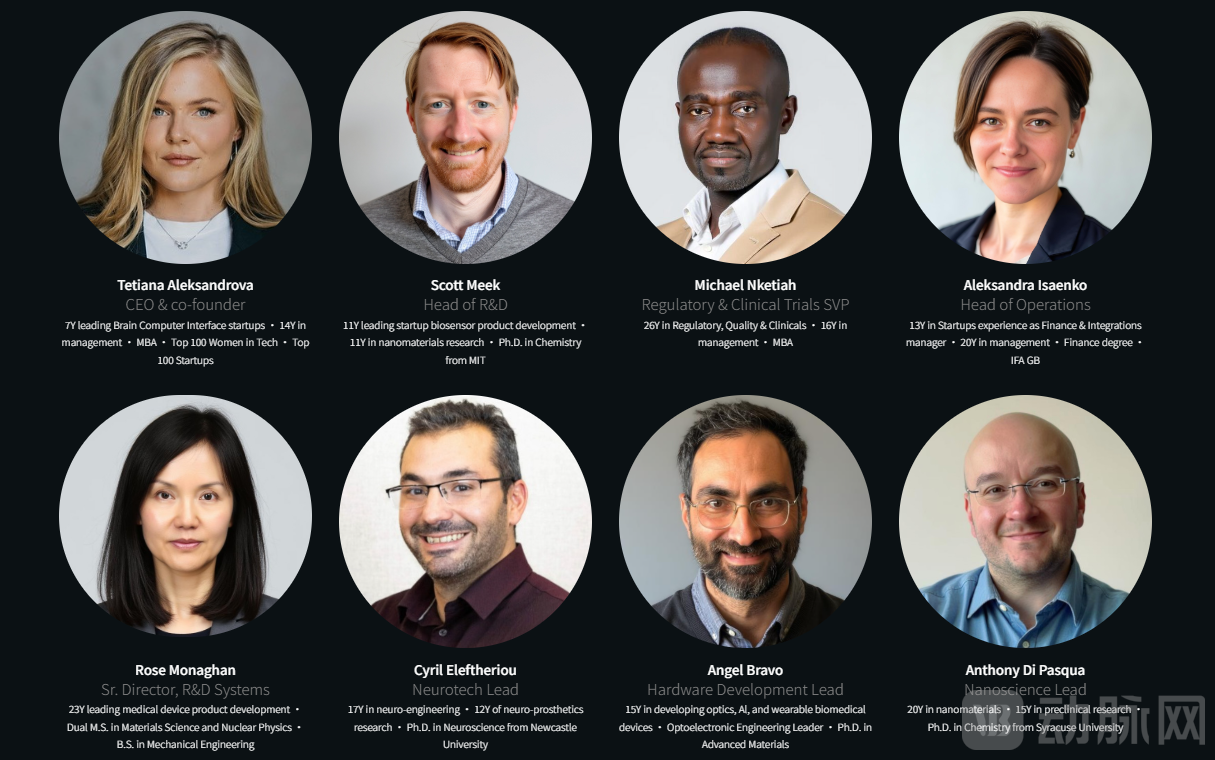
This goal and vision are carried by a top-tier interdisciplinary team. Tetiana Aleksandrova, CEO and co-founder of Subsense, holds a Master's degree in Business Administration, with 14 years of management experience and 7 years of hands-on leadership in brain-computer interface startups. She was named one of the world’s top 100 women in tech and led her startup to be recognized as one of the world’s top 100 startups.
Source: Subsense Official Website
The core team members of the company have backgrounds covering multiple fields such as neurotechnology, nanotechnology, biology, physics, and chemistry, collectively forming the knowledge network needed to tackle this complex challenge. Scott Meek, the R&D lead, is a Ph.D. in Chemistry from MIT with 11 years of experience in nanomaterials research and leading-edge startup biosensor product development. Rose Monaghan, Senior Director of R&D Systems, holds a bachelor’s degree in mechanical engineering and dual master's degrees in materials science and nuclear physics, with 23 years of expertise in medical device product development. Cyril Eleftheriou, Head of Neurotechnology, is a Ph.D. in Neuroscience from Newcastle University with 17 years of experience in the field of neural engineering. Angel Bravo, Head of Hardware Development, holds a Ph.D. in Advanced Materials and has focused on biomedical devices for 15 years. Anthony Di Pasqua, Head of Nanoscience, is a Ph.D. in Chemistry from Sherrington University, with 20 years of experience in nanomaterials and 15 years in preclinical research.
The advisory team brings together experts who work at various prestigious universities and research institutions, including researchers from ETH Zurich, University of California Santa Cruz, University of California Davis, Politecnico di Torino, Florida Institute of Technology, and Yorktown Research Institute.
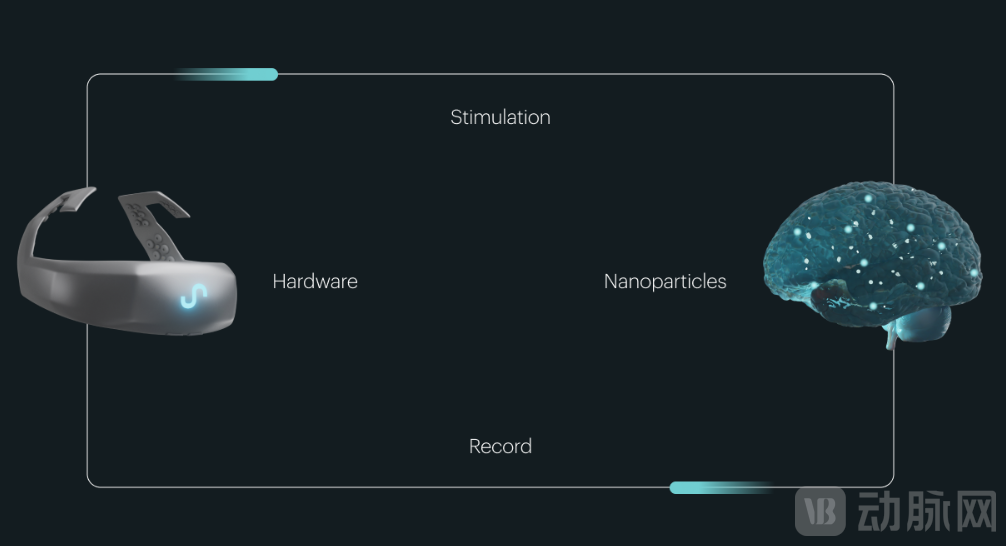
Their core solution is to revolutionize the hardware unit by shrinking it from the macroscopic "electrode" down to molecular-scale "nanoparticles." Subsense is developing two types of nanoparticles: one type is responsible for "reading" the electrical activity of neurons, while the other is tasked with "writing," or applying regulatory stimulation. These biocompatible particles are designed to safely distribute to specific brain regions via the bloodstream and be wirelessly controlled and read by external devices.
Source: Subsense Official Website
Subsense's technical path is completely different from traditional brain-computer interface solutions, with its core lying in three major technological pillars: biocompatible nanoparticles, non-surgical techniques, and a proprietary hardware system.
Biocompatible nanoparticles represent the cutting-edge innovation in BCI technology. These nanoparticles are designed to seamlessly integrate into the human brain while ensuring safety and compatibility. They form the core of BCI systems, with two different types of nanoparticles capable of accurately recording and stimulating brain activity without adverse effects, paving the way for safer and more effective neurotherapy and interfaces.
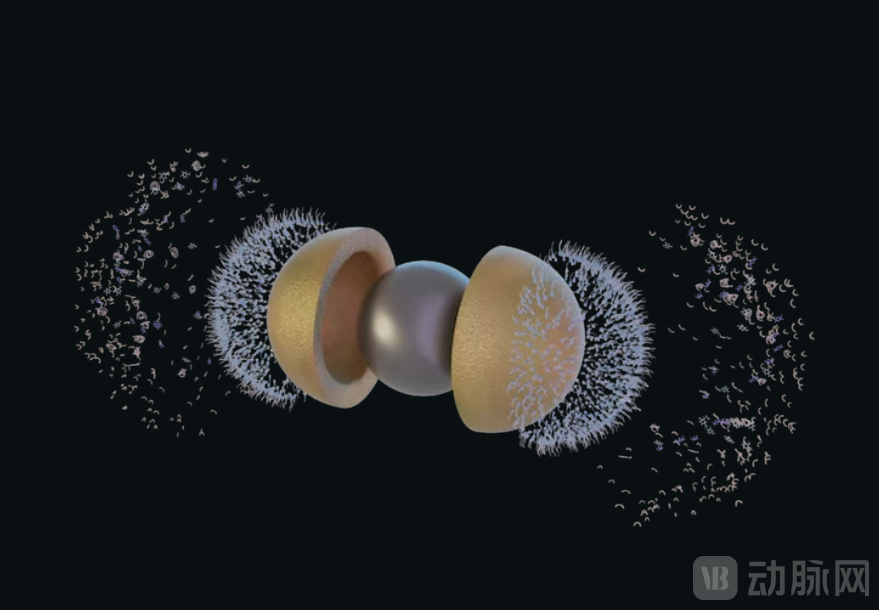
Image source: Subsense official website
Non-surgical technology is at the core of Subsense's philosophy. Unlike traditional brain-computer interfaces that require craniotomy for electrode implantation, Subsense’s system is designed to interact with the brain without the need for surgical implantation. It primarily employs methods such as intranasal administration, allowing nanoparticles to cross the blood-brain barrier and naturally distribute within the target brain regions, thereby providing users with a safer and more comfortable experience. This approach not only reduces the risks associated with invasive procedures but also makes the technology more accessible to a broader population.
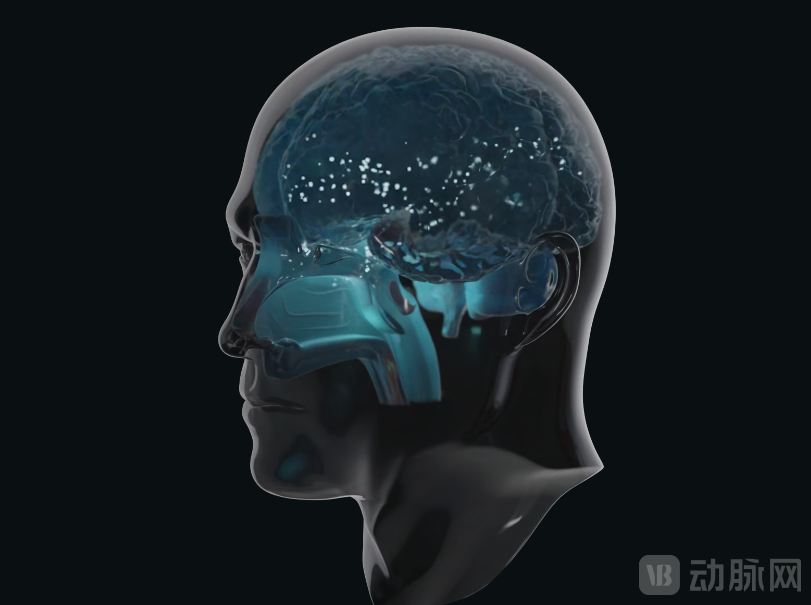
Image source: Subsense official website
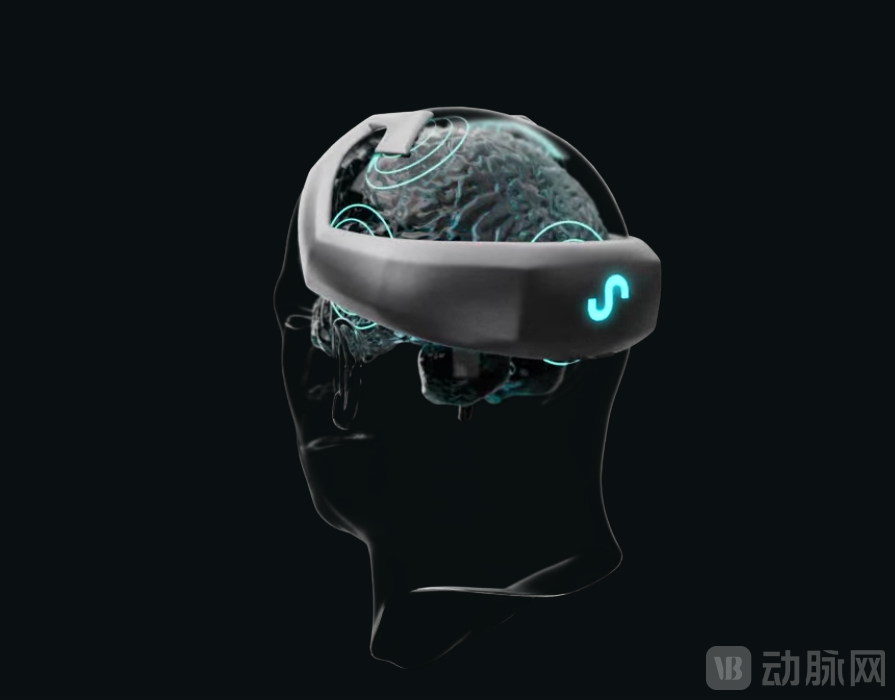
Proprietary hardware systems are precision-engineered to ensure optimal signal capture and transmission from nanoparticles, designed to seamlessly connect the brain to the digital world.
Source: Subsense official website
By using a dual-system approach with plasma and magnetoelectric nanoparticles, Subsense aims to set a new standard in neurotechnology—bypassing traditional surgical implants and achieving precise brain interaction through minimally invasive delivery.
Currently, Subsense is initially applying its technology to treat movement disorders caused by neurodegenerative diseases such as Parkinson's disease. The principle involves using nanoparticles to replace traditional deep brain stimulation electrodes for precise modulation of abnormal neural nuclei.
"People have already used deep brain stimulation to treat these symptoms, and our nanoparticles can partially replace this treatment method," said Tetiana Aleksandrova. "Without surgical methods, these nanoparticles will enter the brain through the nose or bloodstream, making it safer than other more invasive approaches."
Although it starts with the treatment of neurological diseases, the future vision depicted by Subsense goes far beyond that. Its technological roadmap will ultimately lead to a deep integration with artificial intelligence.
Subsense's short-term goal is to verify its safety and efficacy in the treatment of neurological diseases. The company plans to first demonstrate its ability to improve symptoms associated with Parkinson's disease and Alzheimer's disease in animal models. This phase is a necessary step toward gaining regulatory approval and advancing to clinical applications.
After establishing a foothold in medical applications, the technology will extend into broader areas of sensory and motor function restoration. For instance, restoring visual perception for the blind or rebuilding motor control for paralyzed individuals. Going further, companies are also exploring inner language decoding and thought translation to directly interpret human intentions, which could revolutionize human-computer interaction.
The long-term, and even ultimate, vision points to the deep integration of humanity and technology. "Our main goal is to create a safe and efficient brain-computer interface for healthy individuals," said Tetiana Aleksandrova, pointing to a broader future. "Imagine being able to actively regulate your brain state instead of being controlled by the chemicals within it."
In this future scenario, brain-computer interfaces will become a new platform for human interaction with the digital world. External devices such as mobile phones and laptops may become unnecessary, as all information processing and communication can be completed through high-speed wireless brain-to-brain connections. This includes direct mind-level interaction with artificial intelligence, using cloud storage as an instant extension of memory, and actively optimizing and managing cognitive states such as emotions, focus, and creativity.
This evolutionary path also points to Subsense's unique market positioning. It is neither a high-value implantable medical device limited to critically ill patients nor a consumer-grade health monitoring device with simple functions, but rather a product that has the potential to open up an entirely new "neuro-enhancement" market track.
Such a cutting-edge and ambitious technological pathway cannot do without the dual support of capital and intellect.
Golden Falcon Capital, which led the seed round financing, has continued to invest within just one year, bringing the total investment to $27 million to date. The new round of funding will mainly be used for the company’s newly built laboratory and engineering facilities in Palo Alto, specifically to accelerate the "in vivo biosafety program" and the miniaturization of hardware, aiming to make it suitable for daily use scenarios.
In terms of intellectual support, the company has established cooperative relationships with academic institutions such as the University of California, Santa Cruz, and ETH Zurich to jointly develop safe, effective, and accessible BCI systems. Subsense is adopting a model that integrates industry, academia, and research to incorporate cutting-edge fundamental research achievements and address interdisciplinary technical challenges.
However, the road ahead is still fraught with challenges. The long-term stability, precise targeting, signal consistency, and scalable production processes of nanoparticles in the complex brain environment are all scientific and engineering problems that need to be solved. In addition, as a completely new medical technology, how to pass through the strict drug and medical device regulatory approval process requires joint exploration with regulatory agencies.
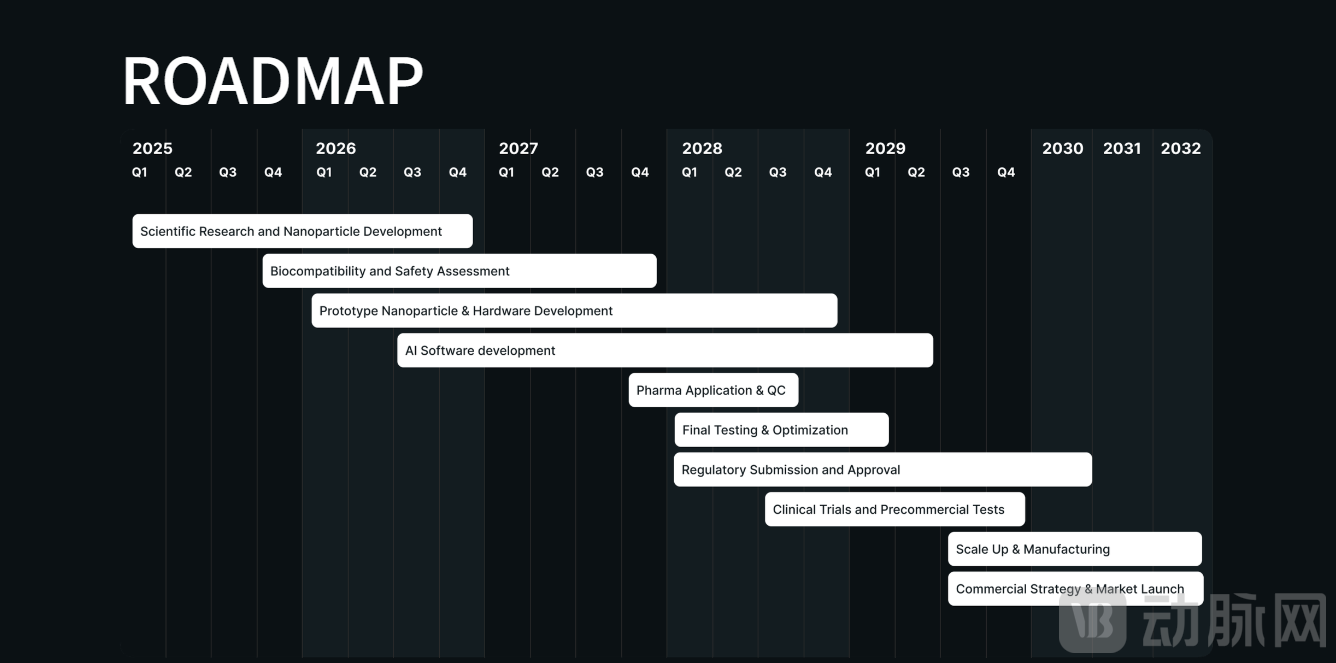 Image source: Subsense official website
In response, the founding team demonstrated a clear understanding and pragmatic planning. The company’s R&D roadmap shows that from 2026 to 2032, Subsense will advance processes such as scientific research and nanoparticle development, drug application and quality control, large-scale production, and commercialization. Currently, the company is in the critical phase of biocompatibility safety assessment, as well as the initial stages of prototype nanoparticle and hardware development, along with AI software development.
Subsense's chosen path offers an imaginative new possibility for the future of brain-computer interfaces. It seeks to break the traditional constraints between "precision" and "invasiveness." By shrinking hardware to the nanoscale, it aims to replace surgical implants with bio-integration.
With the opening of the new Palo Alto lab and the advancement of in vivo safety assessments, the era of brain-computer interaction without the need for craniotomy may be approaching more rapidly.
In the future, this technology may truly fulfill its promise, evolving from medical devices treating Parkinson’s disease to products enabling self-awareness state management, and further becoming a bridge for everyone to seamlessly integrate with artificial intelligence and the digital universe.