

Disease Control Rate Reaches 93%! Latest Clinical Data Released for New "Cancer King" Therapy
Phanes China
Antibody New Drug Developer
From January 8 to 10, 2026, the annual American Society of Clinical Oncology Gastrointestinal Cancers Symposium (ASCO GI) will be held as scheduled at the Moscone Center in San Francisco, USA. As the world's top academic conference on gastrointestinal tumors, ASCO GI has always been regarded as the research and development trendsetter in the field of gastrointestinal oncology.
On the second day of the agenda, clinical research data targeting metastatic pancreatic ductal adenocarcinoma (mPDAC) was published for the first time, drawing widespread attention. The study focuses on spevatamig, a CLDN18.2&CD47 bispecific antibody independently developed by Phanes Therapeutics. Despite being in the clinical proof-of-concept stage, spevatamig has demonstrated significant potential in combating pancreatic cancer, often referred to as the "king of cancers."
In the process of combining with classical chemotherapy regimens for first-line treatment of mPDAC, spevatamig significantly improved disease control rates and extended patient survival under safe and controllable conditions. More importantly, spevatamig has advanced the development of drugs targeting CD47, often referred to as the "cursed target," by avoiding severe anemia, neutropenia, or thrombocytopenia during treatment. Previously, severe hematological toxicity had been a major obstacle in the clinical development of several high-profile CD47 pipelines.
"King of Cancers" New Drug Validated
Phanes Therapeutics, a clinical-stage immuno-oncology biotechnology company headquartered in San Diego, USA, has developed its core pipeline product spevatamig, a bispecific antibody drug targeting Claudin18.2 and CD47. In March 2023, to explore the potential of spevatamig in improving outcomes for patients with mPDAC, Phanes Therapeutics initiated the multi-cohort TWINPEAK study (NCT05482893).
At present, TWINPEAK is undergoing Phase II combination expansion and dose optimization studies. The combination expansion cohort includes combination therapy with chemotherapy and/or immune checkpoint inhibitors. As of December 12, 2025, 107 patients with gastrointestinal tumors have received spevatamig as monotherapy or in combination in the United States.
For a long time, pancreatic cancer has been regarded as the king of cancers, with extremely limited treatment options and a five-year survival rate of less than 5% for patients. Once diagnosed with pancreatic cancer, most patients can only receive systemic chemotherapy. Due to the development of drug resistance and cumulative toxicity, chemotherapy offers only temporary benefits. Even after innovative immunotherapies have widely entered clinical practice, the treatment dilemma of the "king of cancers" has not improved. This is because common methods such as PD-1 inhibitors and CTLA-4 inhibitors target the "adaptive immune system" and struggle to combat "cold" tumors like mPDAC. Moreover, they have high rates of severe adverse reactions and dose-limiting toxicity. To date, no immunotherapy or biologic agent has been approved for first-line treatment of mPDAC patients.
Clinically, gemcitabine combined with nab-paclitaxel (GnP regimen) is the mainstream chemotherapy for mPDAC. In the combination therapy cohort of the TWINPEAK study, 42 patients received first-line treatment with various dosage regimens of spevatamig combined with GnP. At this ASCO GI, Phanes Therapeutics mainly presented data on a 2 mg/kg weekly dosing regimen of spevatamig combined with GnP.
Data showed that in 15 patients (n=15) with mPDAC who received spevatamig at 2 mg/kg weekly in combination with GnP as first-line treatment, 6 patients achieved partial response (5 confirmed, 1 pending confirmation), and 8 patients had stable disease. The disease control rate was 93% (compared to 48% in key clinical studies), and the objective response rate was 40%.

Notably, in this dose regimen study, Phanes Therapeutics selected patients with the same disease and similar baseline characteristics as those in the two key GnP clinical studies, MPACT and NAPOLI-3, to facilitate a direct comparison of the efficacy of the two treatment regimens. The data showed that compared to the GnP treatment groups in the MPACT and NAPOLI-3 studies, the median progression-free survival in this study increased from 5.5 months and 5.6 months to 7.3 months, and the median overall survival improved from 8.5 months and 9.2 months to 13.2 months. Additionally, the 6-month progression-free survival rate and 6-month overall survival rate among the participants also significantly increased from 44% and 67% in the MPACT GnP treatment group to 59% and 93%, respectively.
In other words, in terms of the primary and secondary endpoints for evaluating the efficacy of cancer treatment, the Spevatamig combined with GnP regimen has shown significant improvement over existing chemotherapy regimens.At the same time, researchers observed a good safety profile in the TWINPEAK study, which will be elaborated on later. For pancreatic cancer patients whose lives are measured in months after diagnosis, a drug that could potentially extend overall survival by nearly half compared to existing chemotherapy is undoubtedly of great significance.
Currently, spevatamig is in Phase II clinical trials in the United States and China, making it the fastest progressing pipeline among drugs targeting the same mechanism globally.In addition, the pancreatic cancer indication for spevatamig has entered the FDA’s expedited review pathway. In June 2022, spevatamig received FDA orphan drug designation for pancreatic cancer, and two years later, it was granted fast track designation for metastatic Claudin18.2-positive pancreatic cancer. The interim data from the TWINPEAK study announced this time represents a critical step toward the clinical application of spevatamig.
Structural Optimization at the Source
Spevatamig can relatively safely control the progression of pancreatic cancer, mainly due to its unique structural design.
In terms of target selection, the two antibody arms of spevatamig target CLDN18.2 and CD47, respectively. In tumor cells of mPDAC patients, both CLDN18.2 and CD47 are overexpressed, making them promising therapeutic targets for this disease. Particularly, the CD47 target, which can activate the "innate immune system," holds significant theoretical efficacy and clinical potential.
However, CD47-targeting drugs have long been limited by hematological side effects. In 2024, due to severe side effects, Gilead was forced to abandon magrolimab, its heavily invested star pipeline in the CD47 program. Data showed that among patients in the magrolimab group, 76.4% experienced grade 3 or higher adverse events related to the study drug, including hematological toxicities such as neutropenia, anemia, and thrombocytopenia, significantly higher than the 56.4% adverse event rate in the control group. The abandonment of magrolimab became a classic turning point in the history of CD47 drug development.
At the same time, another target, CLDN18.2, is expressed in the gastric mucosa, causing nausea and vomiting when CLDN18.2-targeted drugs bind to it. Therefore, targeting CLDN18.2 and CD47 for cancer treatment requires a strategy that can mitigate or resolve gastrointestinal toxicity associated with CLDN18.2 as well as hematological toxicity related to CD47.
Compared with traditional bispecific antibody drugs, spevatamig has undergone dual molecular design.
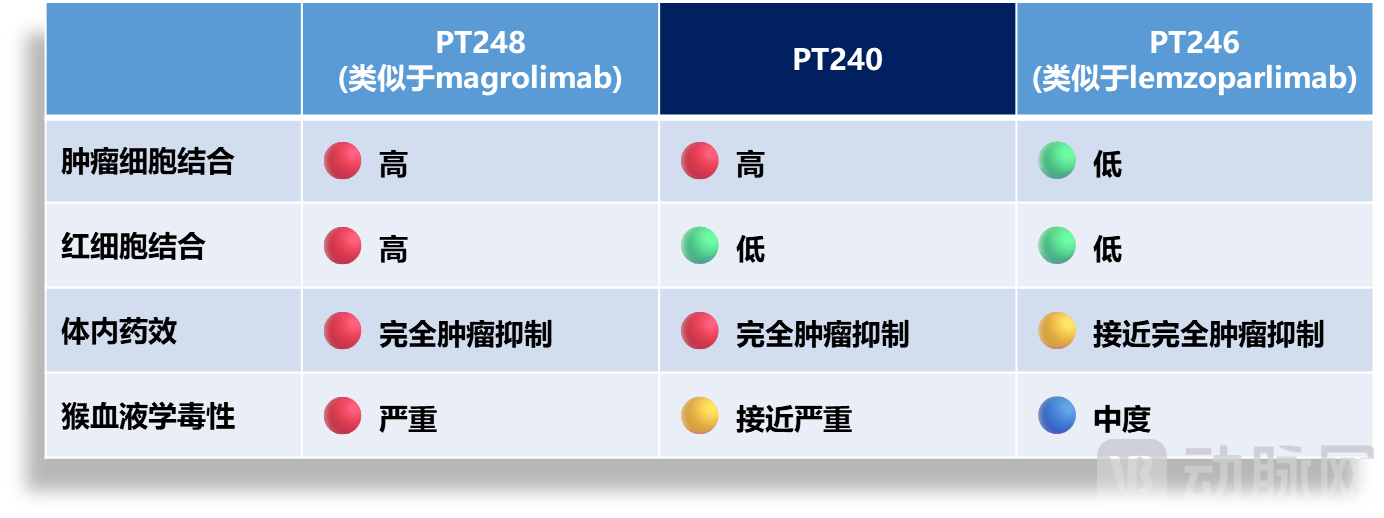
On one hand, in the selection of anti-CD47 monoclonal antibodies, Phanes Therapeutics utilized three anti-CD47 monoclonal antibodies with distinct biological characteristics: PT248, which is similar to magrolimab; PT246, which resembles lemzoparlimab; and PT240, which is unique.
Through systematic exploration of CD47 biology, Phanes Therapeutics selected PT240.The high blood toxicity of CD47 drugs is mainly due to the expression of CD47 on red blood cells, platelets, and neutrophils, which are rapidly cleared by CD47-targeted drug-activated monocytes/macrophages. However, PT240 exhibits a high binding affinity for tumor cells and low binding to red blood cells, which becomes the key to reducing blood toxicity.
On the other hand, utilizing the PACbody® and SPECpair® bispecific antibody technology platforms, Phanes Therapeutics constructed the bispecific antibody spevatamig based on an IgG1 backbone, using the anti-CD47 single arm from PT240 and the anti-CLDN18.2 antibody single arm.
Unlike many CLDN18.2-targeted drugs, which typically have two anti-CLDN18.2 arms, spevatamig has only one anti-CLDN18.2 arm, resulting in weaker binding to gastric mucosa that does not express CD47, potentially reducing nausea and vomiting. Similarly, spevatamig has only one anti-CD47 arm, leading to weaker binding to red blood cells that do not express CLDN18.2. Thus, spevatamig, through its high binding affinity to cancer cells via its two single arms, exerts potential therapeutic effects while limiting off-tumor (gastrointestinal) toxicity.
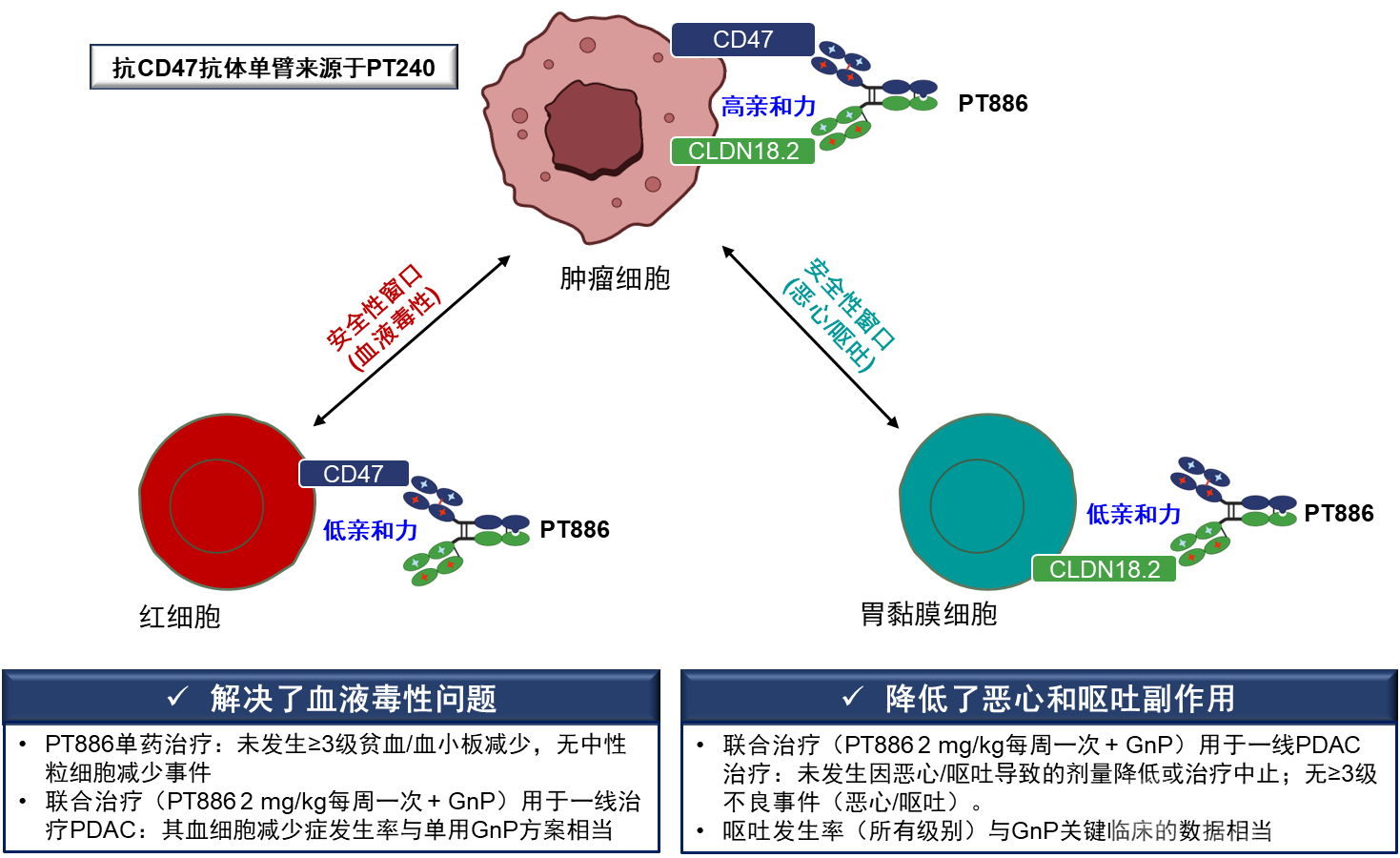
Currently, the clinical concept designed by Spevatamig has been data-validated.Among the 107 patients enrolled in the TWINPEAK study, no cytokine release syndrome or dose-limiting toxicity was observed in the monotherapy group. At this stage, the maximum tolerated dose of spevatamig has not been reached in either monotherapy or combination therapy. No treatment-emergent adverse events (TEAEs) of Grade ≥3 anemia, neutropenia, or thrombocytopenia were observed during the study period in the monotherapy group.
Among them, at the dose level of 2 mg/kg spevatamig administered weekly in combination with GnP, the incidence rates of anemia, neutropenia, and thrombocytopenia were comparable to those observed in the GnP treatment group in key clinical trials. No nausea or vomiting events of grade ≥3 occurred during treatment, nor were there any dose reductions or treatment discontinuations due to nausea or vomiting. Cytokine release syndrome was not observed. These clinical proof-of-concept data indicate that the molecular design of spevatamig mitigates hematological toxicity and improves gastrointestinal tolerability.
Currently, the efficacy data of >2 mg/kg spevatamig administered weekly in combination with GnP is maturing, which will reveal whether higher doses of spevatamig may bring greater clinical benefits to patients with mPDAC.
Despite being a small-sample clinical study that lacks statistical stability, its outstanding performance in the clinical proof-of-concept makes Spevatamig's subsequent large-scale clinical trials more anticipated.
The CD47 Target in the Midst of Challenges May Break the Stalemate
In the history of tumor immunotherapy drug development, CD47 is a rather dramatic presence.
Generally, the logic of tumor immunotherapy includes activating adaptive immunity by T cells to fight tumors and activating innate immunity by macrophages to combat tumors. Currently, for adaptive immunity, there are already numerous drugs targeting the representative checkpoint PD-1 that have been applied in clinical practice; however, drug development targeting CD47, a representative checkpoint for innate immunity, has fallen into deep difficulties.
In theory, CD47 drugs are stronger tumor immunotherapy agents than the widely known PD-1 inhibitors, as the former can activate both innate and adaptive immune anticancer mechanisms, while the latter relies solely on adaptive immunity.In addition, CD47 is widely expressed on the cell surface, and theoretically, immune drugs targeting CD47 would also have a higher response rate in cancer patients.
Around 2020, the more powerful tumor immunology logic of the CD47 target attracted a large number of pharmaceutical companies to actively develop new drugs, including multinational pharmaceutical companies such as Gilead and Pfizer. According to Frost & Sullivan statistics, there are over 60 new drug pipelines globally targeting CD47. It is estimated that by 2030, the global market size for CD47/SIRPα-targeted therapies will reach $12.6 billion.
In March 2020, Gilead acquired Forty Seven for $4.9 billion, bringing the star asset, CD47 monoclonal antibody magrolimab, into its portfolio. This marked the largest acquisition in the CD47 field to date. At that time, Phase I/II data for magrolimab combined with azacitidine in treating acute myeloid leukemia showed an objective response rate of 64%, immediately igniting industry enthusiasm for development. In September of the same year, AbbVie partnered with China-based Biotech I-Mab, paying $180 million upfront and $20 million in milestone payments to acquire partial rights to I-Mab’s CD47-targeted drug lemzoparlimab.
Another notable acquisition in the CD47 field occurred the year after Gilead's deal. In November 2021, Pfizer acquired Trillium Therapeutics for $2.26 billion, gaining two CD47-targeted drugs, maplirpacept and ontorpacept. Maplirpacept is a fusion protein drug combining the Fc region of IgG4 with SIRPα, while ontorpacept combines the Fc region of IgG1 with SIRPα. These drugs demonstrated controllable safety and preliminary efficacy in Phase I/II clinical trials for lymphoma and multiple myeloma.
During this period, venture capital institutions have also jumped into the fray, attempting to seize the first-mover advantage in the CD47 track. Representative transactions include Hillhouse Capital’s repeated investments in Innovent Biologics since the C-round, providing financial support for the preclinical research and IND application of its CD47 pipeline IBI188. According to VCBeat database, since 2020, over 10 billion yuan from the primary market has flowed into innovative drug projects related to the CD47 target.
Subsequently, bad news about CD47 development kept coming. In addition to Gilead's complete abandonment of magrolimab development mentioned earlier, in September 2023, I-Mab and AbbVie terminated their collaboration agreement, marking the failure of the two companies in developing drugs targeting CD47. In June 2025, Pfizer announced the termination of the Phase II study of maplirpacept for treating relapsed/refractory diffuse large B-cell lymphoma due to difficulties in patient recruitment, after ontorpacept had quietly disappeared from the pipeline.
Of course, the pharmaceutical industry has not completely abandoned the CD47 target. Based on ideas such as molecular structure optimization, tumor microenvironment activation, and target synergy, the CD47 pipeline is continuously being optimized. At present, developing second-generation or even third-generation CD47 pipelines has become a new trend. However, most of these optimization measures are still in the early validation stage.
The clinical proof-of-concept data for spevatamig, published for the first time, shows that by significantly reducing blood-related adverse events, the exploration of targeting CD47 in innate immune therapy for mPDAC has reached a critical milestone. Spevatamig also has the potential to become the first innate immune-targeted drug for solid tumor indications.
In a sense, spevatamig not only provides a new treatment option for pancreatic cancer patients but also represents a successful validation of a research and development approach—transforming the biologically known "fatal attraction" into a clinically "safe and effective" tool through cutting-edge antibody engineering expertise.
In conclusion
At ASCO GI, Phanes Therapeutics also mentioned a nearly overlooked piece of data: spevatamig requires only 10% expression level of the CLDN18.2 target, which is much lower than the requirements of many other CLDN18.2-targeted therapies.This means that spevatamig can potentially cover approximately 85% of mPDAC patients. For patients with advanced tumors, the broad-spectrum efficacy of a drug is crucial.
Moreover, as an immunotherapy, the combinability and differentiated mechanism of action of spevatamig, along with its excellent safety profile, not only position it as an "enhancer" for existing standard chemotherapy but also potentially establish it as a core component in future combination therapies involving targeted treatments and immunotherapies. It could become an ideal partner for more innovative cancer treatment regimens, such as KRAS inhibitors.
From a longer-term perspective, an anti-tumor drug with platform attributes may become the cornerstone for changing treatment approaches.