

What Can the Off-Hospital Medical Device Market Compete On If Not Price?

JD Health
Internet Medical and Health Service Platform Provider
The off-hospital medical device market is entering a phase of explosive growth. According to industry data estimates, the current market size has reached approximately 300 billion yuan and is expected to surge towards the target of 500 billion yuan in the next 3 to 5 years. However, as the market expands, the phenomenon of "internal competition" within the industry is becoming increasingly prominent, with frequent price wars and a lack of innovation constraining the healthy development of the sector.
Anti-Involution Has Become an Important Task for the Medical Device Industry. On January 7, Jingdong Health announced the full opening of its core capabilities at the first "Crazy Opening New Year Ceremony" and the 2026 Merchant Conference, assisting medical device brands in overcoming involution dilemmas from multiple dimensions such as supply chain, AI technology, and services.
With the adjustment of in-hospital payment policies and the upgrading of out-of-hospital health consumption demands, a batch of hospital-end devices are accelerating their penetration into out-of-hospital scenarios, forming a supply overlap with products originally entrenched in the out-of-hospital market. This not only enriches user options but also drives the continuous expansion of market scale. However, the rapid expansion on the supply side has also intensified market competition, especially with homogenized competition becoming increasingly prominent, leading to price wars as a primary short-term strategy for some companies to capture market share.
A review of the financial reports of several listed companies reveals that the industry generally faces challenges such as weak growth in traditional products or increasing revenue without increasing profits, which has weakened companies' subsequent innovation capabilities and willingness, leading to insufficient momentum for sustainable development.
VBInsight's "2025 Medical Device and Supply Chain Annual Innovation White Paper" analyzes that the regulatory and industrial policy logic in the medical device field has changed, shifting from "lowest price wins" to "curbing ineffective internal competition." Driven by policy guidance and market demand, breaking internal competition has become a consensus in the medical device industry.
As a leading platform connecting the medical device industry with users, Jingdong Health has implemented numerous practices to help the industry counter internal competition. One of the core measures is the continuous deepening of cooperation with global medical device brands. Through methods such as global procurement and bulk purchasing, it consistently introduces overseas supply. Additionally, by establishing the JDH+N Alliance, it collaborates with domestic brands to comprehensively accelerate industrial supply upgrades and promote the industry's move away from homogeneous competition.
In practice, Jingdong Health is reshaping categories with AI and defining value through services, driving the transformation of medical devices from single hardware sales to full-cycle health services.
Take Continuous Glucose Monitors (CGM) as an example, one of the fastest-growing home medical devices in recent years. They have been continuously improving in terms of sensor lifespan, accuracy, and wearing comfort, with the user base expanding from diabetes patients to fitness and weight-loss enthusiasts. However, users often face issues such as lack of guidance on wearing the device and data silos, significantly diminishing the user experience.
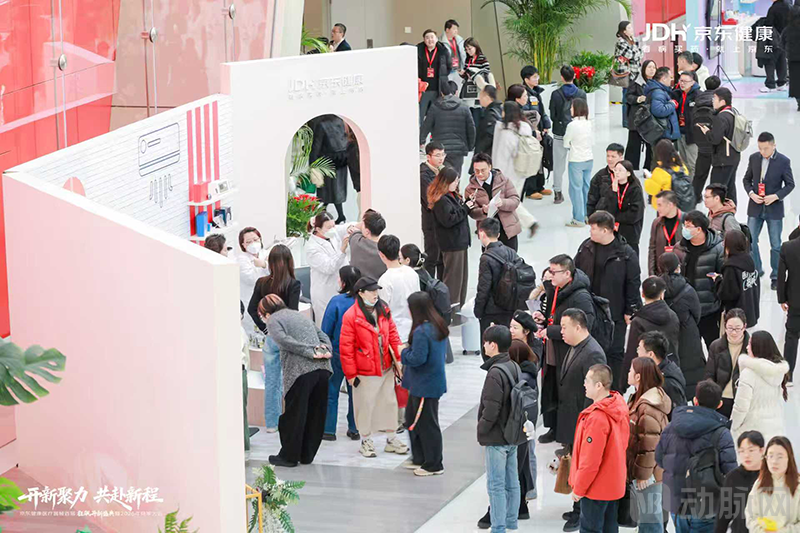
Medical Device Products Cooperated by Jingdong Health Attract Attention
To address real-world pain points, Jingdong Health has built an intelligent interconnected ecosystem to break the deadlock. In September last year, Jingdong Health established the "CGM+AI" Intelligent Interconnected Ecosystem Alliance, with brands such as Yuwell, Sinocare, and Wetai among the first to join. Relying on the Jingdong Health app and the AI health intelligence agent "Kangkang Blood Sugar," a comprehensive intelligent blood glucose management system was formed that integrates monitoring, analysis, intervention, and tracking. Currently, this model is gradually being replicated across categories such as blood pressure, electrocardiogram, and oxygen therapy, enabling more products to have practical disease prevention and precise control value.
In addition, Jingdong Health has also introduced AI capabilities into the adult toy track for the first time, which can analyze users' conversations with AI characters in real time and accurately convert them into hardware tactile feedback, redefining the immersive interactive experience of "what you say is what you feel."
These measures give the product differentiated added value, better meeting users' diversified and personalized needs, thereby avoiding the vicious cycle of low-price competition immediately after the product launch.
By 2025, Jingdong Health had cumulatively launched nearly 30 new products worth tens of millions, nearly 500 new products worth millions, and helped over 3,000 brands achieve a doubling of sales.
The key reason why Jingdong Health can help its device partners achieve rapid growth lies in its precise insight into industry pain points and provision of practical solutions against internal competition, which is backed by the platform's service, technology, and market resource advantages.
Specifically, Jingdong Health has the "Medical + Testing + Diagnosis + Pharmacy" closed-loop capability, which can fully activate the service value of medical device products.
As is known to all, Jingdong Health is one of the first platforms in the industry to establish a closed-loop service capability of "medical consultation + testing + diagnosis + medication." It has built a value-added service matrix that can flexibly adapt to different categories of medical devices, injecting diversified service value into medical device products. Targeting the characteristics and needs of different categories such as home monitoring devices, rehabilitation care equipment, and medical consumables, its service capabilities can achieve precise matching and dynamic adjustment, ultimately forming differentiated service content.
Jingdong Health's Medical Device Director shared a case at the aforementioned conference. After a 90-year-old patient with chronic obstructive pulmonary disease (COPD) and myocardial infarction was discharged, the family connected with an expert from a Beijing Tier-3 hospital via JD Internet Hospital. They received precise treatment advice and urgently purchased a home-use ventilator. Jingdong Health not only ensured next-day delivery but also provided in-home nurse services, completing equipment setup and usage guidance under remote doctor supervision.
This complete out-of-hospital diagnosis and treatment service closed loop of "professional diagnosis and treatment - convenient device purchase - installation guidance - continuous follow-up visits" not only promotes the transformation of devices from single tools to full-cycle health management carriers, significantly optimizing user experience, enhancing user stickiness and repurchase rate, but also helps partner companies accurately meet market demands, build differentiated competitive advantages, and achieve a dual improvement in product value and brand competitiveness.
Towards 2026, driven by multiple factors such as population aging, a surge in demand for chronic disease management, and the popularization of home-based health concepts, the out-of-hospital medical device market is showing new trends, providing direction for industry development.
First, the upgrading of demand structure is driving products to rapidly transform towards scenario-based and service-oriented solutions.For example, the demand for home-based elderly care has shifted from single-product procurement to scenario-based solutions, covering the entire process of monitoring, rehabilitation, and nursing; chronic disease management has entered the era of "digital prescriptions," with the "device as a service" model becoming mainstream, deeply integrating equipment and services; household products are accelerating their medical upgrade, extending from simple vital sign monitoring to closed-loop diagnosis and treatment.
Secondly, AI technology is no longer just an added bonus but has become a standard feature that defines the core competitiveness of a product.As artificial intelligence technology matures and becomes implemented, users' demand for intelligent medical devices is increasing. AI is no longer an optional feature. Smart devices with capabilities such as data analysis, intelligent early warning, and personalized guidance will become central.
Third, demand-driven product innovation accelerates iteration.Thanks to the support of big data and AI technology, enterprises are able to capture user needs more accurately, and product research and design have shifted from technology-driven to demand-driven. Rapidly responding to market demands and continuously launching products that precisely address user pain points have become the core capabilities for enterprises to maintain their competitiveness.
In line with industry trends, by 2026 Jingdong Health will focus on three core dimensions: supply, AI, and services. It aims to comprehensively open up its core capabilities to further address challenges such as industry stagnation and supply-demand mismatches.
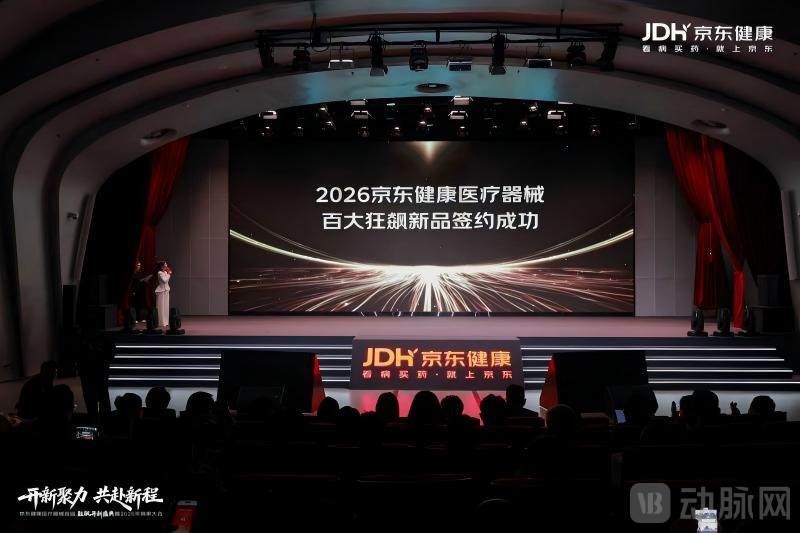
Jingdong Health Signs "Top 100 Global Brands"Top 100 Breakthrough New Products of 2026"Cooperation
On the supply side, Jingdong Health plans to promote global procurement and deepen domestic industrial belts, improve product structure through digitization, and build an efficient supply chain.For example, integrating high-quality products globally, linking up with suppliers in China, and driving the upgrading of local industries through large-scale customized orders; for key sectors such as elderly care, chronic diseases, and the aesthetics economy, continuously introducing high-quality supplies from overseas and deepening ecological co-construction.
Technically, further promote AI to become industrial productivity.Targeting the high knowledge barriers in medical devices, the AI shopping guide has achieved a conversion rate surpassing human efforts and a 98.4% positive review rate, effectively assisting users in making informed decisions. Next, Jingdong Health will establish an AI Chronic Disease Center and an out-of-hospital diagnosis and treatment system, integrating CGM, respiratory, ECG, blood pressure, and other devices to build a health ecosystem ranging from prevention to management.
In terms of service, Jingdong Health's full-scenario service network covering hospital visits, home services, and store arrivals will continue to improve.For medical devices, in addition to relying on nurses to provide professional services such as injections, care, and equipment debugging at home, the platform will also integrate with pharmacies, physical examination centers, and medical beauty stores to achieve an integrated service of online sales and offline multi-format experiences.
There is no doubt that, with the rapid release of growth potential, the out-of-hospital medical device market has become the most dynamic growth pole in the medical device industry. Jingdong Health's long-term goal is to inject strong momentum into the golden decade of the out-of-hospital medical device market.
In this process, Jingdong Health not only achieves rapid growth in its own business but also provides an ecosystem platform for the industry to counter internal competition. In the future, Jingdong Health will promote more device companies to break away from reliance on price wars, fostering healthy industry growth through precise supply-demand matching and enhanced product value.