

AI for Science Investment and Entrepreneurship: Where Are the Opportunities in the Next Decade?
XtalPi
Computation-Driven Innovative Drug R&D Provider
AI for Science (Artificial Intelligence-Driven Scientific Innovation), simply put, is to make artificial intelligence the "super assistant" and "insight engine" for scientists.
On November 25, 2025, Google DeepMind released "AlphaFold: The Impact Over Five Years," marking a revolutionary breakthrough in protein structure prediction and underscoring the "scientific value" of AI for Science.
More than half a month later, on December 18, XtalPi, a leading Chinese AI + robotics company, was officially included in the "HKEX Tech 100 Index" — a move that not only pushed it to the first tier of Hong Kong's technology sector but also marked the transition of AI for Science from a "technical concept" to "industrial hard power," providing a concrete "benchmark example" in China.
As a pioneer in both the AI pharmaceuticals and AI for Science fields, XtalPi has long validated its technical implementation capabilities with solid achievements: from being listed on the Hong Kong Stock Exchange as the "first AI pharmaceutical stock," to securing a nearly $60 billion mega-order from DoveTree, and reaching a $345 million collaboration with Eli Lilly. Each step is accelerating the transition from "AI accelerating research" to "research revitalizing industry."
Not long ago, at Frees Fund's 2025 Annual Investor Summit, Frees Fund partner Rui Ma and XtalPi's co-founder and Chief Innovation Officer Libo Lai engaged in an in-depth dialogue. They discussed AI for Science, the integration of technological innovation with industry, and the application of large models in the biopharmaceutical field, breaking down the core opportunities for the next decade for investors and entrepreneurs.
The main topics they discussed include:
AI pharmaceuticals has reached a period of fruition. AI for Science is still in a phase of going from 0 to 1. How can we truly integrate technological innovation with industry?
What is the underlying logic behind the development of AI for Science? Around this, what are XtalPi's future business layout adjustments?
Where are the capability boundaries of large models in the biopharmaceutical field? Which problems have been well solved, and which remain difficult to overcome?
What are the core difficulties in the cross-domain migration of AI+ technology from pharmaceuticals to fields like materials and energy? Where does the key to implementation lie?
We have edited parts of the dialogue, hoping to bring new perspectives. This article is part of the "AI Industry Observation" series, which will continuously share first-hand practices and insights from entrepreneurs in the AI field. If you are an entrepreneur in the AI for Science direction, please feel free to contact marui@freesvc.com.

AI Drug Development Enters the Harvest Period
Ma Rui:Let me start by sharing how we understand AI for Science.
The first logic is that AI pharmaceuticals have reached a fruition period. Three years ago, many people questioned whether AI could really develop drugs. However, looking at the situation today, the results are beyond doubt.
Taking XtalPi as an example, in November 2025, Ailux, a wholly-owned subsidiary of XtalPi, reached a $345 million AI large molecule R&D collaboration with global top pharmaceutical company Eli Lilly; in August 2025, XtalPi and U.S.-based biopharmaceutical company DoveTree announced the completion of an AI drug pipeline cooperation agreement with a total order value of nearly $6 billion.
In addition, AI pharmaceutical company Insilico Medicine has also been listed on the main board of the Hong Kong Stock Exchange. The small molecule generated by AI for the treatment of Idiopathic Pulmonary Fibrosis (IPF) has achieved very good results in Phase II clinical trials.
Our early investment in XtalPi's self-developed MTS-004 orally disintegrating tablet has reached the primary endpoint of Phase III clinical research, becoming the first AI-empowered formulation new drug in China to complete Phase III clinical trials.
The second logic: Can AI replicate its success in the pharmaceutical field and extend its capabilities to other fields such as chemistry, materials, and physics? We found that the biggest variable driving innovation at the underlying scientific level may also be AI.
This is a very important part of our conversation today — beyond AI pharmaceuticals, can we capture this type of listed or quasi-listed enterprises in the next five years?
The third logic, since AI pharmaceuticals have reached the stage of bearing fruit, and AI for Science is now at a stage of going from 0 to 1, can we integrate these technological innovations with the industry?
In fact, the "15th Five-Year Plan" provides answers, such as proposing to create another high-tech industry in quantum technology, biomanufacturing, brain-computer interfaces, embodied intelligence, and nuclear fusion over the next decade.
So, what we want to discuss today is whether the technological innovation of AI for science can integrate technological innovation with industrial innovation, ultimately creating a multiplier effect from 1 to 100?
Here is an introduction to Dr. Laibo, who is a co-founder of XtalPi and also the Chief Innovation Officer. He has been one of the three founders from day one and has accompanied XtalPi all the way to its IPO.
Currently, he is mainly responsible for the XtalPi Innovation Center, promoting technological innovation and transformation from 0 to 1 in more fields such as peptides, gene, and cell therapy based on XtalPi's underlying capabilities, and has done a lot of AI+ and AI for science work. XtalPi has many new modalities (drug forms) in drugs internally, all of which are advancing under Dr. Lai's leadership.
The first question here for Dr. Lai is that XtalPi has had an excellent performance in the capital market over the past year. Please let Dr. Lai introduce the current practices and layout of XtalPi's business. What new measures will be taken in terms of strategy and business in the future?
Lai Lipeng:To follow up on what Mr. Ma just mentioned, I will first explain why the core logic of AI for science holds true, and how AI for science is relevant to commercial aspects and XtalPi's future business planning.
It is generally understood that, compared to AI, the brain's power consumption is extremely low—AlphaGo requires a large supercomputer, while a person only needs to eat a bowl of rice.
The reason for such minimal consumption is that we are adept at simplifying problems. For instance, after Kepler observed celestial movements, he simplified them into Kepler's elliptical equations. Though seemingly simple, the real natural world does not exist because of humans, and there are two kinds of things that cannot be simplified.
One category lies in the vast macroscopic realm, such as complex celestial movements, where neither humans nor computers can effectively solve the chaotic three-body problem; another category is the microscopic world, including fields like biology, chemistry, and materials science, whose complexity also exceeds the capacity of the human brain to resolve effectively.
Take biology as an example. Humanity's pursuit of health began thousands of years ago with Emperor Qin Shi Huang’s quest for immortality. In the modern industrial era, this is a massive market with annual investments reaching trillions of dollars.
This means, first, its stock market is very large, and second, human intelligence itself cannot adequately understand this complex system. Therefore, AI will definitely be able to create value within it, which is also the underlying logic for the future development of AI for science.
Specifically, over the past decade, AI has accelerated each key individual stage of drug research and development to varying degrees. Taking XtalPi's own experience as an example, in preclinical drug discovery, AI can improve efficiency by an average of 20% to 80%.
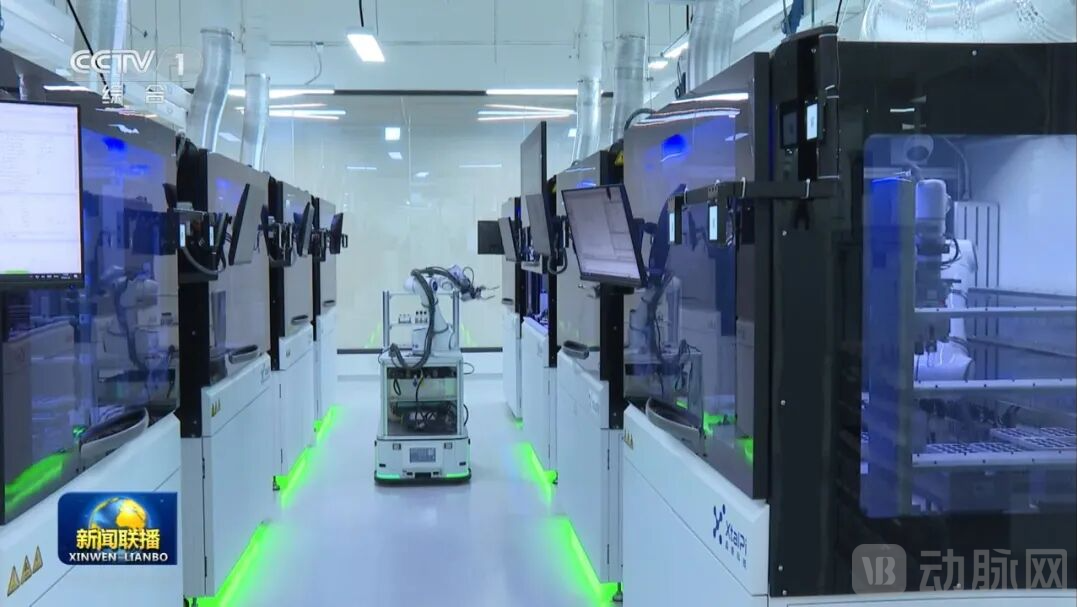
XtalPi AI Autonomous Experimentation Platform - Synthesis Workstation Figure | News Broadcast
In addition, biological data is still very scarce compared to internet data. The reasons are: firstly, the cost of data collection is high; secondly, the quality of data is relatively low—data quality can vary across different laboratories, different publications, and even the same person conducting experiments at different times. Based on these two points, we believe that in the next 3 to 5 years, data will be a key asset in the AI biopharmaceuticals field.
Based on this, XtalPi's business layout has the following directions:
First, we are paying more attention to internationalization. We are very optimistic about the development of innovative drugs in China. In terms of short-term to medium-term strategies, it will definitely be a comprehensive strategy of "internationalization + China." For example, our R&D collaboration with Eli Lilly is an important step in XtalPi's internationalization.
Second, focus on the diversification of drug types. In the past decade, AI has mainly focused on small-molecule compounds, which account for 70% of the pharmaceutical market, while the remaining 30% consists of biologics, 25% of which are antibodies, and 5% are other types such as peptides, gene and cell therapies, and vaccines.
XtalPi initially focused on small molecules and began布局antibodies in 2019. In addition to technologies like ADC and molecular glue, in recent years, it has also been applying AI in areas such as peptide nucleic acid drugs and integration with cell therapies (e.g., in vivo CAR-T). This is partly due to the technical feasibility and partly because, under the trend of biopharmaceutical R&D, there is a growing emphasis on modality diversification, driven more by clinical needs rather than purely by technology.
Whether it's small molecules or antibodies, as long as they can treat diseases, people will use them. I think this also aligns with commercial trends.
Thirdly, we are exploring the extended fields of drugs. Apart from biomedicine, we have also started to lay out in consumer goods, functional ingredients for cosmetics, food and health care, and other fields. As long as AI and molecular design can be combined, we will actively explore.
Fourth, build data barriers. Since 2019, XtalPi has been deploying its own automated experimental cluster. We will further expand the scale of data collection to establish a long-term competitive advantage in data.
Moreover, in the field of chemistry, the accuracy of AI-assisted predictions for common pharmaceutical chemical reactions has reached 80% to 90%. We are also expanding our pharmaceutical chemistry capabilities to fields such as chemical engineering, materials, and new energy.
Ma Rui:What proportion of XtalPi's business will be accounted for by future services and products? Will we develop drugs ourselves in the future?
Lai Lipeng:Not in the foreseeable future. XtalPi is always a technology platform. Unlike traditional pharmaceutical service companies, we can not only provide standardized services but are also more adept at solving "tough cases," namely, addressing some problems that are currently considered very challenging within the industry.
Taking the transfer of solid powders in the field of chemical automation as an example. Those of you with a chemistry background may know that liquid transfer is relatively easy, but the transfer of solid powders, especially in highly flexible and variable environments like laboratories, is actually very difficult to handle.
The experiment involves hundreds of thousands of different powder components, which are expensive, and the particle size, flowability, morphology, and other characteristics of the powders vary greatly. This is often a crucial step before high-throughput experiments. Manual weighing and transferring of solid powders not only creates a major efficiency bottleneck but also presents precision challenges, making the pain points very clear.
Because XtalPi has very strong R&D capabilities in robotics automation, we have successfully addressed this issue, and the corresponding technology has been recognized by major pharmaceutical companies.
On the product front, our main strategy is to engage in collaborative development with clients. We contribute through early-stage technical input and leverage our R&D output capabilities to secure future rights to the product, while subsequent steps like clinical trials are handed over to pharmaceutical partners who are more experienced and proficient in such research.
Market Prospects and Capability Boundaries of Large Models in the Biomedical Field
Ma Rui:Next, I would like to talk about models. In fact, over the past two years, the spillover of AI into the biopharmaceutical field has significantly advanced model development. For instance, introducing AI models such as Transformer and Diffusion into the biomedicine sector has played an indispensable role in the progress of the AlphaFold series.
I would like to ask Dr. Lai to talk about what phenomenal models you think are worth our attention in the past two years? And where is the current capability boundary of large models? Which problems have been solved relatively well, and which problems still cannot be solved by the model so far?
Lai Lipeng:Overall, I think the space for AI or large models in the biopharmaceutical field is still very large, and the corresponding business opportunities are also significant.
Returning to the question we discussed earlier, human understanding of the microscopic world is extremely limited. At least for me, I can imagine how tens of thousands of people run around in a square, but I cannot picture how tens of thousands of proteins interact inside a cell. Therefore, AI models have mainly played a role in the drug design phase over the past decade, which I believe is a relatively sufficient application.
Including the previously mentioned small molecule design and protein design, after the emergence of AlphaFold in 2018, people began to believe that AI could perform well in the field of protein, which is akin to a biological natural language—and indeed it has. However, there is still significant room for growth in this area.
Take myself playing billiards as an example, I will probably go through three stages: at the beginning, I didn't know anything, couldn't even hold the cue properly, and couldn't hit the ball accurately at all; by the time I reach the intermediate stage, it's all about "force makes miracles" – I can hit the ball with some accuracy, and if I hit it hard enough, I’m sure to pot a ball. But in the future, to really come out on top, it will still depend on more precise practice and ball control.
This is the same for AI models in drug design. Compared with David Baker's general protein design algorithm, our internally developed protein design algorithm for specific disease areas has significantly improved. This does not mean that we have done a lot of work on the data; we use the same dataset. However, because the algorithm is more refined and incorporates more biological knowledge, there is a substantial increase in performance and applicability.
Therefore, even though everyone has thought that AI has done well in the field of molecular design over the past decade, with many commercial cases, there are still growth opportunities in this direction.
I think the more difficult part later is the biology section, including the processing of large amounts of biological data and how to use AI to help achieve clinical success.
If everyone understands this field, the success rate of a drug in clinical trials—multiplying the probabilities of Phase I, Phase II, and Phase III—is likely less than 10%, meaning over 90% actually fail. Before a drug comes to market, 75% of R&D costs are incurred during the clinical stage, making this area a potentially larger market.
But the difficulty lies in two points: one is that there is relatively less historical data accumulation, and the second, more fundamental reason is that the iteration speed of data is too slow. The closer to the preclinical stage, the faster the data feedback; the further into the clinical stage, the slower the data feedback.
This is also the key criterion for XtalPi's internal judgment on whether AI can be applied in a new field: it is not about how much data is already available, but how fast the feedback speed of the data is. This is also the reason why AI is not yet widely applied in clinical settings.
So in the future, whether it's our own resource investment or from an investment perspective, on one hand, we need to look at the细分的modality in the preclinical stage, such as cyclic peptides, oral peptide drugs, and small nucleic acids. We must break down the issues into very detailed parts. At the same time, we also need a unique professional team. If these conditions are met, I think there will be commercial opportunities.
The second is the bigger unsolved problem. In the field of biological AI + biology, if someone can improve the speed of data collection and feedback through experimental methods, data channels, or algorithm iteration, I think such technology and products will have tremendous value.
Ma Rui:Lai Bo's point is that more vertical, more refined models might outperform general-purpose ones. Moreover, we cannot focus solely on molecular design; for instance, AI + biology involves not only target selection but also clinical strategy. If this field sees more and faster data iteration, new opportunities may arise.
I think there are roughly three paths for the model:
The first one is related to AlphaFold, a model that can predict the conformation and structure of molecules or between molecules.
The second is the all-atom model, such as RF diffusion3 today. It is designed in great detail, down to the atomic level. When AI learns, it can truly acquire some physics knowledge, so it's not purely data-driven.
The third is the large model, which directly combines large models with gene sequencing data and transcriptome data, and after learning, can make certain predictions.
So I would like to ask Dr. Lai, what do you think will be the next step for the development of models? For example, what will be important for future models?
Lai Lipeng:Speaking of which, I need to make a statement: all the views expressed today are my personal opinions. I see it this way, divided into two stages:
One is in the short term, due to the lack of data, so there will definitely be the development of AI models strengthened by professional domain knowledge. In molecular design, it is the Physics-informed model (physics-constrained model), including all-atom models, and even models guided by quantum chemistry calculations; in biology, it is the model enhanced by biological knowledge.
For example, three years ago, XtalPi developed a model for antibody design using what now seems to be an older method, similar to BERT. As you may know, when BERT trains language models, the masking ratio is approximately 30%, meaning 30% of the information is hidden, and then the AI is tasked to infer and reproduce the entire language. Through this process, it can learn the structure of the language.
However, we found that this method did not work well in antibody design. We did not change much of the model's structure; we only increased the masking ratio from 30% to 70% and changed the random masking to specifically target the most critical regions of the antibody. This uses biological knowledge to inform the AI that this is the most challenging area and it should focus more effort on learning here, which significantly improved the model's performance.
So I think when the amount of data is not enough, model training guided by professional knowledge may be more important.
On the other hand, in the long term, Cathie Wood, also known as "Wooden Lady," once predicted in a report that biological data would surpass the corpus data of the Internet in the future. I believe there will be a turning point when there is enough data and we have the appropriate model to observe the Scaling law of this data growth. At that point, we can extract the underlying rules through unsupervised large model learning, rather than relying on humans to tell the model what the rules are.
Therefore, large models will definitely play a significant role in the future. A similar event actually occurred more than a decade ago. In 2012, AI surpassed human capability in image recognition, with one of the core technological breakthroughs being that—prior to 2012, humans told AI what was most important in an image, but with the development of convolutional neural networks in 2012, there was no longer a need for humans to define the rules; AI could extract key information from images by looking at pixels alone.
Returning to what was mentioned earlier, humans indeed have limited capabilities in handling complex systems. Therefore, the transformation brought by AI and AI for science may have a value far exceeding the significance of convolutional neural networks surpassing human performance in image recognition in 2012.
"Those failed data are valuable"
Ma Rui:For AI, the most important elements are computing power, algorithms, and data. On the data side, XtalPi has an AI-driven autonomous experimental platform composed of many robots that can generate a large amount of data. This data is particularly important for biology, chemistry, materials science, and especially for AI + biology or AI + pharmaceuticals.
So I would like to ask Dr. Lai to talk about whether there could be opportunities similar to Scale AI in this field? Also, what kind of data do we need the most right now? In the near future, will we be able to obtain this data?
Lai Lipeng:We have actually been thinking about this as well. It was mentioned earlier that data may become the most core strategic resource in the next 3 to 5 years. In my personal view, the development of new productivity brought by the industrial revolution and technological revolution often stems from changes in the means of production.
The change in the means of production in the AI field actually began in the 1950s and 1960s when machine learning was first proposed. At that time, there was a widely recognized idea, which in hindsight was correct — the failed data had value.
Before the development of machine learning, many studies only published correct or successful data. However, in the scientific field, successful data is actually very rare, and a large amount of failed data was discarded without good tools to utilize it. With the emergence of new production tools, such as machine learning and deep learning methods, the value of these failed data has been discovered.
Every productivity revolution, in essence, lies in the rediscovery of the potential of existing production resources.
Just as the steam engine discovered the new value of thermal energy, which has always existed in nature; then came petroleum energy, which has also always existed; then semiconductors, where silicon has similarly always existed. In the information age, or the AI age, the failed data from past research has always been there—it’s just a process of rediscovering it now.
There is another common saying: "Garbage in, garbage out," but personally, I don't fully agree with it.
As a joke, even in the investment field, garbage collection is a very hot direction. So if we have good technology, the data we previously considered as "garbage" can also be put to good use.
So, how to utilize future data may involve several key points:
The first is what XtalPi is currently doing: unifying data standards and reducing the cost of data collection through automation and robotics, based on existing data processing methods.
The second is what XtalPi hopes to achieve through cooperation or investment, which is to explore new tools and methods for data acquisition — such as multi-omics technology, rapid DNA/RNA synthesis, and novel clinical testing technologies. These can bring about "data dimensionality elevation," revealing previously unseen incremental data.
The third thing I think has a very significant advantage in China. We have a large number of hospitals and a vast patient population, with clinical data and biological samples already well accumulated. I believe that by establishing a reasonable and compliant mechanism through collaboration among research institutions, hospitals, the government, and enterprises, these clinical resource data can be fully utilized.
So back to the core question: How should data be used? What kind of data is the most valuable?
There is no consensus at this stage, as AI for Science, especially AI for Life Sciences, is still in its early stages of development, and people have yet to figure out "what data is most useful for AI."
Just like image recognition, we used to manually define "the distance between two eyes, the length of the nose" as inputs, but later realized that using pixel input directly yields better results. In the future, data such as infrared detection may also become input items, and our understanding continues to evolve.
In fact, this is even more true in biology. Previously, during the drug development process, whether a drug was effective in animals or humans still relied heavily on the professional experience of biologists.
So, in the future, could we potentially rely less on experts and instead have AI extract indicators more relevant to clinical outcomes or post-drug-launch effectiveness? I believe this has tremendous commercial potential, but it’s currently uncertain what kind of data would support AI in achieving this.
Against this logical backdrop, the most valuable data now is highly consistent, highly standardized, and can be quickly collected and fed back.
Because while AI is learning, people are also figuring out what data to feed it, and during the learning process, the speed of feedback is crucial. Currently, the most important and best data is high-quality data that provides rapid feedback.
Currently, imaging data and transcriptome data are relatively easy to obtain, as well as the chemical synthesis data that we are working on. Next, when the cost of proteomics data decreases and the throughput increases, it may become the core data of the next generation. These are some of my humble opinions.
Breaking the Consensus: How Can AI Empower Drug Development?
Ma Rui:Lai Bo just mentioned that there are three key points in data collection: the first is speed, cost-effectiveness, and consistency; the second is data most directly related to human diseases; and the third is failed data.
Datafication is very important. In fact, Feng Shu (Li Feng of Frees Fund) has been asking us internally, AGI lacks data, what data do you think might be the most useful.
I summarize them into three categories:
The first category is data related to the real physical world, including data on embodied interactions, spatial intelligence, and 3D reconstruction.
The second category is highly relevant to our conversation, which is the microscopic data required for AI for science, such as intermolecular interactions.
The third category is brain-related data. If brain-computer interface technology matures and can collect EEG data at high density and correlate it with human behavior, there will likely be many new discoveries—after all, technologies like CNN and Transformer were initially inspired by advances in neuroscience.
Therefore, for AGI, the model is currently limited by data, and in the future, it may be necessary to obtain data from the fields mentioned earlier.
The next question is, I would like to invite Dr. Lai to introduce XtalPi's practice in pharmaceuticals, especially in new modalities; if you could also talk about how AI assists in the drug development of peptides, small nucleic acids, or RNA-related drugs, that would be even better. After all, AI-driven drug discovery ultimately needs to be translated into actual drugs.
Lai Lipeng:At the end of the day, it all comes down to making money—AI ultimately needs to be practical to succeed. Earlier, we mentioned XtalPi's own strategic layout. In Beijing, we have a separate department called the XtalPi Innovation Center. Each year, XtalPi sets aside a portion of its budget to invest in exploratory projects that we believe hold significant commercial potential. One of the key areas of focus is expanding into more modalities.
On the one hand, this is driven by market demand and commercial interests: like some large MNCs, they tend to diversify their modality in pipeline selection; in 2022, Pfizer published an article summarizing the strategic progress of clinical development from 2016 to 2021, which also mentioned that "diversification of drug modalities" was a key factor.
On the other hand, there is technical support: The powerful imagination and molecular design capabilities of AI can help us build multi-modality design capabilities. As we move further into biologics (such as from antibodies to peptides, to proteins, and small nucleic acids), the logic of the algorithms is actually consistent. Because it is essentially a linear sequence. Therefore, I believe that with good AI infrastructure, expanding into new modalities is relatively feasible.
For example, in the past, when people invested in or studied drugs, they would say that small molecules, antibodies, and peptides each have their own characteristics: small molecules have good PK (pharmacokinetics), can easily penetrate membranes and enter cells, target intracellular targets, and have strong delivery capabilities and stability; antibodies are highly precise, not easy to miss the target, hitting exactly where intended; peptides are somewhere in between, smaller than antibodies with potentially better cell penetration and safer than small molecules, but not as stable as small molecules—this is the industry consensus. However, I believe the emergence of AI can break this consensus.
For example, within XtalPi, we used AI to analyze almost all interactions between proteins and proteins, as well as small molecules and proteins. Peptides are unstable because they are composed of 20 natural amino acids. In the industry, manual modifications are often made to optimize the properties of peptides, making them closer to the advantages of small molecules. After analyzing all these interactions, we used AI to generate approximately 2,000 non-natural amino acids, which is 100 times more than the number of natural amino acids. By introducing these non-natural amino acids, we have retained the advantages of peptide drugs while incorporating the benefits of small molecule drugs. This has potential applications in niche areas such as drug delivery to the brain and oral administration in the future.
For example, current weight-loss drugs such as semaglutide and tirzepatide are mostly injectable formulations. Not only XtalPi, but the entire industry is focused on whether better oral medications for weight control, taken once a week or once every two weeks, can be developed in the future. This largely depends on breakthroughs by AI in this field.
When our team looks at many drug development issues, we reorganize them from an AI perspective, and actually, there are a lot of new findings. So, I think there are really plenty of business opportunities.
Let me give you another example of small nucleic acids. The design of standard small nucleic acids involves two steps. One is called sequence design, where I select suitable targets based on the complementary mRNA and then design a small nucleic acid of approximately 21 to 23 bases. However, small nucleic acids are unstable in vivo and degrade quickly, which compromises their efficacy. Therefore, the second step involves chemical modification.
The traditional approach is to carry out sequence design and modification design in two steps. First, find the best sequence. Second, match the best modification for this sequence.
This seems to be without issue, but let’s take a simple analogy — marriage. The best man and the best woman do not necessarily make a happy marriage.
Therefore, to obtain a good nucleic acid drug, the two optimization steps should actually be integrated into one step rather than being carried out separately. However, the traditional process handles them linearly, and it is difficult for human expertise to balance both steps simultaneously.
So XtalPi did a very straightforward job internally: putting sequence design and modification design into the same generative model to complete in one step.
This brings two benefits: First, it identifies a nucleic acid molecular sequence that is superior to those currently used in clinical research; second, both the sequence and its modifications demonstrate strong novelty. As you may know, many patents related to modifications are dominated by large companies like Alnylam. By doing this, we have not only overcome patent restrictions but also discovered better molecules.
Therefore, I think revisiting the existing drug R&D process with an AI perspective will lead to many new discoveries, especially in new modalities where AI applications are not yet particularly hot, offering excellent opportunities for implementation.
Exploring New Opportunities in the AI+ Intersection
Ma Rui:Very good, Dr. Lai's speech has given us a lot of confidence. The example of marriage is very vivid – we should optimize the joint probability with the ultimate goal as the objective function, rather than simply optimizing a single parameter. Next, I would like to discuss XtalPi's layout in the AI + materials field. What are the differences between materials and pharmaceuticals and biotechnology fields? What are the trends in this area?
Lai Lipeng:Materials, energy, and some agriculture-related fields are all new areas for XtalPi.
We can see obvious similarities and differences.
The commonality lies in the technical interoperability, at least in the microscopic world,XtalPi summarizes that there are three aspects that can be implemented quickly and show value.
1. The first is the new molecular structure design, which you have heard a lot about, that is, designing new compounds and new proteins.
Secondly, the optimization of the formulation: things in the real world are not single substances; they are all made from different formulations —— drugs correspond to preparations, and materials correspond to formulation choices.
Third is the process. After obtaining core materials and formulations, it is necessary to address the issue of laboratory production processes, including transforming an idea into a tangible product that can be tested in the lab, as well as scaling up the process from small-scale trials, medium-scale trials to full production. In these aspects, our technology can be transferred relatively quickly.
The difference lies in the varying speeds of validation and data feedback across industries. Since each industry has its own R&D chain and commercialization process, the challenge is how to break down the R&D chain into commercially relevant milestone stages and then build a rapid data feedback loop. This varies significantly across different fields.
For example, laboratory verification in the materials field is relatively faster. We previously had some photovoltaic material projects where we could achieve feedback on more than 100 samples per day in the lab. However, in the pharmaceutical field, one reason XtalPi engages in chemical automation is that synthesizing a compound used to take about one and a half months.
Therefore, from the perspective of technology implementation, the definition of phased milestones and the speed of data feedback vary across different fields. When XtalPi implements in new fields such as materials, it will also pay more attention to the efficiency of data iteration and feedback speed.
Ma Rui:Therefore, AI is very important in the fields of materials and synthetic biology. Due to time constraints, let me wrap up today's conversation with a brief conclusion.
As everyone has just learned, AI pharmaceuticals have already borne fruit, and there are also tremendous opportunities in fields such as materials, chemistry, and physics. Integrating these innovative opportunities with China's strong industrial chains is expected to further amplify productivity.
For example, AI pharmaceuticals have developed based on China's robust innovative drug industry chain. Two years ago, people might not have recognized China's innovative drug industry chain, but now no one should have any doubts.
In the field of fusion, AI can assist in the control, prediction, and reactor design of plasma. China is expected to lead the development of the fusion industry due to its advantages in manufacturing capabilities, materials, components, and power electronics.
In biomanufacturing, we have the largest fermentation capacity, combined with AI design and synthetic biology capabilities, and this industry will also rise in China.
In the field of quantum computing, AI is also an important variable, and future opportunities are promising.
In summary, seeking innovative opportunities at the intersection of AI with biology, chemistry, materials, energy, and other fields, if these innovations can extend into the future industrial directions of the "15th Five-Year Plan," represents the kind of innovative opportunity like XtalPi that Peakview Capital aims to capture in the next decade.