

Vistel Launches Innovative Domestic AI Ophthalmic Solution Under National Key R&D Program to Enhance Eye Health Accessibility
Vistel
Artificial Intelligence Eye Health Product Developer
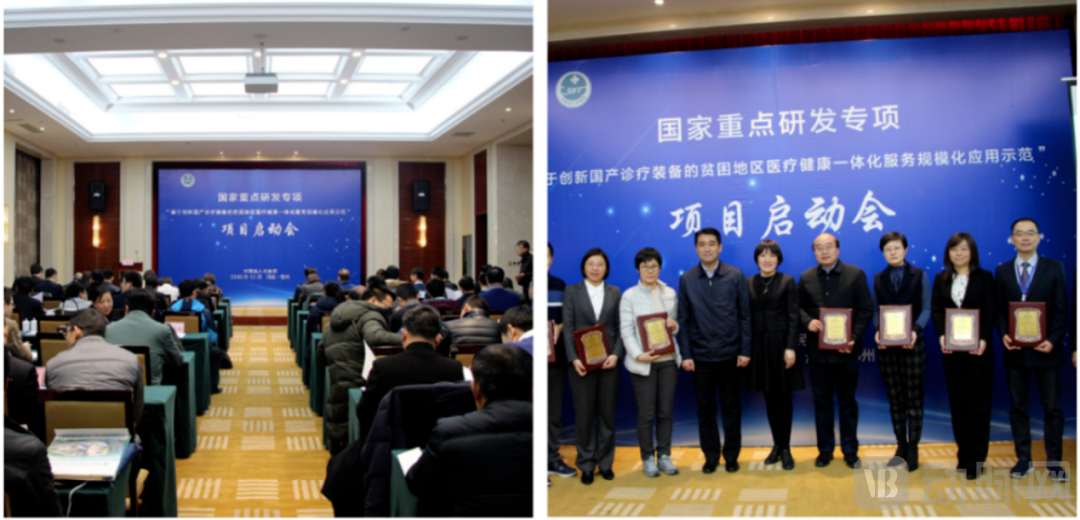
The National Key R&D Program "Demonstration Project for Large-Scale Application of Integrated Medical and Health Services in Poverty-Stricken Areas Based on Innovative Chinese-Manufactured Diagnostic and Therapeutic Equipment" was launched in Henan Province. Spearheaded by Henan Provincial People's Hospital with the joint participation of over twenty other institutions, the project aims to collaboratively explore and establish new configuration plans for Chinese-manufactured equipment, clinical solutions for emerging technologies, and innovative healthcare service models. The project has secured tens of millions of RMB in funding from the central government.
The project spans Hebei, Shaanxi, Yunnan, and Henan provinces to pilot demonstration sites, focusing on underdeveloped counties and districts with a reachable population of 8.2 million. The population of underdeveloped regions in central and western China accounts for over 90% of the national total. This initiative is committed to providing underdeveloped areas with clinical solutions integrating new technologies from high-quality, domestically manufactured diagnostic and therapeutic medical devices, thereby delivering high-quality, affordable, and more effective healthcare services to impoverished populations.
The project focuses on four disease categories: cardiovascular and cerebrovascular diseases with high prevalence, chronic kidney disease with a heavy economic burden, cataracts and fundus lesions with high disability rates, and oral diseases characterized by limited public health awareness. The project utilizes Chinese-produced diagnostic and therapeutic equipment, refines corresponding technical specifications, and conducts demonstration applications.
Taking disabling eye diseases as an example, the project team will utilize domestically manufactured ophthalmic examination and surgical equipment. Teams will be dispatched to Guangshan in Henan, Daming in Hebei, and Huize in Yunnan to screen 5,000 high-risk individuals for cataracts and fundus diseases, establishing standard operating procedures (SOPs) for screening; utilizing digital examination equipment integrated with AI-assisted diagnostic technology to develop standardized diagnostic protocols; formulating surgical SOPs based on cataract surgery and intravitreal injection techniques; and following further validation and expert review, establishing technical specifications for the mobile diagnosis and treatment of disabling eye diseases.
The new model established by this project features three key characteristics: the use of innovative smart devices produced in China, the provision of remote services, and the delivery of proactive services. The project expands the remote diagnosis and treatment platform of Henan Provincial People's Hospital, integrates it with the health cloud platform, and establishes an online health service hospital. The cloud platform connects with five newly established sub-centers (pathology, medical imaging, clinical laboratory, interventional medicine, and physical examination) in the demonstration county, providing integrated pre-hospital, in-hospital, and post-hospital services for patients at the primary care level.
The project has currently been implemented in over twenty medical institutions. Under the guidance of local Health Commissions across various regions, it serves millions of residents, promoting equity and accessibility within the healthcare service system and enhancing the overall quality of medical services.
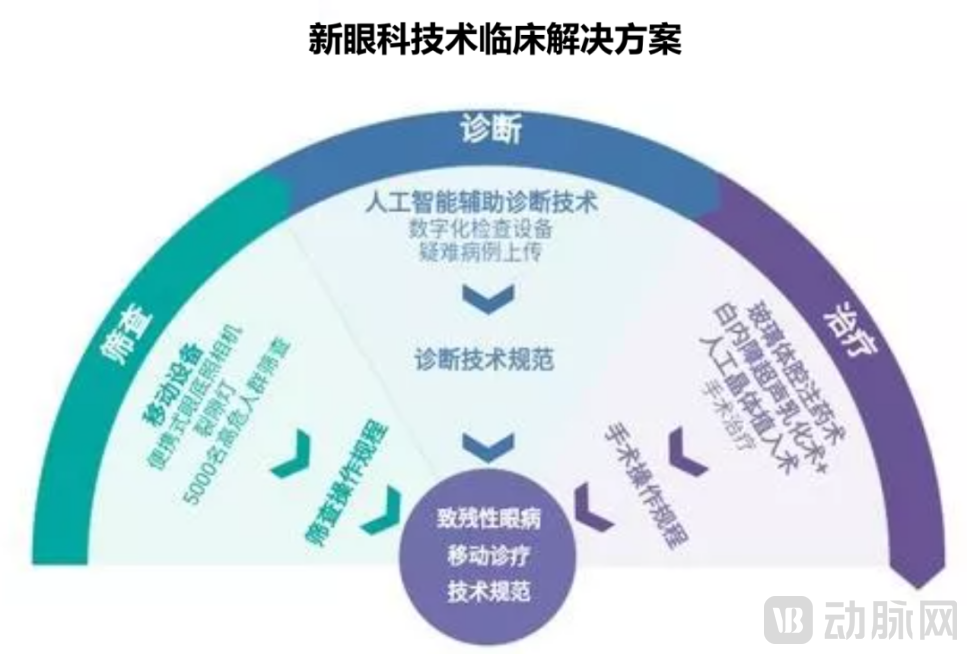
The integrated eye health solution fully demonstrates the characteristics of the new model established by this project:
1. Domestic Innovative Smart Devices + Artificial Intelligence
The project utilizes the FC-800 non-mydriatic fundus camera, a Chinese-manufactured product featuring independent core technology produced by Xuzhou Huimou Medical Technology Co., Ltd. Seamlessly integrated with Vistel’s eye health AI system series (certified as Class III medical devices, the highest regulatory classification by China’s National Medical Products Administration), it completes intelligent screening, assisted diagnosis, and information management for dozens of blinding eye diseases and systemic chronic conditions within 5 seconds. The system outputs rigorous, highly readable, and user-friendly professional reports, comprehensively facilitating integrated eye health management.
The application of Chinese-manufactured digital ophthalmic equipment integrated with artificial intelligence has effectively completed the project sub-topic "Research on Clinical Solutions for Mobile Diagnosis and Treatment of Ophthalmic Diseases Based on Digital Equipment", providing high-quality and reliable screening and diagnostic medical services to the local population, thereby achieving early detection, early intervention, and early treatment.
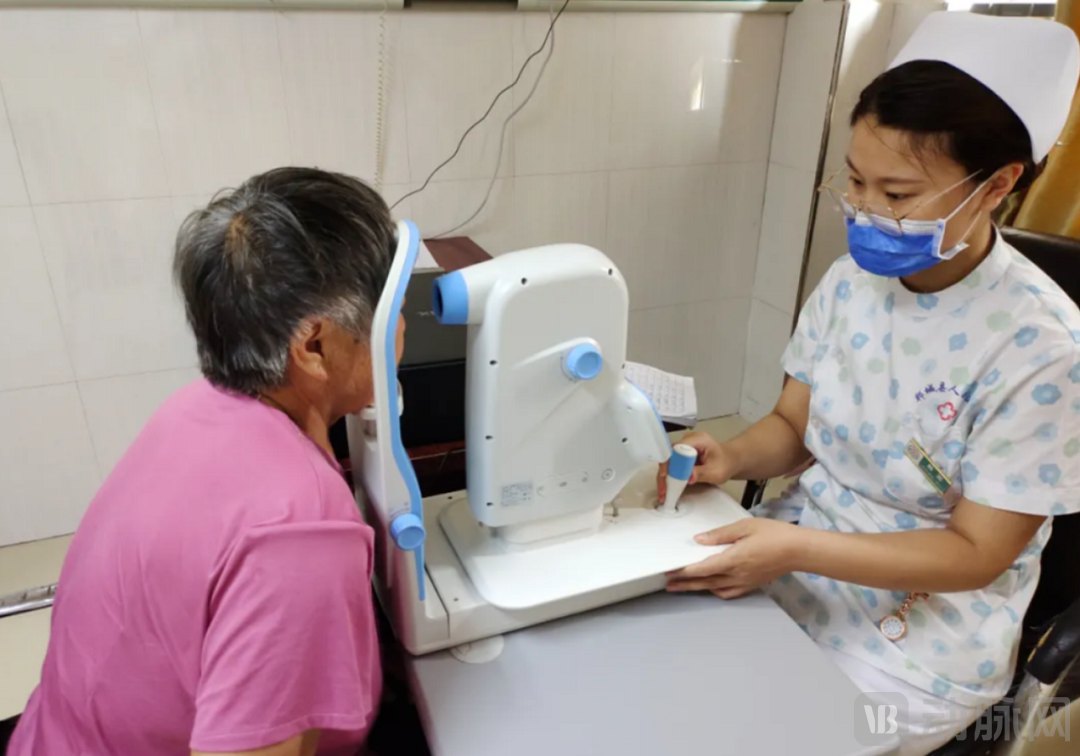
Figure 1. Clinical application of a domestic high-performance fundus camera.
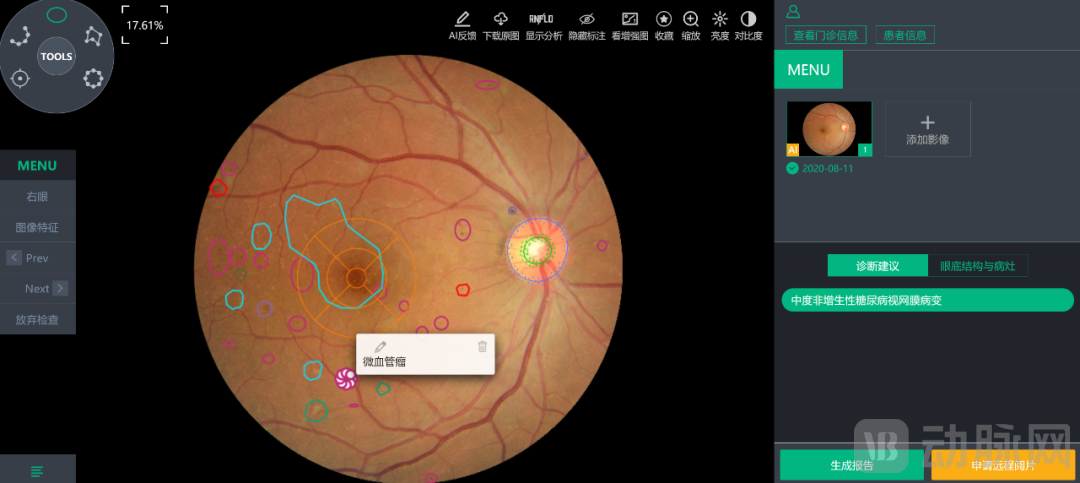
Figure 2: Domestically developed eye health artificial intelligence system with independent intellectual property rights.
2. Standardized Process
The standardized screening and diagnostic workflow also provides remote services for patients with positive results from AI-based ocular health screenings, enabling patients to receive timely treatment. Taking the screening and clinical management workflow for diabetic retinopathy (DR), a highly prevalent blinding eye disease, as an example:
● Pre-hospital:Conduct blood glucose and diabetic retinopathy screening via mobile diagnostic services; provide health education, free clinics, and public awareness campaigns related to blood glucose management at the municipal/county, rural, community, and institutional levels; screen-positive patients can be directly referred to ophthalmology specialists through telemedicine services.
● In-hospital:Integrate the Endocrinology and Ophthalmology departments to establish a specialized center for blood pressure and blood glucose management; explore a hospital-wide standardized blood glucose management model, conduct diabetes prevention and control education in inpatient wards, etc.; implement diabetic retinopathy screening for hospitalized diabetic patients;
● Post-hospital:Implement whole-course glycemic management for discharged diabetic patients and ensure effective multi-party coordinated chronic disease management; patients treated for diabetic retinopathy should undergo regular follow-up examinations.
3. Provide proactive services
Ophthalmic healthcare services are cultivating a mindset shift from "passively waiting for patients" to "proactive service and intervention," accelerating the transformation into proactive health service-oriented hospitals, facilitating the smooth implementation of this national key scientific research project, and making greater contributions to local medical and public health initiatives.
"Demonstration Project for the Large-Scale Application of Integrated Medical and Healthcare Services in Poverty-Stricken Areas Based on Innovative Chinese-Manufactured Diagnostic and Therapeutic Equipment" will continue to be advanced in a coordinated manner. First, it is essential to deeply understand the strategic positioning of application demonstration projects within national science and technology programs; second, the work of the "Ten-Hundred-Thousand-Ten Thousand Project" will be carried forward and deepened, and on the basis of summarizing previous implementation experience, scientifically sound and feasible implementation plans will be formulated to establish application demonstration models tailored to the actual conditions of the demonstration sites; third, the organization and implementation of the project will be expedited, with strict fulfillment of the project legal person responsibility system, while strengthening regional coordination and cooperation among all demonstration areas.
The project will also conduct more in-depth research into deployment solutions for domestically produced innovative diagnostic and therapeutic equipment, clinical application solutions for new technologies, and solutions for innovative service models in primary healthcare institutions in underdeveloped regions. It will explore demonstration models for large-scale application to better improve the equity and accessibility of the healthcare service system in these areas and enhance the level of medical services.
Beijing Zhiyuan Huitu Technology Co., Ltd. (Vistel), founded in 2016, is a high-tech enterprise dedicated to exploring the application of artificial intelligence (AI) in the healthcare industry, particularly in ophthalmology. Vistel operates a top-tier artificial intelligence medical imaging laboratory in China. The laboratory's research team, specializing in medical imaging, comprises Ph.D. and Master's graduates from prestigious institutions including Tsinghua University, Renmin University of China, the National University of Singapore, and Northwestern Polytechnical University. Backed by profound expertise and extensive industry experience in computer vision processing, artificial intelligence, image annotation, and big data computing, the technical team collaborates with ophthalmology medical professionals to deliver solutions powered by artificial intelligence and smart ophthalmic hardware for disease screening, diagnosis, and treatment.

One of Vistel’s medical AI products, the Diabetic Retinopathy Fundus Image Assisted Diagnostic Software, officially obtained its Class III Medical Device Registration Certificate from China’s National Medical Products Administration (NMPA) on June 8, 2021. Both the Diabetic Retinopathy AI software and the Multi-disease Fundus Image Assisted Diagnostic Software have secured European CE certification. Notably, the Multi-disease Fundus Image Assisted Diagnostic Software is the world’s first AI software product to receive CE certification for supporting the assisted diagnosis of over a dozen ophthalmic diseases. This product suite has also been approved under the NMPA’s “Special Examination Procedures for Innovative Medical Devices” (Class III), making it the first in China to achieve this status.
Vistel is dedicated to exploring the application of artificial intelligence (AI) in the field of eye health. It currently operates a top-tier medical imaging AI laboratory in China (Vistel AI Lab) and a marketing network covering China and overseas markets. Centered on the clinical pathway of "screening-diagnosis-treatment-follow-up-disease management," Vistel provides solutions powered by AI and smart ophthalmic hardware. Currently, multiple ophthalmic AI products are under development and undergoing regulatory registration. Vistel will continue to maintain its technological leadership and innovative drive to deliver more high-quality medical products:
Technology-Driven: As China's leading medical imaging artificial intelligence laboratory (Vistel AI Lab), it has accumulated profound expertise and extensive industry experience in computer vision processing, artificial intelligence, image annotation, and big data computing. Through years of dedicated efforts, it has secured numerous R&D achievements and invention patents in image processing, intelligent diagnosis, clinical applications, and information security, continuously maintaining strong enthusiasm and robust capabilities for technological innovation.
Medical-Engineering Integration: Requirements, practice, validation, and iteration must all be firmly grounded in clinical practice. Through close collaboration with China's top-tier ophthalmology clinical teams, and via the interdisciplinary integration of data science, AI, and medicine, we will establish a high-level ophthalmology research platform to explore new directions for advancement and breakthroughs in eye health.
Application-Oriented: AI products must align with the clinical workflow and application habits of physicians in real-world settings. Vistel AI has transformed its core technologies into a "chief AI assistant for physicians' daily practice," and is currently deployed in clinical practice across over 700 medical institutions in China, with daily use in physical examination centers and health management centers; meanwhile, it has taken the lead in "going global," distinguishing itself in a series of high-level product and technology evaluation competitions, and successfully entered the EU market.
`Verification serves as proof`: The sensitivity and specificity of AI require more comprehensive validation. Vistel has conducted a multi-center AI validation adhering to strict clinical requirements. Through a series of optimization processes—including model testing, clinical verification, repeatability and reproducibility testing, and robustness testing—the AI product achieves sensitivity and specificity for positive case detection that are significantly higher than the average performance of senior fundus specialists at Grade-A tertiary hospitals. Furthermore, the diagnostic interpretation efficiency of "AI + physician" collaboration significantly surpasses that of standalone manual image reading.
Scientific Research Support: High technology drives high research output. Vistel, in collaboration with China's top-tier ophthalmology teams, has published over 20 high-impact academic papers, with multiple studies achieving significant academic breakthroughs and being featured as cover articles in international peer-reviewed journals.
Artificial intelligence represents the comprehensive integration and core embodiment of next-generation information technologies, serving as a strategic driver for current and future economic and social development. Smart healthcare is a critical application of AI in society, directly impacting public health and social harmony and stability. Vistel will remain fully committed to advancing AI-driven technologies and products while simultaneously embracing greater social responsibilities. We will care for vulnerable populations, extend support to a broader demographic, leverage innovative technologies to address clinical challenges, and ultimately serve the health and well-being of all humanity.