

Approval of Class III Certificates Combined with the Benefits of Charging Policies! Yice Technology Leads the New Paradigm of Pathology Multi-Payment
More than 6 million real clinical application data accumulations and pilot implementations verified in multiple overseas countries and regions — this is the solid foundation of Yice Technology's cervical cell AI product, refined through long-term clinical practice. Over the past three years, this system has quietly been integrated into several top-tier tertiary hospitals in China as well as national laboratories such as Di'an Diagnostics. It has also gone beyond China’s borders to form a deep collaboration with IHH Healthcare Berhad, achieving large-scale deployment across 11 of its cross-regional hospitals, successfully undertaking local cervical screening support work with truly "impressive" performance in real-world applications.
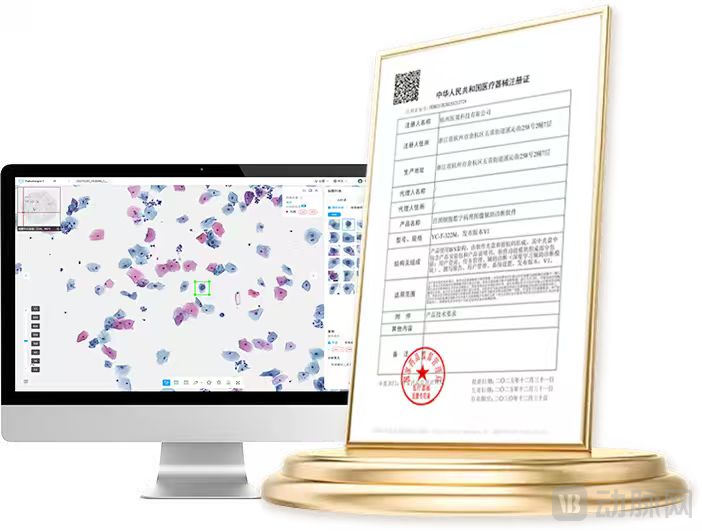
Recently, Yice Technology has received another significant boost.Self-developed "Cervical Cell Digital Pathology Image Auxiliary Diagnosis Software" officially approved for Class III medical device registration certificate by the National Medical Products Administration (NMPA).Superimposed with the policy dividend of the National Healthcare Security Administration's "Guidelines for the Establishment of Pathology-related Medical Service Price Projects," which explicitly includes "AI-assisted diagnosis" within the chargeable scope."The triple resonance of product strength, Class III certification, and policy dividends has opened up a channel for Yice Technology to upgrade from product value to ecosystem value, laying a solid foundation for the large-scale popularization of high-quality pathology AI services."
Multi-center Clinical Trial Endorsement: Reshaping a New Paradigm for Standardization and Efficiency in Pathological Diagnosis
Cervical cytology diagnosis has long been plagued by dual challenges: a single TCT slide contains tens of thousands to hundreds of thousands of cells, imposing a heavy screening burden on physicians. Fatigue and variations in experience can easily lead to missed detections, making it difficult to balance efficiency and consistency. Differences in sample preprocessing and the absence of quality control systems at the grassroots level further exacerbate diagnostic risks.
Yice Technology's cervical pathology AI product, which obtained a Class III certificate, demonstrated excellent performance and reliable safety in multi-center clinical trials. Through rigorous comparison with the pathological gold standard and expert consensus, its core clinical value was proven.
At the quality control level,The product has built a full-chain quality control system covering "sample collection - slide preparation - image scanning - diagnostic analysis": Through built-in standardized quality control algorithms, it automatically identifies unqualified samples such as slide contamination, uneven staining, cell overlap, and image blurring, marking and prompting for rechecking in the first instance to avoid diagnostic deviations caused by sample quality issues from the source.
At the diagnostic assistance level,The product, through a deeply optimized algorithm architecture, features precise lesion recognition and intelligent prompting functions: it can automatically filter out the TOP24 list of suspected lesion cells in descending order of confidence level, and is equipped with professional viewing tools that clearly mark suspicious areas and provide diagnostic reference directions, helping physicians quickly focus on key areas for review and significantly reducing ineffective screening time. At the same time, it retains complete image data and review trajectories to ensure the diagnosis process is traceable and no part of the review is missed.
This scientific model of "sample quality control + AI precision preliminary screening + physician-focused review" not only strengthens the safety baseline of diagnosis through a quality control system but also reduces physicians' repetitive labor through human-machine collaboration, achieving a triple improvement in "efficiency, accuracy, and standardization," providing clinical practice with a more reliable auxiliary diagnostic solution.
Seizing the Policy Window Period, Three Types of Certificates Catalyze the Ecosystem Upgrade "From Product Sales to Inclusive Diagnostic Services"
Since 2025, the Pathological AI Industry Has Entered a Policy "Window Period".
On the procurement side, the "Smart Healthcare Grading Evaluation Method" requires smart hospitals at level 6 and above to be equipped with a closed-loop quality control system for AI in pathology. The evaluation results are tied to fiscal subsidies and performance assessments, generating rigid procurement demands.
On the charging side, the "Guidelines for the Establishment of Pathological Medical Service Price Projects" has, for the first time, included "artificial intelligence-assisted diagnosis" in pathological charging items. It clearly states that products with three types of certificates can serve as the basis for charging, and medical institutions can independently negotiate profit distribution, clearing the core bottleneck for the commercialization of pathological AI.
Yice Technology accurately seizes this opportunity, promoting the industry ecosystem from product sales to continuous and inclusive AI diagnostic services through two core strategies.
One is to implement a "pay-per-use" lightweight service model to lower the application threshold.Yice Technology Launches Cloud-Based AI Diagnostic Services, Enabling Medical Institutions to Pay Based on Actual Usage (e.g., Per Case or Per Instance). This Fee Can Be Directly Included in Pathology Diagnosis Charges, Connecting with Health Insurance or Patient Self-Payment Channels. Consequently, This Reduces the Initial Equipment Investment and Operational Costs for Hospitals, Especially Grassroots Institutions, Allowing High-Quality AI Diagnostic Capabilities to Be Quickly and Flexibly Popularized.
The second is to build a "centralized platform" service system to promote resource coordination.Centering on the needs of hierarchical diagnosis and treatment, Yice Technology plans to build provincial and municipal regional pathological AI diagnostic centers. The platform can integrate screening samples from medical institutions within the region, uniformly provide high-quality AI-assisted analysis, and connect with senior experts for review, forming a closed-loop service network of "grassroots sampling - centralized AI analysis - expert collaborative diagnosis." This will not only enhance the standardization and accuracy of regional diagnostics but also systematically optimize resource allocation, extending high-quality pathology capabilities to the farthest reaches of the network.
Currently, China conducts over 100 million cervical cytology examinations annually, with a shortage of more than 100,000 pathologists, highlighting an urgent market demand.Wang Xiaomei, founder & CEO of Yice Technology, stated: "The core significance of the Class III certificate lies in providing authoritative endorsement for the safety and effectiveness of artificial intelligence algorithms and models from the perspective of clinical value. The current policy environment offers unprecedented opportunities for the diversified implementation of pathology AI. Yice Technology is no longer merely a 'product supplier' but a 'builder of an inclusive diagnostic service ecosystem.'"
In the future, Yice Technology will focus on certified products as its core, and through innovative service models and platform-based operations, effectively address deep-rooted industry pain points such as uneven distribution of pathology resources and weak diagnostic capabilities at the grassroots level. This will push early screening and diagnosis of diseases like cervical cancer towards a more standardized and accessible new phase.