

China's First Shared Medical Complex: A Nine-Year Growth Chronicle
Before China's medical industry completes its transition from "insufficient resource supply" to "consumption upgrade," connecting high-end malls with serious medical services remains more like a bold fantasy.
In 2015, this vision took root at Qingchun Square in Hangzhou —— the establishment of Hangzhou Full-Process International Health Medical Management Center. After nearly two years of preparation, its created Full-Process Medical (Medical Mall) officially began operations in 2017, becoming the first shared medical complex in China to receive explicit government approval.
As of 2024, this innovative business model has cumulatively served over 800,000 patients, establishing the earliest standardized system for shared medical services in China and transforming the concept of "shopping mall + healthcare" into a replicable commercial model.
Full-process healthcare does not follow a simple "high-end medical" path. It attempts to address a more complex issue:How to Reorganize Fragmented Medical Resources in a Platform Manner and Build a Safe, Efficient, and User-Friendly New Medical Ecosystem in a Consumption Scenario.
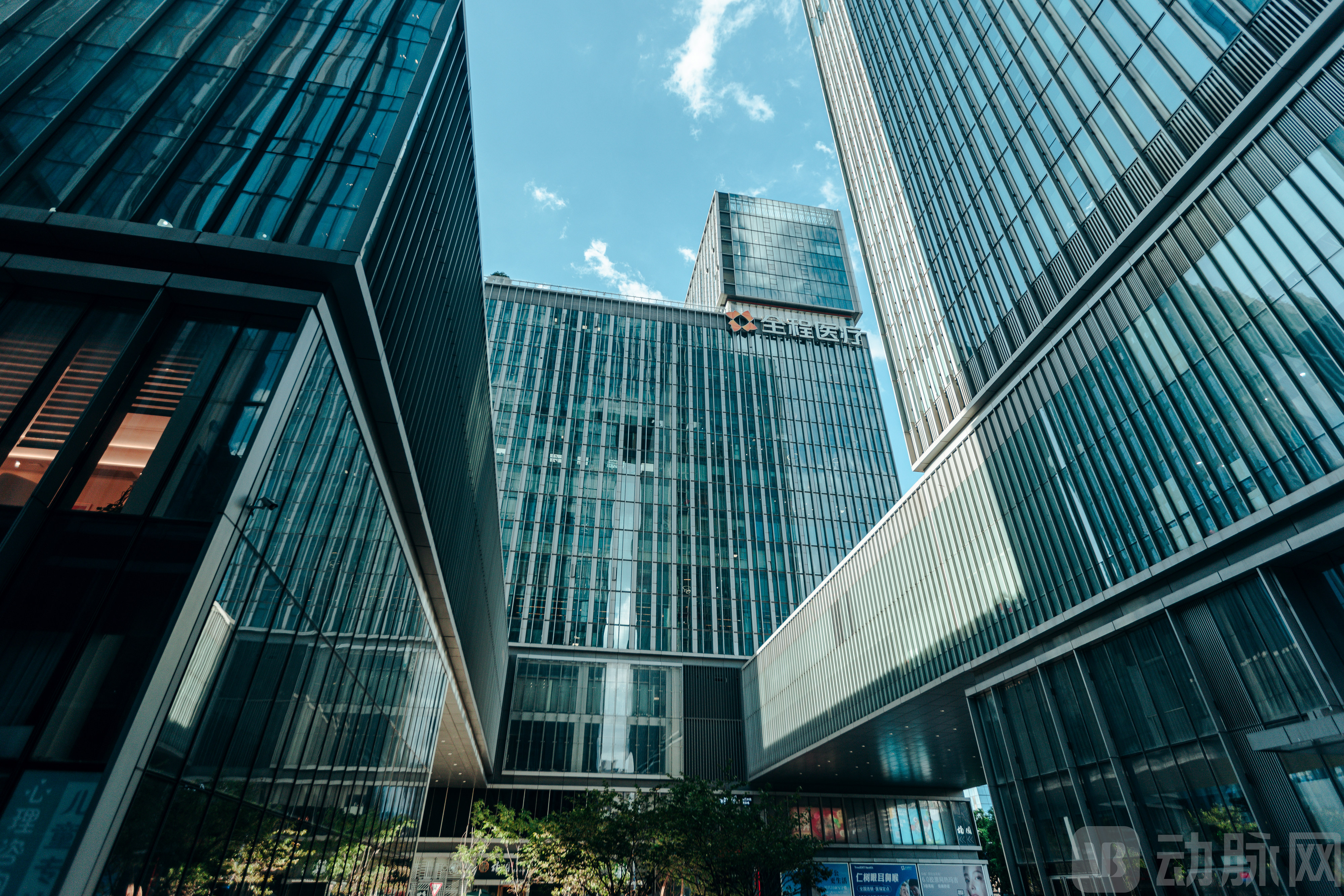
China's First Shared Medical Complex: The Architectural Appearance of Quancheng Medical Source: Quancheng Medical
The birth of Full-process Healthcare stemmed from a microscopic insight. One of its founding shareholders, Jiebai Group, discovered that the high-net-worth members of its Hangzhou Tower were quietly shifting their consumption focus from luxury goods to health management and services.
Based on this discovery, three seemingly unrelated industrial threads began to connect: Jiebai Group (commercial real estate and high-end customer flow), Dian Diagnostics (third-party medical testing), and Bailian Group (capital and commercial operations). Their consensus is: if it is possible toEmbedding Medical Services into Commercial Spaces, can it meet the expectations of high-net-worth individuals for quality healthcare while also bringing a new growth curve to traditional businesses?
The answer of Whole-process Medical Care is cross-border. This is calledThe "3+1+X" structure essentially reorganizes medical resources in a platform-based manner.Among them, "3" refers to the joint establishment of a capital and operation platform by three listed companies; "1" refers to the core technology support and medical quality endorsement provided by Sir Run Run Shaw Hospital affiliated with Zhejiang University School of Medicine; "X" refers to the introduction of numerous specialized chain brands, forming a differentiated, complementary, and symbiotic medical cluster.
The implementation of this model has hit the key window of policy opening at just the right time. Zhejiang Province's early open policies on multi-site medical practice and private healthcare, especially the special approval in 2017 for Full-Process Healthcare’s "shared medical technology services," have made it legally and practically possible for Medical Mall’s "move-in ready" solution. As a result, Full-Process Healthcare is not only a beneficiary of these policies but also a trailblazer in innovative practice.
The groundbreaking platform quickly attracted the gathering of private healthcare providers. At the opening, 13 institutions were already onboarded, and despite the pandemic, the second phase opened with an additional 12 institutions introduced. Today, Quancheng Medical has expanded to multiple floors of the commercial complex, bringing together over twenty private healthcare institutions.
From the Shaw International Medical Center on floors 17-22, to well-known specialties distributed across various floors such as Tree Healthcare, Taixue Eye Center, Mianhua Reproductive Chain, Aivision Dental, and Yanshu Medical Aesthetics, a medical complex ecosystem encompassing health management, specialized diagnosis and treatment, and consumer healthcare has already taken shape.
What this ecosystem undertakes are precisely the new demands that the traditional healthcare system struggles to fully meet: consumers with stronger purchasing power who pay more attention to service experience, chronic disease management, and quality of life. Therefore, the essence of comprehensive healthcare is not to imitate or replicate traditional hospitals but to introduce mature commercial logic and experience design into the medical field.
In a sense, this is an attempt to shift the medical logic from "forced medical treatment" to "proactive health," and also an exploration of China's healthcare system moving from a traditional supply model to a diversified service industry.
Sharing is the most core label of the whole-process medical care, but its ultimate goal is not to "share costs" but to build trust. To this end, it has created a "six-shared" system covering hardware, medical technology, medical quality and safety, marketing, membership, and capital.
At the basic level, shared facilities such as laboratories, imaging, and operating rooms have saved入驻 institutions millions in initial investment, significantly lowering the barriers to entry. However, the real challenge and innovation lie in the core concept of "shared medical quality and safety."
Quancheng Medical is deeply tied to Sir Run Run Shaw Hospital, affiliated with Zhejiang University School of Medicine. In 2018, under its guidance, Quancheng established a Medical Quality and Safety Management Committee, systematically empowering all入驻机构 with standardized systems such as infection control, operational protocols, and emergency procedures from public hospitals.
This "public medical technology + public quality control + private operation" combination has formed an industry-first hybrid model. In other words, the entire medical process is not just about simply "sharing costs," but sharing a quality system. This is the fundamental reason it can become a benchmark.
This system has demonstrated strong appeal in practice. Tree of Life Healthcare, as one of the first "flagship stores" to settle in, successfully took off and has since expanded to Shanghai and Shenzhen, becoming a national chain brand; Taixue Eye Clinic's revenue at the Medical Mall location consistently ranks among the top in its nationwide system. The comprehensive hardware and operational support provided by the Medical Mall have significantly shortened the time required for clinic decoration and licensing, achieving true "cost reduction and efficiency enhancement" and "establishing deep roots."
In addition, the core competitiveness of Full Journey Healthcare lies in its unique commercial operation genes injected into the medical field. Its operation team originated from the department store retail industry and is skilled in member operations and resource integration.
The platform efficiently connects over 40 commercial insurance partnership networks, the high-end shopping mall traffic of Jiebai Group, and a wealth of corporate client resources with more than 20 specialty clinics/medical centers through a unified membership system. This enables入驻机构to not only share medical equipment but also valuable customer sources and channels.
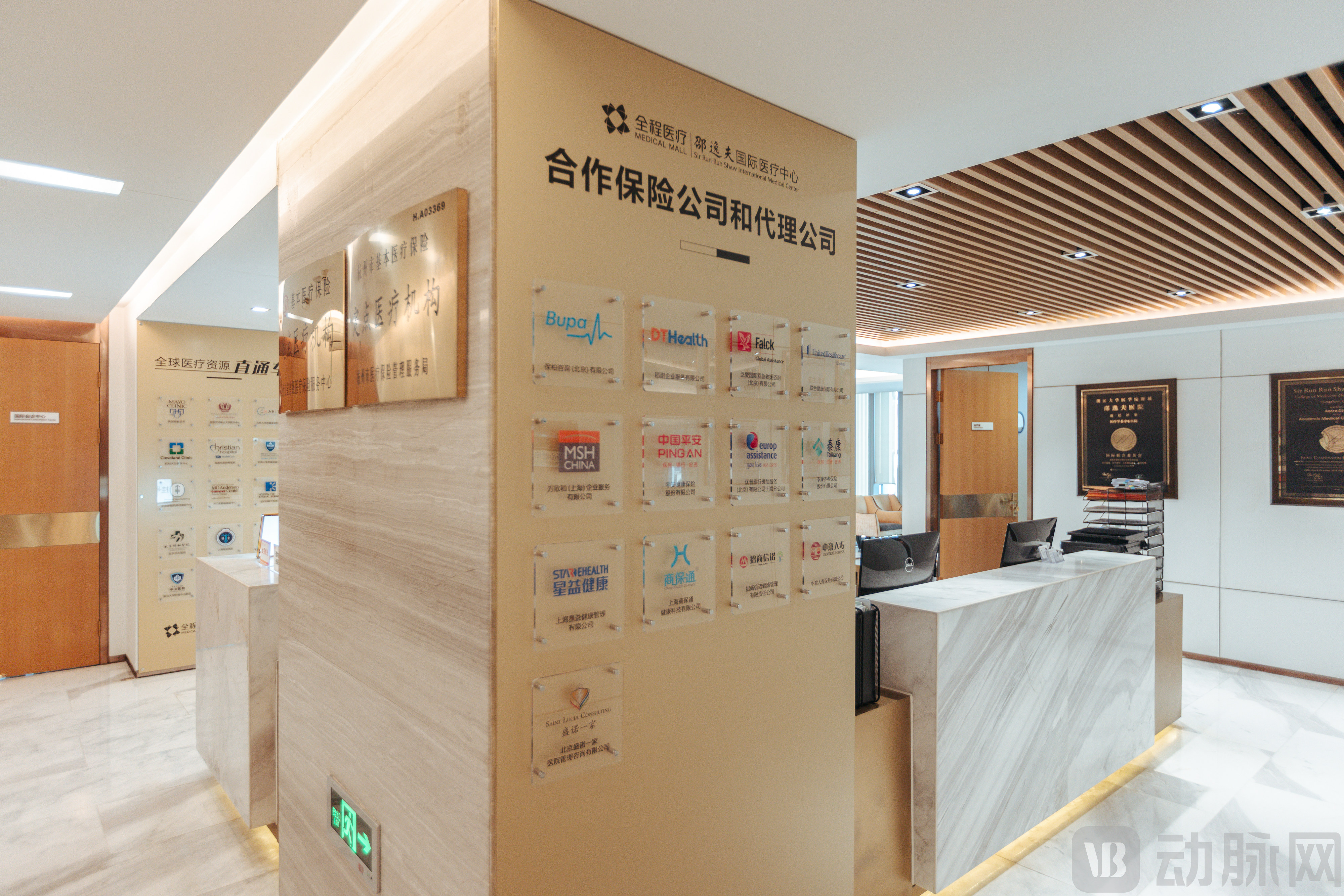
List of Full-Process Medical Partner Insurance Companies and Agencies | Source: Full-Process Medical
This kind of sharing is not just empty talk. For example, its self-operated health checkup business serves as an important traffic entry point, directing precise traffic to international outpatient services and various specialized departments; joint free clinics and health lectures organized on the platform integrate doctor resources from various institutions, forming a strong brand synergy that reaches high-net-worth customer groups such as those in finance, insurance, and large enterprises.
In 2022, Full-Process Healthcare introduced the "Golden Key" international alliance service system, integrating the high-end service industry's concept of "ultimate personalization" into medical scenarios, further enhancing overall service quality and customer experience. This combination of commercial operational thinking and medical professionalism forms its moat that is difficult to be simply imitated.
Similarly, meticulously designed is the self-operated business portfolio of Quancheng Medical — health checkups, international clinics, and medical aesthetics. Health checkups serve as the traffic entry point and triage hub, precisely screening health risks; international clinics act as a platform for personalized medical care, offering in-depth diagnostic solutions; medical aesthetics is positioned as a consumption upgrade scenario, meeting customers' pursuit of quality of life with its high repurchase characteristics and anti-aging extensions.
From health monitoring to medical intervention and then to life optimization, it precisely meets the growing core demand of modern consumers for systematic, one-stop health living solutions, rather than just single treatments. The essence of Full-process Healthcare is to build a sustainable and scalable health consumption service ecosystem through this closed loop.
After nine years of development, Full-process Medical has delivered an impressive report card. As of 2024, it has served over 800,000 patients cumulatively, achieved revenue growth for eight consecutive years, and established a direct payment network covering more than 40 commercial insurance providers.
More convincing is the growth of institutions within the ecosystem: The performance or revenue per square meter of several specialized brands operating in Quancheng Medical's stores ranks among the top in their nationwide systems; physical stores of specialty doctor groups are steadily developing. This demonstrates that the platform’s empowerment goes beyond simply driving traffic—it also enhances the operational ceiling of individual institutions through sharing and collaboration, achieving true "symbiotic growth."
However, the market never stands still. Looking internationally, the Medical Mall is already a mature business model in countries such as the United States, the Philippines, and Singapore. Its success is typically based on several key prerequisites: a mature physician group culture, a robust commercial health insurance payment system, and highly specialized divisions of medical expertise. These cases, such as Centuria Medical Makati in the Philippines and Jackson Medical Mall in the United States, often focus on space leasing as the core, achieving the dual goals of revitalizing commercial real estate and meeting residents' healthcare needs.
As Quancheng Medical verified the feasibility of the Medical Mall, various forms of medical complexes have also emerged in Beijing, Shanghai, Chengdu, and other places. Competition has entered a new phase of model exploration: some rely on large real estate projects to pursue massive "medical cities"; some are driven by insurance giants aiming to build a closed-loop payment system; others focus on vertical development in single sectors like pediatrics or medical aesthetics. Specific cases are being implemented, such as Beijing's Hanbos Medical City and Haiyu Health City, which was selected as a key project in Changsha. These examples indicate that the field is becoming increasingly crowded.
Against this backdrop, Full-Process Healthcare has launched the "Medical Mall 2.0" strategy. Its focus shifts from model innovation at a single point in Hangzhou to the construction and output of systematic capabilities, creating a transferable "Standardized Operation System" — a soft infrastructure that integrates medical quality control, customer service, and a digital platform. It will prioritize entering core cities with dense high-net-worth populations and mature commercial facilities for further development.
The latest manifestation of this systematic capability is its role in shaping industry standards. In 2023, Full-Process Healthcare led the release of the "Management Guidelines for Shared Medical Complexes" group standard; in December 2025, this standard was upgraded and approved as a China Association for Standardization (CAS) standard – "Operational Service Specifications for Shared Medical Complexes."
This national standard, which focuses on "operation" and "service," comprehensively covers four major modules: "shared services," "collaborative management," "service assurance," and "evaluation and improvement." It systematizes and publicizes nine years of practical wisdom, marking its role evolution from a market pioneer to an industry definer.
Therefore, the goal of Whole-process Medical Care for the next five years is not only about scale expansion but also focuses on "service deepening" and "model definition." It aims to build a more robust "medical service + health management + commercial support" ecosystem platform by integrating resources and standardizing output capabilities.
The nine-year practice of Full-process Healthcare shows that shared healthcare is not a concept, but a profound institutional innovation. Its goal is not to become a competitor of the public system, but to become a"High-quality supplementary samples that are replicable, regulatable, and sustainable"。