

The Era of First-in-Class Drugs: A Comprehensive Outlook on FDA New Drugs in 2025
As 2025 draws to a close, the FDA's Center for Drug Evaluation and Research (CDER) has approved 44 new drugs, with more than half classified as "first-in-class." This data not only highlights the innovative capabilities of global new drug research and development but also reveals a shift in treatment paradigms from "refinement" to "disruption." Small-molecule drugs remain dominant, but new therapeutic modalities such as peptides, nucleic acid therapies, and ADCs are rapidly entering clinical use. Target innovation and breakthrough mechanisms have become the key themes of the year.
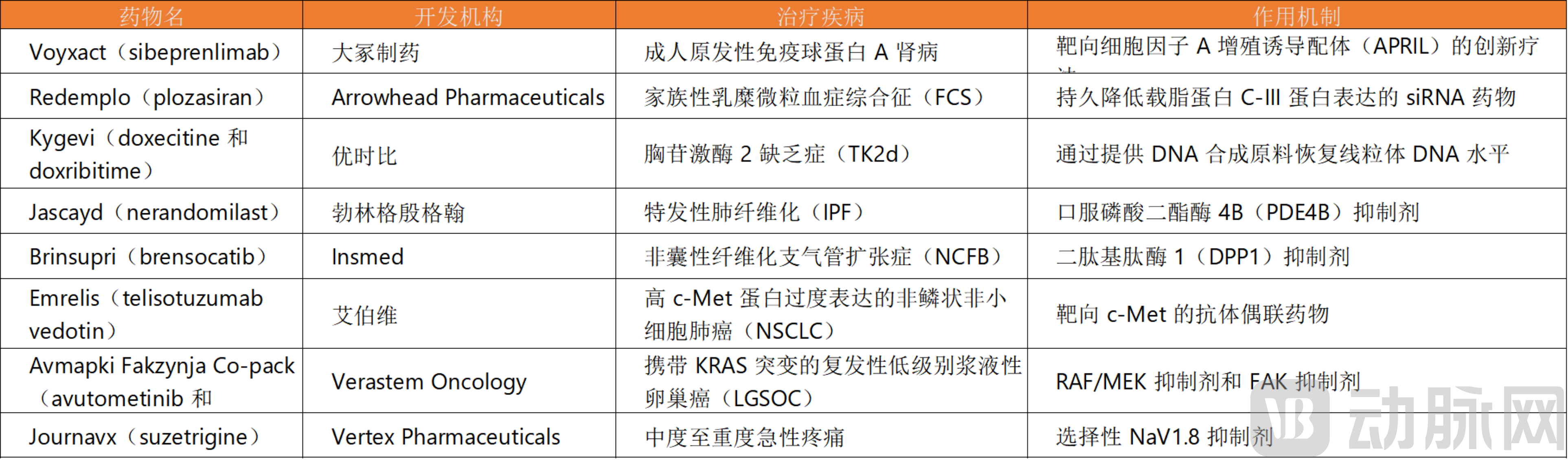
Table: "First-in-class" drugs granted FDA Breakthrough Therapy designation
More than half of the first-in-class new drugs, innovative drugs enter the "mechanism-driven" era
Why is the industry so enthusiastic about developing drugs with entirely new mechanisms? From the perspective of clinical needs, existing treatments for many diseases, especially rare diseases and complex chronic conditions, often fail to meet patient demands. For instance, prior to the approval of Brinsupri (brensocatib), there was a lack of effective targeted therapies for non-cystic fibrosis bronchiectasis (NCFB). Patients had to rely on physical mucus clearance and antibiotic treatments, significantly impacting their quality of life. Brinsupri, as a "first-in-class" inhibitor targeting dipeptidyl peptidase 1 (DPP1), addresses the root cause of the disease by inhibiting the activation of neutrophil serine proteases that drive chronic airway inflammation in NCFB, offering new hope to patients.
For instance, for adult and pediatric patients with diffuse midline glioma carrying the H3K27M mutation whose disease has progressed after previous treatments, therapeutic options were extremely limited, and patient prognosis was very poor. Modeyso (dordaviprone), developed by Jazz Pharmaceuticals, not only inhibits dopamine receptors and reduces the activation of the RAS signaling pathway mediated by dopamine receptors but also overactivates the innovative target ClpP, leading to selective degradation of mitochondrial proteins, causing cancer cells to die due to energy supply shortages. This unique mechanism of action provides a new treatment option for such patients and demonstrates the potential of novel mechanism drugs in overcoming difficult diseases.
From a business perspective, the successful development of a "first-in-class" drug allows a company to gain a first-mover advantage in the market and secure substantial returns. During the patent protection period, the company can exclusively sell the drug, generating high profits, while also enhancing its brand image and R&D capabilities.
Among the new drugs approved in 2025, eight have simultaneously received Breakthrough Therapy Designation, which is closely related to their innovative mechanisms. The Breakthrough Therapy Designation aims to expedite the development and review of drugs for serious or life-threatening conditions, where preliminary clinical evidence indicates a substantial improvement over existing treatments. Drugs receiving this designation typically possess unique innovative mechanisms that bring significant therapeutic benefits to patients. For instance, Brinsupri was approved for marketing under an accelerated approval pathway due to its innovative mechanism of action and favorable clinical data. This reflects the regulatory authorities' supportive stance towards truly innovative drugs, using policy incentives to accelerate the research, development, and market entry of such drugs, allowing patients to benefit more quickly.
Small molecule drugs remain the mainstay, but the "approach" has changed.
In 2025, small molecule drugs accounted for a staggering 66% of the new drugs approved by CDER, highlighting their unshakable central role in the field of new drug development. Although small molecule drugs have always been a crucial component of drug research and development, their intrinsic innovation dimension saw significant enhancement in 2025. The "approach" underwent profound changes, shifting from the traditional "broad inhibition" model to a "precise regulation" model.
Traditional small-molecule drugs often work by broadly inhibiting targets. While this approach can treat diseases to a certain extent, it also tends to bring about more side effects, as it may affect other targets related to normal physiological functions while inhibiting disease-causing targets. Nowadays, with the deepening research on disease mechanisms and target structures, the design of small-molecule drugs has become more sophisticated, aiming to achieve precise regulation of specific targets, thereby improving efficacy while reducing side effects.
Allosteric inhibitors are an important manifestation of precise regulation by small molecules. For instance, Cytokinetics' Myqorzo (aficamten, an allosteric cardiac myosin inhibitor) was approved in December 2025 for the treatment of symptomatic obstructive hypertrophic cardiomyopathy (oHCM) in adult patients. It reduces contractility by binding to a unique allosteric site on cardiac myosin, offering more precise control compared to traditional direct inhibition, minimizing interference with normal physiological processes, and enhancing safety and tolerability. The pivotal Phase 3 SEQUOIA-HCM study demonstrated that after 24 weeks of treatment, patients experienced a 1.8 mL/kg/min increase in peak oxygen uptake (pVO2) from baseline, significantly better than the placebo group (0.0 mL/kg/min), validating the efficacy of precise regulation.
The rise of covalent drugs also demonstrates innovative approaches in small-molecule drug development. Covalent drugs achieve long-lasting inhibitory effects by forming stable chemical bonds with their targets. In 2025, the FDA approved multiple covalent drugs, such as the EGFR inhibitor Zegfrovy (sunvozertinib), which offers a new treatment option for adult patients with non-small cell lung cancer (NSCLC) carrying EGFR exon 20 insertion mutations. Traditional EGFR inhibitors often encounter resistance issues, whereas covalent drugs, through their stable covalent bonds with targets, can inhibit target activity more effectively, overcome some resistance problems, and improve target occupancy. Administered at lower doses, these drugs achieve favorable therapeutic outcomes, not only reducing drug usage but also minimizing the risk of side effects, showcasing broad clinical application prospects.
Vertex Pharmaceuticals' Journavx (suzetrigine) is an orally administered selective NaV1.8 inhibitor that achieves high selectivity for NaV1.8 through an allosteric inhibition mechanism, with its selectivity for the NaV1.8 ion channel being 30,000 to 40,000 times greater compared to other NaV channels. NaV1.8 is primarily expressed in pain-sensing neurons of the peripheral nervous system and is responsible for transmitting pain signals to the spinal cord and brain. By selectively inhibiting NaV1.8, Journavx precisely blocks pain signal transmission, effectively treating moderate to severe acute pain. Compared to opioids, it not only provides effective pain relief but also avoids side effects such as addiction, showcasing the advantages of precise modulation by small-molecule drugs. In two Phase III clinical trials, NAVIGATE1 and NAVIGATE2, Journavx rapidly reduced moderate to severe acute pain and was effective as a monotherapy within 48 hours. Its incidence of side effects, such as nausea and vomiting, was significantly lower than that of opioids, demonstrating better patient tolerability and bringing new hope to the field of pain management.
Jazz Pharmaceuticals' Modeyso (dordaviprone) has been approved for the treatment of adult and pediatric patients aged 1 year and older with H3K27M-mutant diffuse midline glioma whose disease has progressed after prior therapy. In addition to inhibiting dopamine receptors and reducing the activation of the dopamine receptor-mediated RAS signaling pathway, this drug hyperactivates the innovative target ClpP, leading to selective degradation of mitochondrial proteins, causing cancer cells to die due to energy supply shortages. By precisely modulating multiple targets, Modeyso provides a new therapeutic strategy for patients with this difficult-to-treat tumor, demonstrating the potential of small molecule drugs in the precise treatment of complex diseases. Previous treatment options for diffuse midline glioma were limited, and patient prognosis was poor. The emergence of Modeyso has brought a turning point to this dilemma, with its precise modulation of novel targets like ClpP opening new avenues for cancer treatment.
The Rise of Peptide and Nucleic Acid Therapies: RNA-Targeted Treatment Enters the Harvest Period
Beyond traditional small molecules and antibody drugs, peptide and nucleic acid therapies reached a significant development milestone in 2025. Multiple innovative therapeutic modalities received FDA approval, gradually becoming a crucial force in new drug development. This marks the transition of RNA-targeted therapies from concept to normalization, bringing new hope for the treatment of numerous refractory diseases.
As the development technology for peptide and nucleic acid-based drugs matures, the FDA has been approving an average of four such new drugs annually in recent years. Among the three "first-in-class" oligonucleotide therapies approved in 2025, the siRNA therapy Qfitlia (fitusiran) provides a revolutionary preventive solution for hemophilia patients by inhibiting the production of liver antithrombin and balancing hemostatic function. Hemophilia, a rare hereditary bleeding disorder characterized by a high risk of bleeding due to a lack of clotting factors, presents even more complex treatment challenges for patients with inhibitors. However, Qfitlia breaks away from traditional treatment models. The Phase III ATLAS study demonstrated that it significantly reduces the annualized bleeding rate by 71% in patients with inhibitors and by 73% in those without. Additionally, this drug is administered via subcutaneous injection only six times per year, greatly improving patient compliance and has the potential to reshape the treatment landscape for hemophilia.
Antisense Oligonucleotide Therapy Dawnzera (donidalorsen) is an RNA-targeted drug used to prevent attacks of hereditary angioedema (HAE). Hereditary angioedema is an autosomal dominant genetic disorder, and its pathogenesis is mainly related to functional defects or insufficient levels of C1 esterase inhibitor (C1-INH), leading to excessive production of vasoactive substances such as bradykinin, which in turn causes localized edema attacks in the skin and mucous membranes. These attacks can affect the limbs, face, gastrointestinal tract, respiratory tract, and other areas, and in severe cases, laryngeal edema may lead to asphyxiation and death. Currently, clinical treatments for HAE include both acute attack management and prophylactic therapy. Traditional acute treatment often only alleviates symptoms during an attack, while options for preventive treatment are limited. Administered via subcutaneous injection, Dawnzera targets and silences the prekallikrein (PKK) gene, reducing bradykinin production and thereby preventing edema attacks. The pivotal Phase III OASIS-HAE study showed that dosing every 4 weeks reduced HAE attack rates by 81%-87%, while dosing every 8 weeks reduced them by 55%-60%. This provides HAE patients with a long-acting preventive treatment option, filling the gap in long-term prophylactic therapies in this field, significantly reducing the frequency of attacks, improving patients' quality of life, enabling better disease control, and minimizing the suffering and risks associated with disease episodes.
Redemplo (plozasiran) is an siRNA therapy approved by the FDA for reducing triglyceride levels in adult patients with familial chylomicronemia syndrome (FCS). Familial chylomicronemia syndrome is an extremely rare autosomal recessive genetic disorder caused by mutations in key enzymes or apolipoproteins involved in chylomicron metabolism, leading to severely reduced or absent lipoprotein lipase (LPL) activity. This results in the massive accumulation of chylomicrons in the blood, causing extremely high triglyceride levels in patients, which can easily trigger severe clinical symptoms such as pancreatitis, posing a serious threat to the life and health of patients. Current treatment options have limited efficacy for FCS patients, who urgently need more effective therapies. Plozasiran lowers triglyceride levels by downregulating apolipoprotein C-III (APOC3), restoring lipids to normal levels and bringing new hope to FCS patients. Previously, Arrowhead Pharmaceuticals announced that the FDA had accepted its New Drug Application (NDA) for the siRNA therapy plozasiran to treat FCS. This therapy has also been submitted for marketing approval in China and included in the priority review process, reflecting global attention on FCS treatment and anticipation for this innovative therapy.
In the field of peptide drugs, the FDA granted accelerated approval to the first-in-class drug Forzinity (elamipretide), providing the first approved therapy for patients with Barth syndrome. Barth syndrome is a rare X-linked genetic disorder that primarily affects males and is caused by mutations in the tafazzin gene, leading to reduced cardiolipin levels and mitochondrial dysfunction. Patients experience symptoms such as exercise intolerance and heart failure, with 85% of early deaths occurring before the age of five. Forzinity, as a mitochondrial cardiolipin-binding agent, improves mitochondrial structure and function by targeting the inner mitochondrial membrane. Its approval was based on the TAZPOWER Phase 2/3 trial and 192-week extension data — while the randomized trial's primary endpoint did not show superiority over placebo, knee extensor muscle strength significantly improved from baseline during the extension phase (median baseline strength of 124 newtons). This drug also marks the first approved targeted mitochondrial therapy. Although further clinical benefits need to be validated, it offers a new direction for treating Barth syndrome and other mitochondrial-related diseases.
ADC: Beyond "Anti-Cancer" – Mechanism Innovation and Indication Expansion in Tandem
Antibody-drug conjugates (ADCs), as one of the rapidly developing therapeutic modalities in the field of cancer treatment, received approval for only two products in 2025. However, they have made remarkable progress in terms of mechanistic innovation and the expansion of indications, gradually transforming the treatment landscape for cancer and other diseases.
Datroway (datopotamab deruxtecan), approved in 2025, is a typical example of the evolution of the ADC mechanism. It consists of a humanized, Trop2-targeting monoclonal antibody conjugated to an innovative DNA topoisomerase I inhibitor (DXd) via a cleavable tetrapeptide linker. In breast cancer treatment, Datroway demonstrates unique advantages. The topoisomerase I inhibitor DXd it carries has a distinct mechanism of action and exhibits ten times higher activity compared to the common chemotherapy drug irinotecan. Moreover, this drug has a strong ability to penetrate cell membranes, enabling it to kill nearby cancer cells after eliminating ADC-ingesting cancer cells, producing a "bystander effect." For highly heterogeneous breast cancer tumor tissues, the "bystander effect" is particularly important. Breast cancer cells are not uniformly distributed within the tumor tissue; there are different subpopulations, and some cancer cells may be difficult to completely eradicate by traditional single-target drugs due to low Trop2 expression levels. With its "bystander effect," Datroway can continue to act on surrounding cancer cells with low or no Trop2 expression after killing cancer cells with high Trop2 expression, effectively overcoming the challenge of tumor heterogeneity and improving treatment efficacy. In treating adult patients with unresectable or metastatic hormone receptor (HR)-positive, human epidermal growth factor receptor 2 (HER2)-negative breast cancer, Datroway significantly extended progression-free survival, offering a new effective treatment option for these patients and changing the previous limitation of limited treatment options for this group.
The Potential of ADC Drugs is Not Limited to Breast Cancer, with Significant Breakthroughs in Other Cancer Fields Such as Lung Cancer. Datroway Received FDA Accelerated Approval in June 2025 for the Treatment of NSCLC, Bringing New Hope to Lung Cancer Patients. For non-small cell lung cancer (NSCLC) patients, especially those whose disease has progressed after multiple lines of treatment, therapeutic options are extremely limited. By targeting Trop2, which is highly expressed in lung cancer, Datroway precisely delivers the highly potent topoisomerase I inhibitor DXd to cancer cells, achieving precise destruction of the cells. In clinical trials, Datroway demonstrated promising efficacy in pretreated NSCLC patients, significantly improving objective response rates and extending patient survival. Due to its unique mechanism of action, Datroway may also be effective for some NSCLC patients with drug resistance issues, opening new treatment avenues for these patients.
In addition to continuous expansion in the field of cancer treatment, the exploration of ADCs in non-cancer areas has also gradually unfolded. In autoimmune diseases, AbbVie developed ABBV-3373, which underwent relevant investigations. It consists of adalimumab and a novel glucocorticoid receptor modulator (GRM), aiming to directly deliver the payload GRM into activated immune cells expressing TNFα, thereby modulating TNF-mediated inflammatory pathways. Although AbbVie has terminated the ABBV-3373 project, it provided important insights for subsequent research. China's Hengrui Medicine disclosed a CD40ADC patent, exploring its use in treating autoimmune diseases; YingBio disclosed a BDCA2ADC patent, using glucocorticoids as the payload for treating autoimmune diseases. In the anti-infective field, Genentech’s RG-7861 is an Anti-S.aureus AAC, composed of THIOMAB™ IgG1 recognizing Staphylococcus aureus linked to rifamycin antibiotics. After the antibody binds to Staphylococcus aureus, it enters the phagocyte, where rifamycin antibiotics are released to kill Staphylococcus aureus inside the phagocyte. It is currently in Phase 1 clinical trials. These studies indicate that ADCs have the potential to provide new strategies for treating autoimmune diseases and infectious diseases by precisely delivering specific drug payloads to diseased cells.
From a broader perspective, ADC technology is evolving towards becoming a platform-based technology. With a deeper understanding of the mechanisms of action of ADCs and continuous technological improvements, ADCs may be designed in the future for the treatment of a wider variety of disease types. By selecting different antibodies and drug payloads, as well as optimizing linker design, ADCs can achieve precise targeted therapies for various specific targets. In terms of neurological diseases, ACImmune's Morphomer antibody-drug conjugates (morADC) combine the high brain penetrability of Morphomer small molecules with the targeting specificity of monoclonal antibodies, enabling them to target key targets such as β-amyloid (Aβ), Tau, and α-synuclein, while allowing single or dual targeting strategies, providing combination therapy in a single formulation. In preclinical studies, compared to traditional antibodies, morADC has demonstrated a fivefold increase in the ability to cross the blood-brain barrier, significantly improving drug exposure levels in the central nervous system, offering new possibilities for the treatment of neurodegenerative diseases such as Alzheimer's disease and Parkinson's disease. If ADC technology achieves breakthroughs in non-cancer fields, it will greatly expand its application scope, bringing benefits to more patients, and will have a profound impact on the entire disease treatment model.
From "First-in-Class" to "Best-in-Class," Which Therapies Have Blockbuster Potential?
In the fierce competition of new drug development, "first-in-class" and "best-in-class" are two highly regarded concepts. "First-in-class" emphasizes originality, meaning the drug has a unique mechanism of action and is the first of its kind. On the other hand, "best-in-class" focuses more on the drug's superiority among similar products—it may not be the first, but it demonstrates significant advantages in efficacy, safety, convenience, and other aspects. As new drug research continues to advance, an increasing number of drugs are not only pursuing originality but also focusing on demonstrating outstanding performance in clinical applications to become "best-in-class" in their respective fields, thereby gaining the potential to become blockbuster drugs.
First-in-class drug Brinsupri (brensocatib, dipeptidyl peptidase 1 inhibitor) shows significant advantages in treating non-cystic fibrosis bronchiectasis (a chronic lung disease characterized by airway damage, mucus accumulation, and recurrent infections). Previously, there was a lack of targeted therapies for this condition, with patients relying on physical expectoration and antibiotics, resulting in poor quality of life. Brinsupri intervenes at the mechanistic root by inhibiting the activation of proteases that drive chronic airway inflammation within neutrophils. Clinical studies have confirmed that it significantly prolongs the time to first acute exacerbation, reduces the frequency of episodes, decreases hospitalizations and antibiotic use, and is suitable for patients with varying baseline conditions. Compared with traditional drugs, it prevents exacerbations by modulating immune-inflammatory pathways, offering advantages such as not inducing resistance and high patient compliance. It is predicted that by 2031, annual sales could exceed $4 billion, making it a blockbuster drug in this field.
Exdensur (depemokimab) is an ultra-long-acting biologic targeting IL-5, showing great potential in the field of asthma treatment. Asthma is a common chronic inflammatory airway disease that severely affects patients' quality of life. Over 80% of severe asthma cases are caused by type 2 inflammation, characterized by elevated eosinophil levels and unpredictable exacerbations. Exdensur can bind to IL-5 with high affinity and is administered once every six months for the treatment of severe asthma patients. Compared with traditional asthma medications, Exdensur significantly reduces dosing frequency, improving patient adherence. Its approval was based on the SWIFT clinical trial results, which showed that patients receiving Exdensur experienced a significant reduction in annualized asthma exacerbation rates compared to placebo. Over 52 weeks, Exdensur treatment reduced annualized asthma exacerbation rates (asthma attacks) by 58% (RR=0.42, 95% CI: 0.30–0.59, p<0.001) and 48% (RR=0.52, 95% CI: 0.36–0.73, p<0.001). The emergence of Exdensur provides severe asthma patients with a more effective and convenient treatment option, potentially transforming the landscape of asthma treatment and becoming a breakthrough drug in this field.
Imaavy (nipocalimab) is a potential "best-in-class" antibody therapy targeting the neonatal Fc receptor. By binding to FcRn, it promotes intracellular degradation of autoantibodies and can be used to treat various autoantibody-mediated immune diseases. It has shown significant efficacy in the treatment of generalized myasthenia gravis (gMG), an autoimmune disease characterized by impaired neuromuscular junction transmission, resulting in muscle weakness and fatigue. Imaavy can reduce autoantibody levels in patients positive for anti-AChR and anti-MuSK antibodies and alleviate symptoms. Compared with existing therapies, its mechanism is unique, potentially offering superior efficacy and safety. It provides a new option for gMG patients and opens up new avenues for treating similar immune diseases, demonstrating blockbuster drug potential.
"The evaluation criteria for 'blockbuster drugs' are also changing. In the past, 'blockbuster drugs' were often measured by peak sales, with annual sales of over $1 billion considered to be a blockbuster drug. However, with the continuous advancement of medical technology and the increasing demand for health, the evaluation criteria for 'blockbuster drugs' have gradually shifted from pure peak sales to changes in treatment paradigms. A drug that can change the treatment paradigm of a disease, significantly improve patients' quality of life, and extend patients' survival, even if its peak sales may not reach the traditional 'blockbuster drug' standard, is considered to have significant value. Drugs such as Brinsupri, Exdensur, and Imaavy not only have potential in terms of sales but, more importantly, have changed traditional treatment models. From this perspective, they undoubtedly possess the qualities to become 'blockbuster drugs' of a new era. This shift in evaluation criteria also reflects a more comprehensive and in-depth understanding of drug value within the healthcare industry, placing greater emphasis on the actual impact of drugs on patient health rather than just commercial interests."
Conclusion
The 2025 new drug approval landscape not only continues the vitality of small molecules but also witnesses the rise of new modalities such as peptides, nucleic acids, and ADCs. Innovation is no longer confined to a specific type of molecule but runs through the entire chain, from target discovery, mechanism design, and drug delivery systems to patient experience. The FDA's high proportion of "first-in-class" approvals is not only an encouragement of scientific courage but also a positive response to patient needs. In the future, with the deep integration of artificial intelligence, gene editing, and other technologies into drug development, we can look forward to more therapies that fundamentally rewrite disease progression.
Source: VCBeat; FDA official website; Company official website