

ValveClamp Completes Exploratory Clinical Study in 10 Patients with Functional Mitral Regurgitation

Hanyu Medical
Structural Heart Disease Interventional Devices and Electrophysiology Product R&D, Manufacturer
Recently, the team from the Institute of Cardiovascular Diseases, Zhongshan Hospital, Fudan University used the world's first transapical mitral valve clip co-developed by their team and Shanghai Hanyu Medical Technology Co., Ltd. (abbreviated as Hanyu Medical)ValveClamp, completed10cases of functional mitral regurgitation (FMR) An exploratory study was conducted on patients, yielding satisfactory results. The study was conducted by Academician Ge Junbo, Director Wang Chunsheng, Professor Zhou Daxin, Professor Wei Lai, Professor Pan Cuizhen, et al.
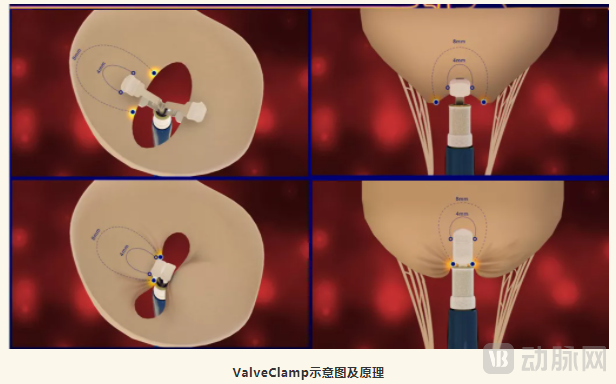
A total of 10 patients were enrolled in this study, with a mean age of 71.0 ± 8.5 years. The cohort included 4 patients with atrial functional mitral regurgitation (AFMR) and 6 patients with ventricular functional mitral regurgitation (VFMR). Among them, 3 patients presented with highly challenging anatomy and were deemed unsuitable for the MitraClip procedure. The procedural success rate was 90%. One patient was converted to conventional open surgery due to excessively complex anatomy and unsatisfactory intraoperative results. Postoperative echocardiography revealed that among the 9 successful cases, mitral regurgitation was reduced to grade 0–1 in 7 patients and grade 2 in 2. Notably, these two patients, despite their anatomically challenging conditions, also experienced significant postoperative symptomatic improvement. Of the 9 successful cases, 7 were treated with a single clip, while the two complex anatomy cases required two clips. Most impressively, the median catheter-based procedural time was 10 minutes, meaning that half of the cases were completed in under 10 minutes, with the fastest procedure taking only 5 minutes.
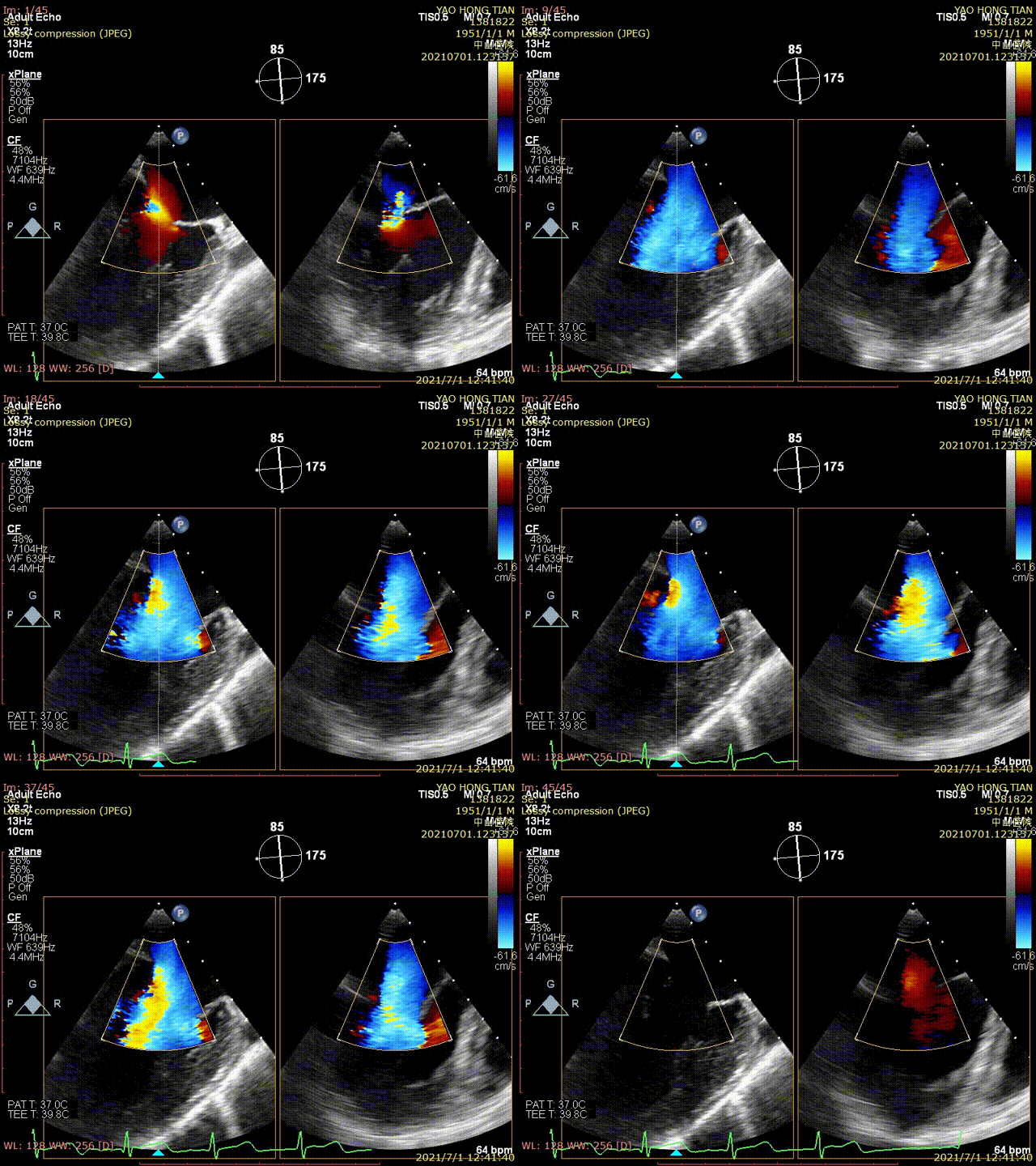
(Patient's preoperative imaging)
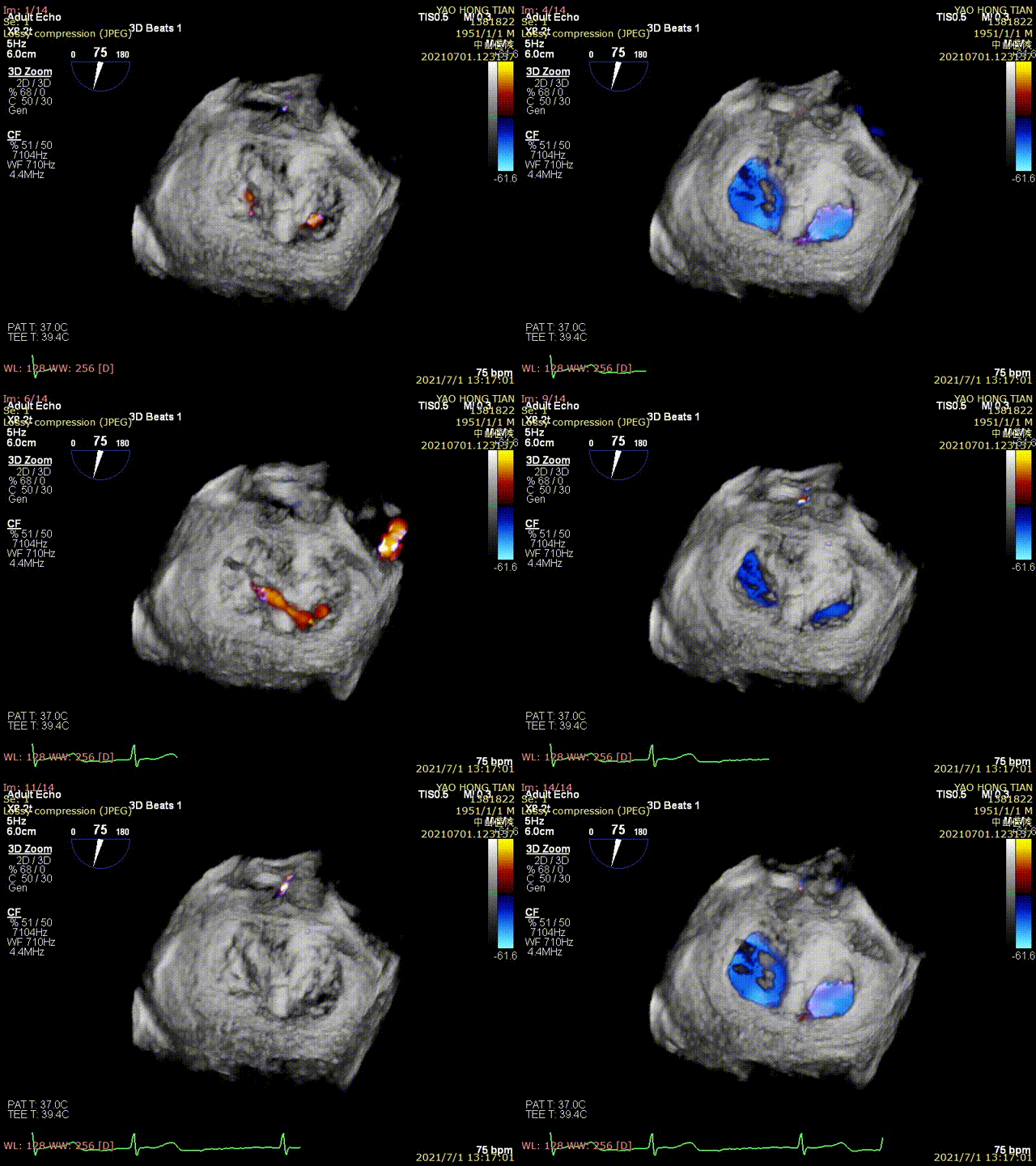
(Patient's postoperative imaging)
ValveClampIt is the world's first transapical mitral valve clip, and has currently been granted PCT patents in multiple countries worldwide. Compared to other internationally available transcatheter edge-to-edge repair (TEER) devices, this device offers several unique advantages:
① Short operative time and short learning curve. Based on current research data,ValveClampThe catheter procedure time is significantly shorter than that of comparable international devices. Even at the current technical level, the average catheter procedure time for international TEER devices is approximately 1.5 hours, and often extends to 4–6 hours in complex cases. Whereas,ValveClampIt takes an average of only 10 minutes, offering a highly distinct advantage in this regard.
② Does not require a DSA machine or a catheterization laboratory; it can be performed in a standard operating room.ValveClampIt requires minimal hardware infrastructure and is suitable for large-scale adoption. Currently, the limited availability of DSA machines and catheterization laboratory resources across hospitals is a major factor constraining the widespread adoption of interventional procedures.ValveClampThe procedure can be performed in a standard operating room using a single ultrasound machine (intraoperative ultrasound is already routinely required for conventional surgeries). Operators do not require experience with DSA or catheter manipulation, allowing for rapid proficiency. It is particularly well-suited for surgeons.
③ Low production costs, suitable for China's national conditions and national strategy.ValveClampThe streamlined structural design significantly simplifies the manufacturing process compared to similar devices, enabling effective control of production costs. Upon future market launch, it can be offered at a lower market price, thereby reducing expenses for patients and aligning with current national policy trends.
Professor Wei Lai, the lead operator of this study, stated that functional mitral regurgitation is highly prevalent, with an incidence rate 3 to 4 times that of degenerative mitral regurgitation. Historically, the vast majority of these patients were deemed inoperable by cardiac surgeons. Even with the use of imported TEER devices, the procedure remains highly challenging. We used...ValveClampMultiple attempts were conducted on atrial FMR and ventricular FMR, and it was found thatValveClampIt is indeed simple, rapid, and effective. In particular, the device is highly intuitive and easy to operate, demonstrating promising prospects for clinical application.
ValveClampThe pre-market clinical study in China (enrolling only patients with primary mitral regurgitation) completed patient enrollment earlier this year, and patients are currently under follow-up. The device is expected to receive market approval by the end of 2022, becoming China's first approved interventional device for mitral regurgitation.