

Valve Disease: A Barrier to Human Longevity — How Innovative Therapeutic Devices Are Breaking the Curse?

NewMed
Artificial Heart Valve System Developer

Jenscare
Developer of interventional treatment technology for heart valves

Hanyu Medical
Structural Heart Disease Interventional Devices and Electrophysiology Product R&D, Manufacturer

Valgen Medtech
Minimally Invasive Interventional Device Developer
Editor's Note: Over the past two years, the mitral valve sector has remained highly active. In the primary market, the field has witnessed skyrocketing valuations and fierce competition for investment projects. In the secondary market, the mitral valve interventional therapy sector has attracted over 4 billion RMB in funding.
Recently, Academician Ge Junbo published 《Valvular Heart Disease: A Hurdle That Must Be Overcome for Human Longevity》, elucidating the relationship between valvular heart disease and human longevity, and pointing out that minimally invasive interventional therapy is the inevitable path for treating valvular heart disease.
Based on Academician Ge Junbo's article, VCBeat has reviewed the mitral valve sector and compiled an overview of leading Chinese enterprises and their products in this field, for our readers' reference.
With the advancement of socioeconomic conditions and medical technology, human life expectancy has continuously increased. Taking China as an example, the average life expectancy was only 35 years in 1949, but reached 77 years in 2018. As human longevity increases, age-related diseases have become the primary factor restricting further life extension. Among various geriatric conditions, valvular heart disease, characterized by a high incidence rate and significant impact on health, will become one of the major diseases limiting further gains in human lifespan. This article analyzes the impact of heart rate and valvular disease on human health and longevity.
Over 50 years ago, scientists discovered that in the animal kingdom, heart rate is closely correlated with lifespan. For example, it has been observed that the Galápagos tortoise, which can live up to 177 years, has a heart rate of only about 6 beats per minute; whereas mice, with heart rates of 400–500 beats per minute, live only 1–2 years. In 1997,Levine HJThe professor provided a detailed summary of this phenomenon and created a widely cited figure (Figure 1, J Am Coll Cardiol 1997;30:1104–6).The higher an animal's heart rate, the shorter its lifespan; the two are inversely proportional, and their product is a constant.The cumulative number of heartbeats throughout a mammal's lifetime is approximately 800 million (730 ± 560 million).
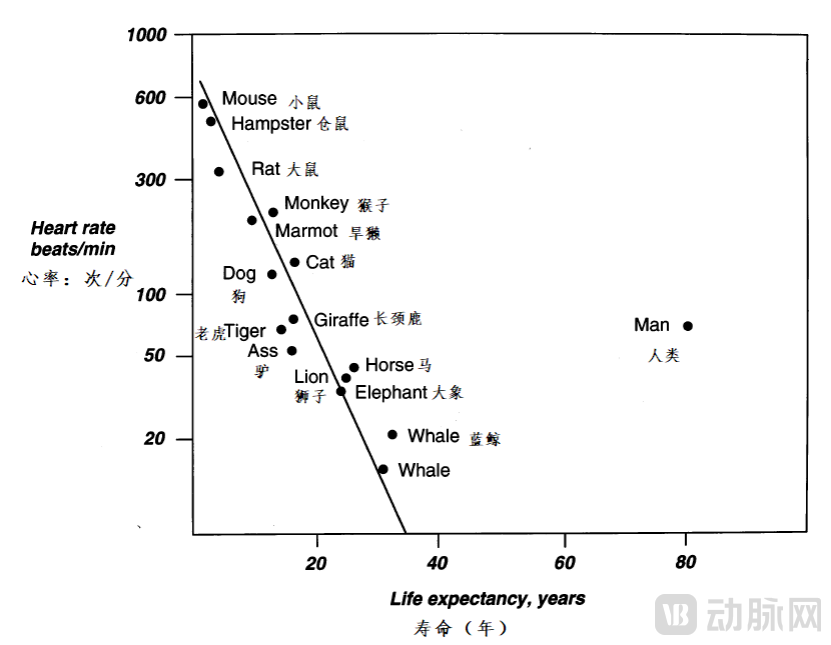
Figure 1. Relationship between heart rate and lifespan in mammals
However, due to evolutionary factors, humans have diverged from the curve in Figure 1, accumulating approximately 3 billion heartbeats over a lifetime. At a comparable heart rate, human lifespan is significantly longer than that of other animals. The relationship between heart rate and lifespan has also been experimentally confirmed. When mice were administered digoxin, reducing their resting heart rate by 50%, their lifespan increased by 20% (Johns Hopkins Med J. 1971;128:169–193).
The exact causes underlying these phenomena have not been fully elucidated; however, prevailing theories attribute them to systemic metabolism: the maintenance of homeothermy in mammals depends on metabolic rate, and small animals, with a larger body surface area-to-body weight ratio, require a higher metabolic rate to sustain it; a higher metabolic rate necessitates a faster heart rate to ensure adequate heat distribution; concurrently, an elevated metabolic rate accelerates cell division and increases oxidative stress; faster cell division leads to accelerated aging and a greater susceptibility to physiological malfunctions (e.g., aberrant division producing tumor cells), resulting in a shorter lifespan (Cardiology 2015;132:199–212). This ultimately manifests as an observed inverse correlation between heart rate and lifespan.
However, Academician Ge Junbo suggests that, in addition to this potential mechanism, cardiovascular disease may also be a significant factor affecting lifespan. Research indicates that the impact of heart rate on the cardiovascular system is multifaceted; an elevated heart rate can lead to reduced myocardial perfusion, increased myocardial oxygen consumption, endothelial damage in the cardiovascular arterial system, and vascular stiffness (Scand J Clin Lab Invest.2019;79:108-116).Studies from multiple countries, including the United States, Germany, Israel, and Japan, have independently demonstrated that in healthy populations, resting heart rate is associated with both all-cause and cardiovascular mortality.(Am J Cardiol, 2009, 103:279–283; Clin Res Cardiol, 2016, 105:601–612; Eur Heart J, 2000, 21:116–124; J Clin Epidemiol, 2001, 54:495–500). Moreover, in patients with pre-existing cardiovascular diseases (coronary heart disease, heart failure), the conclusion that heart rate is positively correlated with mortality has been repeatedly validated and is widely recognized by clinicians.Ge JunboAcademicianIt is believed that as human life expectancy increases, heart rate-related valvular heart disease will also become a significant factor affecting human longevity.
Multiple studies by the World Health Organization (WHO) have shown that cardiovascular and cerebrovascular diseases are the leading cause of death globally, accounting for one-third of all deaths.Among them, heart disease has been the "leading killer" over the past 20 years, with deaths from the disease currently accounting for 16% of all deaths.
Historically, coronary heart disease and hypertension have long received significant attention and are recognized as the first and second most important cardiovascular diseases. With population aging, degenerative valvular heart disease has also begun to garner attention. Western scholars have proposed that valvular heart disease has become the third most important cardiovascular disease, being more prevalent than atrial fibrillation, cardiomyopathy, heart failure, and age-related cardiac conduction system degeneration (Med Clin North Am.2006;90(5):849-62).
A study shows that in individuals older than 75 years, the prevalence of valvular heart disease is 13.2% (Lancet 2006;368:1005–11). Among those aged 80–89 years, the prevalence of aortic stenosis is 9.8% (Heart 2013;99:396–400). The Framingham Study indicates that in a cohort aged 70–83 years, the prevalence of mitral regurgitation (moderate or greater) is 11.1% (Am J Cardiol. 1999;83(6):897-902).The incidence of valvular heart disease is significantly positively correlated with age, increasing sharply after 65 years of age.(Figure 2, Lancet 2006;368:1005–11).
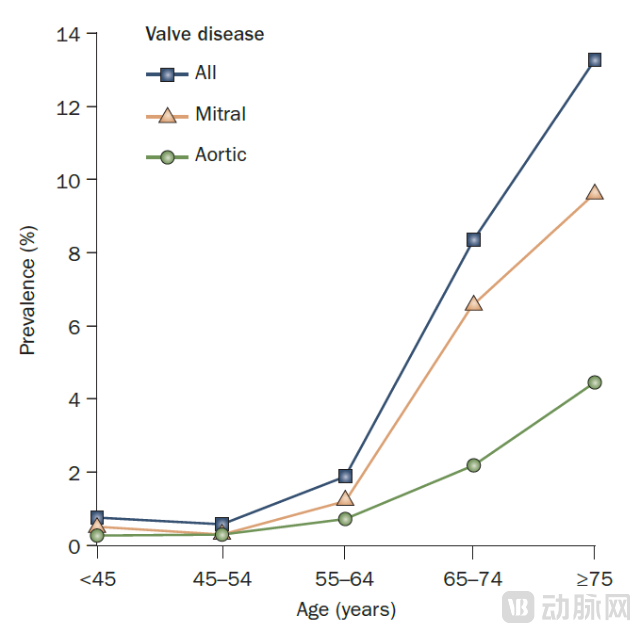
Figure 2. Relationship between the incidence of valvular heart disease and age
Based on current literature research findings,Prof. Ge Junbo, MD, PhDAcademicianIt is estimated that the prevalence of valvular heart disease is at least 20% among individuals aged 80 years and older. Mitral regurgitation is the most common condition, followed by aortic stenosis (the former is approximately 3 to 4 times more prevalent than the latter).Given the significant impact of valvular heart disease on health and life expectancy, as human lifespan continues to extend and an increasing number of people live beyond 80 years of age, valvular heart disease will become a critical factor affecting further life extension.
In fact, our understanding of the causes of age-related mortality in animals remains limited, as we lack both the motivation and the appropriate environment to conduct large-scale, detailed medical observational studies on animal populations. Pet ownership, however, enables us to carry out sufficiently detailed medical research on animals. Surprisingly, we have found that the incidence of valvular disease (mitral regurgitation) in small, geriatric dogs exceeds 30%, making it one of the leading causes of death in advanced age. Consequently, valvular disease may also be a primary cause of mortality in aging animals.
Heart valves refer to the membranous tissues located between the atria and ventricles or between the ventricles and arteries. Functioning as one-way valves, they allow blood to flow forward when open and prevent backflow when closed. Each time a heart valve closes, it is subjected to impact stress from the blood, and this impact force is by no means negligible (with a pressure of 8–18 kPa).The human heart contracts approximately 100,000 times a day, subjecting the cardiac valves to 100,000 impacts.
From the perspective of mechanical fatigue wear, this is relatively astonishing (as constant dripping can wear through stone), placing exceptionally high demands on heart valves. Therefore, mechanical prosthetic valves used in heart valve replacement are fabricated from super wear-resistant pyrolytic carbon, which also has a finite service life; whereas bioprosthetic valves have a shorter lifespan, typically ranging from 10 to 15 years. In the in vitro performance evaluation of bioprosthetic valves, fatigue resistance testing is of paramount importance. Generally, 200 million cycles in an in vitro simulated valve opening and closing test (simulating 200 million heartbeats) correspond to a 5-year service life, while 400 million cycles indicate a 10-year lifespan.
Why can bioprosthetic valves only withstand 400 to 500 million heartbeats, while normal native human valves can typically endure over 2.5 billion heartbeats? This is because bioprosthetic valves consist of decellularized, non-viable fibrous tissue, whereas normal native human valves containEndothelial cellsandMesenchymal cells, these two cell types confer regenerative and reparative capacity upon human valve tissue. However, as the body ages, the viability of these cells markedly declines. Native human valves are also highly susceptible to the same fate as bioprosthetic valves, undergoing degeneration under the relentless hemodynamic stress of continuous blood flow. This degeneration, akin to that of bioprosthetic valves, is closely associated with cumulative heartbeats.
A study has confirmed that in patients with aortic stenosis, the rate of progression of valve orifice narrowing is positively correlated with resting heart rate. The faster the heart rate, the more rapidly the stenosis progresses (Int J Cardiol.2016;204:149-51). It can be said that heart valve degeneration (valvular heart disease) is a critical hurdle that must be overcome to extend human longevity.
Coronary heart disease and hypertension are ranked as the first and second most significant cardiovascular diseases. Both conditions can be prevented, controlled, and alleviated through pharmacological therapy. With advances in drug treatment, the incidence and mortality rates of coronary heart disease in the United States have already begun to decline, marking a turning point in cardiovascular mortality.
Valvular heart disease involves physical structural alterations that are difficult to correct with pharmacotherapy. Definitive correction requires physical interventions (such as surgical treatment). Furthermore, there are currently no clearly effective medications available to prevent valvular heart disease.
With the aging of the population, the incidence of valvular heart disease in the general population is gradually increasing. However, conventional surgical interventions require open-chest procedures under cardioplegic arrest, and due to their high invasiveness, elevated surgical risk, and prolonged recovery, they are generally less suitable for elderly patients.The advent of transcatheter valve repair or replacement technologies has made minimally invasive interventional therapy for valvular heart disease in the very elderly a reality.Over the past decade or so, technology in this field has advanced rapidly,has become one of the most popular medical technologies。For example, minimally invasive transcatheter mitral valve therapy was listed among the Cleveland Clinic’s Top 10 Medical Innovations for two consecutive years (2018–2019), alongside cancer immunotherapy, AI-assisted medical treatment, and genomic prevention. We believe that transcatheter valve intervention will enable humanity to overcome the hurdle of valvular degeneration, helping to realize the dream of longevity.
Valvular heart disease is a type of heart disease caused by stenosis or regurgitation of the cardiac valves, including stenosis and regurgitation of the aortic, mitral, and tricuspid valves.
According to available data,Mitral regurgitation and aortic stenosis are the most common types of valvular heart disease, and the prevalence of mitral regurgitation is 3 to 4 times that of aortic stenosis.. Therefore,The market size of mitral valve devices is expected to reach that of the aortic valve market's3-4 times。
According to the prospectus of Hanyu Medical, the global number of patients with moderate-to-severe mitral regurgitation was 96.7 million in 2019, and is expected to reach 122 million by 2030. In terms of the volume of minimally invasive interventional procedures, the global number of transcatheter mitral valve repair procedures was 22,000 in 2019, and is projected to increase to 144,000 by 2030.
Driven by the growing number of patients with mitral regurgitation and the increasing volume of related procedures, the global market size for transcatheter mitral valve repair (TMVr) devices was USD 698 million in 2019 and is projected to reach USD 5.449 billion by 2030.
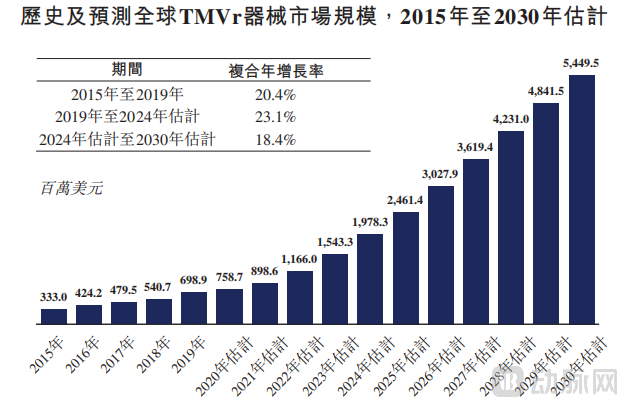
(Transcatheter Mitral Valve Repair Device Market Size, 2015-2030)
The vast market potential in the mitral valve sector has attracted a host of medical device giants such as Abbott, Edwards Lifesciences, Medtronic, MicroPort, and Blue Sail Medical, alongside countless startups clustering in this field.
However, only seven interventional devices for mitral valve disease have been approved globally, comprising six transcatheter mitral valve repair products and one transcatheter mitral valve replacement product. Currently, only Abbott's MitraClip has been approved by China's NMPA for transcatheter mitral valve repair.
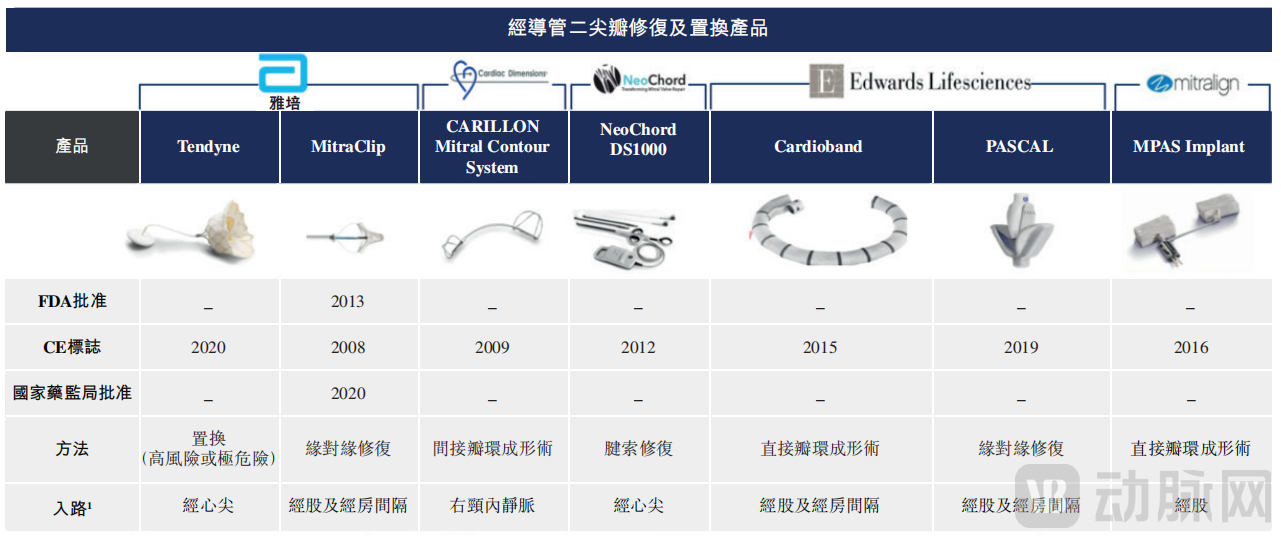
(7 Globally Approved Interventional Devices for Mitral Valve Disease)
Product development in the mitral valve sector is highly challenging, and commercially available products remain limited. This is primarily because the anatomical structure and location of the mitral valve inherently pose greater difficulties for interventional device development, leaving numerous technical hurdles in product design and development that still need to be overcome.
Transcatheter mitral valve interventions can be categorized into the following five types based on technical principles: transcatheter edge-to-edge repair (TEER), transcatheter mitral annuloplasty, transcatheter artificial chordae tendineae implantation, ventricular annular remodeling, and transcatheter mitral valve replacement (TMVR).
Among them, edge-to-edge repair, as the most mature technique, has treated over 100,000 patients worldwide and achieved favorable clinical outcomes.
For minimally invasive interventional therapies targeting mitral valve disease, another key focus is the access approach, which is divided into the percutaneous and transapical approaches. The percutaneous approach involves advancing the therapeutic device to the mitral valve via the femoral vein, whereas the transapical approach involves directly accessing the mitral valve by passing the device through the heart.
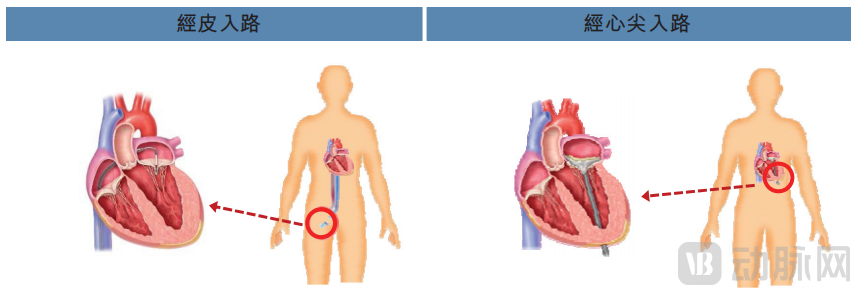
Both access approaches offer distinct advantages. In comparison, the percutaneous approach is relatively less invasive but demands a high level of technical proficiency from the operator, while also imposing more stringent requirements on the delivery system in product design. The transapical approach shortens the surgical access route, significantly reduces procedural time, features a shorter learning curve for physicians, and enables more direct and stable manipulation. Notably, factors such as vascular stenosis, septal thickening, the presence of foreign bodies, or an undersized left atrium may impede the maneuverability of the delivery system, rendering certain patients unsuitable for the transfemoral venous approach. In such cases, the transapical approach becomes the only viable treatment option.
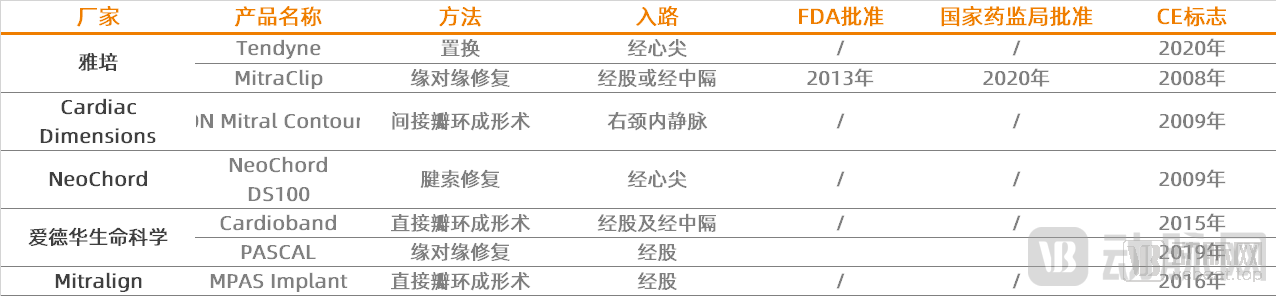
(Global Commercialization Status of Transcatheter Mitral Valve Products)
According to a VCBeat review, ValveClamp, launched by Hanyu Medical, is the world's first transapical edge-to-edge repair device for the treatment of mitral regurgitation. The product utilizes the most mature edge-to-edge repair technology and adopts a transapical approach, facilitating physician training and widespread clinical adoption, thereby helping to save more patients with mitral regurgitation.
According to statistics, mitral regurgitation is considered the most prominent hotspot in cardiovascular intervention following TAVR, and currently stands as the most heavily invested sector. Between 2020 and 2021, the mitral valve intervention space attracted over RMB 4 billion in funding. Leading ventures such as Hanyu Medical, Valgen Medtech, NewMed, and Jenscare have been highly favored, with top-tier investment institutions including CPE, Hillhouse Capital, Sequoia Capital, Honghui Capital, and Yunfeng Capital actively competing to enter the market.
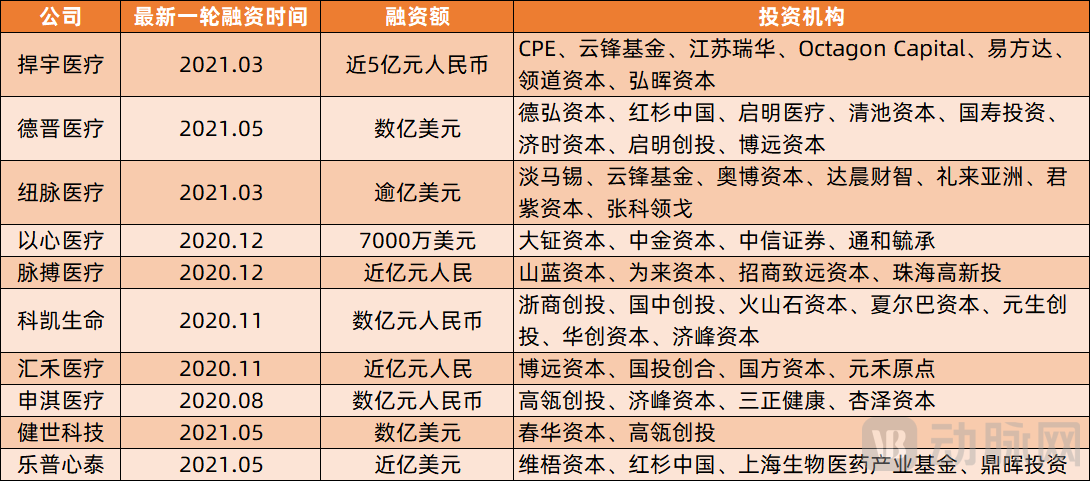
Additionally, companies such as Hanyu Medical and NewMed have initiated their IPO processes, with Hanyu Medical expected to pass the listing hearing soon.
Currently, the key players in China's mitral valve market can be divided into three categories: the first comprises global medical device giants represented by Abbott and Edwards Lifesciences; the second consists of startups specializing in the mitral valve field, such as Hanyu Medical and NewMed; and the third includes China-based listed companies in the valve sector, such as MicroPort CardioFlow, Venus Medtech, and Peijia Medical. These companies have already achieved commercialization progress in the aortic valve segment and are now strategically expanding into the mitral valve market.
In the nascent mitral valve market, Abbott and Edwards Lifesciences currently hold the leading position. Abbott's MitraClip, launched in 2008, remains the only approved transcatheter mitral valve repair product in the U.S. market. The MitraClip has become the primary growth driver for Abbott's structural heart business. According to JPMorgan data, the MitraClip generated approximately $690 million in sales in 2019 and is projected to deliver around $670 million in revenue in 2020. Meanwhile, Abbott's overall structural heart business achieved approximately $1.4 billion in revenue in 2019.
Meanwhile, startups specializing in the mitral valve sector, leveraging their accumulated technological expertise, strong execution capabilities, and access to leading domestic clinical expert resources, have achieved equally rapid clinical progress and are poised to develop into highly competitive companies in the heart valve industry. For example, Hanyu Medical has launched the world's first`Transapical Edge-to-Edge Repair Device`,and completed the clinical trial in March 2021,`is currently the product with the fastest R&D progress in China`;NewMed launched Asia's first transapical mitral valve replacement system and announced the initiation of clinical trials in February 2021; Valgen Medtech developed a transapical mitral valve repair product, which entered exploratory clinical trials in May 2018.
In China, there are numerous mitral valve companies, with key players including Hanyu Medical, Jenscare, NewMed, Valgen Medtech, and Xintai Medical. Many of these enterprises are preparing for or actively undergoing their IPO processes. Hanyu Medical, Jenscare, and Xintai Medical have already submitted their listing applications; among them, Hanyu Medical is poised to pass its listing hearing shortly.
Hanyu MedicalFounded in 2016, it is a company dedicated to the research, development, and commercialization of platform-based innovative medical devices in the fields of structural heart disease and electrophysiology. In July 2018, it launched the world's firstTransapical Edge-to-Edge Repair DeviceValveClamp completed its first implantation, and concluded patient enrollment for the pre-market clinical trial in March 2021,is currently the product with the fastest R&D progress in China。
According to Hanyu Medical's prospectus, its self-developed transfemoral venous TEER device, ValveClasp, has completed long-term animal experimental evaluations and is scheduled to enter clinical trials in the third quarter of 2021.
Meanwhile, Hanyu Medical has expanded into the veterinary healthcare market, with its controlling subsidiary, Hongyu Medical, as the world’s sole provider of interventional cardiovascular devices for pets, already initiating global commercialization. Its transapical mitral valve edge-to-edge repair product—V-Clamp, specifically designed for mitral regurgitation in small- and medium-sized pet dogs—has already generated revenue in China and is poised for overseas sales.
JenscareFounded in 2011, the company specializes in minimally invasive interventional therapy for cardiac valves. Its product portfolio includes transcatheter aortic valve replacement systems, transcatheter tricuspid valve replacement systems, transcatheter mitral valve replacement systems, and transcatheter mitral valve repair systems. Among these, Jenscare’s core product, the transcatheter tricuspid valve replacement system, is the only investigational device worldwide to have completed patient enrollment in pivotal clinical trials, and is expected to become the first commercialized product globally for the treatment of tricuspid regurgitation. In the mitral valve field, the mitral valve repair clip system developed by Jenscare is scheduled to enter feasibility clinical trials in the first quarter of 2022.
`NewMed`Founded in 2015, it is a developer of artificial heart valve systems. In May 2019, NewMed launched Asia's first transapical mitral valve replacement system (Mithos). In February 2021, the company announced that Mithos had entered a pre-market registration clinical trial.
Valgen MedtechFounded in 2015, it is part of the Denovo Medical platform alongside Venus Medtech. Valgen Medtech has developed China's first transapical mitral valve repair product, MitralStitch, in the mitral valve field. The product entered exploratory clinical trials in May 2018 and is currently undergoing pre-market confirmatory clinical trials.
Overall,Whether in terms of product differentiation advantages, development pace, or commercialization progress, mitral valve companies in China all demonstrate a certain level of competitiveness. In particular, compared to global medical device giants,The various differentiated products developed by mitral valve enterprises in China are highly competitive and are expected to achieve a breakthrough in the mitral valve sector, thereby driving the development of high-end medical devices produced in China.