

Bio-gene Technology Files IPO Prospectus: Focused on AML CAR-T and Advancing AI-Driven Allogeneic Cell Therapy Platforms

Bio-gene
CAR-T Cell Therapy Product Developer
Immune cell therapy, recognized as the fourth treatment modality following radiotherapy, chemotherapy, and surgery, represents a major breakthrough in cancer treatment. Notably, the CAR-T cell therapy (chimeric antigen receptor T-cell immunotherapy) sector is particularly prominent, demonstrating promising therapeutic efficacy for major diseases such as leukemia and lymphoma, and holds strong potential for future applications in solid tumor treatments.
Currently, five CAR-T cell therapies have received marketing approval, primarily targeting the two prominent targets, CD19 and BCMA. In China, a significant number of leading enterprises have emerged, continuously innovating within their respective domains. For instance, many are adopting dual-targeting strategies or leveraging novel technologies to achieve clinical advantages such as lower relapse rates, faster onset of action, and enhanced safety profiles. In the solid tumor sector, several highly promising targets, including MSLN, GPC3, GD2, and Claudin 18.2, are also being actively developed by numerous companies.
Backed by Qixi Group's health industry ecosystem,
Equipped with a Mature Development Framework from Inception
Guangzhou Bio-gene Technology Co., Ltd. (hereinafter referred to as Bio-gene) is a company that has long been dedicated to developing next-generation chimeric antigen receptor-modified T cell products with proprietary intellectual property rights, and its R&D products can be used to treat hematological malignancies, including leukemia and lymphoma, as well as various solid tumors.Founded in 2015, Bio-gene is a holding subsidiary of Hedy Group and the Guangdong Provincial Engineering Technology Research Center for Precision Medicine.
Founded in 1998, Hesper Group is a large-scale comprehensive enterprise group. Evolving from its initial sole focus on the computer business, the Group has expanded into three major business sectors today: IT, real estate, and healthcare. Among these, the healthcare industry will serve as the Group's primary direction for future industrial development. Hesper Group has established the creation of a closed-loop medical service ecosystem as its core long-term development strategy. Based on this,Qixi Group has given rise to the "Qixi Healthcare Industry Ecosystem"., the industry chain encompasses biopharmaceuticals, medical imaging equipment, life support equipment, intelligent assistive devices for paralysis, healthcare investment and operation, and elderly care services, among other fields.
Backed by Qixi Group's mature development framework and closed-loop health industry ecosystem, Bio-gene has enjoyed first-mover advantages in capital, management, and R&D since its inception.
Bio-gene's Strategy for the Next 5 Years:
AML and Universal Cell Therapy
In addition to the advantage of being backed by the Qixi Group, Bio-gene has also established an R&D team led by overseas-educated returnees, featuring a well-structured age and knowledge hierarchy, broad disciplinary coverage, and comprehensive technical expertise, spanning multiple fields including CAR-T product R&D, GMP manufacturing, quality assurance, clinical development, and regulatory submissions.
Dr. Luo Min, CEO of Bio-gene, has been deeply engaged in the field of gene therapy for many years. He holds a Ph.D. from the National University of Singapore and completed postdoctoral research at Baylor College of Medicine, with 13 years of dedicated experience in the clinical translation of gene and cell therapies.Dr. Min Luo previously served as a Translational Research Scientist at bluebird bio in the United States., participated in the clinical translational research of multiple gene and cell therapy products: including the stem cell product for adrenoleukodystrophy (ALD) (Lenti-D), and Zynteglo, the first internationally approved gene therapy product for the treatment of thalassemia, among others.
In 2017, Dr. Luo Min returned to China and joined Guangzhou Bio-gene Technology Co., Ltd., leading the company's R&D team to rapid development. Soon after, Bio-gene submitted an IND application for a CD19 autologous CAR-T product, but following comprehensive assessment, ultimately decided to pause the project. "After we suspended the autologous CD19 CAR-T pipeline in 2019, Bio-gene stood at a crossroads, and we asked ourselves what the next breakthrough area for CAR-T would be," Dr. Luo said. "Fortunately, we identified a new therapeutic field for CAR-T—AML. The project has currently demonstrated promising efficacy, serving as an excellent starting point. Moving forward, we will continue to explore more targets and strategies in the AML space to benefit a greater number of AML patients."
Dr. Luo Min continued, "Furthermore, since 2017, we have been dedicated to developing off-the-shelf cell therapy products, which may truly fulfill our mission to 'make immune cell therapy accessible to the general public.'"
New Track: Bio-gene Takes the Lead in Achieving a Breakthrough in AML Treatment,
Invited to present at ACSO
At the 2021 ASCO oral presentation, Guangzhou Bio-gene Technology Co., Ltd. presented the Investigator-Initiated Trial (IIT) clinical data of BG1805 (anti-CLL1 CAR-T) for the treatment of relapsed/refractory acute myeloid leukemia (R/R AML). Preliminary analysis of 11 AML patients showed an overall response rate (ORR) of 82% and a complete response (CR) rate of 73%. In terms of safety, patients only experienced grade 1–2 cytokine release syndrome (CRS), with no cases of immune effector cell-associated neurotoxicity syndrome (ICANS).
"In fact, the development of CAR-T therapies for AML has been ongoing for over a decade. Targets such as CD33, CD123, LeY, NKG2D, and CD70 remain in the early clinical efficacy exploration phase. While there have been sporadic reports of complete remission (CR), none have matched the clinical performance of the star target CD19," Dr. Luo Min continued. "The exceptional clinical efficacy of BG1805 has also surprised and delighted us. AML may well become the next competitive frontier." AML progresses rapidly after onset. Historically, patients who failed chemotherapy and radiotherapy and were unable to undergo bone marrow transplantation typically succumbed to the disease within a few months.
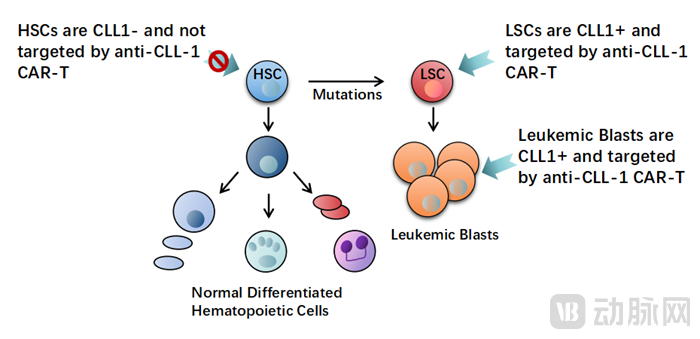
Potential reasons for the breakthrough clinical efficacy of BG1805 include:First, the selection of the CLL1 target is appropriate.Due to the heterogeneity of AML, the therapeutic efficacy of many CAR-T therapies has been suboptimal. Since CLL1 is not expressed on hematopoietic stem cells but is expressed on AML cells and leukemic stem cells (LSCs), the CLL1 target may represent a more optimal choice.Second, it takes effect very quickly.Therapeutic response is typically observed on Day 14 post-infusion, with the majority of patients achieving CR/MRD- by Day 14.Third, antibody screening is crucial.Following rigorous antibody screening, candidates with optimal affinity/dissociation kinetics were selected for CAR design.
AI Empowers Off-the-Shelf Cell Therapy,
Empowering Efficient CAR Structure Design
In addition to the more advanced BG1805 (CLL1 CAR-T),Bio-gene's γδT cell-based universal cell platform (UCAR-γδT) has also recently achieved encouraging research progress.In animal studies conducted by Guangzhou Bio-gene Technology Co., Ltd., off-the-shelf CAR-γδT cells demonstrated anti-tumor efficacy comparable to that of autologous CAR-T cells, effectively clearing tumor cells in mice and significantly prolonging their survival. Concurrently, early-stage Investigator-Initiated Trial (IIT) clinical studies have also demonstrated the safety and efficacy of this product, and the study is currently in the phase of expanding the clinical trial sample size. Additionally, iPSC-derived CAR-NK related projects are under active collaborative development with research institutions and top-tier industry companies. Looking ahead, production costs are expected to drop to 1/100–1/1000 of those for autologous CAR-T cells.
For off-the-shelf allogeneic cell therapy, U-CAR-T is the mainstream, alongside other modalities such as NK, γδT, Mφ, and iPSCs.Intrinsic signaling and functional profiles vary across different cell types, making the screening of the optimal CAR structure crucial.Dr. Luo Min explained: "We have found that the individual components of a CAR significantly impact its expression and cellular signaling functions. By inputting hundreds of actual experimental results, we have gathered a substantial amount of correlated data. Guangzhou Bio-gene Technology Co., Ltd. is currently collaborating with AI experts to compile these data into a training database. In the future, AI can be leveraged for highly efficient CAR design, enabling the creation of optimal structures for different cell types and target-specific antibodies. We hope this will contribute to the advancement of the industry."
Future:
Simultaneous Advancement in AML and Off-the-Shelf Cell Therapy
Currently, Bio-gene has established stable partnerships with nearly 20 clinical hospitals. Looking ahead, the company's primary investor, Qixi Group, plans to build 20 specialized oncology hospitals in China within five years. Abundant clinical resources and future market opportunities will continue to drive Bio-gene's advancements in AML and universal cell therapy. Guided by the vision of "making immune cell therapy accessible to all," Bio-gene continues to forge ahead.