

Medix Focuses on Dry Eye Treatment Devices and Builds an Integrated Ophthalmic Diagnosis and Therapy Platform

MDC
Ophthalmic Medical Device R&D, Manufacturing, and Sales Company
As the most vital sensory organ in the human body, the eyes are responsible for acquiring at least 80% of external information. In recent years, factors such as China's aging population, increased exposure to allergens, prolonged use of electronic devices, and unhealthy lifestyle habits have contributed to a steady year-on-year increase in the incidence of ocular diseases, including cataracts, myopia, and dry eye disease.
Meanwhile, public awareness of eye care continues to rise, driving the steady expansion of the ophthalmic market. According to the *“Multicenter Big Data Report on Dry Eye in the Chinese Population”*, there are currently approximately 360 million dry eye patients in China, with the patient population growing at an annual rate of over 10%. Consequently, dry eye disease is emerging as another major national eye health concern, following myopia.
As a chronic ocular surface disease, dry eye is currently commonly managed with pharmacological therapy. However, the medications frequently used in clinical practice today can only alleviate uncomfortable symptoms such as ocular dryness, visual fatigue, and blurred vision, making it difficult to achieve a definitive cure. Therefore, to effectively alleviate and treat dry eye disease, clinical practice often employs a combination of drugs and medical devices. Some market entrants have also chosen to innovate and deepen their presence in the ophthalmic device sector, among which is Make Dreams Connect (Tianjin) Co., Ltd. (hereinafter referred to as "MDC").
It is reported that MDC is a high-tech innovative enterprise specializing in the R&D, production, and sales of ophthalmic medical devices. Its fourth-generation Intense Pulsed Light (IPL) dry eye treatment device "Eyesis", which features proprietary intellectual property rights, has successfully obtained a medical device registration certificate, and its clinical efficacy has been validated by multiple institutions.
10+ Years of Innovative R&D, Focused on Ophthalmic Disease Treatment
Years of clinical experience in hospitals led Gao Chengsen, founder of MDC, to recognize the shortcomings of medical devices produced in China in innovation and technology. Gao Chengsen told VCBeat: "The clinical competence of doctors in China is actually not low, but the technology of medical devices produced in China still falls short, necessitating greater investment in research and development."
Guided by this understanding, Gao Chengsen ultimately chose to leave the hospital and dedicate himself to the R&D and promotion of pharmaceuticals and medical devices. In 2008, he founded MDC (Beijing) Pharmaceutical Technology Co., Ltd., partnering with Sinopharm Group and Nitto Denko Corporation to promote China's first transdermal drug. Although the company's operations and projects progressed smoothly, Gao Chengsen believed that focusing on medical device R&D was the direction he truly wished to pursue. Consequently, in 2009, he officially established MDC Medical Device Co., Ltd., shifting the core focus of development to the R&D, production, and sales of medical equipment.
Although determined to commit intensively to medical device R&D, the subsequent challenge was determining which specific field to focus on. To this end, Gao Chengsen and his team traveled to the United States, Europe, and other regions multiple times each year to attend professional conferences and visit R&D institutions across various technical domains for study and evaluation. They sought entrepreneurial directions with immense potential that had not yet achieved commercial scale in China. By chance, Gao and his team discovered that Intense Pulsed Light (IPL) therapy for dry eye disease was already established overseas. At the time, dry eye treatment had not yet received significant attention in China, leading them to anticipate a vast future market.
Following consultations with multiple ophthalmology experts in China and conducting relevant research, the MDC team ultimately decided in 2015 to focus on the research and development of professional dry eye treatment devices, building upon the development of a novel intense pulsed light (IPL) technology for dry eye therapy.
To ensure the smooth advancement of product R&D, MDC has continuously recruited outstanding talent throughout its development. Currently, MDC’s core team has assembled R&D experts from institutions such as the Changchun Institute of Optics, Fine Mechanics and Physics, Chinese Academy of Sciences, and the School of Precision Instrument and Opto-Electronics Engineering at Tianjin University. Through close collaboration with ophthalmology clinical experts across China, the team conducts in-depth research into the therapeutic theories of dry eye disease and the clinical application outcomes of related devices, thereby continuously optimizing its products.
Starting with Dry Eye Disease, Innovating the Fourth-Generation IPL Dry Eye Treatment Technology
As one of the ophthalmic diseases with a relatively high incidence rate in China, dry eye disease is primarily caused by tear film instability and ocular surface damage resulting from abnormalities in the quantity, quality, or dynamics of tears, which subsequently leads to ocular discomfort and visual dysfunction. Generally, dry eye disease is broadly classified into the aqueous-deficient type and the evaporative type. Among these, meibomian gland dysfunction (MGD) is the primary cause of evaporative dry eye; therefore, treating MGD can be considered an effective therapeutic approach for dry eye disease.
Currently, the treatment for MGD primarily relies on traditional methods such as warm compresses and eyelid massage, which can alleviate dry eye symptoms but yield limited long-term efficacy. Intense Pulsed Light (IPL), as a novel therapeutic modality, serves as an effective adjunct to conventional MGD treatments.
IPL, or broad-spectrum visible light with specific wavelengths, exhibits a relatively mild photothermal effect and was initially primarily used in clinical dermatology to treat cutaneous capillaries and hemangiomas. With its continuous clinical application, researchers have found that IPL demonstrates significant efficacy in treating MGD. Its mechanisms of action include: intense pulsed light irradiation can occlude abnormal capillaries around the eyelids, reduce neovascularization, inhibit Demodex mites, decrease the bacterial load on the eyelid margin, and concurrently alleviate inflammatory responses. Furthermore, the thermal energy generated by the pulsed light can dissolve and soften meibum, thereby facilitating improved patency of the meibomian glands.
Based on the safety and efficacy of Intense Pulsed Light (IPL) in treating dry eye associated with Meibomian Gland Dysfunction (MGD), and after thoroughly investigating its mechanism of action for dry eye, the MDC team, through years of collaborative research involving R&D teams and clinical experts from China and France, has launched the Eyesis IPL Meibomian Gland Dysfunction Treatment Device. Utilizing safe visible and near-infrared light wavelengths, the device effectively unblocks the meibomian glands while simultaneously delivering multiple therapeutic benefits, including the attenuation of ocular surface neovascularization, eradication of Demodex mites, anti-inflammatory action, and neuromodulation. Furthermore, the treatment is non-invasive, painless, convenient, and efficient, significantly enhancing the overall patient experience.
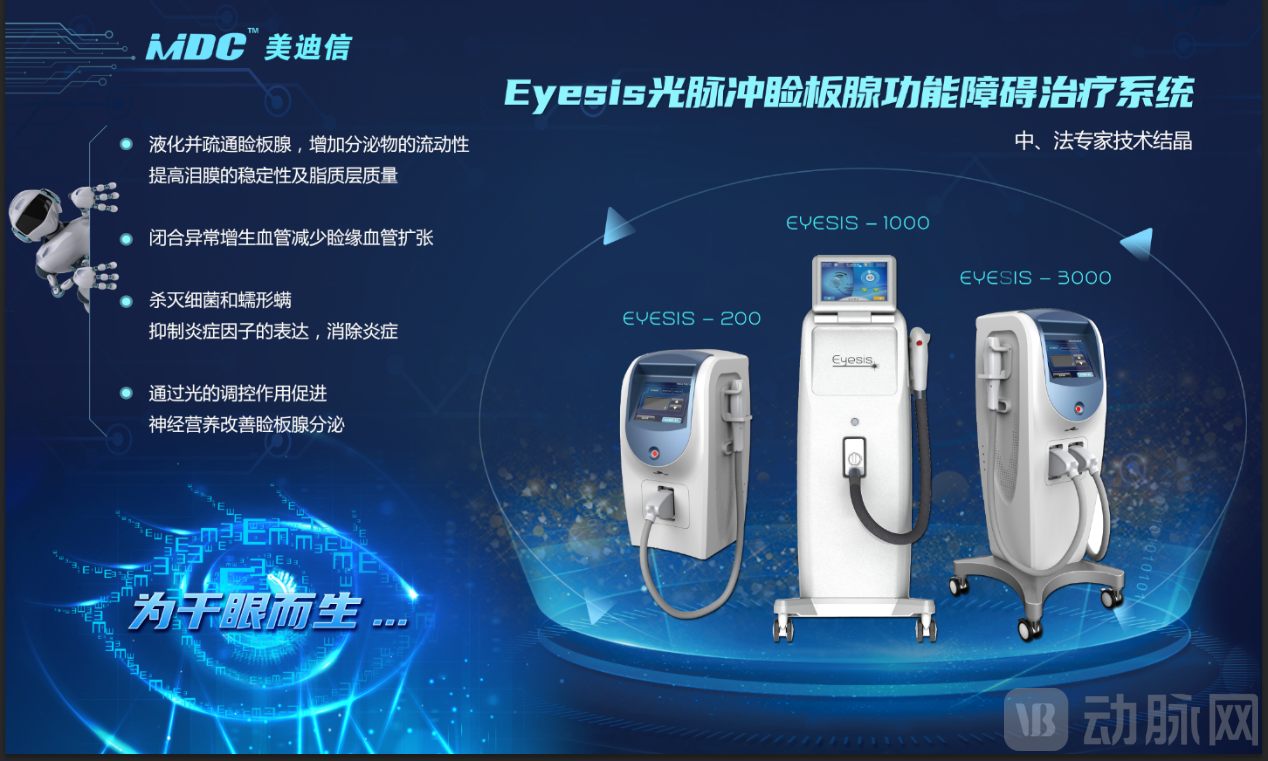
Notably, although Intense Pulsed Light (IPL) technology has been utilized in the aesthetic field for many years, the market has been dominated for over two decades by the OPT (Optimal Pulse Technology) from the U.S.-based company Lumenis. Launched in 2001 as a second-generation IPL technology, Lumenis’s OPT has been widely adopted in aesthetic medicine. In 2010, a French company developed a third-generation IPL technology, IRPL, based on OPT, which has since been applied in clinical treatments.
The fourth-generation IPL dry eye treatment technology utilized in MDC's eyesis (eye+oasis) dry eye treatment device is a company-pioneered innovation. It not only identifies and addresses the shortcomings of second- and third-generation IPL devices through targeted improvements, but also builds upon the third-generation IPL technology by incorporating multiple pulses with varying energy levels. This allows for more precise control over the energy density and thermal relaxation time of the IPL treatment, thereby simultaneously enhancing both patient comfort and therapeutic efficacy.
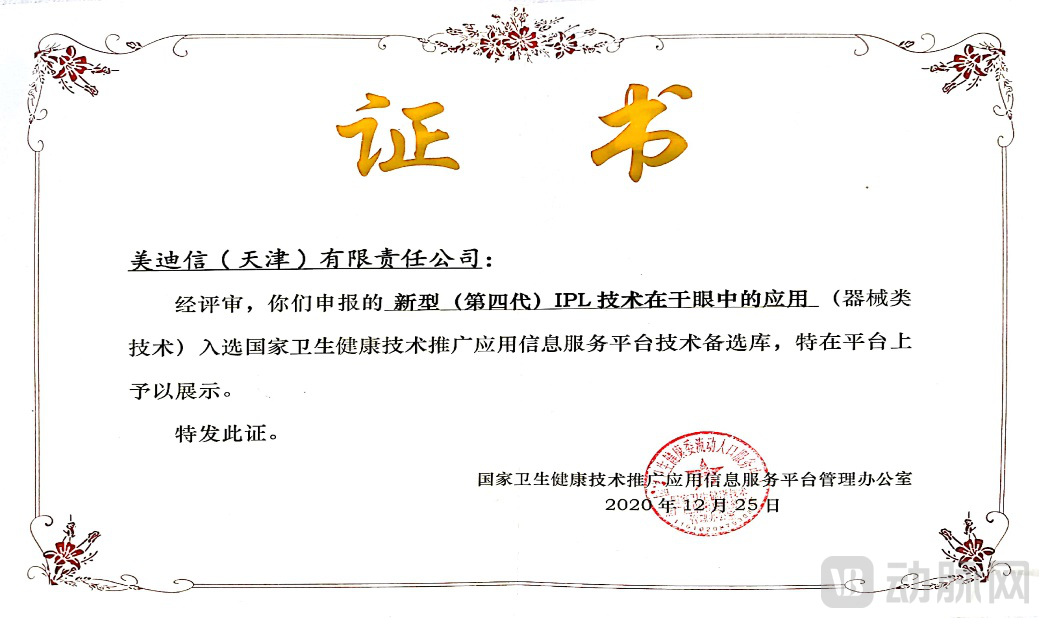
Leveraging its innovation and proven clinical efficacy, MDC’s fourth-generation IPL dry eye treatment technology has been successfully selected into the candidate technology database of the National Health Technology Promotion and Application Information Service Platform. Its core product, the Eyesis IPL Meibomian Gland Dysfunction Treatment Device, has been deployed in over 600 hospitals and has earned widespread recognition from frontline clinical ophthalmology experts.
Diversified Business Layout: Building a Comprehensive Platform for Ophthalmic Devices and Diagnostics
Although MDC has already achieved initial success in dry eye treatment devices, as an innovation-driven high-tech enterprise, MDC will by no means stop here. On the contrary, this is merely MDC's starting point.
Currently, in addition to dry eye disease, MDC has also begun to expand its presence in the field of amblyopia. Amblyopia is one of the more widely recognized ocular conditions among the general public. Generally, if active treatment is not initiated before the age of eight, visual impairment becomes difficult to correct due to the maturation of the visual system. For children who receive consistent treatment before age five, vision can improve to varying degrees, potentially even returning to normal. For children aged 3 to 5, the earlier the treatment begins, the higher the cure rate.
To address pediatric amblyopia, MDC's "Haoshibang" brand has collaborated with ophthalmology experts from multiple hospitals, including Beijing Tongren Hospital and Peking University Third Hospital, to launch LCD amblyopia therapy glasses and a smart VR amblyopia therapy system. The amblyopia therapy glasses have already obtained medical device certification, and further in-depth R&D is currently underway, alongside the development of additional optometric products.
Regarding the future, MDC also has a clear plan.
First, expand into the home-use market.。With the gradual improvement in public awareness of eye health, consumer spending on ocular care continues to increase. However, not all individuals choose to seek treatment at hospitals; therefore, home-use products can serve as a supplement to clinical equipment, extending treatment coverage to patients with mild dry eye disease.
Targeting the vast potential of the home-use market, MDC has already initiated the research and development of home-use dry eye treatment devices, with the technical roadmap design now completed.
Second, develop diagnostic products for ophthalmic diseases and build an integrated platform for ophthalmic diagnosis and treatment.. Currently, MDC has planned to conduct R&D on ophthalmic diagnostic devices and IVD products, and gradually achieve comprehensive synergy in diagnosis and treatment services.
Third, expand the product line., expand its product portfolio to address a wider range of ophthalmic diseases, thereby providing comprehensive diagnosis and treatment for all ocular conditions.
To ensure the rapid advancement of R&D projects and subsequent market promotion, capital infusion is a critical need for the company at this stage. It is reported that MDC has now launched its Series A financing round. Previously, bolstered by its high-performance products and a talented team, MDC successfully completed its angel round and Pre-A round financing in 2016 and 2020, respectively.