

BrainCo Leverages Brain-Computer Interface Technology to Empower Healthcare and Wellness, Unlocking New Possibilities for Human Life

BrainCo
Non-invasive brain-computer interface technology solution provider
Earlier this year, Elon Musk revealed that Neuralink had identified a suitable wireless sensor and implanted it into a monkey's brain, which industry insiders hailed as a major engineering breakthrough for brain-computer interface (BCI) technology. Consequently, BCI technology has repeatedly captured widespread attention.
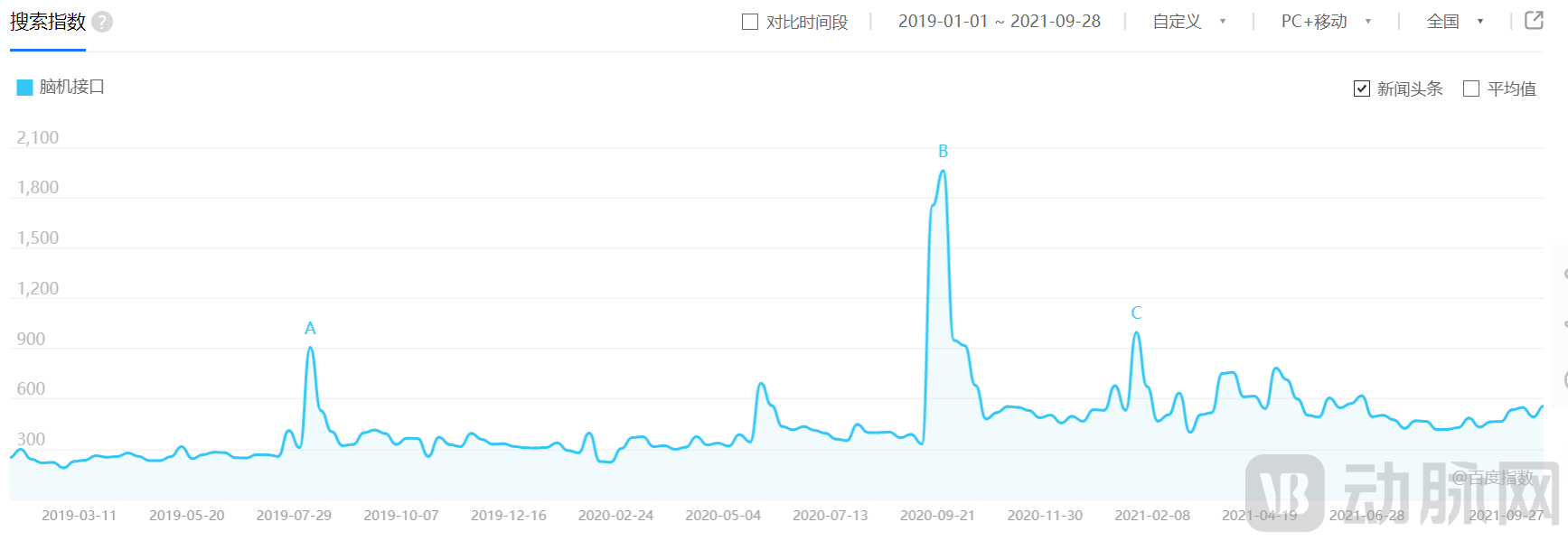 “Brain-Computer Interface” Search Index (Several peaks are all related to Neuralink news) Source: Baidu Index
In fact, the brain-computer interface (BCI) industry has existed for many years, yet it has historically attracted little attention from the public or investors, and has not yet witnessed any disruptive breakthroughs. BCI remains an emerging technology, with current applications primarily concentrated in the medical and education sectors. No international unicorns have yet emerged in this field, leaving substantial room for further exploration.
As a high-potential company, BrainCo was founded in 2015 and became the first Chinese team selected for the Harvard Innovation Lab. Dedicated to becoming a globally leading provider of non-invasive brain-computer interface (BCI) technology solutions, it has achieved notable success in the fields of education, healthcare, and human-computer interaction. In 2019, the Chinese Academy of Sciences released a ranking of the Top 20 Global AI Enterprises, featuring BrainCo as a representative company in the BCI sector.
According to statistical data from the China Disabled Persons' Federation, the total number of persons with disabilities in China is approximately 85.02 million (data as of the end of 2010), among whom 24.72 million have physical disabilities, accounting for nearly 30% and representing the largest group among the six categories of disabilities. Therefore, efficient and dignified treatment and rehabilitation for physical disabilities are of particular importance, and the advent of brain-computer interface (BCI) technology has made fulfilling this need possible.
In 2016, shortly after its establishment, BrainCo began`BrainRobotics Intelligent Bionic Hand`the development of, the product was officially launched in 2019, and is a bionic hand that integrates brain-computer interface technology with artificial intelligence algorithms.
Human motor intent is initiated by the brain and transmitted to the muscles via the spinal cord. The residual limb can be understood as an amplifier and filter for these neural signals. BrainRobotics captures myoelectric signals from the residual limb and employs deep neural network algorithms to decode the user's intent, thereby enabling the prosthetic limb to execute various movements.
BrainRobotics features 10 active joints and 6 actuated degrees of freedom, enabling independent movement of all five fingers and coordinated inter-finger manipulation, allowing above-elbow amputees to control the intelligent bionic hand as intuitively as their natural hand, achieving seamless mind-to-hand coordination.
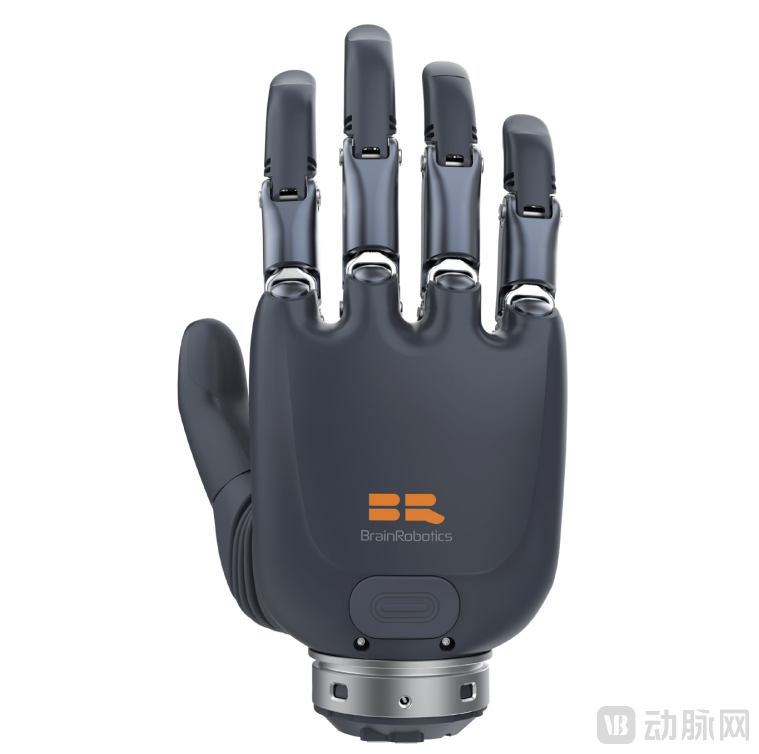
BrainRobotics Smart Bionic Hand
BrainRobotics not only restores motor function for individuals with disabilities and assists with their daily living, but also, by restoring sensory feedback, enables them to experience the proprioceptive sensation of their limbs “regrowing,” thereby providing psychological comfort. In 2019, the BrainRobotics intelligent bionic hand was recognized as one of the U.S. *TIME* magazine’s 100 Best Inventions of the Year. In 2020, this prosthetic hand also won the German Red Dot Design Award: Best of the Best.
From October 15 to 17, 2021, the China International Disability Expo & China International Rehabilitation Expo (CR EXPO) will be held at the China National Convention Center in Beijing. The BrainRobotics intelligent bionic hand will also be showcased at this year's expo.
Han Bicheng, Founder and CEO of BrainCo, stated: “The greatest challenge and unmet need in healthcare is that many diseases currently cannot be effectively diagnosed or treated using conventional approaches. For instance, Alzheimer's disease lacks effective pharmacological interventions; treatment-resistant depression is burdened by severe medication side effects, and its clinical diagnosis relies predominantly on subjective assessments due to the absence of objective diagnostic tools. Brain-computer interface (BCI) technology, however, can address numerous neurological and psychological conditions that were previously considered untreatable.”
“For example, in traditional autism treatment, physicians must rely on their clinical experience and assessment scales to independently evaluate treatment progress and efficacy. With brain-computer interface (BCI) technology, clinicians can access EEG reports from patients with autism and obtain more objective, previously unattainable data, thereby enabling a more scientific and efficient evaluation of therapeutic outcomes. When integrated with conventional intervention methods, the overall effectiveness of the intervention is enhanced,” Han Bicheng added.
To address this need,BrainCo initiated the research and development of the “StarKids Social and Attention Rehabilitation System” in 2017, established an autism rehabilitation pilot center in 2018, and commenced clinical trials in 2019.
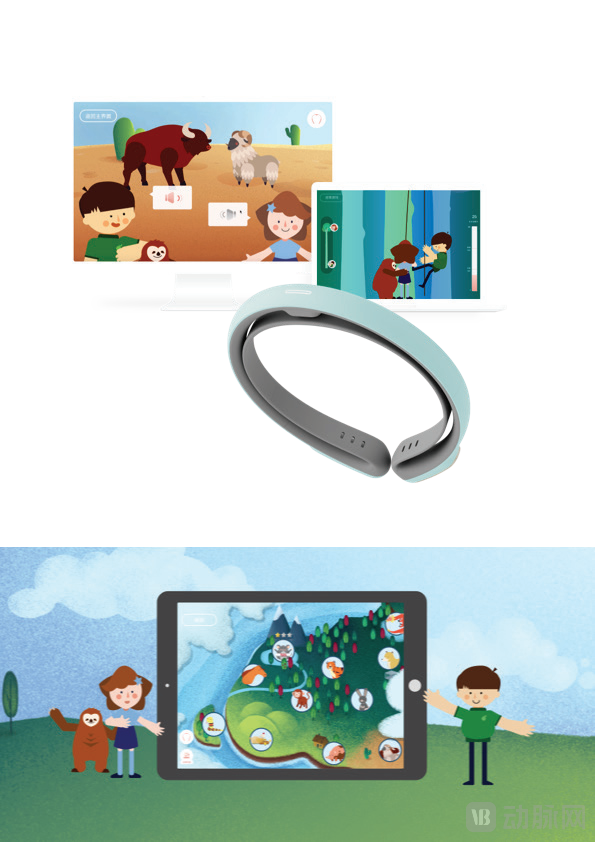
Kaixingguo Social Skills and Attention Rehabilitation System
The StarKids training system utilizes non-invasive brain-computer interface (BCI) technology. The head-mounted EEG recording device solely captures brainwave activity and transmits the data to the software for analysis via artificial intelligence algorithms. The software then provides feedback on neural activity to the child’s sensory system and brain through visual and auditory signals. Throughout the entire process, the device applies no electromagnetic stimulation to the child’s brain or body, thereby ensuring product safety.
Furthermore, the efficacy of the StarKids product is primarily grounded in three to four decades of scientific research, supported by extensive academic literature, and validated through rigorous clinical trials conducted by the National Autism Rehabilitation Research Center of the China Rehabilitation Research Center.
Regarding pediatric user adherence, BrainCo captures and sustains children's interest and attention through naturally engaging and fun brain-controlled therapeutic games and social interactive videos, while providing continuous, systematic training to rehabilitation therapists and parents to ensure the long-term therapeutic efficacy of the product.
Furthermore, the application potential of brain-computer interface (BCI) technology extends far beyond this. In the diagnosis and treatment of depression, clinical judgment and assessment scales have long served as the gold standard, with virtually no objective diagnostic methods available. Current treatment regimens primarily rely on psychotherapy and pharmacotherapy, which exhibit highly variable efficacy across individuals, carry substantial side effects, and lack both objective evaluation criteria and personalized treatment protocols.
Brain-computer interface (BCI) technology can address these pain points. For instance, Ruijin Hospital successfully treated a patient with treatment-resistant depression using BCI technology, achieving a major breakthrough in the intervention and treatment of depression.
In addition to the aforementioned two medical products, BrainCo has also developed a...Mindfulness Stress Relief System FocusZen。For those seeking a simple and effective way to alleviate anxiety, stress, and related issues, mindfulness meditation is a scientifically proven and highly effective approach.
However, for the vast majority of beginners, it is difficult to discern what constitutes the "correct" state. By collecting EEG data from numerous professional meditation practitioners, BrainCo quantifies the state of mindfulness meditation into a numerical score ranging from 0 to 100, providing users with feedback to help them better learn and practice mindfulness meditation.
At the same time, this mechanism is also designed based on the principles of neurofeedback training, helping users learn how to self-regulate their brainwave states and thereby achieve a more relaxed brain state.
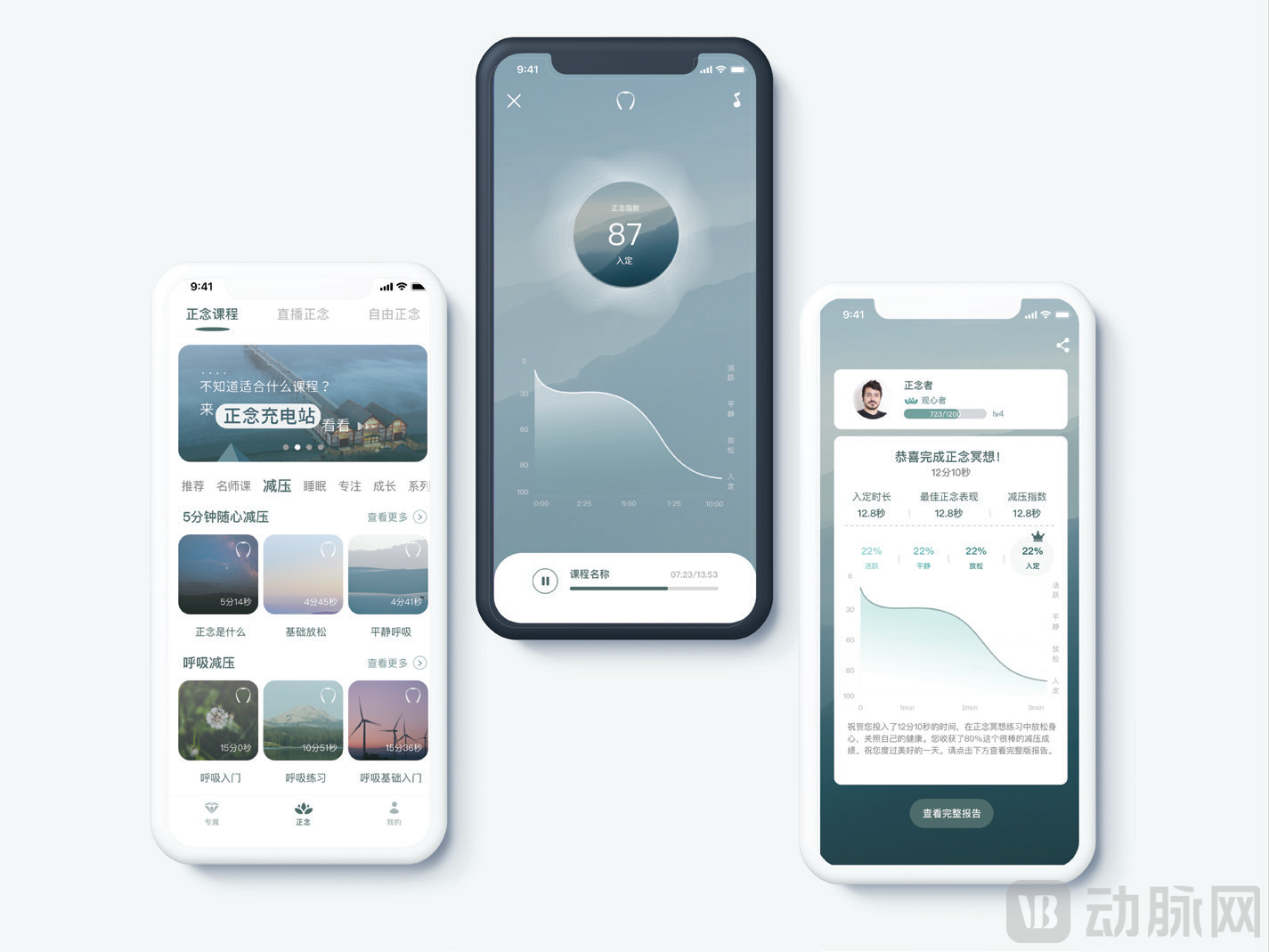
BrainCo Mindfulness Stress Relief System FocusZen
By now, attentive readers have already noticed,BrainCo has established a broad presence in the medical and healthcare sector, with each of its products empowered by cutting-edge brain-computer interface (BCI) technology. However, this is no easy feat for a startup, and it poses an even greater challenge for its founders.
When asked how he first became involved with brain-computer interface technology and what motivated him to start a company, Han Bicheng, founder and CEO of BrainCo, recalled:: “During my undergraduate studies, I learned about brain-computer interface (BCI) technology and thought controlling robots with the brain was incredibly cool. Later, I joined a medical company in Seattle, where I was also exposed to some brain-related research.”
“Later, I realized that the brain-computer interface field holds immense potential and a promising future, so I applied and was admitted to the Ph.D. program at the Harvard Center for Brain Science. During that time, I founded this company, with the original intention of enabling more people in need to benefit from brain-computer interface technology. This later evolved into our corporate mission: ‘Brain-computer technology, unlocking more possibilities for life,’” he said.
When discussing the company's formation process, Han Bicheng noted that during his Ph.D. studies at Harvard, he interacted with many outstanding professors and classmates,The company currently maintains a leading team of scientists in North America, with distinguished alumni from world-renowned institutions such as Harvard and MIT accounting for over 70% of its core R&D team.
BrainCo currently holds over 100 core patents in the brain-computer interface (BCI) field, approximately 60% of which are invention patents. The company aims to leverage BCI technology to assist a broader population by addressing issues related to specific diseases, thereby enabling more individuals to benefit from technological advancements.。
It is reported that over the next 3 to 5 years, BrainCo plans to launch products including intelligent bionic knees, sleep intervention systems, and dementia intervention solutions. The company will continue to deepen its presence in the consumer-grade product and digital therapeutics sectors, while simultaneously expanding the application scope of its technology to make brain-computer interface (BCI) technology benefit a broader population.
When discussing the application and development trends of brain science in China's healthcare sector, Han Bicheng stated that "the future has arrived." During the “14th Five-Year Plan” period, brain science has once again become a key priority, the National Brain Initiative is poised for launch, and the “Healthy China 2030” Planning Outline also calls for comprehensively enhancing public health while strengthening early diagnosis, early treatment, and early rehabilitation. Mental and psychological health have also garnered extensive attention from the state.
In addition to its applications in disability rehabilitation and other fields, brain-computer interface (BCI) technology can provide entirely new and potentially more effective solutions for a wide range of psychiatric and psychological disorders, including autism, stroke rehabilitation, attention deficit hyperactivity disorder (ADHD), depression, anxiety disorders, and Alzheimer's disease.
With the continuous advancement of science, the interplay between the brain, psychological processes, and mental health is becoming increasingly well-established. Through brain analysis, we can now comprehend many phenomena that were previously elusive, and the application of brain science in the medical field holds immense potential.
Regarding CR Expo 2021 China International Welfare Expo & China International Rehabilitation Expo
From October 15 to 17, 2021, the China International Welfare & Rehabilitation Expo (CR EXPO) will be grandly held at the China National Convention Center in Beijing. Organized by the China Disabled Persons' Federation, the expo has been successfully held for fourteen editions to date. It is a ministerial-level national exposition for assistive devices for persons with disabilities in China, and also one of the country's largest and most highly regarded industry gatherings in the rehabilitation and assistive technology sector.
As the only national-level exhibition for the rehabilitation assistive devices industry, officially organized by the China Disabled Persons' Federation, CR EXPO 2021 is unparalleled in scale and influence: spanning 25,000㎡ of exhibition space, featuring 350+ exhibiting companies, and attracting 50,000+ professional visitors. This edition will prominently showcase dedicated zones for mobility aids, prosthetics & orthotics, rehabilitation, information & communication aids and low vision, accessibility, and elderly care, bringing together cutting-edge technologies and innovative applications from the global rehabilitation, assistive devices, elderly care, and health industries.