

Going Global: Can Chinese Medical AI Find a Home in Europe?
Vistel
Artificial Intelligence Eye Health Product Developer
Among executives in the medical imaging AI sector, the vast majority have overseas backgrounds. Consequently, "going global" appears to be ingrained in the industry's DNA, with companies frequently announcing their overseas expansion plans since 2015.
However, upon careful examination of the meaning of “going global,” most companies regard initiatives such as joint research, establishing overseas branches, and strategic partnerships as markers of taking root abroad. Yet, when it comes to actual commercial implementation, very few enterprises are truly able to put it into practice.
Medical AI companies have a strategic purpose behind their precise choice of wording. In its prospectus, Infervision once described the medical AI market as follows: China’s medical AI market is projected to reach RMB 20.4 billion by 2025, while the global medical AI market is expected to reach as high as USD 17.7 billion in the same year.
Chinese enterprises possessing globally leading medical imaging AI technologies could potentially capture a market share worth hundreds of millions if they expand their applications overseas. Historically, however, challenges in funding, R&D, clinical validation, and regulatory registration have hindered the overseas scaling of Chinese companies.
Ideals are quietly transforming into reality. Since 2020, as AI medical devices from Chinese enterprises have frequently secured CE and FDA approvals, the charge for practical "going global" expansion has sounded. Supported by regulatory registration and market access, Chinese AI companies' journey into overseas markets is shifting from a "technology-centric" approach to a "technology + market" strategy.
Chinese healthcare AI company Vistel is one of the practitioners of "AI going global." Recently, Sun Yuhui, Founder and CEO of Vistel, conducted an in-depth interview with VCBeat, sharing in detail their practical overseas experience, which may serve as a valuable reference for the commercialization models of medical AI in overseas markets.

Sun Yuhui, Founder & CEO of Vistel
“The integration of AI into healthcare certainly cannot create demand out of thin air.” Regarding the expansion into Europe, Sun Yuhui elaborated on this premise: “Through careful observation, we can identify numerous workflows and technologies within clinical pathways that are ripe for optimization. If the value derived from streamlining these steps is substantial, then a genuine demand undoubtedly exists.”
Building on this approach, Vistel conducted research and analysis on factors such as clinical pathways and patient distribution across multiple European countries, ultimately finding that to fully leverage the value of AI, optometry centers and diabetes centers are the two most promising entry points.
As institutions with strong professional expertise but relatively limited clinical attributes, the core need of vision care centers lies in expanding their service scope and enhancing service quality, thereby acquiring more loyal consumers. Therefore, healthcare AI companies must identify the genuine latent needs of these consumers and leverage effective AI tools to help vision care centers meet them.
Such a B2B2C scenario exhibits its own distinct characteristics. Vistel has observed that within the framework of the European healthcare system, if residents develop a medical condition, they must first consult a general practitioner (GP) before being referred to a specialist for subsequent diagnosis and treatment. At this referral stage, patients typically face waiting periods ranging from one to three months. Furthermore, once a specific disease is confirmed, the cumbersome and protracted diagnostic and treatment workflows will further extend the overall clinical timeline. Consequently, Vistel identified optimizing the clinical pathway as a viable solution to shorten the time residents spend on examinations and treatments, thereby enabling patients to receive faster and higher-quality healthcare services.
Specifically, Vistel collaborates with optometry centers to equip their fundus imaging devices with AI-assisted diagnostic software for multiple fundus diseases. Powered by AI, patients can obtain a comprehensive assessment of their ocular health through a single fundus photograph. This examination can either supplement myopia screenings or be established as a standalone ophthalmic evaluation program, enabling residents to detect ocular pathologies more promptly and effectively, and facilitating early intervention for eye diseases.
On the other hand, the advent of AI has equipped optometry centers with the capability to efficiently process a high volume of examinations. This means that patients diagnosed with eye diseases can promptly monitor the progression of their conditions through these centers, accelerate the communication workflow with general practitioners and ophthalmologists, and receive more precise and effective treatment for ocular diseases.
Compared to vision care centers, diabetes centers are more closely integrated with clinical practice, with more direct needs, stricter requirements for AI's sensitivity and specificity, and a greater emphasis on the value of AI in clinical pathways.
An AI enterprise once stated, "During our collaborations, some of our ideas failed to generate strong interest from hospitals because the value lies outside hospital operations, or it does not align with physicians' core clinical expertise. Furthermore, clinical trial methodologies are inherently unable to adhere to traditional approaches." Consequently, in its pilot program at the diabetes center, Vistel adopted an alternative strategy, primarily leveraging AI to alleviate outpatient burden and streamline clinical workflows.
Given Europe's strong emphasis on ophthalmic disease screening and its readiness to adopt AI-based fundus screening, a straightforward objective has yielded significant results. Sun Yuhui told VCBeat: “We initially launched pilot tests in France, Italy, Germany, and Spain, and have now successfully achieved large-scale deployment. Data from Germany shows that 58% of diabetic patients in the country utilize AI during their screenings. This is a promising start.”
Although there are relatively few companies globally engaged in ophthalmic AI R&D, why have only one or two AI enterprises, such as Vistel, successfully achieved commercial deployment in the European market? According to VCBeat, the primary reasons can be summarized into two key aspects.
The first factor is regulatory market access. Historically, a major reason AI companies merely paid lip service to overseas expansion was the lack of commercially viable AI products as core support. In other words, even if their AI technology could genuinely meet the needs of healthcare institutions, the absence of regulatory review and approval precluded large-scale clinical trials and market promotion.
In this regard, Vistel's advantage lies in speed.
In March 2020, Vistel's AI-assisted diagnostic software for diabetic retinopathy fundus images obtained CE certification, laying the foundation for expansion into the endocrinology market. Less than a year later, Vistel's multi-disease fundus imaging AI-assisted diagnostic software received EU CE certification. It is the world's first ophthalmic AI product to obtain EU CE certification and China's first to be approved by the National Medical Products Administration (NMPA) to enter the "Special Review Procedure for Innovative Medical Devices." The software enables screening and auxiliary diagnosis for dozens of common ophthalmic diseases, including Retinal Vein Occlusion (RVO), Age-related Macular Degeneration (AMD) (dry/wet), suspected glaucoma, and Central Serous Chorioretinopathy (CSC).
Since the European market does not impose separate pricing and market access restrictions, obtaining CE certification grants enterprises the right to sell directly to end consumers. Therefore, in the collaboration between Vistel and the Diabetes Center, a significant portion of the revenue is derived from a "pay-per-case" model, enabling the AI's pricing to reflect its true commercial value.
Since entering the Italian market in the fourth quarter of 2020, Vistel's Diabetic Retinopathy AI has been deployed across dozens of local diabetes specialty clinics, serving approximately 120 patients per week at each individual clinic. At this rate, the annual volume of AI screenings in the diabetes clinic setting is projected to exceed 2,000 cases.
The second aspect is quality. Real-world statistics from general practice clinics in Italy during the third quarter of 2021 show that, among 467 randomly selected clinical samples, Vistel's diabetic retinopathy AI achieved a sensitivity of 100% and a specificity of 97.7%, representing the best performance among currently available diabetic retinopathy AI products globally.
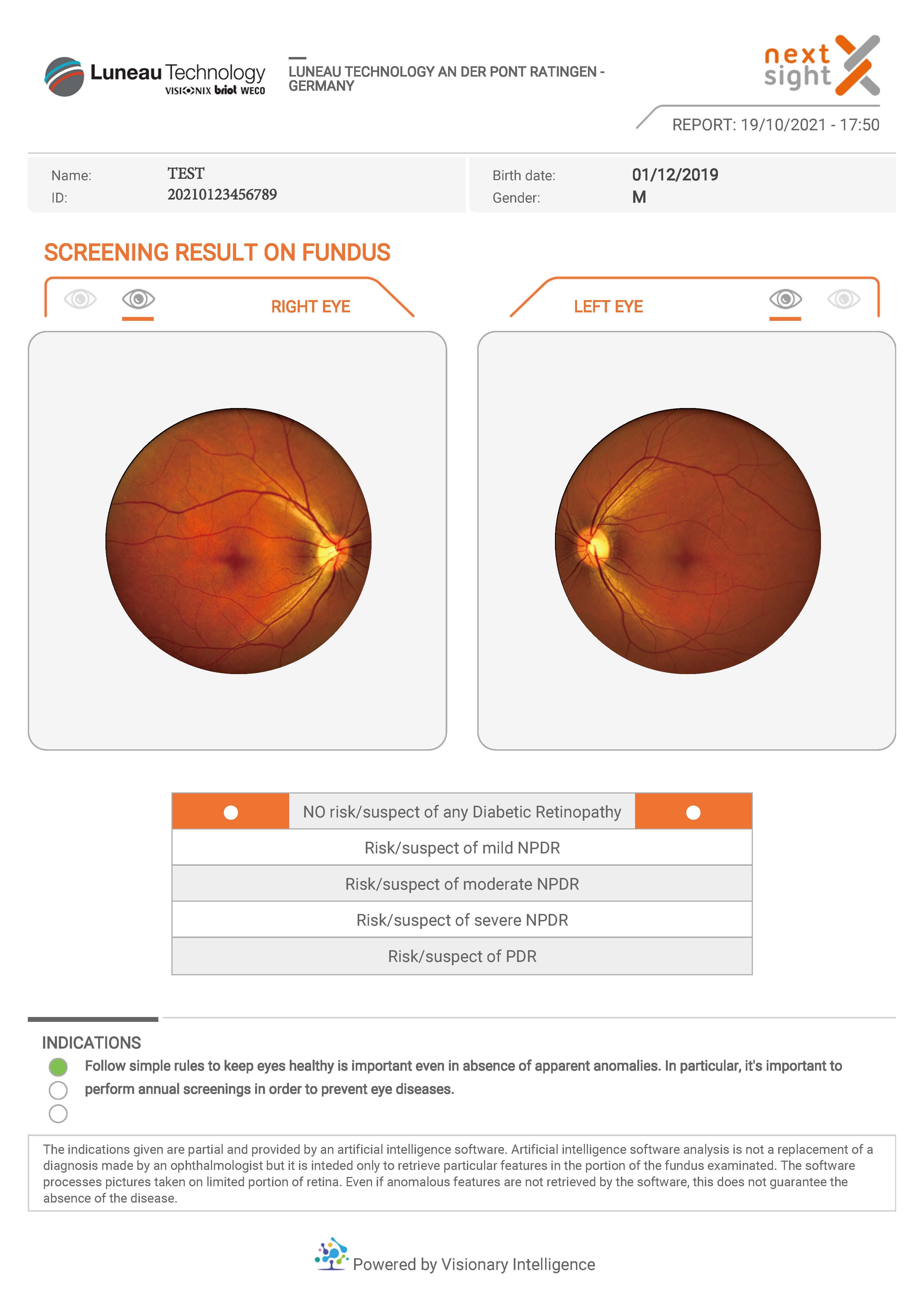
Test Report on Diabetic Retinopathy AI in the European Market
Multi-disease fundus AI also possesses technical advantages. According to Sun Yuhui, Vistel's multi-disease fundus AI can screen for common fundus diseases such as diabetic retinopathy, pathologic myopia, age-related macular degeneration, suspected glaucoma, and retinal artery occlusion. In other words, by leveraging AI technology, users can rule out over 90% of fundus diseases through a single screening.
For medical AI enterprises, single-disease R&D may yield mature products in the short term, yet it cannot meet diverse clinical needs. Therefore, since its establishment in 2016, Vistel has strategically targeted "ophthalmology" and its related specialties, thereby building a product system that aligns with clinical logic.
To date, Vistel has developed an AI-driven, end-to-end diagnostic and treatment system for fundus diseases, capable of screening and evaluating various fundus conditions and assisting in patient follow-up management.
Although Vistel has already achieved promising results in its overseas market expansion, as Sun Yuhui pointed out, observation reveals unmet needs, and clinical workflows are never perfect. This process requires patience.
Therefore, Sun Yuhui has divided Vistel's upcoming overseas expansion journey into three steps.
First, Vistel will continue to seek partners in relevant regions, expand collaborations with optometry centers and diabetes centers, and further capture the European market by leveraging its advantages in regulatory review and approval. Sun Yuhui, who previously worked at Intel for 15 years and possesses extensive experience in channel innovation, noted that Vistel has advanced rapidly in overseas commercialization, already securing several successful partnerships in Italy, Germany, Spain, and other countries.
Secondly, after completing the workflow optimization for optometry centers and diabetes centers, Vistel will next focus on scenarios such as general practitioners and pharmacies to further expand the service scope of its AI capabilities. This initiative aims to enhance the accessibility and convenience of ophthalmic screening services and optimize patients' diagnostic and treatment experiences. Throughout this process, Vistel will focus on addressing the needs of general practitioners and patients, as well as navigating data laws and regulations. For instance, while the EU has imposed strict requirements on data privacy, regulatory standards vary across different countries. In response, Vistel adopts a localized strategy in its commercial applications, delivering tailored AI solutions that precisely align with the specific conditions of each country.
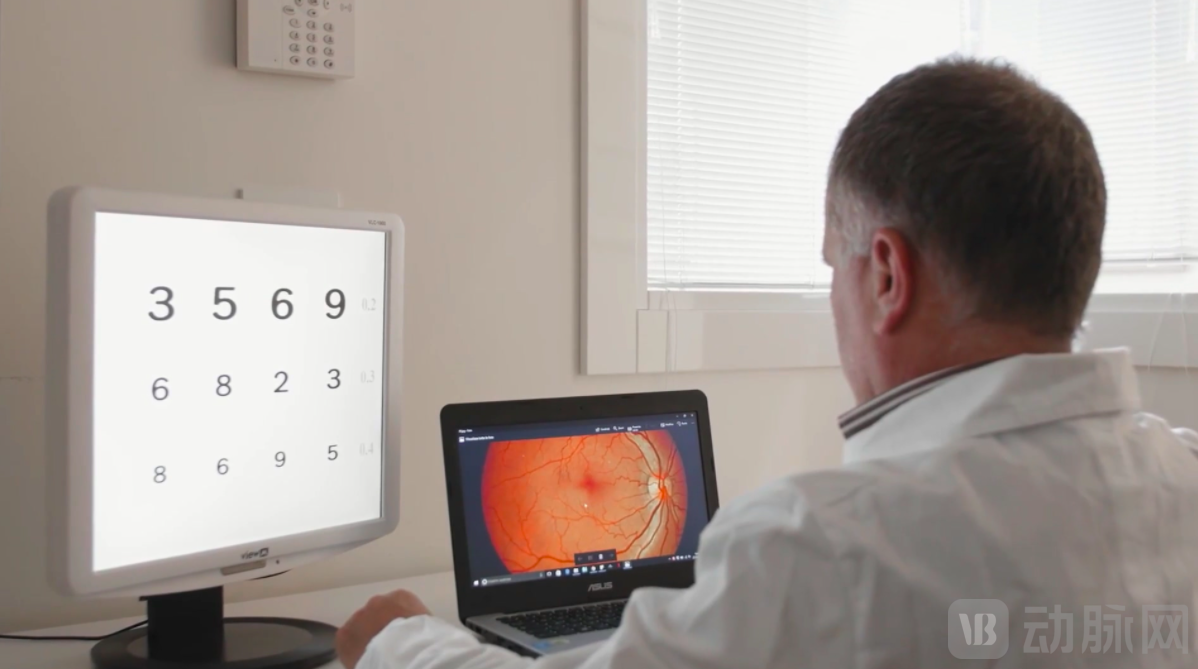
Vistel AI-Assisted Diagnostic System Deployed at French Optometry Center
The third step is to transition into clinical practice. The implementation of AI in the European market should be a gradual process. Sun Yuhui stated: "As our product pipeline becomes increasingly comprehensive, Vistel can enter higher-tier medical institutions to assist clinicians in delivering better diagnosis and treatment, as well as surgical planning and follow-up care." At this stage, Vistel needs to further enhance its product functionalities to closely align with clinical needs and serve a broader range of clinical scenarios.
Beyond completing the aforementioned core mission, Vistel has also established partnerships with multiple domestic and international insurance companies. Previously, the lack of patient data for many diseases prevented insurers from developing specific insurance products. With the integration of AI, a greater volume of clinical and medication data has been incorporated into standardized workflows, enabling insurance companies to provide commercial insurance support to more patients who fall outside the coverage scope of existing insurance systems.
With the continuous in-depth development and business model transformation of artificial intelligence and healthcare technologies, the value of AI in healthcare remains under ongoing exploration. Yet, in the era of big data, we are witnessing greater possibilities through Vistel's global expansion journey.