

Multi-Party Collaboration and Innovative Models Drive the Construction of County-Level Medical Consortium Ecosystem

Pfizer
Pharmaceutical R&D Developer
SHANGHAI, Nov. 7, 2021 /PRNewswire/ -- At the fourth China International Import Expo, the "Broad Market Strategic Cooperation Platform," themed "Expansion, Cooperation, Innovation, Co-creation," was officially launched at the Pfizer booth.。This collaborative platform aims to integrate resources from multiple stakeholders and align with the development needs of the county-level market to establish a county-level ecosystem centered on medical consortia. By introducing standardized diagnostic and treatment technologies and protocols into primary healthcare institutions, it enables grassroots patients with infectious diseases, tumors, and other major conditions to receive timely and accurate treatment locally, thereby realizing the goal of "treating serious illnesses without leaving the county."
Leaders and experts from relevant departments of the National Health Commission, medical institutions, pharmaceutical enterprises, channel partners, foundations, and innovative technology service providers attended the strategic project briefing and jointly launched the ceremony for the "Co-building of a County-level Medical Community Ecosystem."
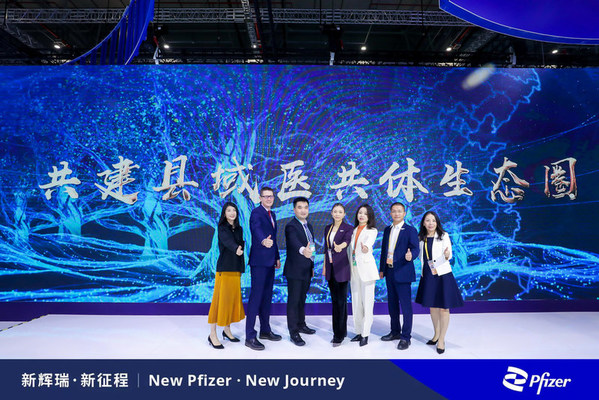
"Broad Market Strategic Cooperation Project" Launch Ceremony
Strengthen Clinical Specialty Development in County HospitalsImproving Standardized Diagnosis and Treatment
In the 《Opinions on Promoting the High-Quality Development of Public Hospitals》 issued by the General Office of the State Council, it is pointed out that county-level hospitals should play a leading role in county-level medical communities, enhance the prevention and treatment capabilities for tumors, respiratory, digestive, and infectious diseases, and increase the county-level healthcare visit rate. Huang Erdan, a researcher at the Health Development Research Center of the National Health Commission, stated: “The establishment of county-level medical communities takes meeting the public’s healthcare needs as its starting point, while also serving the broader objective of deepening the healthcare service system. It requires collaborative medical services across healthcare institutions at different levels to build an ecosystem for healthcare services. Through the coordinated integration of multi-party resources, this will drive comprehensive improvements in the service quality and standards of grassroots healthcare institutions, enabling county residents to genuinely access equitable, standardized, and integrated ‘health-centered’ healthcare services, thereby enhancing health outcomes.”
Wu Wei, President of Zichang City People's Hospital in Shaanxi Province, stated: “Currently, many county hospitals have excellent hardware facilities, but the key lies in enhancing the ‘soft power’—the clinical expertise—of grassroots physicians. The prevention, diagnosis, treatment, and rehabilitation of any disease can be operated and managed through a standardized framework. If accurate and reliable treatment cannot be provided to patients, they will lose confidence and trust, opting instead to seek care at larger hospitals, which will make it difficult to implement the tiered healthcare system. To achieve the goal of ‘keeping major illnesses within the county’ and further advance the tiered medical system, strengthening specialty capacity building is crucial.”
“To introduce standardized diagnostic and treatment practices into primary healthcare institutions, county-level hospitals must take the lead by prioritizing the development of key clinical specialties such as critical care, oncology, gastroenterology, medical imaging, and pathology, thereby driving improvements in overall diagnostic and treatment capabilities through specialty advancement. Through collaborative efforts to integrate and share clinical teaching resources across different regions, establish regional clinical skills training centers, co-develop diverse medical simulation training courses tailored to physicians at various levels, and promote the multidisciplinary team (MDT) model, we can cultivate and deploy more high-caliber medical professionals to grassroots healthcare institutions, comprehensively enhancing their diagnostic and treatment capabilities,” noted Yin Yongmei, Vice Chairperson of the Chinese Society of Clinical Oncology (CSCO).
“Over the years, the Chinese Red Cross Foundation has remained committed to enhancing the diagnostic, treatment, and preventive capabilities of grassroots hospitals. By integrating widespread training for primary care physicians with targeted cultivation of grassroots specialists, the Foundation has leveraged national-level expert resources to deliver standardized diagnosis and treatment training and organize clinical case discussion programs for grassroots doctors. Operating from top to bottom and from theory to practice, and addressing the most urgent needs of grassroots practitioners for clinical knowledge and skill enhancement, the Foundation provides support for talent development and specialty construction in county-level hospitals. Currently, with the support of Pfizer China, the Chinese Red Cross Foundation is advancing the implementation of the 'Provincial Training Program for Grassroots Oncologists.' Through the establishment of provincial demonstration bases, the program promotes standardized oncology diagnosis and treatment concepts, standardizes clinical practices, enhances the service capacity of county-level oncology specialists, and improves the comprehensive prevention, control, and management of cancer as a chronic disease. Ultimately, it aims to provide cancer patients with convenient and reliable full-course medical support across diagnosis, treatment, drug accessibility, and disease management,” stated Zhou Kuiqing, Assistant to the Secretary-General and Director of the Rescue and Medical Department of the Chinese Red Cross Foundation.
Strengthening primary healthcare service capacity and providing equitable healthcare solutions for patients has been the driving force behind Pfizer’s sustained cultivation of the vast county-level market in recent years. Bao Hua, Head of the Market Expansion & Innovation Center for China at Pfizer Biopharmaceuticals Group, stated: “As a global leading biopharmaceutical company, Pfizer has always been committed to ‘becoming an integral part of China's healthcare system.’ Over the years, Pfizer has actively supported the enhancement of clinical physicians’ academic capabilities and the development of relevant medical disciplines in China. For example, the ‘Navigation’ Project launched in 2013 has helped China’s medical institutions train nearly 10,000 professionals in the anti-infective field. Moving forward, Pfizer’s Market Expansion Team will collaborate with relevant government departments, foundations, and medical institutions on a series of initiatives focusing on county-level cancer prevention and treatment centers, standardized diagnosis and treatment of infections, and standardized quality control management for breast cancer. These efforts aim to promote consistent clinical standards, assist primary care hospitals and physicians in strengthening their professional competencies and enhancing disease prevention and control capabilities, and actively advance the development of China’s healthcare sector.”
Leveraging Momentum to Innovate Healthcare Delivery Models: Ushering in a New Era of Primary Care
The newly released "Broad Market Strategic Cooperation Platform" will also gather multi-party social forces across dimensions such as channels and innovative technical services to jointly build the ecosystem of county-level medical communities, enhance the accessibility of medicines and healthcare services, improve survival and quality of life through standardized treatment, and thereby foster a virtuous and healthy ecosystem.
Baohua stated: “Innovative business models in the pharmaceutical and healthcare industry are continuously emerging and evolving. We hope to actively expand through both traditional and innovative models, leverage the ‘Internet + Healthcare’ initiative to enhance the medical service capabilities of primary healthcare institutions, embrace new business formats, and collaborate to co-build an ecosystem, thereby better delivering high-quality and convenient healthcare services to patients and ensuring that premium, equitable diagnosis and treatment reaches more patients.”
“In active response to the national policy of ‘strengthening grassroots healthcare,’ Sinopharm’s distribution network across China has been continuously improved in recent years, and our cooperation in the grassroots market has also been steadily strengthened. The range of covered products has expanded from traditional mature products to innovative drugs and specialty medicines. To date, our county-level market cooperation project with Pfizer has already covered more than 6,000 county-level hospitals in 14 provinces. We hope that through our collaboration, more high-quality drugs and treatment solutions will be delivered to a broader range of county-level areas, continuously improving the diagnostic, treatment, and medication standards at county hospitals,” said Xu Hai, Deputy General Manager of the Global Procurement and Supply Chain Service Center at Sinopharm Group.
Innovative services at DTP pharmacies are also a current hotspot in the grassroots healthcare sector. Pang Tingyu, Vice President of Shanghai Pharma Cloud Health, stated, “DTP pharmacies have already been integrated with county-level hospitals and mobile screening vehicles. By forming a closed-loop service system across five pathways—medication awareness, prescription accessibility, drug accessibility, drug affordability, and medication adherence—they are building their own service framework to provide patients with integrated comprehensive health services.”
Chong Hua, Deputy General Manager of Zhiyun Yilu, stated: “The uneven distribution of medical resources and inconsistent quality of care are critical pain points in China’s current healthcare system. Digital innovations, represented by virtual medical services, can serve as a means to remotely provide academic services and medical support to primary care physicians, thereby addressing part of their need for enhanced clinical and academic competencies. Meanwhile, through sustained long-term efforts, we continuously advance the development of medical knowledge bases, intelligent clinical assistance tools, and quality control systems to optimize the primary care support network and ultimately improve patient outcomes.”
It is foreseeable that as the collaborative development of the county-level medical community ecosystem continues to advance, primary healthcare services and diagnostic and treatment capabilities will accelerate significantly. Regarding expectations for the future development of primary care hospitals, Wu Wei stated: “Digital platforms and digital models in grassroots hospitals are already under continuous development. In the future, they are expected to integrate with advanced medical technologies. Built upon next-generation information management technologies, this will enable more efficient diagnosis and treatment, comprehensively elevating the standard of primary healthcare services.”