Danaher Releases 'Evidence-Based Value Compendium on Pall Point-of-Use Water Filters' to Enhance Hospital Water Safety

Danaher
Product Design and Manufacturer
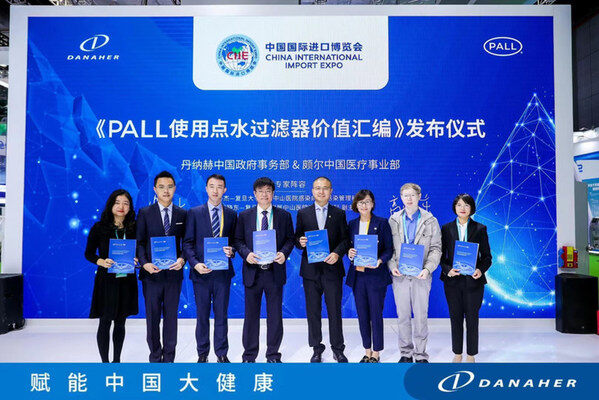
SHANGHAI, November 7, 2021 /PRNewswire/ -- On November 7, during the 4th China International Import Expo (CIIE), 《Compendium of Evidence-Based Value for Pall Point-of-Use Water Filters》 was officially released. The publication was jointly compiled by the Danaher China Government Affairs Department and Pall Corporation, a Danaher operating company. The release ceremony was hosted by Li Xiao, Head of Health Economics and Value Access, Danaher China Government Affairs Department. Attendees included Hu Bijie, Director of the Department of Infectious Diseases / Infection Control, Zhongshan Hospital Fudan University; Gao Xiaodong, Deputy Director of the Department of Infection Control, Zhongshan Hospital Fudan University; Ms. Wei Chunyan, Vice President of Government Affairs, Danaher Corporation; Mr. Li Lei, Vice President and General Manager, Pall China; and Mr. Zhai Jianhua, General Manager, Pall Healthcare Business Unit.


Healthcare-associated infections (HAIs) are inherently linked to the existence of healthcare facilities. Among the numerous risks of HAIs, water used for clinical purposes in these settings is a significant yet frequently overlooked source. While most waterborne microorganisms do not cause infections in healthy individuals, they can lead to severe infections or even be life-threatening for patients in high-risk departments such as hematology, transplantation, and burn units. Microorganisms readily form persistent, difficult-to-eradicate biofilms in tap water pipelines, terminal outlets, and the water pathways of medical equipment, posing a potential infection threat to patients.
To prevent waterborne infections in healthcare facilities, global organizations such as the U.S. Centers for Disease Control and Prevention (CDC) and the World Health Organization (WHO) regularly issue recommendations and guidelines on controlling waterborne microorganisms. Point-of-use (POU) water filtration technology is considered a simple and effective method for controlling waterborne microorganisms and biofilm-related issues. The WHO guidelines on *Legionella and the Control of Legionellosis* stipulate that faucet outlets in high-risk areas must be free of *Legionella pneumophila* (undetectable in 1 L of water); if this standard is not met, POU water filters should be installed on the faucets. POU filters can serve as an effective measure to prevent the discharge of waterborne microorganisms from outlets such as faucets and showers.
The Point-of-Use (POU) water filters developed by Pall Corporation, a Danaher company, are evidence-proven to effectively remove waterborne microorganisms. Pall's POU water filtration technology has been deployed globally for over 20 years, with widespread adoption in healthcare institutions across Europe and North America, accumulating extensive practical application experience.
《Compilation of the Evidence-Based Value of Point-of-Use (POU) Water Filters》 references 93 of the latest international academic papers, systematically summarizing the current status of waterborne microbial contamination in healthcare water systems, commonly adopted disinfection protocols, the technical characteristics of POU water filtration technology, and its clinical and economic value. This compilation demonstrates the professional academic expertise of the Danaher team and has been recognized by leading experts in the field.
Against this backdrop, Director Hu Bijie delivered the opening remarks, introducing waterborne contamination and control strategies abroad, China's water use standards and specifications, the insufficient awareness of waterborne infection prevention and control among healthcare institutions, the current status of waterborne contamination in medical facilities in China, research findings from Zhongshan Hospital, as well as an evaluation of Point-of-Use (POU) filtration technology and its value compilation. Concluding his speech, Director Hu shared his vision: "Through collaboration and joint efforts with Danaher Corporation, we hope to raise awareness among infection control and clinical professionals in China regarding the prevention and control of waterborne infections, strengthen microbial monitoring and research on prevention and control strategies for medical water use, and promote the development of hospital water use standards/guidelines at both national and local levels. This will ultimately improve the quality and safety of water in Chinese healthcare institutions, benefiting both our patients and healthcare workers."