

Takeda Launches 'Rare Disease Year' in China with New Product, Diagnosis, and Support Initiatives at CIIE

Takeda
Biopharmaceutical Manufacturer
SHANGHAI, Nov. 7, 2021 /PRNewswire/ -- Today, Takeda Pharmaceutical Company Limited (Takeda) grandly hosted a special launch event for hemophilia and rare diseases under the theme "Beginning with Life's Vastness" during the 4th China International Import Expo (CIIE). Guided by its core "patient-centric" philosophy, Takeda delivers comprehensive care and support to rare disease patients in China across three dimensions—"new products, new diagnostics and treatments, and new patient support and coverage"—thereby driving the next-level upgrade of China's rare disease innovation ecosystem: Firazyr, a therapeutic drug for acute attacks of Hereditary Angioedema (HAE),®(Icatibant Acetate Injection) made its nationwide debut in China, safeguarding the lives of HAE patients; signed a cooperation agreement with the Chinese Alliance for Rare Diseases and the Hemophilia Treatment Center Collaboration Network of China (HTCCNC) on the "Bai Fen Ling Hang" Hemophilia Multidisciplinary Diagnosis and Treatment Capacity Enhancement Project, driving further advancements in clinical standards; and partnered with the Chinese Red Cross Foundation to launch the "Wei Ai Na Han" Rare Disease Care Special Fund, further strengthening the healthcare support system.
Prof. Li Linkang, Executive Chairman of the China Alliance of Rare Diseases; Mr. Bei Xiaochao, Vice Chairman and Secretary General of the Chinese Red Cross Foundation; Prof. Yang Renchi, Director of the Thrombosis and Hemostasis Diagnosis and Treatment Center at the Institute of Hematology and Blood Diseases Hospital, Chinese Academy of Medical Sciences; Prof. Wu Runhui, Secretary of the Party Branch of the Hematology Discipline and Director of the Second Hematology Department at Beijing Children's Hospital, National Center for Children's Health; Dr. Song Yang, Department of Allergy, Renji Hospital, Shanghai Jiao Tong University School of Medicine; Director Huang Rufang, Founder of the CORD (China Organization for Rare Diseases); Ms. Fan Jing, Head of the Prescription Drug Business at JD Health; Mr. Feng Hao, General Manager of the Innovative Payment and Patient Services Division at Medlinker Health; Mr. Shan Guohong, Global Senior Vice President of Takeda Pharmaceutical Company Limited and President of Takeda China; and Ms. Liu Yan, Head of the Hemophilia and Rare Diseases Business Unit at Takeda China, along with other distinguished guests, attended the event via a hybrid online and offline format.
Mr. Guohong Shan, Global Senior Vice President and President, Takeda Chinastated: “It is a great honor to have the opportunity to introduce Takeda’s innovative products and comprehensive services for rare disease patients in China on such a high-level international exchange platform as the CIIE. Leveraging the momentum of the Expo, Takeda is continuously accelerating the introduction of a wide range of treatment options to address the urgent and practical needs of these patients. Meanwhile, upholding our core ‘patient-first’ philosophy, we will continue to actively partner with industry peers to elevate the diagnosis and treatment standards for rare diseases in China, raise public awareness, and support the enhancement of a multi-tiered healthcare security system. By advancing the development of a rare disease innovation ecosystem across multiple dimensions, we are committed to helping rare disease patients in China welcome a spring filled with hope.””
"New Products", Accelerating the Fulfillment of Patients' Actual Unmet Needs
Rare diseases are one of Takeda Pharmaceutical Company Limited’s core therapeutic areas globally. In China, Takeda expects to launch more than 15 innovative medicines within five years, with over half being rare disease treatments. Benefiting from the spillover effect of the previous China International Import Expo (CIIE), Takeda has fully ushered in the "Year of Rare Diseases" in China starting this year. Within just one year, four innovative rare disease products have been approved or launched, covering multiple therapeutic areas including Fabry disease, Gaucher disease, and hereditary angioedema (HAE).
Hereditary angioedema (HAE) is a rare autosomal dominant genetic disorder.[1], patients may unpredictably develop acute edema in multiple body sites, including the extremities, face, genital skin, respiratory tract, and gastrointestinal mucosa. Of particular concern is that laryngeal edema progresses rapidly, with a mean time of 4.6 hours from the onset of edema to asphyxiation.[2], severe cases can lead to death from asphyxiation. According to statistics, 58.9% of HAE patients in China have experienced laryngeal edema.[3], with a case fatality rate of up to 40%[2], patients chronically face the physical and psychological distress caused by acute exacerbations, as well as the life-threatening risks they pose.
During this China International Import Expo (CIIE), Takeda announced another innovative product — Firazyr®, a treatment for acute attacks of Hereditary Angioedema (HAE).®(Icatibant Acetate Injection)has officially become available to patients. The drug was rapidly approved and launched within just one year, and officially became accessible to Chinese HAE patients at the end of October. The first beneficiary patient was diagnosed by the Department of Allergy, Peking Union Medical College Hospital, Chinese Academy of Medical Sciences, and for the first time, integrated online-to-offline fulfillment was successfully implemented through JD Pharmacy, marking Feizeyou®(Icatibant Acetate Injection) will safeguard the lives of patients with hereditary angioedema, ushering in a new era of HAE treatment in China.
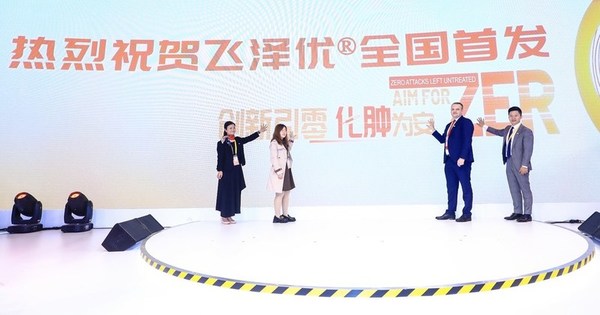
Feizeyou® (Icatibant Acetate Injection) China Launch Ceremony
"New Diagnosis and Treatment", "Leading with Excellence": The Innovative Path of China's Rare Disease Diagnosis and Treatment System
In recent years, with growing societal and public attention to rare diseases and their patient populations, coupled with the frequent introduction of favorable policies, China has made substantial progress in rare disease prevention and management. Research on rare diseases has progressively deepened, relevant data has been continuously accumulated, and clinicians' capabilities in diagnosing and treating rare diseases have steadily improved. Taking hemophilia as an example, China has gradually optimized its regional collaborative network for hemophilia diagnosis and treatment and initially established a tiered diagnosis and treatment system for the disease, which has played a positive role in enhancing hemophilia clinical care and patients' disease management capabilities. However, compared with other developed countries, the number of hemophilia centers at all levels in China remains relatively small, and their quality varies significantly, falling far short of meeting the extensive needs of patients.
At the press conference, Takeda signed a cooperation agreement with the China Alliance for Rare Diseases and the Hemophilia Treatment Centers Collaborative Network of China (HTCCNC) for the "100% Leading" Hemophilia Multidisciplinary Diagnosis and Treatment Capacity Building Project. Through the multidisciplinary diagnosis and treatment model, the project will provide hemophilia patients with training and guidance on medications, treatment, disease education, and home-based therapy. In this regard,Prof. Yang Renchi, Director of the Center for Diagnosis and Treatment of Thrombosis and Hemostasis, Institute of Hematology & Blood Diseases Hospital, Chinese Academy of Medical Sciencesstated: "The establishment of a tiered diagnosis and treatment system for hemophilia holds significant reference value for future rare disease prevention and treatment efforts. As is widely recognized, the journey for rare disease patients in China to seek medical diagnosis and treatment is exceptionally long, and even after diagnosis, they often face a lack of available therapeutic options. Therefore, by taking hemophilia centers as a model and collaborating with all sectors of society to advance the development of a three-tier diagnosis and treatment network and elevate the clinical management standards for hemophilia, this initiative will undoubtedly serve as a benchmark and exert a profound impact on the advancement of rare disease prevention and treatment in China, including hemophilia."
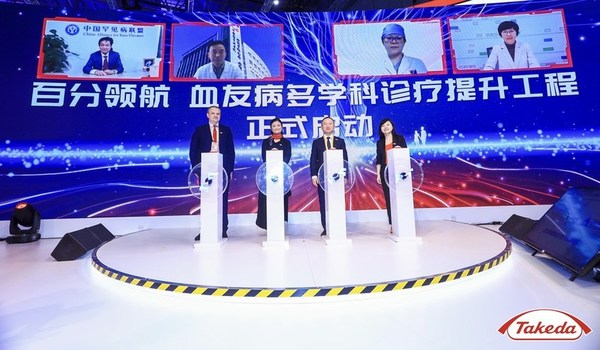
“100% Leading” Hemophilia Multidisciplinary Diagnosis and Treatment Capacity Enhancement Project Launch Ceremony
As a supporting enterprise, Takeda has long maintained a strong presence in the hemophilia field. The company is not only actively dedicated to translating scientific advancements into innovative therapeutic solutions, but is also driving China’s hemophilia landscape into a new era of precision and digitalized treatment. At the end of 2020, Takeda introduced myPKFiT to China, the country's first pharmacokinetics-guided hemophilia A management tool approved by the National Medical Products Administration (NMPA).®, collaborating with healthcare professionals to "tailor-make" individualized treatment plans based on each patient's condition, fully ushering in a new era of personalized hemophilia treatment in China. As of October 2021, myPKFiT®It has been implemented in over 40 hospitals across China, benefiting more than 200 patients and enabling them to move freely as desired and enjoy a life of independence.
“New Coverage”, Collaboratively Exploring a Multi-Tiered Coverage System from Point to Area
The accessibility of rare disease medications remains one of the most pressing concerns for patient communities. Currently, many patients continue to face critical challenges, including the absence of curative treatments, limited access to available drugs, and the risk of falling into or back into poverty due to medical expenses, underscoring an urgent need for societal attention and support. Therefore, in addressing the challenges posed by rare diseases, collaborative efforts across all sectors of society are particularly crucial to jointly establish a multi-tiered healthcare security system for patients with rare diseases in China.
Takeda closely focuses on the actual and urgent needs of patients. Adopting a “from point to surface” approach, it comprehensively engages in the co-construction of a healthcare security system: On one hand, Takeda collaborates with commercial insurance providers and other relevant institutions to explore initiatives such as Huimin Bao (inclusive commercial health insurance), ensuring effective complementarity between commercial insurance and basic medical insurance. Simultaneously, it works closely with patient advocacy groups and charitable organizations to continuously implement patient care and medication assistance programs. On the other hand, Takeda actively participates in establishing regional medication security mechanisms for rare disease patients, contributing to the refinement of a multi-channel financing framework centered on basic medical insurance, incorporating government fiscal support, civil affairs assistance, and charitable aid.
At this press conference, Takeda further announced that it will jointly launch the "Love for Rare" Rare Disease Care Special Fund with the Chinese Red Cross Foundation. "Healthy China Campaign" will be among the first projects implemented under the special fund. Both parties will co-build an ecosystem for rare disease diagnosis and treatment, promote the development of rare disease care in China (including but not limited to hereditary angioedema, Fabry disease, and Gaucher disease), enhance the accessibility of innovative medicines, and strengthen comprehensive disease management across the full patient journey. These efforts will ultimately drive improved treatment benefits for patients and upgrade the rare disease diagnosis and treatment ecosystem. Concurrently, Takeda has also partnered with MediTrust Health to develop an innovative payment program for HAE. This initiative aims to improve the accessibility and affordability of innovative rare disease therapies, explore the establishment of a multi-tiered healthcare security system, and alleviate the overall economic burden on patients, society, and the government.

“Call of Love for the Rare” Special Fund for Rare Disease Care Launch Ceremony
Mr. Bei Xiaochao, Vice President and Secretary-General of the Chinese Red Cross Foundationstated: "We are highly pleased to partner with Takeda in sustained and in-depth public welfare cooperation for rare diseases. We look forward to the ‘Love for the Rare’ Rare Disease Care Special Fund contributing to advancing the development of China's rare disease patient care and security system and diagnosis and treatment system, enhancing patient welfare, and promoting the upgrading of China's rare disease diagnosis and treatment ecosystem."
Approval Number: C-ANPROM/CN/APK/0009
Approval Date: November 2021
Statement:
1. This material is intended solely for use at the 2021 China International Import Expo.
2. This article is intended to disseminate cutting-edge medical and pharmaceutical information and does not constitute a recommendation or promotion of any drug or diagnostic and treatment regimen.
3. If you would like to learn more about diseases, medications, or related diagnostic and treatment information, please consult a healthcare professional.
About Takeda Pharmaceutical Company Limited
Takeda (Tokyo Stock Exchange Ticker Symbol: 4502) (NYSE ticker symbol: TAK) is a values-based, R&D-driven global biopharmaceutical company headquartered in Japan. Takeda is committed to transforming scientific discoveries into highly innovative medicines to safeguard patients' healthier lives and brighter futures. Takeda focuses its drug development on four therapeutic areas: Oncology, Gastroenterology, Neuroscience, and Rare Diseases, with targeted R&D investments in plasma-derived therapies and vaccines. We remain dedicated to the research and development of highly innovative medicines, building a robust and diverse pipeline by pioneering novel treatment approaches and strengthening our collaborative R&D engine to help improve people's lives. With employees across approximately 80 countries and regions, we work alongside local healthcare partners to deliver health breakthroughs to patients worldwide.
Takeda entered China in 1994. Takeda China is headquartered in Shanghai, with its major business centers in mainland China located in cities and regions including Beijing, Shanghai, Tianjin, Guangzhou, and the Hong Kong Special Administrative Region. The company maintains offices in major cities across China and currently employs over 2,000 people in the country. With China's economic development and the growing demand for healthcare, China has become one of Takeda's most important emerging markets globally.
For more information, please visithttps://www.takeda.com
Forward-Looking Statements
This document and any materials distributed in connection therewith may contain forward-looking statements, views, or opinions regarding Takeda's future business, future conditions, and operating results, including Takeda's estimates, forecasts, objectives, and plans. Forward-looking statements often include, but are not limited to, words such as “aim,” “plan,” “believe,” “hope,” “continue,” “anticipate,” “intend,” “seek,” “secure,” “will,” “may,” “should,” “would,” “could,” “expect,” “estimate,” “predict,” or similar expressions, or the negative of such expressions.
The forward-looking statements contained herein are based solely on Takeda’s estimates and assumptions as of the date of publication. Such forward-looking statements do not constitute a guarantee by Takeda or its management of future performance, and involve known and unknown risks, uncertainties, and other factors, including but not limited to: economic conditions affecting Takeda’s global operations, including the macroeconomic environments in Japan and the United States; competitive pressures and developments; changes in applicable laws and regulations; the success or failure of product development programs; decisions by regulatory authorities or the timing of such decisions; fluctuations in interest and exchange rates; claims or questions regarding the safety or efficacy of marketed products or product candidates; the timing and impact of post-merger integration efforts for acquired companies; and the ability to divest assets non-core to Takeda’s operations and the timing of any such divestitures. All of these factors may cause Takeda’s actual results, performance, achievements, or financial condition to differ materially from any future results, performance, achievements, or financial conditions expressed or implied by such forward-looking statements.
For more information regarding the above and other factors that may affect Takeda's results, performance, achievements, or financial condition, please refer to "Item 3. Key Information—D. Risk Factors" in Takeda's most recent Annual Report on Form 20-F filed with the U.S. Securities and Exchange Commission and other reports, available on Takeda's website.https://www.takeda.com/investors/reports/sec-filings/orwww.sec.gov. Takeda's future results, operating performance, or financial position may differ materially from those expressed or implied by the forward-looking statements. Persons receiving this press release should not place undue reliance on any forward-looking statements. Takeda has no obligation to update any forward-looking statements contained in this press release or any other forward-looking statements that the Company may make, except as required by law or securities regulations. Past performance is not indicative of future results, and Takeda's performance referenced in this press release should not be construed as, nor is it an estimate, forecast, or projection of, Takeda's future performance.
[1]National Health Commission, Office of the Expert Committee for Diagnosis, Treatment and Guarantee of Rare Diseases (Peking Union Medical College Hospital). Guidelines for Diagnosis and Treatment of Rare Diseases (2019 Edition). 2019.
[2] Xu YY, et al. Ann Allergy Asthma Immunol. 2014, 112(6):539-544.