

Novartis and Philips Sign Strategic Collaboration Memorandum to Enhance Diagnosis of Central Nervous System Rare Diseases

Novartis
Drug Development and Manufacturing
SHANGHAI, Nov. 8, 2021 /PRNewswire/ --Novartis (China) and Philips (China)A Strategic Cooperation Memorandum of Understanding was signed at the 4th China International Import Expo (CIIE) to fully leverage both parties' professional expertise in pharmaceuticals, healthcare, and medical artificial intelligence. With central nervous system demyelinating disease—multiple sclerosis (MS) as a breakthrough point, the collaboration aims to drive innovation in imaging technology to enhance diagnostic techniques for multiple sclerosis, thereby further shortening the time to diagnosis for rare diseases and improving the diagnostic rate.
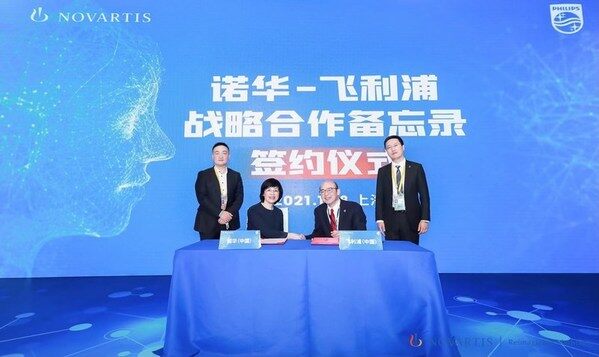
Figure/ Philips and Novartis Sign Strategic Cooperation Memorandum of Understanding
Novartis Pharmaceuticals (China) Chief Scientific Officer and Head of Medical Affairs Wu Lingstated: “Only by integrating the industry’s most cutting-edge technologies with extensive experience can better healthcare solutions be developed to benefit patients. Novartis has been deeply engaged in the field of central nervous system (CNS) diseases for many years, possessing extensive experience in disease diagnosis, treatment, and management. This collaboration aims to fully unleash the immense potential brought about by innovations in imaging technology and artificial intelligence, accelerate efforts to overcome the challenges of ‘difficulty in detection’ and ‘difficulty in diagnosis’ for rare diseases, and realize the inspiring vision of ‘Healthy China, leaving no one behind.’”
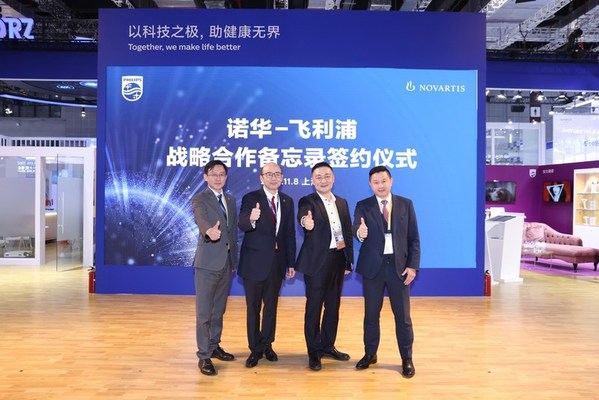
Photo/ Group photo at the Philips-Novartis signing ceremony
Complex and variable clinical manifestations, prolonged time to diagnosis
Multiple sclerosis (MS) is an immune-mediated disease primarily characterized by inflammatory demyelinating lesions of the central nervous system, and was included in the *First Catalogue of Rare Diseases in China* in 2018. According to the *2021 Report on the Survival and Treatment of Multiple Sclerosis Patients in China*, the time from symptom onset to first medical consultation for MS patients in China exceeds one year, the average time to diagnosis exceeds three years, and 50% of patients are misdiagnosed.[1]. Delayed diagnosis and treatment of MS can lead to severe disabilities such as paralysis and blindness, imposing a heavy burden on families and society. Accurate diagnosis and early initiation of highly effective therapy are essential measures to delay disability progression and reduce the disability rate.
Magnetic Resonance Imaging (MRI) is one of the key modalities for the early diagnosis of MS and holds significant value for follow-up and assessment of disease progression. MRI imaging clearly demonstrates the location, number, size, and distribution of lesions.
Professor Liu Yaou, Director of the Department of Radiology at Beijing Tiantan Hospital, Capital Medical University, stated: “With the advancement of imaging technology, particularly MRI, more subtle lesions can be detected at an early stage of disease. This has enabled a more comprehensive and in-depth understanding of demyelinating diseases, providing clinicians with a solid basis for subsequent treatment. However, in practical application, imaging examinations still face certain challenges, such as non-standardized research methodologies, a lack of standardized tools and data, and varying proficiency levels among imaging professionals. These factors can lead to discrepancies in imaging results across different hospitals. Promoting the standardization and customization of imaging examinations is an urgent task that we must currently advance.”
Centered on Standardized Clinical Management, Jointly Advancing Imaging-Tracked Diagnosis and Treatment Across the Entire Disease Course
This collaboration between Novartis and Philips will explore a disease-specific diagnostic and therapeutic management model centered on imaging diagnosis and standardized clinical management. Taking multiple sclerosis as the initial focus, the partnership will jointly explore and develop advanced imaging diagnostic models. By leveraging cutting-edge medical imaging technologies such as compressed sensing alongside artificial intelligence, the initiative will drive the generation of customized, structured imaging reports, advance the clinical implementation of longitudinal imaging tracking to optimize treatment outcomes, reduce time to diagnosis, and standardize clinical follow-up. Furthermore, by transcending the boundaries of traditional diagnostic and therapeutic paradigms, the collaboration aims to build disease-centric solutions and ecosystems, providing patients with a comprehensive range of extended services.
Liang Jianqiu, Vice President of Philips Greater China, General Manager of the Integrated Solutions Center, and Head of Strategic Partnerships, stated: “As a pioneer in digital innovation in healthcare, Philips has always focused on the unmet clinical needs within China's healthcare system. We believe that our collaboration with Novartis will accelerate the implementation of cutting-edge technologies, one-stop solutions, and innovative business models in the healthcare sector, helping to shorten the diagnostic journey for MS patients, promote industry standardization, and deliver greater value to both the industry and patients.”
[1]《Blue Book on Health Insights for Patients with Multiple Sclerosis in China and the 2021 Quality of Life Report for Patients with Multiple Sclerosis in China》