XtalPi Showcases AI-Powered Peptide and Oligonucleotide Drug Discovery Platforms at TIDES USA 2026, Highlighting Multimodal Innovation and Global Impact
XtalPi
Computation-Driven Innovative Drug R&D Provider
Recently, the globally leading AI (artificial intelligence) + robotics drug R&D platform XtalPi (2228.HK) was invited to attend a premier global industry conference in the field of pharmaceutical R&D for peptides, nucleic acids, and gene editing — 2026 TIDES USA (Oligonucleotide & Peptide Therapeutics 2026), focused on sharing itsAI Peptide Drug Design Platform PepiX™ and Generative AI-Driven Oligonucleotide Drug Development Platform Kodexia™Breakthrough Achievements and Commercial Applications of Two Core Technology Platforms.
XtalPi’s independently developed AI peptide drug development platform, PepiX™, integrates three core capabilities: precision AI design, high-throughput wet-lab screening, and automated synthesis, forming an efficient closed-loop workflow between dry and wet experiments. The platform features a database of over 2,000 proprietary non-natural amino acids (NCAAs), effectively addressing traditional challenges in peptide drug R&D such as poor stability, permeability, and oral bioavailability, thereby optimizing the drug development timeline and success rate. It has currently driven multiple...The development of high-potential peptide therapeutics, including brain and ocular delivery peptides and oral peptides, has achieved cutting-edge results, validating technological advantages in real-world cases.. The nucleic acid drug platform Kodexia™ focuses on the development of siRNA (small interfering RNA) therapeutics. It has achieved breakthroughs in generative siRNA sequence design, enabling the simultaneous optimization of modification patterns, long-acting properties, and off-target risk reduction during the design phase. The platform has also established a highly efficient closed-loop workflow integrating wet and dry experiments, thereby significantly shortening the design cycle for small nucleic acid drugs. Currently, Kodexia™The platform is strategically focusing on building technological capabilities for candidate drug development and drug delivery in the fields of metabolic diseases, kidney diseases, and dual-target therapies.
Building on its success in small molecule and antibody drug discovery, XtalPi’s AI-driven drug R&D platform for peptides and small nucleic acids has also fully commenced the commercial translation of its research outcomes,Its intelligent drug R&D platform, spanning multiple drug modalities, has entered a new stage of scaled development.。

PepiX™: AI + Non-Canonical Amino Acids + Dry-Wet Iterative Cycle
`Redefining the New Paradigm of Peptide Drug R&D`
As leading global pharmaceutical companies such as Novartis, Johnson & Johnson, AstraZeneca, and Merck & Co. continue to expand their peptide drug pipelines, peptides have emerged as one of the core tracks in global innovative drug R&D. However, longstanding challenges such as lengthy R&D cycles, poor druggability, and limited structural diversity continue to hinder the successful development and clinical translation of peptide therapeutics. At the "Peptide Discovery to CMC" forum during this summit,Dr. Zhang Genwei, Head of the Peptide Platform at XtalPi, was invited by Prof. Bradley L. Pentelute, a Chemistry Professor at the Massachusetts Institute of Technology (MIT), to deliver a keynote speech titled 《AI and NCAA to Unlock the Design of Peptide Drugs》(《Artificial Intelligence and Non-Canonical Amino Acids Unlock the Design of Peptide Drugs》)., thoroughly elucidating how PepiX™ directly addresses the aforementioned pain points, achieving breakthroughs in accelerated R&D, enhanced druggability, and expanded structural diversity.
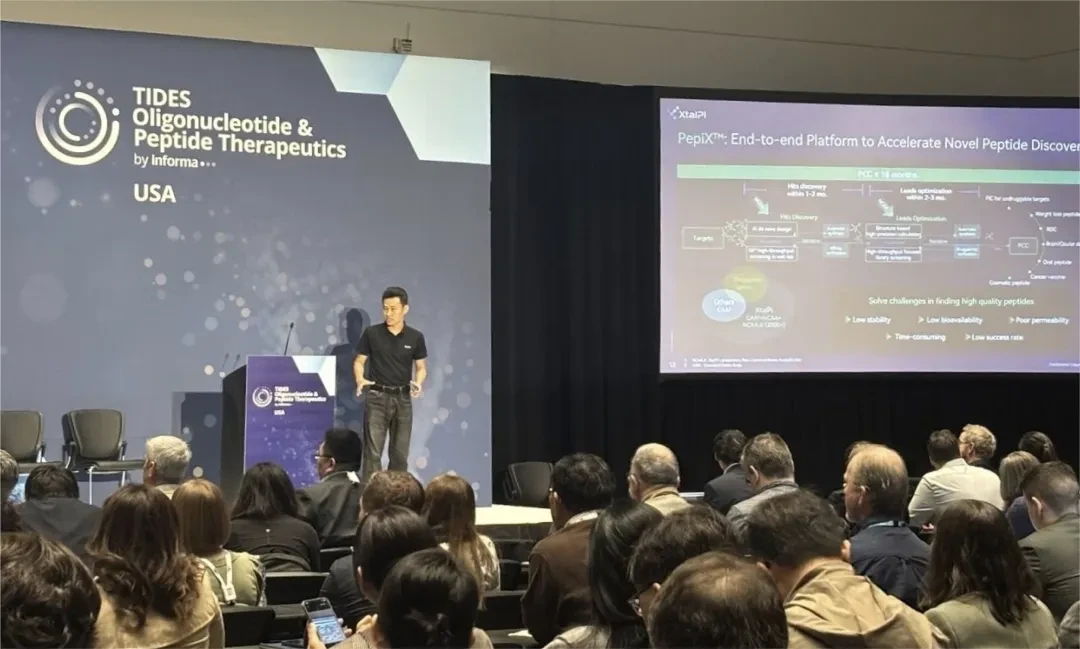
Dr. Zhang Genwei introduced that XtalPi's independently developedPepiX™ AI Peptide Drug Design Platform, integrating high-precision AI models, automated synthesis, and high-throughput wet-lab screeningThree core capabilities have established an end-to-end R&D closed loop of "dry-lab design + high-throughput wet-lab screening + wet-lab validation," completely breaking the linear model of traditional peptide R&D. The platform has developed a proprietary non-canonical amino acid (NCAA) library that can overcome the spatial constraints of peptide molecules and significantly enhance their druggability.
The PepiX™ platform comprehensively covers the peptide drug discovery workflow from Hit (hit compound) identification to PCC (preclinical candidate) development, supporting diverse molecular types including linear peptides, cyclic peptides, and bicyclic peptides. Centered on AI-driven molecular design and augmented by automated synthesis, high-throughput library construction and screening, and bioactivity assays, the platform enables real-time data feedback and a closed-loop integration of wet and dry experiments, significantly enhancing the efficiency and precision of peptide drug discovery:Hit discovery takes only 1–2 months, while the lead optimization cycle is shortened to 2–3 months.Meanwhile, by introducing proprietary NCAA, medicinal chemistry modifications, cyclization, and other approaches, PepiX™ can significantly expand the druggable space for peptides, andTo obtain cyclic peptide molecules with higher affinity (pM-level dissociation constant) and superior stability (plasma stability half-life exceeding 72 hours), thereby addressing druggability challenges in peptide drug development such as low bioavailability and poor penetration., providing preclinical candidate molecules with superior drug-like properties for subsequent development.
Currently, the PepiX™ platform has successfully deployed its technologies across multiple therapeutic pipelines and is strategically focusing on the development of various high-potential peptide therapeutics, including brain/ocular delivery systems and oral peptides. Dr. Zhang Genwei also shared several benchmark practical R&D achievements, featuring cutting-edge cases such as AI-driven de novo design and molecular optimization, picomolar (pM)-level RDC peptide vector development, and cyclic peptide development against difficult-to-drug IDP (intrinsically disordered protein) targets. These accomplishments fully validate the technological advantages and industrial value of the PepiX™ platform, setting a new global benchmark for the intelligent R&D of peptide therapeutics.

Kodexia™:
Generative AI Spearheads Next-Generation siRNA Drug R&D
As a research hotspot in the development of small nucleic acid drugs, siRNA drugs have been widely applied due to their high gene silencing efficiency, manageable adverse reactions, and convenient synthesis. However, traditional siRNA drug development faces industry pain points such as challenges in navigating patent landscapes, limited modification strategies, high complexity in dual-target R&D, and protracted development cycles. During this summit,Dr. Honggen Zhang, Senior Scientist at XtalPi, presented the poster 《Kodexia™: An Integrated siRNA Design Platform Powered by Generative AI》(《Generative AI-Powered Integrated siRNA Design Platform Kodexia™》), detailing the breakthroughs achieved by the platform in siRNA design precision and R&D efficiency, facilitating the discovery of best-in-class (BIC) candidate siRNA sequences. Currently, the platform is strategically building technical reserves for candidate drug development and drug delivery, with a primary focus on metabolism, kidney diseases, and dual-target therapeutics.
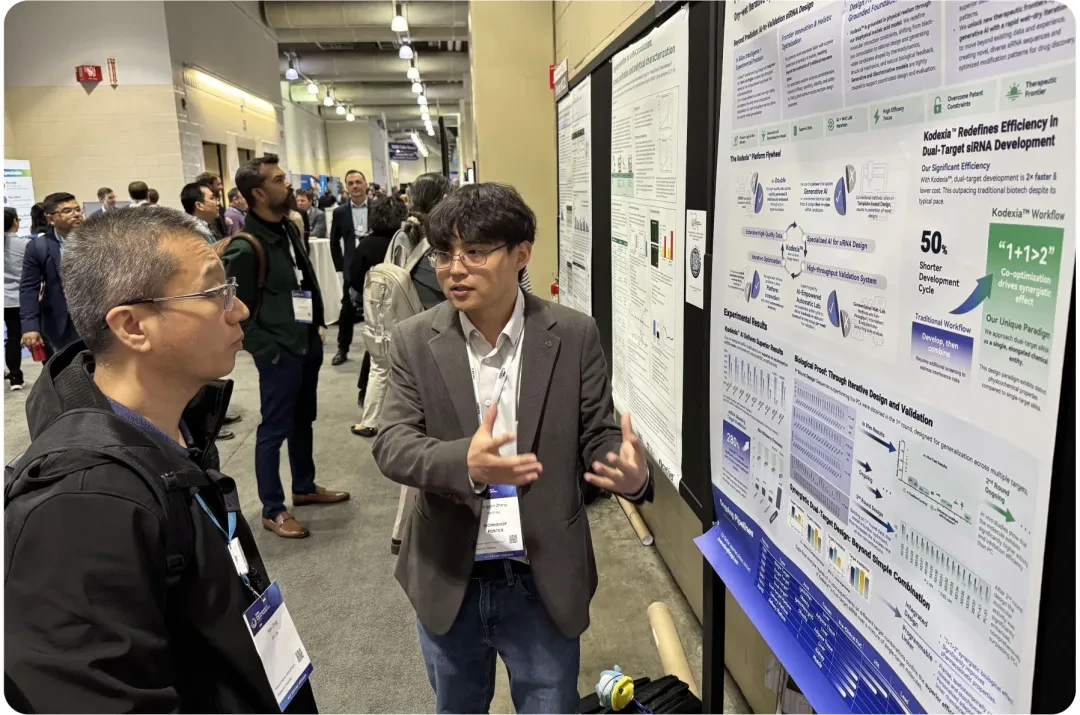
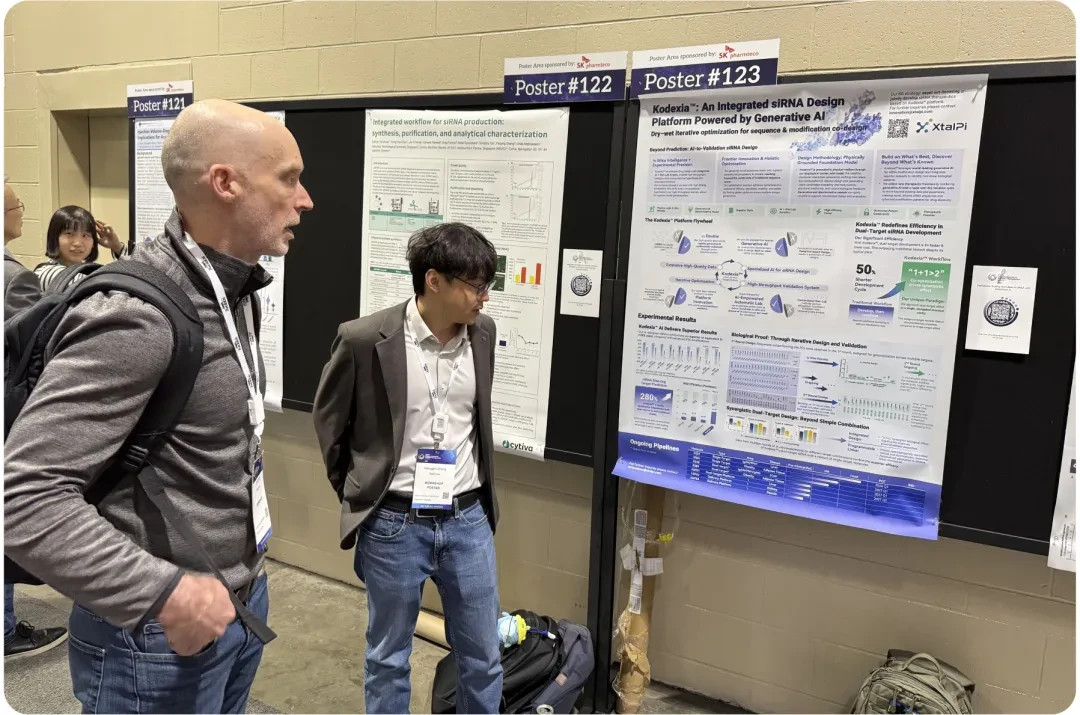
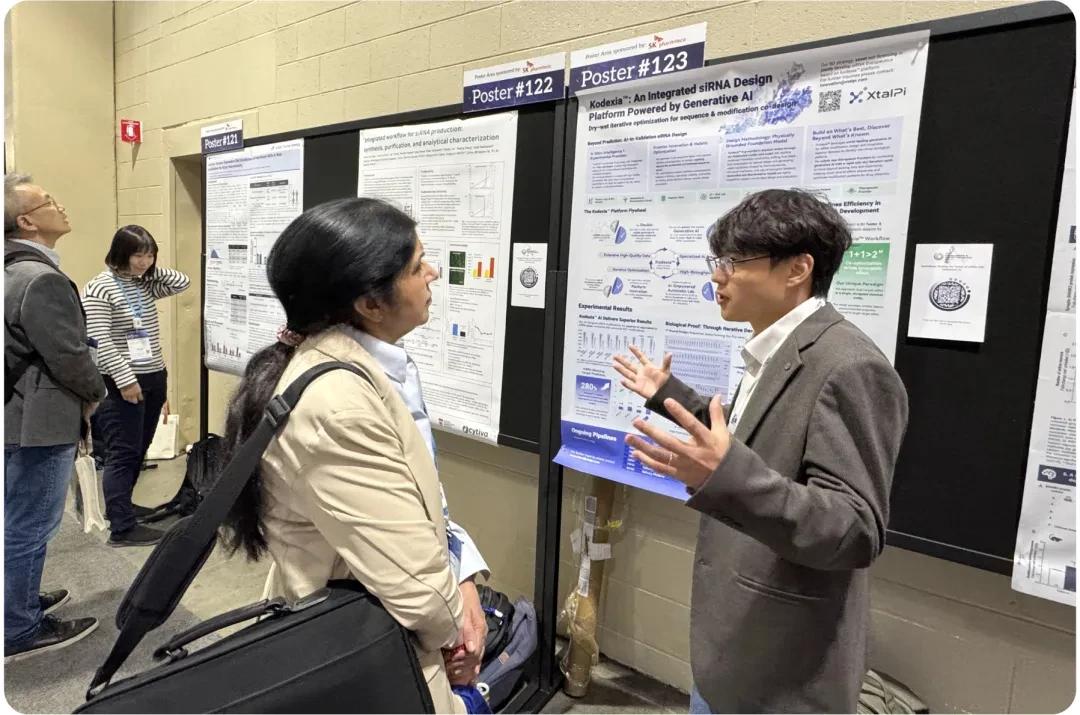
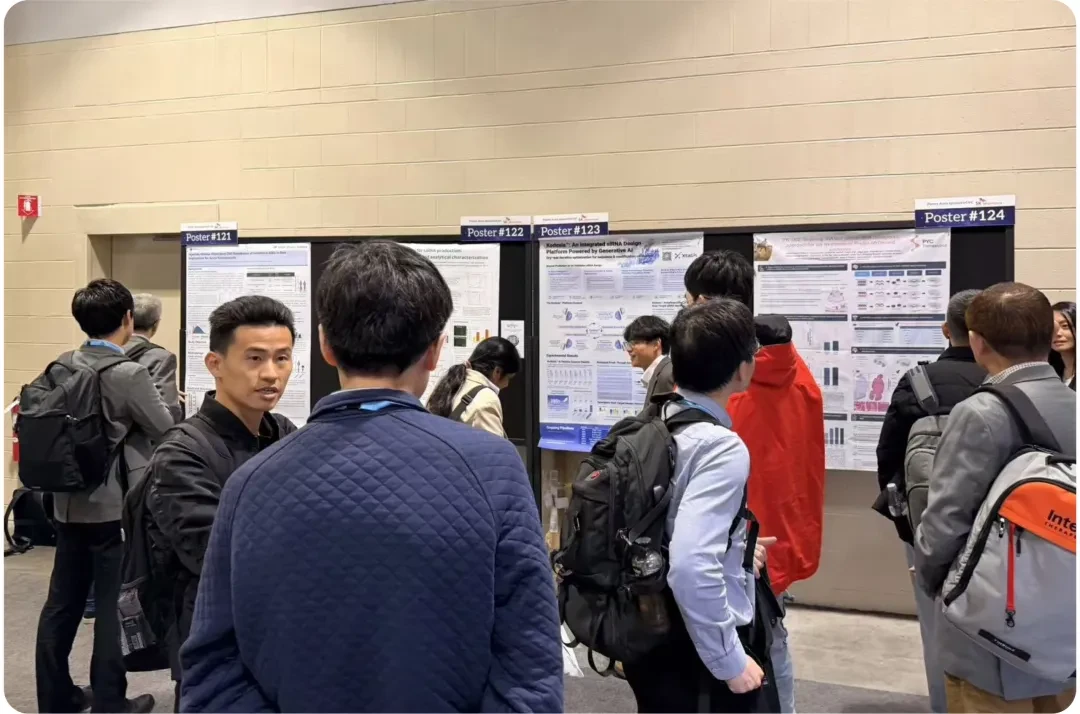
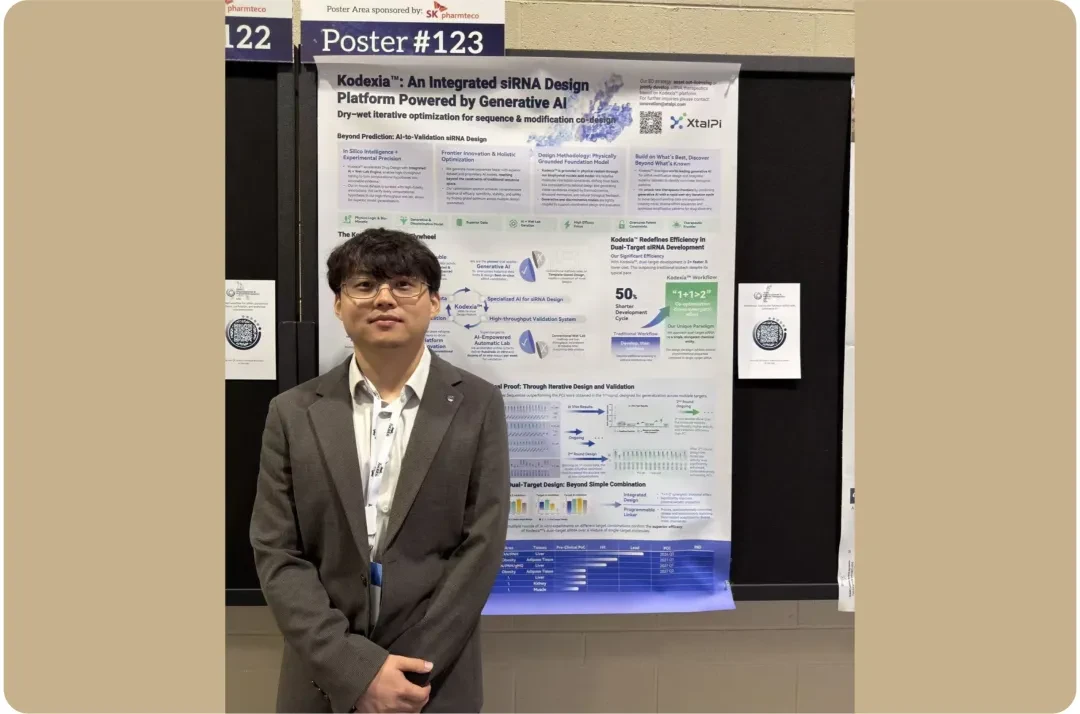
Kodexia™ is developed by XtalPi, leveraging proprietary AI algorithms and massive experimental dataNext-Generation Generative AI End-to-End siRNA R&D Platform. Building upon over 40,000 high-quality data points rapidly accumulated through XtalPi’s drug discovery and automation systems, the platform features a proprietary generative AI model that forms an iterative dry-wet closed loop with automated experimental workflows. It rapidly identifies optimal siRNA sequences and provides customized recommendations for optimal modification patterns, achieving multi-objective design optimization that balances high silencing efficiency, prolonged duration of action, and low off-target risk, while supporting the precise design of single-molecule, dual-target therapeutics. Furthermore, by integrating delivery technologies including small molecules, lipid nanoparticles (LNPs), antibodies, and peptides, the platform establishes a comprehensive delivery capability system. This delivers end-to-end intelligent enablement across the entire siRNA drug development pipeline, holding the promise of comprehensively accelerating the R&D process for nucleic acid therapeutics.
At the core algorithm level, the Kodexia™ platform integrates physics-constrained logic with biological principles, overcoming the "black-box training" paradigm of traditional AI models to construct a highly interpretable and adaptable bio-algorithm architecture. Leveraging the powerful spatial exploration capabilities of generative AI, the platform achieves breakthroughs in siRNA molecular design. It is particularly optimized for the R&D of novel targets and First-in-Class (innovative drugs), enabling rapid identification of the global optimum within the molecular space and establishing a differentiated technological barrier. Experimental data shows that, compared to traditional siRNA R&D methods,Kodexia™ enhances the precision of siRNA molecular design by over 280%., can rapidly screen for high-quality molecules with in vitro activity superior to that of the positive control, thereby significantly enhancing the design quality and success rate of lead compounds for in vivo studies. In the context of dual-target siRNA research and development, the platformCan shorten the R&D cycle for BIC siRNA candidate molecules by 50%, while leveraging integrated dual-target molecular design to achieve synergistic target enhancement, overcome the efficacy limitations of conventional single-target drugs, and enable innovative breakthroughs in next-generation siRNA therapeutics.
In terms of data and iterative systems, the Kodexia™ platform leverages automated laboratory infrastructure to establish high-throughput, rapid validation capabilities and has rapidly accumulated nearly 10,000 high-quality wet-lab experimental data records. Experimental validation demonstrates that the recommended siRNA modification patterns significantly outperform traditional feature engineering screening and mainstream ESC (Enhanced Stability Chemistry) modification schemes, providing high-precision, comprehensive data support for AI model training. Additionally, through active and continuous learning mechanisms, Kodexia™ has established an R&D flywheel of "design–experiment–review–optimization" to continuously enhance molecular design accuracy and overall R&D efficiency.
This participation in TIDES USA 2026 serves as a comprehensive showcase of XtalPi’s technical capabilities and R&D achievements in the field of innovative peptide and oligonucleotide therapeutics. With the continuous advancement of multiple R&D collaborations driven by AI platforms such as PepiX™ and Kodexia™,The Company's intelligent drug R&D platform, spanning multiple drug modalities, is accelerating the expansion of the druggable space for small molecules and biologics., drive source innovation, enabling more breakthrough therapies to reach patients sooner.