GSK's Breakthrough Hepatitis B Drug Bepirovirsen Denied First-Time Approval in China

GSK
Pharmaceutical R&D Manufacturer

CHIATAI TIANQING
High-quality pharmaceuticals research, production, and sales provider

Sino Biopharm
Pharmaceutical R&D Developer
This is a drug that has been highly anticipated for a long time,Hepatitis B has long been incurable, entecavir,Tenofovir alafenamide and similar drugs can only potently suppress viral replication, but cannot completely eradicate the virus.
Therefore, innovative drugs targeting the functional cure of hepatitis B are being actively developed worldwide, with the fastest progress seen in bepirovirsen injection (Bepirovirsen, GSK836).
Bepirovirsen injection is a first-in-class antisense oligonucleotide (ASO) therapy with a triple mechanism of action, designed to inhibit hepatitis B virus (HBV) DNA replication, thereby reducing serum hepatitis B surface antigen (HBsAg) levels, and stimulating the immune system to mount a sustained response.
The drug was included in the CDE's Breakthrough Therapy Program in August 2021, submitted for marketing approval in China in March 2026, and has been placed under the Priority Review and Approval Program. GSK believes that this drug has the potential to become the world's first approved therapy for a functional cure of hepatitis B.
Globally, the marketing authorization application for Bepirovirsen is also advancing concurrently.2026Year2month, the application was first filed in Japan, and subsequently in3month in China and the European Union. By4was then submitted in the US in [Month]NDA, and received Breakthrough Therapy Designation,PDUFAScheduled for10Month26Day.
How Significant Is the Threat of Hepatitis B to the Chinese Population?
According to data from the *2024 Global Hepatitis Report*, there were up to 254 million people living with chronic HBV infection globally in 2022, with approximately 1.2 million new cases annually. As the second leading cause of death from infectious diseases worldwide, viral hepatitis accounts for a significant mortality burden, with up to 83% of these deaths attributable to hepatitis B,China bears the highest global disease burden of hepatitis B, accounting for approximately one-third of the world's chronically infected individuals.
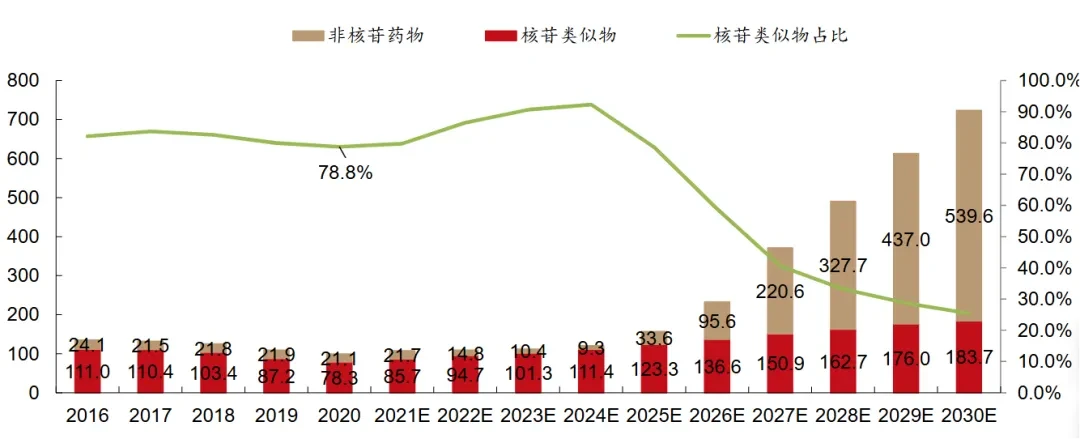
According to Western SecuritiesAccording to a securities research report, sales in China's hepatitis B antiviral drug market reached RMB 2.43 billion in 2023, and the market size is projected to climb to RMB 72.33 billion by 2030, demonstrating robust growth prospects.
Facing the largest market for hepatitis B drugs,GSK has always been committed toIntensive Deployment in China:
On the one hand, its recombinant hepatitis B vaccine (Saccharomyces cerevisiae)Engerix-B(Engerix B) reintroduced to China and entered into a partnership with Keyuan Xinhai; on the other hand, handed over the commercialization of bepirovirsen to CHIATAI TIANQING, which also possesses a robust hepatitis B drug portfolio.
Just this month, Sino Biopharmhas just announced that its subsidiary, CHIATAI TIANQING, and GSK have entered into an exclusive strategic partnership,Accelerate`Innovative Drugs`Bepirovirsen InjectionThe listing process in mainland China.Sino Biopharm, Big News!
Under the agreement, CHIATAI TIANQING shall be responsible for the import, distribution, of the product in mainland China,HospitalFor market access and promotional activities, all sales revenue will be recognized as CHIATAI TIANQING's operating revenue; GSK, as the Marketing Authorization Holder (MAH), will continue to be responsible for regulatory registration, quality control, pharmacovigilance, and global medical strategy.
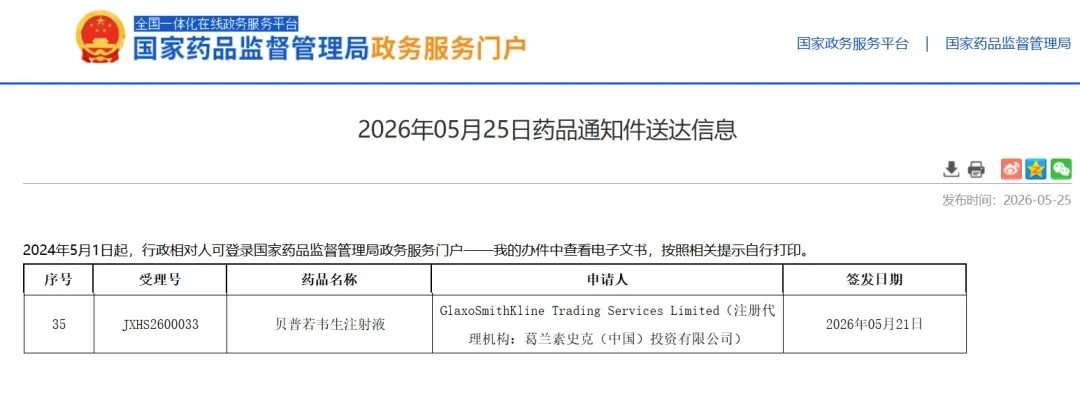
During the initial 5.5-year collaboration period, CHIATAI TIANQING will purchase the product from GSK in accordance with the agreed terms, with the option to extend the partnership through mutual negotiation. Yet, just half a month after the official announcement, the drug has received an official regulatory notice, a development that has taken the industry by surprise.
Typically, the official notification will specify the reasons for non-approval, which may include failure to pass the technical review, supplementary materials not meeting the requirements, or currentOn-site inspection findingsissues, etc. Applicants may conduct supplementary studies or adjust their application strategies based on the feedback. Therefore, receiving a "Drug Notification Letter" does not necessarily signify the complete failure of a drug's marketing approval; theoretically, there remains the possibility of continuing the application process after supplementing and refining the data.
Judging from the timeline, the approval process this time was very brief, making it highly likely thatGSKThe application was voluntarily withdrawn. It is expected to be resubmitted shortly after supplementary data is provided.
After all, this drug holds profound clinical significance; its successful approval will mark the transition of hepatitis B treatment from viral suppression to functional cure (also known as clinical cure), a milestone of great importance.
The previous liver disease announced as functionally curable was hepatitis C. The commercial launch of functional cure therapies for HCV elevated Gilead to a pedestal, propelling it into the top tier and cementing its legendary status.
Although nucleos(t)ide analogs such as entecavir and tenofovir alafenamide can potently suppress viral replication and offer convenient oral administration, patients require long-term or even lifelong therapy to maintain therapeutic efficacy.
Although interferon, particularly long-acting interferon, has a fixed and limited treatment course, its relatively modest antiviral efficacy, coupled with significant and common adverse effects, limits its application in a broader patient population.
In other areas, HEC Pharm's mofesetide mesylate, GST Pharm's niravrelvir (GST-HG141,GST-HG131、GST-HG121) and Zhimeng Pharma's ZM-H1505R (Canocapavir) have both entered Phase III clinical trials.
Among the three major viral infectious diseases—HIV/AIDS, hepatitis B, and hepatitis C—hepatitis C has already achieved a 95% functional cure rate, and hepatitis B is expected to be the next.