Case Study: Prof. Wang Jian’s Team at Peking University First Hospital Successfully Treats Liver Metastasis with Vispearl® Radiopaque Drug-Eluting Embolic Microspheres

H&H Healthcare
R&D and Producer of Interventional Medical Devices for Heart Disease
Basic Information:65year-old male
Chief Complaint:Over 3 Years Post-Cholangiocarcinoma Surgery; Liver Metastasis Detected 3 Months Ago
History of Present Illness:`Two intrahepatic metastatic lesions`
Past Medical History:In September 2022, surgery for bile duct cancer was performed due to obstructive jaundice. Postoperative pathology revealed: (ampullary) bile duct adenocarcinoma, tumor size 1.5×1 cm, tumor penetrated the bile duct wall and invaded the duodenal papilla, with vascular tumor emboli observed. Lymph node metastasis was present (greater and lesser curvature: 0/2; pancreatic and duodenal: 3/3). Adjuvant therapy was not administered postoperatively due to intra-abdominal infection. Follow-up in April 2025 revealed retroperitoneal metastasis, with progressive disease (PD) after multiple lines of chemotherapy and immunotherapy.
Laboratory Tests:AFP normal, PIVKA-II 10.4 ng/mL, CEA 12.8 ng/mL, TBIL 10.8 μmol/L, ALB 34.4 g/L
Imaging Examination:Preoperative CT revealed a newly developed lesion in each of the left and right hepatic lobes, demonstrating marked enhancement in the arterial phase and washout in the delayed phase.
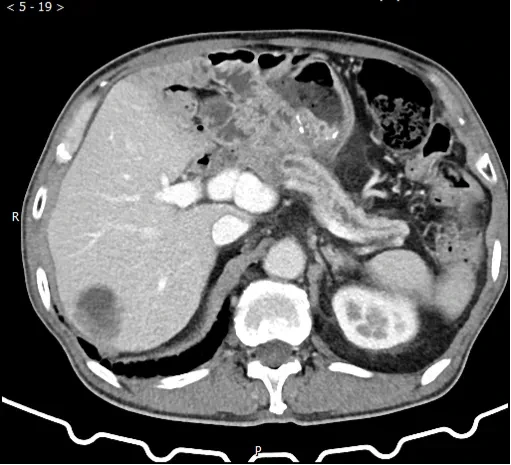
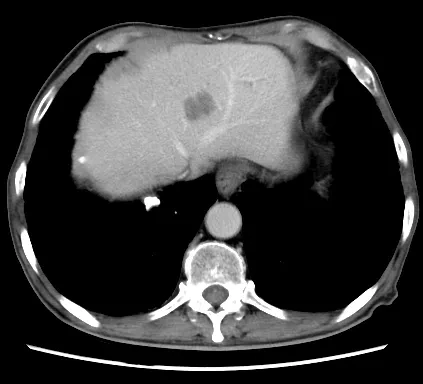
Imaging shows: 2 new intrahepatic lesions.
Surgical Plan:
Precise TACE followed by combined ablation, aiming for complete eradication of the lesion.
1. For hypovascular lesions, use contrast-enhanced CBCT to identify the feeding arteries; after successful superselective catheterization, perform embolization using radiopaque drug-eluting microspheres.
2. Ultrasound and CT multi-modal imaging-guided RFA for lesions
`percutaneous right femoral artery`Puncture, insert a 5F arterial short sheath, advance an RH catheter and guidewire over the guidewire, and perform common hepatic arteriography.
`First Right Hepatic Lobe TACE Procedure`
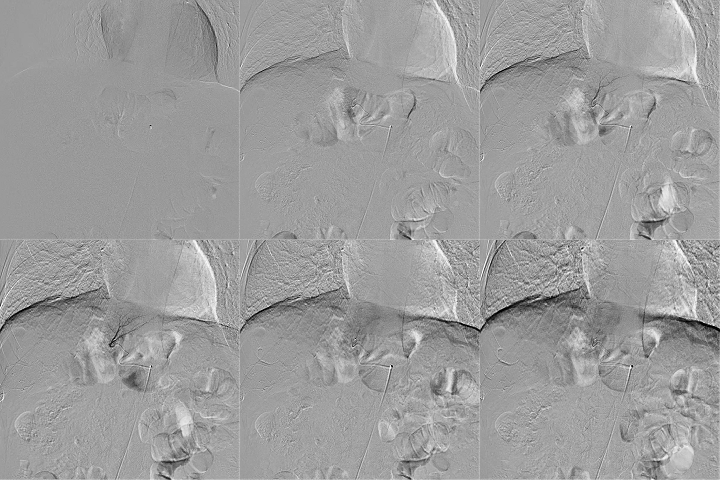
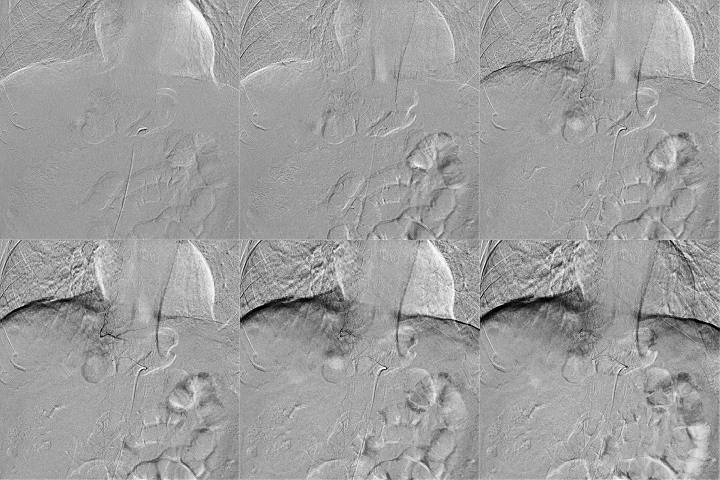
Angiography shows: a roughly round tumor blush in the right hepatic lobe, with two feeding arteries.


The microcatheters were selectively advanced into the two tumor-feeding arteries, respectively. Following CBCT confirmation, Vispearl was injected via the microcatheters.®️Radiopaque Drug-Eluting Embolization Microspheres, 70–150 μm, 1 g, loaded with 1 g of gemcitabine.
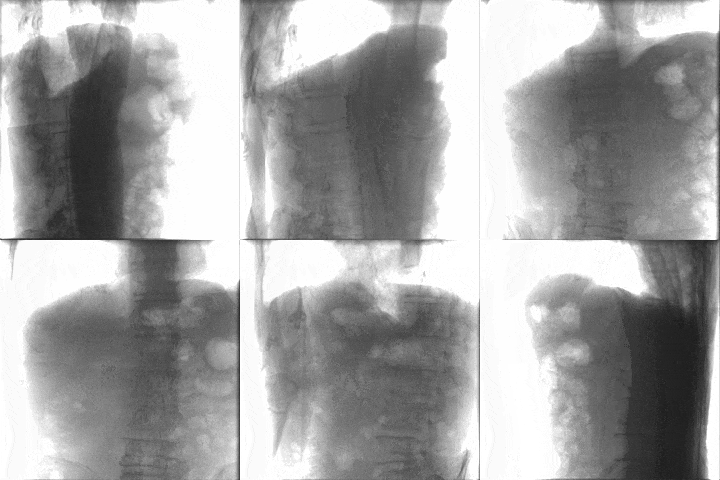
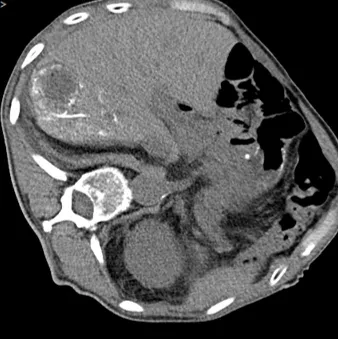
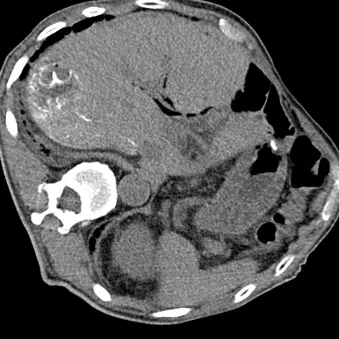
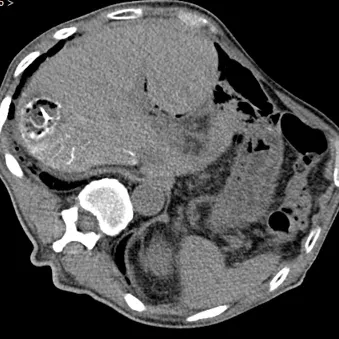
Post-embolization non-contrast CBCT demonstrates satisfactory peritumoral deposition of radiopaque microspheres.
Radiofrequency ablation of the right hepatic lobe
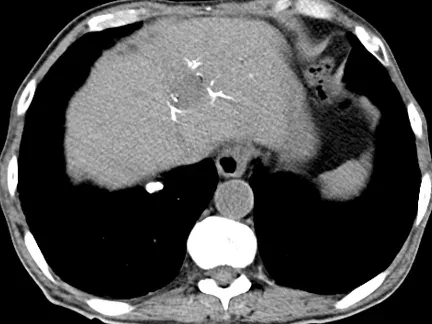
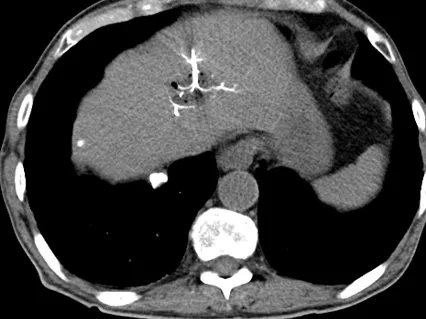
Postoperative CBCT shows:Complete embolization of the tumor-feeding artery was achieved. The Vispearl microspheres within the tumor were clearly opacified with satisfactory deposition. Subsequently, radiofrequency ablation (RFA) was performed under the guidance of the opacified microspheres.
Second Left Hepatic Lobe TACE Procedure
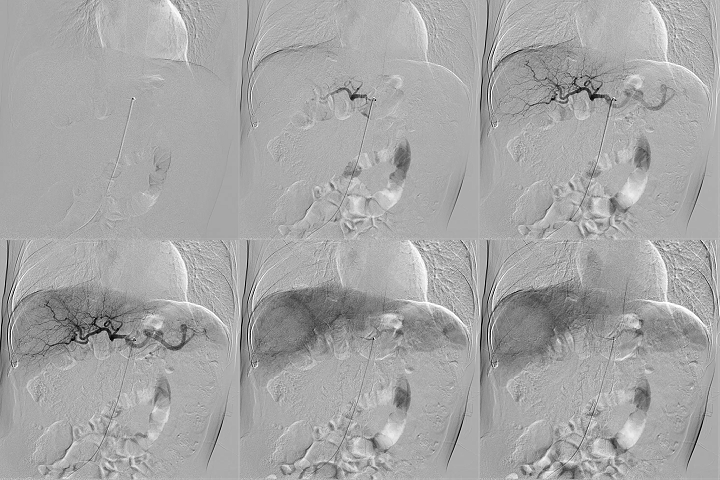
Angiography shows:Following treatment of the right hepatic lesion, tumor staining disappeared, while the left hepatic lesion was hypovascular. The microcatheter was superselectively advanced into two tumor-feeding arteries, respectively. After CBCT confirmation, Vispearl was injected via the microcatheter.®️Radiopaque drug-eluting embolic microspheres, 70-150 μm, 1 g, loaded with 1 g gemcitabine.
Radiofrequency Ablation of the Left Hepatic Lobe
Postoperative CBCT showed: complete embolization of the tumor-feeding arteries, with clear visualization and satisfactory deposition of Vispearl microspheres within the tumor. Subsequently, radiofrequency ablation (RFA) was performed under the guidance of the radiopaque microspheres.
1-month postoperative follow-up:
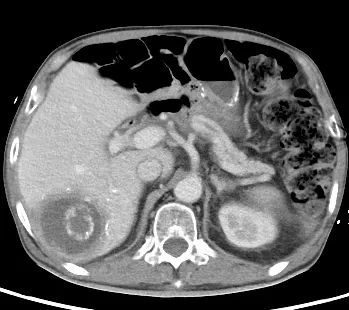
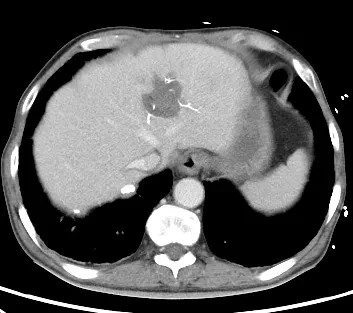
CT scan demonstrates: complete intratumoral necrosis.
Professor Wang Jian stated that existing studies in evidence-based medicine have demonstrated that in patients with liver metastases, the median progression-free survival (PFS) with DEB-TACE combined with systemic therapy is significantly superior to that of the systemic therapy-only group, with a significantly improved disease control rate (DCR) and a favorable safety profile. Radiopaque microspheres have also yielded promising results in clinical applications for metastatic liver cancer. In addition, theirRadiopacity characteristics are acceptable.To provide guidance for subsequent combination therapy.

Chief Physician, Doctoral Supervisor
Deputy Director, Department of Interventional Vascular Surgery, Peking University First Hospital
National Health Commission Capacity Building and Continuing Education Center, Interventional Medicine Expert Committee, Portal Hypertension Expert Group: Deputy Group Leader
Chinese Research Hospital Association, Interventional Medicine Committee, Portal Hypertension Expert Committee: Vice Chairperson
National Strategic Alliance for Technological Innovation in Minimally Invasive Tumor Therapy Industry, Professional Committee on Critical and Emergency Care: Vice Chairperson
National Strategic Alliance for Technological Innovation in Minimally Invasive Tumor Treatment Industry, Portal Hypertension Professional Committee: Vice Chairman
Chinese Medical Education Association, Professional Committee on Interventional Minimally Invasive Therapy: Standing Committee Member
Chinese Medical Education Association, Medical Device Management Professional Committee: Standing Committee Member
Beijing Medical Association, Branch of Interventional Medicine: Vice Chairperson
Beijing Medical Association Interventional Radiology Specialty Branch: Vice President
Beijing Society of Cancer Prevention and Treatment, Professional Committee on Minimally Invasive Interventional Therapy for Liver Cancer: Vice Chairperson
Chinese Anti-Cancer Association, Interventional Oncology Professional Committee, Expert Committee on Portal Hypertension: Vice Chairperson
China Anti-Cancer Association, Interventional Oncology Professional Committee, Expert Committee on Oncological Emergencies, Critical Care and Supportive Care: Vice Chairperson
China Anti-Cancer Association, Committee of Interventional Oncology, Expert Committee on Chemotherapy and Immunotherapy: Standing Committee Member
Chinese Anti-Cancer Association, Committee of Interventional Oncology, Expert Committee on Ablation: Standing Committee Member
Chinese Anti-Cancer Association, Committee of Interventional Oncology: Member
Interventional Physician Branch of the Chinese Medical Doctor Association: Committee Member

M.D., AssociateChief Physician
Department of Interventional Vascular Surgery, Peking University First Hospital
Committee Member of the Branch of Interventional Medicine, Beijing Medical Association, and concurrently Vice Chairman of the Youth Committee
Member, Interventional Specialty Committee, National Health Commission Center for Capacity Building and Continuing Education
Committee Member, Professional Committee of Interventional Oncology, Chinese Anti-Cancer Association
Member, Interventional Radiology Group, Radiology Branch, Beijing Medical Association
Standing Committee Member, Youth Committee of the Oncology Internal Radiation Medicine Branch, Chinese Medical Education Association
Youth Committee Member, Interventional Group, Radiology Branch of the Chinese Medical Association
Member, Youth Committee, Interventional Physicians Branch, Chinese Medical Doctor Association
Committee Member of the Interventional Diagnosis and Treatment Branch, China International Exchange and Promoting Association for Medical and Health Care
Committee Member, Interventional Branch of Integrated Traditional Chinese and Western Medicine, China Association of Chinese Medicine Information
Committee Member, Young and Middle-Aged Experts Committee on Hepatobiliary and Pancreatic Diseases, Beijing Health Promotion Association
Committee Member, Multidisciplinary Expert Committee on Portal Hypertension, Beijing Health Promotion Association
Main Research Fields: Interventional Therapy for Digestive System Tumors, Portal Hypertension, and Renal Angiomyolipoma
Published over 30 Chinese and English articles as first/co-first author, including 16 SCI-indexed papers, with a cumulative impact factor (IF) > 50.
Co-edited 3 books on interventional medicine
Principal investigator for multiple ministerial-, university-, and hospital-level research projects, with cumulative research funding exceeding RMB 1 million.
Holds 1 invention patent and 1 utility model patent (as the first inventor for both)

M.D., Peking University Health Science Center
Attending Physician
Department of Interventional Vascular Surgery, Peking University First Hospital
Clinically specializes in the interventional diagnosis and treatment of benign and malignant hepatic and renal tumors, portal hypertension, and emergency interventional procedures.
Published a total of 9 papers in SCI-indexed and Chinese core journals, including 5 SCI papers and 1 Chinese core paper as the first author (including co-first author).
BMC Gastroenterology Reviewer
The 1st China Interventional Surgery Competition – Liver Ablation – National Second Prize
2024 IMworld China TIPS Challenge Top 10 Outstanding Contribution Award
The 10th Southern TIPS Forum: Portal Hypertension TIPS Debate Competition – Best Popularity Award