Note: This article does not constitute any investment advice or recommendations, and official/company announcements shall prevail. It is solely for the introduction of healthcare-related medications and does not recommend treatment regimens (if mentioned), nor does it represent the platform's official position.Reproduction of any articles requires prior authorization.
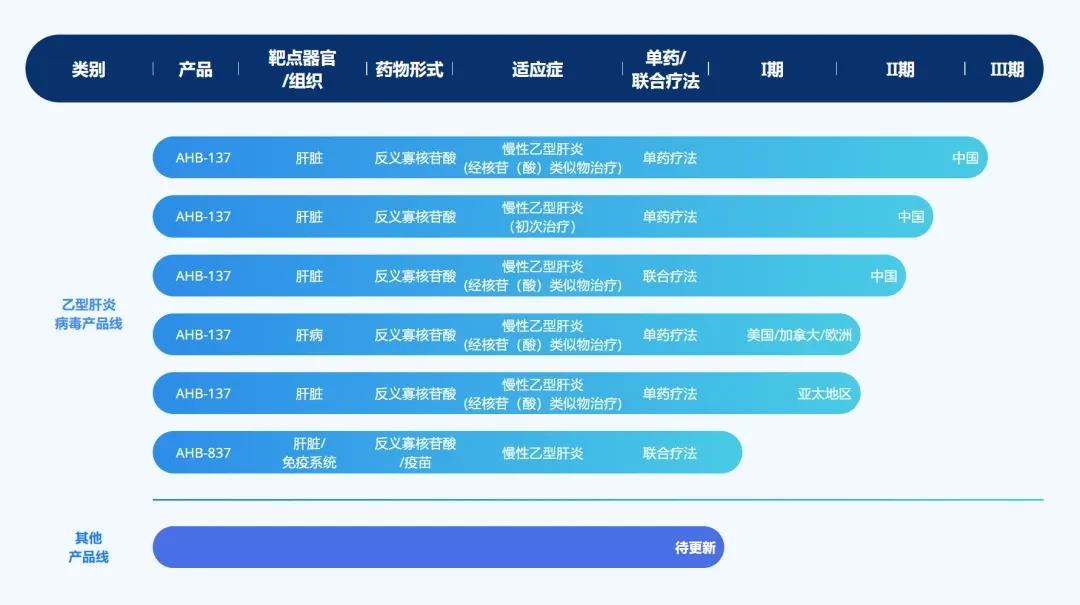
On May 27, AusperBio is a clinical-stage innovative drug R&D company operating concurrently in China and the United States, focused on developing proprietary targeted-delivery oligonucleotide therapeutics with First-in-Class and Best-in-Class potential.The Company announced today that it presented the final follow-up data from its Phase II clinical study of AHB-137, a proprietary antisense oligonucleotide (ASO) therapeutic, in treatment-naïve chronic hepatitis B (CHB) patients in mainland China at the 2026 European Association for the Study of the Liver (EASL) Congress (AB-10-8008, NCT06829329).The results demonstrated that AHB-137 exhibited potent and durable antiviral activity in treatment-naïve patients with chronic hepatitis B, and in the population with baseline HBsAg levels of 100–1000 IU/mLAchieved a 70% clinical cure rate(Fuctional Cure, FC), and the overall safety profile was consistent with expectations. As a candidate drug based on the innovative first-generation Med-Oligo™ ASO technology platform independently developed by AusperBio, AHB-137 has previously demonstrated superior efficacy and a favorable safety profile in NA-experienced HBeAg-negative patients. The newly released study results further validate its therapeutic potential in the broader chronic hepatitis B population, particularly among treatment-naïve chronic hepatitis B patients.
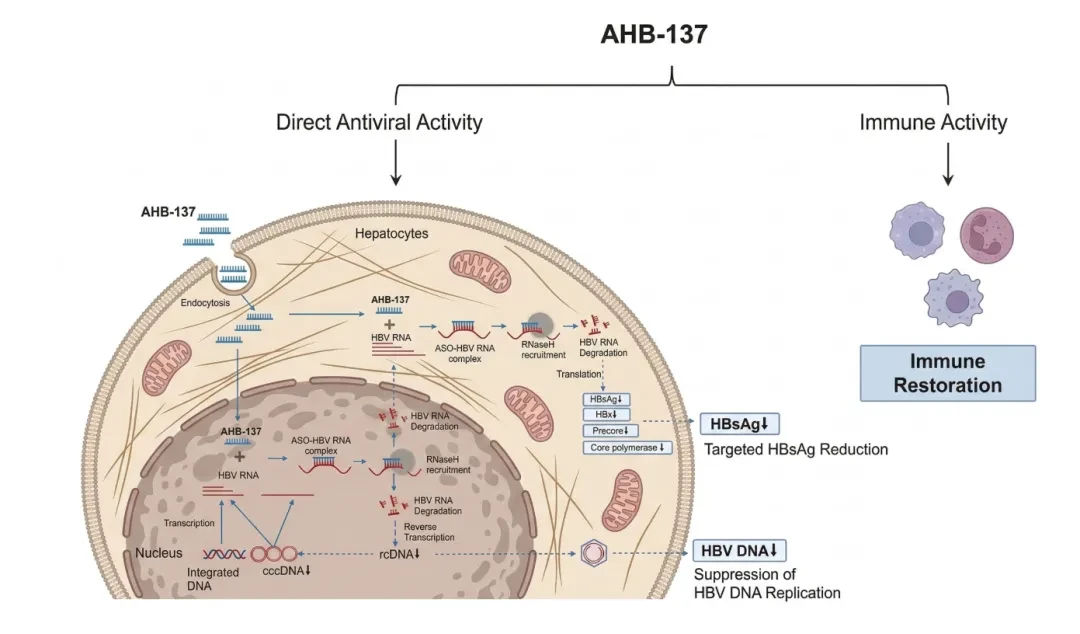 Led by The First Affiliated Hospital, Zhejiang University School of Medicine, this is a randomized, double-blind, placebo-controlled Phase II clinical trial enrolling treatment-naïve patients with chronic hepatitis B (CHB) with baseline HBsAg levels of 100–10,000 IU/mL and HBV DNA levels of 20–2,000 IU/mL. Participants received once-weekly AHB-137 (300 mg) or placebo for 16 weeks, followed by a 24-week off-treatment follow-up period. The primary endpoint was complete response (CR) at the end of treatment (EOT), defined as HBsAg <0.05 IU/mL and HBV DNA <10 IU/mL; clinical cure was defined as maintaining CR at 24 weeks after treatment cessation.The study results demonstrated that AHB-137 monotherapy achieved rapid and profound suppression of HBV DNA replication. After 16 weeks of treatment, 100% of subjects achieved undetectable HBV DNA (<10 IU/mL), demonstrating potent viral suppression.Meanwhile, AHB-137 also demonstrated significant clearance of hepatitis B surface antigen (HBsAg): in the overall population with baseline HBsAg levels of 100–10,000 IU/mL, 76% of patients achieved HBsAg clearance at the end of treatment; among patients with baseline HBsAg ≤ 3,000 IU/mL, 84% achieved HBsAg clearance; and in patients with baseline HBsAg > 3,000 IU/mL, HBsAg levels decreased by more than 4.5 log10 IU/mL in all patients, with 50% achieving HBsAg clearance. Overall, 68% of patients achieved a complete response (CR) at the end of treatment (EOT).Notably, 24 weeks after treatment discontinuation, 32% of patients in the overall population (i.e., baseline HBsAg 100–10,000 IU/mL) achieved functional cure (FC). Among patients with baseline HBsAg of 100–1,000 IU/mL, the functional cure rate was 70%. In patients with baseline HBsAg > 1,000 IU/mL, 33% reached a 'partial cure' status (sustained HBV DNA suppression and HBsAg < 10 IU/mL).In terms of safety, AHB-137 was generally well tolerated, consistent with previous study results.The vast majority of treatment-related adverse events (TRAEs) were Grade 1–2, primarily manifesting as injection site reactions and laboratory abnormalities. Reversible elevations in ALT/AST accompanying a rapid decline in HBsAg were consistent with previous observations in the NA-experienced population.Former Executive Vice President of The First Affiliated Hospital, Zhejiang University School of MedicineProfessor Qiu Yunqing stated“The World Health Organization has established the strategic goal of ‘eliminating viral hepatitis as a public health threat by 2030’; however, the current treatment rate hovers at only 15–20%. One of the core barriers driving this situation is that existing mainstream treatment regimens require lifelong medication. Consequently, upon diagnosis, a significant number of patients choose to delay or even abandon treatment due to apprehension regarding the psychological burden, financial strain, and lifestyle disruptions associated with long-term therapy.”The treatment-naïve data for AHB-137 presented at EASL offers a new potential solution to this clinical dilemma. In patients with baseline HBsAg levels of 100–10,000 IU/mL,32% of patients achieved clinical cure (FC)。In patients with baseline HBsAg levels of 100–1,000 IU/mL,The clinical cure rate is 70%.This model of ‘achieving clinical cure with a finite treatment duration’ is expected to significantly enhance treatment willingness and adherence among treatment-naïve patients, truly driving the shift in chronic hepatitis B management from ‘passive long-term control’ to ‘proactive clinical cure’.”
Reference: AusperBio
Scan QR Code to Join GroupMastery of CAR-T therapy, stem cell therapy, genetherapy,Comprehensive Information on Oncolytic Viruses and Nucleic Acid Therapeutics