

China's Solution on the Global Stage: CuraSense MedTech Showcases FDA-Designated Breakthrough Bioresorbable Embolic Microspheres at the 9th China-EU Symposium on Biomaterials

Cardiolink Science
Vascular Interventional Medical Device Developer
In May 2026, the premier academic conference in the global biomaterials field—the 9th China-Europe Biomaterials Conference—was held in Beijing. Cardiolink Science made a prominent appearance at the event with its innovative product—the bioresorbable embolic microspheres, which have been granted the U.S. FDA Breakthrough Device designation. Invited to deliver an oral presentation, the company showcased the product's cutting-edge achievements in embolization therapy for knee osteoarthritis to numerous top scholars in the field, receivingInternationally acclaimed.
1. Gathering of Top Scholars: The 9th Sino-European Biomaterials Conference Officially Opens
From May 10 to 13, 2026, the 9th China-Europe Symposium on Biomaterials (CESB 2026) was successfully held at the Beijing International Convention Center. Coinciding with the 20th anniversary of China-Europe biomaterials cooperation, the conference was jointly organized by the Chinese Society for Biomaterials and the European Society for Biomaterials, and co-hosted by the School of Materials Science and Engineering, Peking University, and the National Center for Nanoscience and Technology.
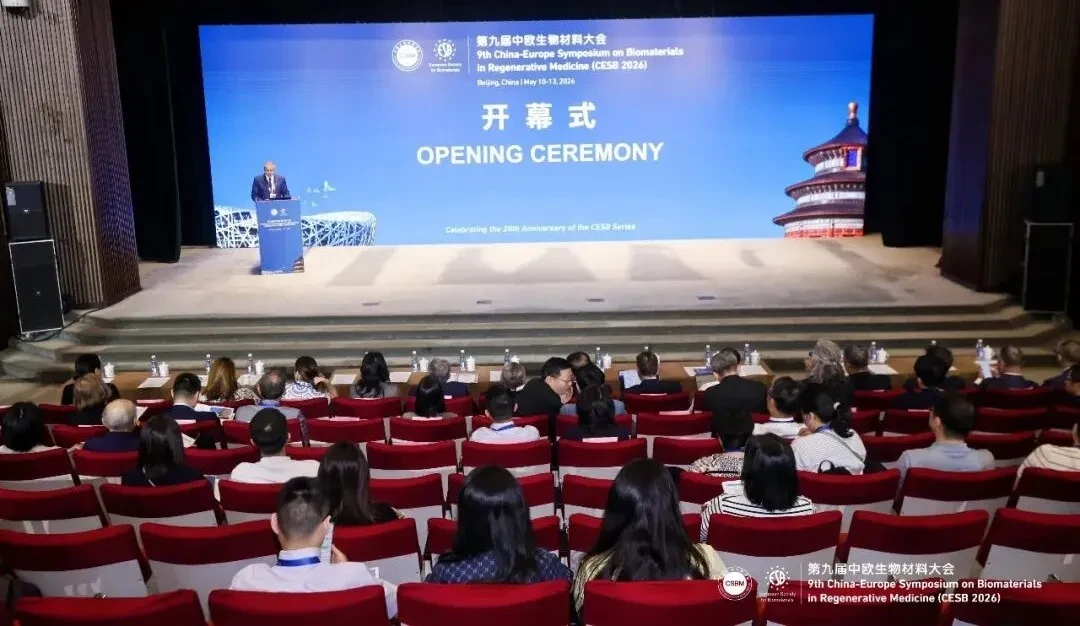
As one of the most influential academic conferences in the global biomaterials field, the event convened nearly 500 leading scholars from China, Europe, Australia, Japan, South Korea, and other countries and regions. Featuring over ten Chinese and international academicians and authoritative experts—including Academician Chen Xuesi, Academician Zhao Yuliang, Academician Luigi Ambrosio, Professor Ana Paula Pêgo, and Professor Nicholas Dunne—the conference facilitated in-depth exchanges on cutting-edge topics such as AI and biomaterials, bone regeneration, nanomedicine, and drug delivery, fully underscoring its international leadership and exceptional academic caliber.
II. Voice on the International Stage: Cardiolink Science's Innovative Bioabsorbable Microsphere Technology Attracts International Attention
As an innovative leader in China's vascular interventional sector, Cardiolink Science made a prominent debut at the conference with its independently developed bioresorbable embolic microspheres. The product lead was invited to deliver an oral presentation titled “Bioresorbable Bead for Transient Embolization in Knee Osteoarthritis: In Vivo and In Vitro Evaluation,” showcasing cutting-edge research findings on the product's application in embolization therapy for knee osteoarthritis (KOA) to global experts and scholars, and drawing significant international attention.
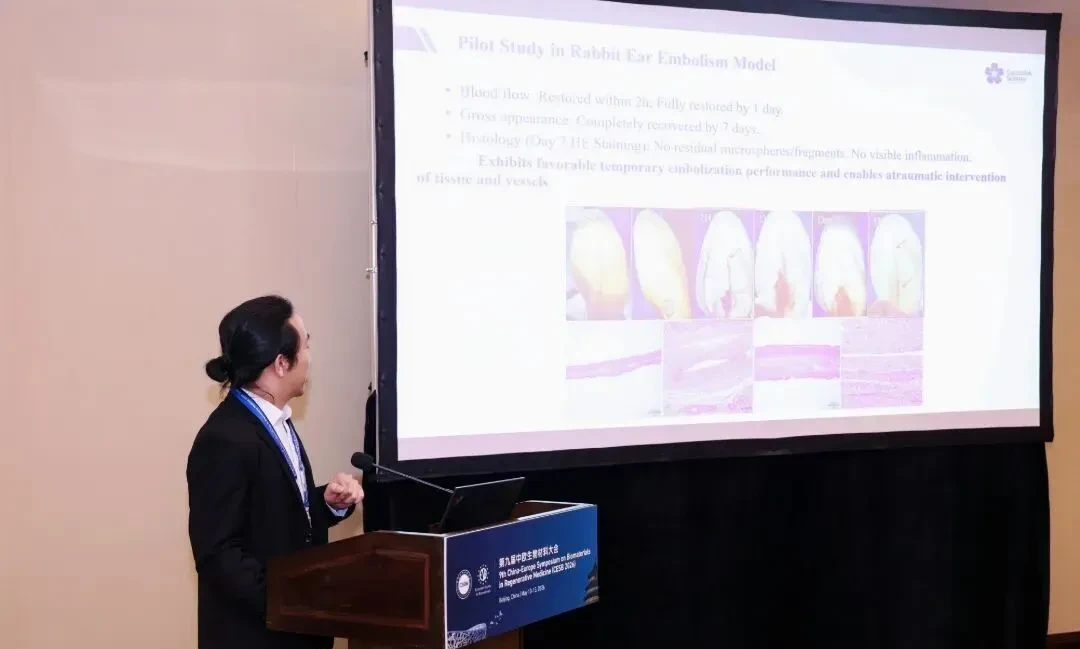
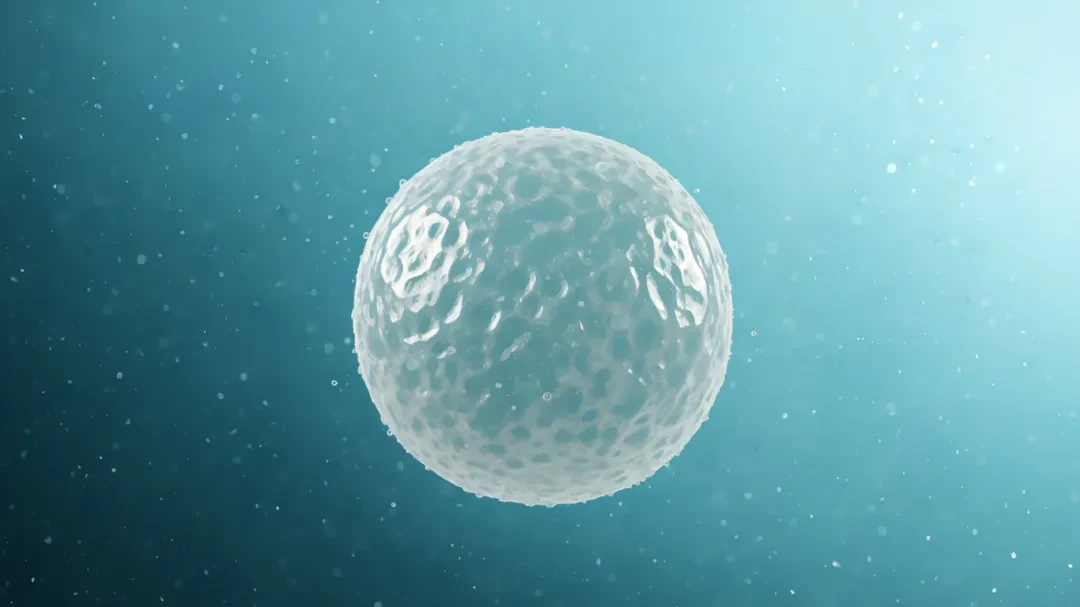
Cardiolink Science Bioabsorbable Microspheres is an innovative biodegradable and bioabsorbable embolic material. Unlike traditional non-degradable permanent embolic materials, this product achieves a controllable degradation timeline—its innovative starch-based microsphere fabrication process enables it to completely degrade into glucose, carbon dioxide, and water after fulfilling its embolization purpose in vivo according to a predetermined cycle, and to be safely absorbed by the human body, truly realizing the leap from “permanent implantation” to a “temporary mission with safe resolution.”1,2. Meanwhile, the product utilizes pure plant starch and non-toxic crosslinking agents, demonstrating excellent biocompatibility and significantly reducing the risk of inflammatory responses and foreign body residue.3, leaving sufficient room for subsequent treatment.
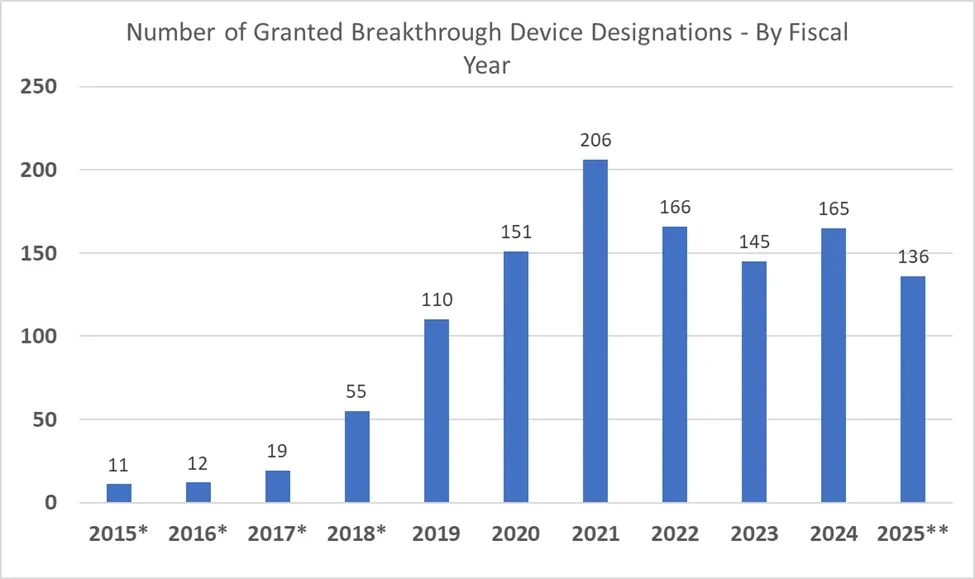
Leveraging its breakthrough technological advantages, the product was granted the U.S. FDA "Breakthrough Device Designation" (BDD) in 2024. Since 2015, the FDA has granted this designation to only 1,176 products worldwide. As a highly distinguished "one in 1,176," Cardiolink Science's bioabsorbable microspheres fully demonstrate their cutting-edge nature, uniqueness, and immense potential for clinical value, further underscoring the leading strength of China's intelligent manufacturing in the high-end medical device sector.1,2。
III.Deep Technological Expertise: The Heritage of Cardiolink Science as a Biomaterials Leader
Cardiolink Science's leadership in the biomaterials sector stems from its long-term and systematic R&D accumulation. The company has established an industry-leading technology platform for medical hydrogel-based targeted embolization therapy and precision drug delivery systems. Leveraging its in-depth understanding of embolization microspheres and full-stack development capabilities, Cardiolink Science, as the lead drafting enterprise, participated throughout the entire drafting and validation process of the "Group Standard for Polyvinyl Alcohol Embolization Microspheres" (T/CSBM 0053-2024), making a significant contribution to promoting the standardized development of the industry.
Guided by the concept of "Therapy Reading," Cardiolink Science continues to lead the evolution of TACE from conventional embolization to precision embolization and immuno-enhanced embolization (TAICE), establishing a comprehensive portfolio of embolic microspheres to meet the demands of diverse clinical scenarios. From tumor intervention to the expansion into new indications such as knee osteoarthritis embolization, the company remains steadfastly guided by clinical value, driving the advancement of biomaterial technologies toward greater safety, precision, and controllability.
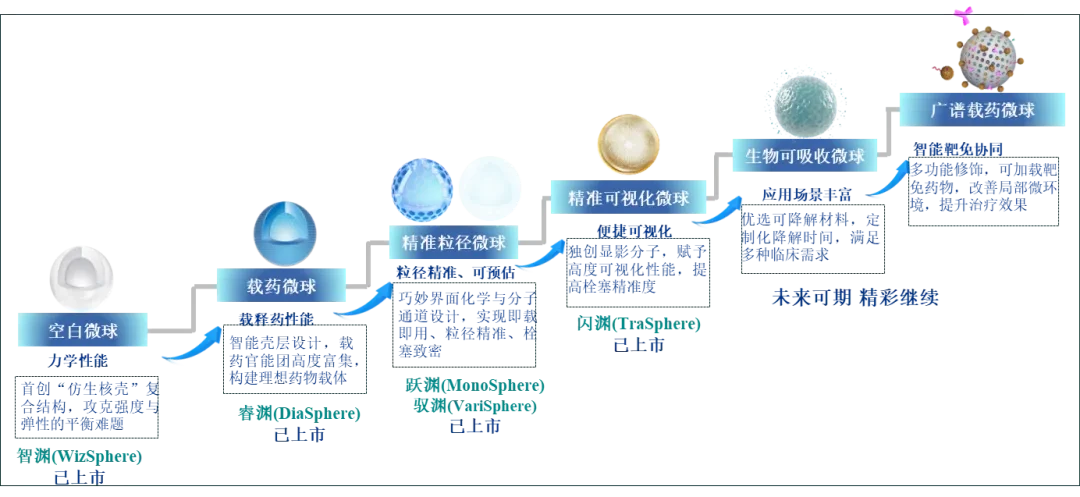
In the future, Cardiolink Science will continue to accelerate the clinical research and regulatory registration of bioresorbable microspheres, striving to bring this internationally advanced innovative technology to patients in China and globally at the earliest opportunity. Continuously upholding its mission of "intervention without implantation," the company will forge ahead in the wave of convergence between vascular intervention and biomaterials, creating greater value for human health.
Note:
[1] Cardiolink Science. Cardiolink's "Bioabsorbable and Biodegradable Microspheres" Receives FDA Breakthrough Device Designation, Leading a New Era of "Intervention Without Implantation"[EB/OL]. WeChat Official Account "Cardiolink", 2025-09-02.
[2] Cardiolink Science. Cardiolink Science’s “Biodegradable Microspheres” Receives FDA Breakthrough Device Designation, Ushering in a New Era for Knee Osteoarthritis Treatment and Expanding Indications for Embolization Therapy [EB/OL]. WeChat Official Account “Cardiolink”, 2024-11-05.
[3] The content of this article is intended to assist healthcare professionals in better understanding the latest developments in the relevant disease areas, and is provided solely for educational and academic exchange purposes. The information herein is derived from laboratory research and cannot, in any way, substitute for professional medical guidance, nor should it be construed as medical advice or treatment recommendations.