

Ruijian Medicine Files for IPO: Advancing Accessible iPSC-Derived Therapies through AI-Powered Chemical Induction

iRegene Therapeutics
Cell Therapy Product Developer
In 2006, Japanese scientist Shinya Yamanaka invented the Induced Pluripotent Stem Cells (iPSC) technology, for which he was awarded the Nobel Prize in Physiology or Medicine in 2012. The advent of this technology allows terminally differentiated adult cells to be reprogrammed into pluripotent stem cells, which have the ability to differentiate into various functional cell types in vitro.
iPSC Technology, Combined with Cell Engineering, Biotechnology, and Other Modern Biological Methods, Drives Rapid Growth in the Regenerative Medicine Market. Currently, the Application Fields of iPSC Are Still Continuously Expanding.
In China, as the CDE (Center for Drug Evaluation of the National Medical Products Administration) has successively released regulatory documents such as the "Guiding Principles for Pharmaceutical Research and Evaluation of Human Stem Cell Products (Draft for Comments)" and the "Guiding Principles for Clinical Trial Techniques of Human Stem Cell and Derived Cell Therapeutic Products (Draft for Comments)," the laws and regulations governing iPSC-derived cell drug research and related clinical trials are gradually becoming clearer, promoting the development of the industry.
iRegene is a rapidly developing national high-tech enterprise in the context of gradually clarified policies.
Introduction to Dr. Wei Jun, Co-founder and CEO of iRegene, induced pluripotent stem cells (iPSC) have overcome the ethical limitations of embryonic stem cells while possessing similar differentiation capabilities. Essentially, iPSCs are generated by dedifferentiating adult cells back into seed cells resembling embryonic stem cells, which are then directionally induced to differentiate into functionally mature adult cells. Through this method, an almost unlimited supply of functional cells can be obtained for disease treatment.
In addition, iPSCs can be modified through gene editing, screening cells with specific immune phenotypes, and other methods to obtain universal cell products with low immunogenicity.
Therefore, compared with cells derived from embryonic sources, iPSC-derived cell products have no ethical issues in clinical applications. The amplification capability of iPSCs can ensure an adequate supply for subsequent production. Additionally, the immunogenicity of iPSCs can be reduced through various methods to avoid the risks associated with allogeneic cell use, offering unique advantages in the development of cellular drugs.
As the clinical application of iPSC technology gradually comes to fruition, Japan, the birthplace of iPSC, has rapidly advanced a series of investigator-initiated clinical trials (IIT model). In terms of the commercialization of iPSC therapies, the United States is currently at the forefront. Companies such as Fate Therapeutics, BlueRock Therapeutics, and Semma Therapeutics have products in the clinical trial stage, with indications covering cancer treatment, neurodegenerative diseases, and diabetes. From the pipeline layout of these international pharmaceutical companies, iPSC demonstrates broad therapeutic potential.
iRegene has also recognized the tremendous opportunities inherent in iPSC technology. Since its establishment in 2017, the company has been committed to the development of chemically induced adult cell drugs based on iPSC, aiming to provide "accessible" drug solutions for diseases that currently lack substantive cures, such as Parkinson's disease and retinal degenerative conditions.
Dr. Wei Jun, Co-founder and CEO of iRegene, with approximately 20 years of experience in functional genomics research in developmental biology,Especially in the transcriptional regulation and directed differentiation mechanisms of pluripotent stem cells, with years of industrialization experience.Dr. Jun Wei has served as a senior researcher at the Roslin Institute, the birthplace of Dolly the sheep, a visiting researcher at the University of Cambridge, and a senior strategic manager for stem cells at Thermo Fisher.

Dr. Wei Jun, Co-founder and CEO of iRegene
In the early stages of his career, Dr. Wei Jun was deeply struck by the heavy financial burden that hematopoietic stem cell transplantation placed on patients, as well as the resulting "healthcare gap."
On one hand, as a clinical researcher, Dr. Wei Jun deeply recognizes the tremendous application value of stem cells; on the other hand, through continuous interaction with patients, Dr. Wei Jun also realizes that if the cost of stem cell applications cannot be made affordable for the general public, its clinical accessibility cannot be improved.
Only universal cell drugs with the potential for large-scale production can address the issue of drug accessibility, becoming routine medications that ordinary people can use, and the emergence of iPSC provides the best solution to this problem.
In 2017, Dr. Wei Jun, together with Dr. Cai Meng, Dr. Zhang Lida, Ren Xiang, and others, formed a founding team consisting of five senior field experts. The team's expertise covered the entire chain of drug development, marking the beginning of their entrepreneurial journey.
Among them,CMO Dr. Cai MengLong-term dedication to the field of molecular medicine,Led the clinical translation of nucleic acid drugs overseas;CTO Professor Zhang LidaLong-term focus on in-depth mining of omics big data, modeling of biological macromolecule regulatory networks, and biomolecular docking;CQO Ren XiangWith over 18 years of frontline quality management and submission experience in pharmaceutical enterprises, and extensive experience in GMP audits both domestically and internationally.
In addition, the company has built an international team with work and study backgrounds in the UK, US, Germany, Australia, and Japan, which has extremely strong execution capabilities. Moreover, iRegene has also represented the Chinese Medical Doctor Association in drafting quality standards for related cell therapy products and participated in the formulation of national policies.
In the field of iPSC clinical applications, how to efficiently convert iPSCs into functional cells,Currently, there are two major technical limitations: how to establish a conversion system without iPSC residue? And how to achieve precise synchronous differentiation of cells in large-scale production processes to obtain highly uniform cell therapy products?
Currently, to address the challenge of simultaneously achieving "iPSC-residue-free" and "precise synchronized differentiation" in industrial production processes, the common practice in the industry is to insert gene-inducible expression cassettes into safe harbor sites of the iPSC genome. By activating the expression of specific transcription factors within the cassette, this drives the precise differentiation of cells.
"Precision differentiation and synchronous differentiation" of cells can be achieved through genomic modification, but such modifications bring potential safety risks and increase the uncertainty in cell drug development. So, is it possible to develop a method that achieves both "no residual pluripotent stem cells" and "synchronous differentiation," two critical processes, without resorting to genomic modification?
Since its establishment, the founding partners of iRegene have aimed to build a cell company with international innovative competitiveness. For iRegene, all process development prioritizes the safety and accessibility of cell-based drugs as the primary principle, leading to the choice of the most direct approach of chemically inducing and regulating cell differentiation and development.
iRegene recognized early on that the research and development approach of artificial intelligence (AI) + chemical induction for regulating cell differentiation and development has extremely broad application potential. It can also address multiple challenges in practical cell drug manufacturing processes. To this end, iRegene independently developed a multifunctional stem cell-derived product development platform based on AI screening of small molecule compounds as core inducing components to achieve efficient conversion from iPSCs to functional adult cell therapeutics.
Compared with similar companies, iRegene also targets the "cell fate determinants" in cell-to-cell transformation, adopting a mechanism akin to chemically targeted drugs. It directly regulates the transcription or function of core target genes through compounds, enabling iPSCs to achieve efficient and uniform large-scale precise cell transformation in a safer and more convenient manner.
First, with the help of a unique bioinformatics platform and AI-mediated virtual screening, iRegene has completed the analysis of the regulatory network between induced pluripotent stem cells and target transformed cells, and fully identified the core driver genes that regulate different characteristic attributes of the cells.
After identifying the driver genes of cell transformation, iRegene will use AI screening to obtain compounds that induce cell transformation.
Ultimately, with only a simple combination of a few appropriate compounds and a pure chemical basal medium, iRegene can achieve highly efficient and precise differentiation from iPSCs to functional adult cell therapeutics on an industrial scale.
On iRegene's unique AI+ platform, iRegene has discovered entirely new reprogramming compounds and possesses a distinctive chemical induction platform. This R&D strategy has significantly enhanced the production efficiency of cell-based therapeutics. For instance, in iRegene's Parkinson’s disease pipeline, an industrial capacity of 360,000 doses produced in 21 days has already been achieved.
In addition, to enhance the speed of cell drug development and the effectiveness of practical transformation, iRegene has completed the construction of a GMP-level iPSC germplasm resource bank, a three-tier production cell bank, and a library of more than a hundred inducing chemical small molecules. Notably, iRegene has also utilized compounds to inhibit the development of the MHC pathway and established a unique clinical-grade universal cell production strategy through epigenetic regulation. This distinctive innovative platform is internationally pioneering and has already attracted several domestic and overseas pharmaceutical companies to negotiate cooperation.
Dr. Wei Jun, founder of iRegene, stated: "Since the company utilizes a unique chemical induction platform, the transformation of induced pluripotent stem cells is entirely driven by key genes within each cell. This method allows the company to achieve an extremely high conversion rate for its cellular drugs while effectively controlling the production cycle and costs. Additionally, the company's unique MHC chemical control approach provides a breakthrough method for preparing off-the-shelf cells, offering an alternative to gene editing. High-quality universal cell products can be efficiently produced at a low cost. This aligns with the vision established when iRegene was founded — to develop affordable cellular drugs for patients."
In addition, iRegene's unique AI+ platform also has strong scalability. Besides completing the aforementioned chemical induction cell drug development, this platform has also provided iRegene with new targets for gene therapy in various diseases and new methods to enhance secondary metabolites in cells. These have already been functionally validated in multiple disease animal models. Dr. Wei Jun believes that iRegene's brand-new AI+ platform will definitely offer a new perspective for the treatment of various diseases.
Dedicated to the development of affordable iPSC drugs,
iRegene's Parkinson's Disease Pipeline to Initiate IND Dual Filing in China and the US
iRegene has been operating for more than three years and has rapidly completed the layout of several R&D pipelines. Among them, cell drugs for spinal cord injury, stroke, and optic nerve disease have all completed basic research and obtained relevant patent authorization. NouvNeu001, the fastest progressing Parkinson's disease project under development, is expected to quickly initiate IND dual filings in both China and the United States.
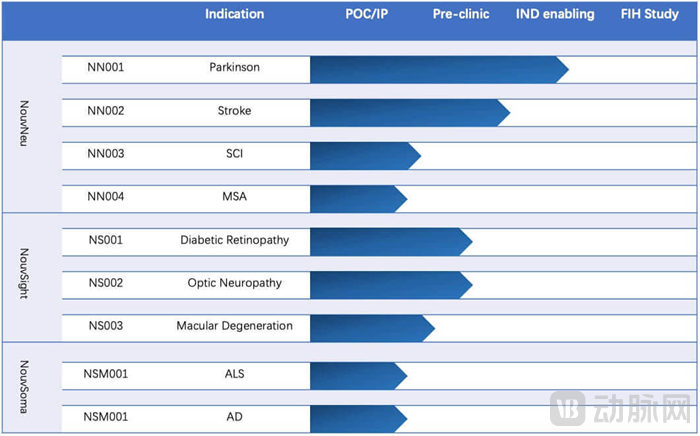
Self-developed Pipeline, Image Source: Official Website
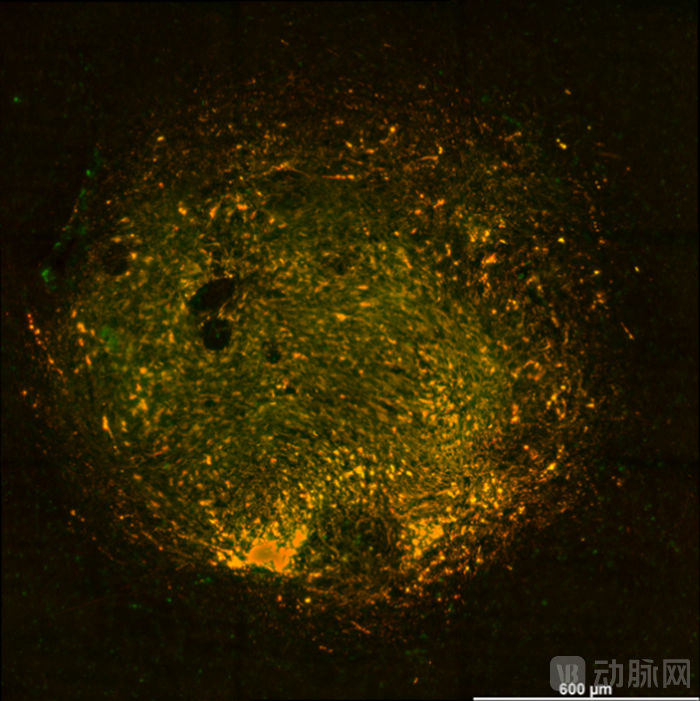
NouvNeu001 was transplanted into the brain of cynomolgus monkeys for 9 months,
Dopaminergic neuron colonies formed in the brain
Taking iRegene's first indication, Parkinson's disease, as an example, the pathological characteristics of Parkinson's disease are very clear, involving the massive death of dopaminergic neurons in the brain that secrete dopamine neurotransmitters.
Based on this characteristic, the two mainstream clinical treatment methods currently are divided into two categories: the first category is oral dopamine metabolic supplements, and the second category is physical deep brain stimulation therapy. Although both methods can provide some functional compensation for the lost dopaminergic neurons, neither can reverse the ongoing trend of dopaminergic neuron death in the brain.
iRegene's treatment strategy is based on regenerative medicine using iPSC as a platform. iPSC serves as the seed to obtain healthy dopaminergic neural precursor cells, which are then implanted into the lesion area to compensate for the deficiency of dopaminergic neurons.
In iRegene's unique strategy, these precursor cells can not only secrete neurotransmitters such as dopamine but also further secrete various proteins and small nucleic acids to improve Parkinson's lesions, providing a favorable "soil" environment for the transplanted cells to function in the brain.
Therefore, the Parkinson's disease cell therapy candidate NouvNeu001, developed by iRegene based on the above strategies, can efficiently promote the recovery of patients' motor and other functions. According to the results of drug administration in iRegene’s cynomolgus monkey Parkinson's model, just four weeks after a single-point administration, the animals' motor dysfunction significantly improved, and by eight weeks, their Parkinsonian behavioral symptoms had recovered by more than 60%.
Based on the results of completed pharmacological efficacy trials and safety trials, the transplantation of NouvNeu001 in various experimental animals not only greatly restored behavioral functions but also significantly improved multiple physiological and biochemical indicators.
It is reported that, in addition to having obtained systematic and solid data validation in indications with significant unmet clinical needs such as Parkinson's disease, iRegene is also continuously expanding a broader pipeline of proprietary new drugs in fields like degenerative and injury-related diseases, oncology, and metabolic system disorders.
Recently, iRegene has reached a collaboration with AliveX Biotech, a company dedicated to decoding the essence of human immunity through AI and multi-omics. By integrating their core strengths and utilizing innovative data mining strategies, the two parties aim to develop next-generation iPSC-derived cell therapy drugs for the treatment of various tumors, with a globally competitive edge.
With the rapid progress of the project, in August this year, iRegene completed its relocation to a new site and hardware upgrade, while securing nearly 100 million yuan in financing. The new site of iRegene covers an area of nearly 4,000 square meters, including a high-standard research and development center and a "B+A" grade GMP pilot production base for cell drugs that meets the highest international standards, among other functional areas. In the fourth quarter of this year, iRegene has already started pilot production on multiple new pipelines in the new pilot workshop, accelerating the product application process and internationalization efforts.

iRegene R&D and Production Base
Regarding future development, the iRegene team has firmly committed to a drug research and development approach oriented toward solving practical clinical problems. At the same time, they have formulated a strategy for synchronized development in both international and domestic markets. Specifically, this involves fully leveraging the cost advantages of iRegene's large-scale production processes to strive for early inclusion in China’s national payment system, fulfilling the original mission of iRegene: "Producing cell therapies affordable for every Chinese person." In parallel, iRegene aims to further enhance its innovative edge and achieve the overseas commercialization of its original novel drugs as soon as possible.