

National University Hospital Singapore Launches First On-Site 3D Printing Medical Lab for Patient-Specific Anatomical Replication
Nov 21, 2021 09:39
CST Updated
09:39

Johnson & Johnson
Healthcare Product Manufacturers, Health Service Providers

National University Hospital
National University Hospital (NUH), established in 1985, is one of Singapore’s largest public hospitals and the first restructured hospital in the country. It comprises 31 wards and 900 beds. NUH demonstrates strong clinical expertise in cardiology, gastroenterology and hepatology, surgery, obstetrics and gynaecology, oncology, ophthalmology, and paediatrics. The hospital offers organ transplantation programmes for adults (kidney, liver, and pancreas) and is the only public hospital in Singapore providing paediatric kidney and liver transplantation services.NUH boasts a team of leading medical professionals who deliver high-quality care to patients.

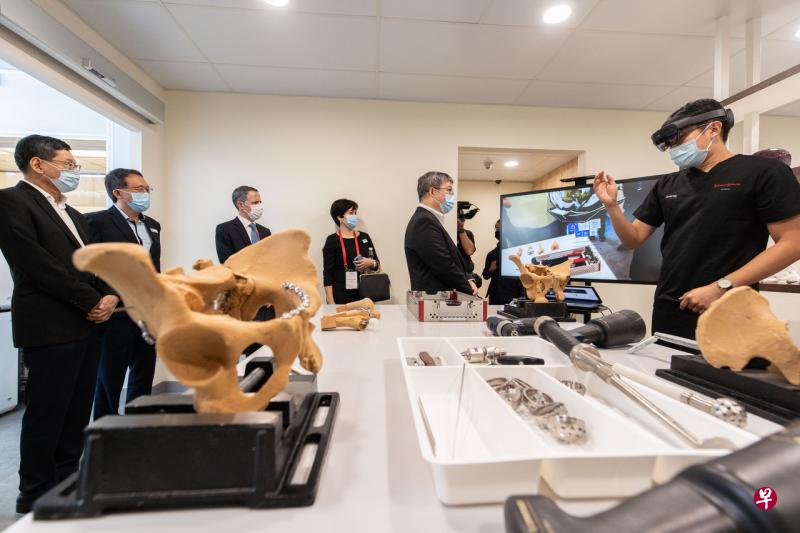
△National University Hospital of Singapore collaborates with pharmaceutical manufacturer Johnson & Johnson to establish the first local3D PrintingImmediate Medical Room.
Located at National University Hospital, available 24/73D PrintingThe Immediate Healthcare Room officially began operations today. The 72-square-meter medical room includes a design workstation, a design and collaboration discussion area, and a surgical simulation workstation, aiming to promote collaboration between doctors and...BiologicalMedicineCollaboration among engineers allows them to test ideas or innovative solutions. The program is supported by the Singapore Economic Development Board (EDB) to accelerate healthcare innovation in Singapore.
The collaboration between NUH and Johnson & Johnson Singapore aims to drive progress in Singapore.SurgeryThe Boundaries of 3D Printing in Surgery, Enhancing Patient CareStandardAnd provide patients with better treatment outcomes.3D Printing Medical Laboratory Managed by Johnson & Johnson Singapore at NUH’s Premises, Making It the First of Its Kind in Singapore. In This Point-of-Care Suite, Johnson & Johnson's Biomedical Engineers Will Collaborate with NUH.ClinicalDoctors closely collaborate to design and produce personalized anatomical models for preoperative planning and surgical simulation.
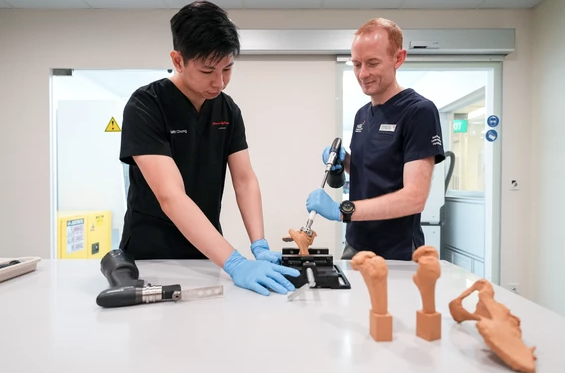
The laboratory can currently produce patient-specific anatomical models, such as hip and knee joints, and plans to manufacture other medical devices and instruments in the near future, such as surgical guides for complex surgeries. To embrace the digital era, the laboratory will also explore Mixed Reality (MR) technology to support the development of next-generation clinical applications and further enhance patient safety during surgeries.
The opening ceremony of the laboratory was held in a hybrid online and offline format on the morning of November 19, with Associate Professor Kenneth Mak, Director of Medical Services at the Ministry of Health, as the guest.
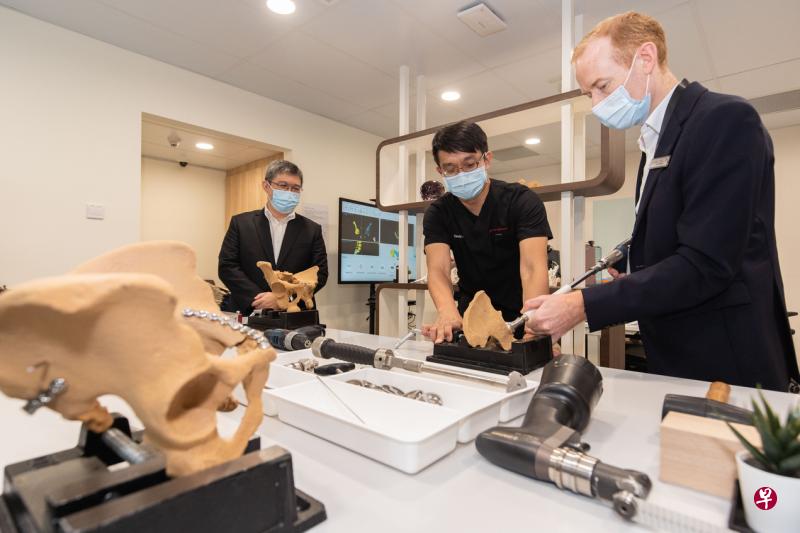
△Associate Professor Kenneth Mak, Director of Medical Services at the Ministry of Health (left) attended3D PrintingOpening Ceremony of Immediate Medical Care Room. National University HospitalOrthopedicsSenior Consultant Surgeon O'Neill (right) demonstrates3D PrintingThe precision of the model can greatly enhance doctors' understanding of the complex relationships between various structures.
Professor Xu Haibo, Director of the Orthopedic Surgery Department at Guoda Hospital, explained in his speech that doctors can use replicated models for more effective preoperative planning, such as precise measurements.ImplantThe shape, size, and position help to shorten the operation time and reduce the probability of patients developing complications after surgery.He emphasized: "3D Printing"It has deeply penetrated the pharmaceutical and healthcare fields, from enhancing medical and patient education, to surgical planning and even the prescription process... This technology holds boundless potential in the medical field."Biomedical engineers from Johnson & Johnson will discuss design plans with doctors based on the patient's CT scan images, and then proceed through3D PrintingThe machine replicates the model within approximately one to two days.
Hard materials can be used to shape parts like bones, while soft materials are used to replicate soft parts such as organs. However, Yang Changyu, Senior Director of Advanced Technologies for Johnson & Johnson's Asia-Pacific region, pointed out that it is more difficult to replicate very small veins or larger areas such as the body trunk.Johnson & Johnson and National University Hospital began planning to establish3D PrintingThe Immediate Medical Center's orthopedic surgery department at the National University Hospital was the first team to utilize this technology for planning complex surgeries. To date, approximately 10 to 12 models have been replicated across the fields of pediatric cardiology, orthopedics, and neurosurgery.
(Editor: admin)