

Qiongding Medical Advances Non-Invasive Deep Brain Stimulation for Parkinson’s Disease Treatment

Neurodome
Neurodome, Inc.
The exploration of the human brain has never ceased from ancient times to the present.
As early as the ancient Greek period, Hippocrates, the founder of Western medicine and a famous ancient Greek physician, believed that human emotions and sensations all originate from the brain, which is the carrier of human intellect.
In the process of technological development and human exploration, the systematic study of brain science has gradually undergone a series of stages from the enlightenment phase, to the budding phase, and then to the pioneering phase.
Since entering this century, brain science research has shown a significant development trend. Countries and regions such as the United States and the European Union have successively announced brain science research plans, and brain science has also entered a period of explosive application.
In the branches of brain science, the research and application of neuromodulation have developed rapidly and gradually become one of the fastest-growing disciplines in the medical science field over the past two decades. It has been widely used in the treatment of various systemic diseases such as Parkinson's disease, epilepsy, depression, and pain.
Data shows that globally there are over 50 million Alzheimer's patients, 350 million depression patients, and 20 million Parkinson's patients. The emergence of brain science and neuromodulation has given more people hope for treatment and recovery.
Driven by the development of the discipline and clinical needs, several neuro-modulation related enterprises have emerged in China. Neurodome, Inc. (hereinafter referred to as "Neurodome"), a company recently contacted by VCBeat, is an innovative technology company focusing on the research and development of neuro-functional regulation products. Its first neuro-modulation product for Parkinson's disease has already entered clinical pre-trials this year.
In this field with high technical barriers, why did Neurodome choose to enter and focus on in-depth development? And how did it build its own technological moat? This time, through a conversation with Dr. Long Li, the founder of Neurodome, VCBeat attempts to answer the above questions.
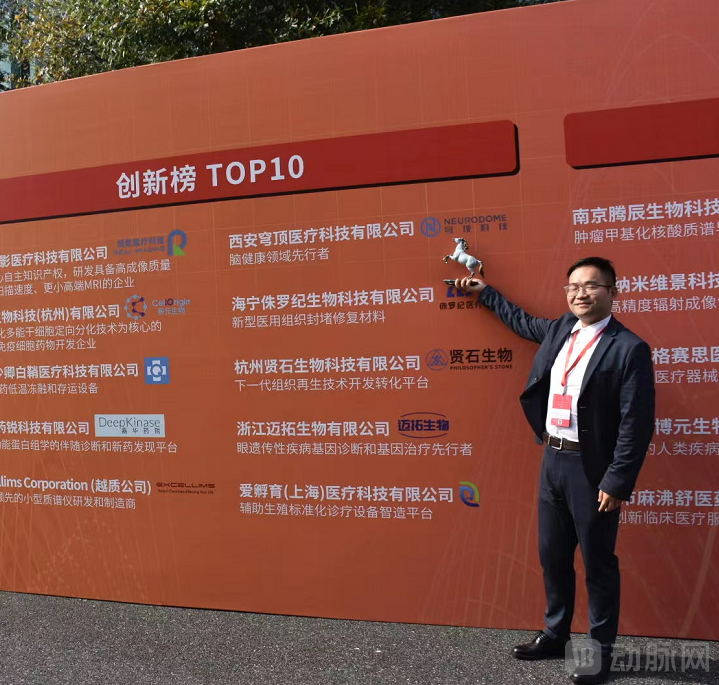
Dr. Long Li, Founder of Neurodome, Inc.
Gathering High-End Talents, Promoting Achievement Transformation
If we were to describe the founding of Neurodome, Inc., "driven by passion" and "going with the trend" would undoubtedly be the most fitting expressions.
Due to his interest, Dr. Li Long, who majored in Electronic Information Engineering during his undergraduate studies, worked on somatosensory detection and physiological signal detection projects after graduation. To gain a deeper understanding of related technologies, Li Long began pursuing a Ph.D. in Biomedical Engineering. His doctoral advisor was Professor Wang Jue, a renowned expert in China's neuromodulation field.
During his Ph.D. studies, Li Long led a robotics team in participating and completing projects under China's National Key Research and Development Program. Prior to this, Li Long's work experience in both R&D and business operations at a telecommunications company provided him with considerable experience in managing R&D teams. Therefore, the establishment of Neurodome, Inc. appears to be a natural progression.
In terms of the core team, not only does the founder have rich experience in scientific research and operation management, but the other team members also have profound accumulation in project clinical transformation, scientific research, and commercial promotion.
It is reported that the Neurodome medical team is the only joint scientific research achievement industrialization team of the Institute of Health and Rehabilitation Science of the School of Life Science and Technology of Xi'an Jiaotong University. Not only do its core management members have backgrounds from prestigious universities such as Xi'an Jiaotong University, Waseda University, and Xidian University, and have participated in the transformation and implementation of scientific research results multiple times, but the technical team also comes from enterprises such as Huawei and Alibaba, with about 10 years of work experience. Therefore, Neurodome also has obvious advantages in the implementation and marketization of scientific research results.
Moreover, the expert team at Neurodome, Inc. includes professors and clinical neurology experts from prestigious institutions such as Xi'an Jiaotong University and the First Affiliated Hospital of Xi'an Jiaotong University, among whom is Professor Wang Jue, Dr. Li Long's doctoral advisor, ensuring a high level of professionalism in product development.
Taking an Unconventional Path: Using Non-invasive TI Technology to Lay Out the Neuromodulation Field
Under normal conditions in the human body, its neural circuits consist of a balance system inherently maintained by electrical stimulation and chemical signals. However, the emergence of neurological disorders disrupts this balance, leading to impaired cognition, sensation, or motor functions. Neuromodulation therapy can effectively restore and rebuild the equilibrium of the nervous system.
At present, Deep Brain Stimulation (DBS), Transcranial Magnetic Stimulation (TMS), and other technologies are commonly used neuromodulation treatment techniques for neurological disorders in clinical practice, but each still has its own limitations in terms of market promotion.
Taking DBS as an example, DBS, as a technology that has been clinically applied for many years, has its clinical efficacy fully validated. Multiple companies in and outside of China have invested in this field. However, due to the need for craniotomy during clinical application to implant electrodes, some patients show low acceptance, which has somewhat restricted the expansion of the market scale.
Although TMS is a non-invasive central intervention treatment, its precision is limited. It is more suitable for the intervention and rehabilitation of Alzheimer's disease and stroke, and its compatibility with Parkinson's disease is relatively low.
From this perspective, technologies and products featuring non-invasive, deep-brain, high-precision, and multi-channel characteristics are clearly more likely to be accepted by the market and patients.
In June 2017, *Cell* published a significant research achievement by a research team from MIT and Imperial College London——High-frequency currents emitted by two external electrodes create "interference" at specific locations deep within the brain, thereby achieving non-invasive deep brain stimulation., effectively stimulating neuronal activity. Notably, the development of this technology involved Professor Wang Jue and her team members.
Specifically, the technology is based on the characteristic that brain neurons do not respond to high-frequency signals. It also utilizes the physical principle where two electromagnetic waves of similar frequencies partially interfere when they meet, forming a low-frequency "envelope" electric field, with the frequency of this "envelope" being the difference between the two. This allows for precise stimulation of targeted deep brain regions and is known as temporal interference (TI) stimulation.Compared with other intervention methods, it has obvious advantages in terms of non-invasiveness, intervention depth, and brain rhythm modulation.。
To ensure the implementation of this technology, the Neurodome medical team registered domestic patents in China and U.S. patents in 2018. After years of accumulation, Neurodome has obtained dozens of patents related to this technology in the field of neuromodulation.
In terms of product development, since 2018, the Neurodome medical team has rapidly completed four generations of TI product iteration and development. The product's performance in depth, stability, and coverage has been fully optimized.
Although some international teams have begun market-oriented development of TI products, no such products have been launched yet. However, the 24-channel TI pulse source device developed by Neurodome, Inc. not only has an advantage in the number of channels but has also entered the clinical pre-trial verification stage, giving it the potential to be the first to make significant progress in this field.
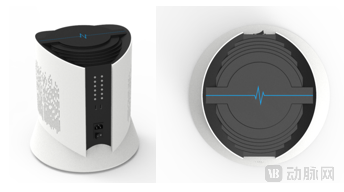
Neurodome Medical Fourth-Generation 24-Channel TI Pulse Source Device
Centering on TI technology, gradually layout the technical service platform.
In terms of TI technology, Neurodome is undoubtedly a pioneer in China. Having already mastered this technology, Neurodome also has a clear plan for the company’s future development.
First, with Parkinson's treatment as the breakthrough point, we will promote the registration and approval of core products and their marketization.At the same time, Neurodome will continue to develop multi-field products around TI technology and optimize the miniaturization of existing products to further enhance the user experience for patients.
Second, form a platform centered on TI technology and expand multi-field partnerships., and provide them with TI technical solutions to assist in the development of products that can be used in diaphragmatic nerve stimulation, addiction treatment, and other fields, expanding the application scope of non-invasive neural stimulation technology.
The goal has been clearly defined, but to truly achieve it, multiple aspects need to be strengthened and supplemented. On the one hand, Neurodome, Inc. must currently enhance the development of its talent pool to ensure rapid market expansion after the future product launch. On the other hand, it also needs to establish a complete production line with financial support, laying the foundation for the subsequent marketization of the product.