

Wushuang Medical Files IPO Prospectus, Pioneering China's First Domestic ICD and Building a Full CRM Portfolio

Singular Medical
Developer, Manufacturer, and Seller of Cardiac Rhythm Management Products
Cardiac Rhythm Management (CRM) is a major focus in both clinical practice and the capital market, and a "must-compete" area for listed companies. Medtronic and Abbott have heavily invested in cardiac rhythm businesses, making it a key component of their cardiovascular portfolios, while China's MicroPort Medical acquired LivaNova’s Cardiac Rhythm Management business.
Cardiac Rhythm Management (CRM) refers to the diagnosis, treatment, and management of arrhythmias and heart failure, with primary devices including pacemakers, defibrillators, and cardiac resynchronization therapy devices. CRM integrates cutting-edge disciplines such as cardiac electrophysiology, bioengineering, materials science, and electronic engineering, presenting an extremely high barrier to entry. China's CRM market has long been dominated by imported products, leaving domestic brands in need of breakthroughs.
Starting from the ICD (Implantable Cardioverter Defibrillator), a technological high point in the field of cardiac rhythm management, Singular Medical has built a full CRM product line. The ICD, ICM (Insertable Cardiac Monitor), and dual-chamber pacemaker all possess independent intellectual property rights. Since its establishment in 2017, the company has successfully filled the gap for domestically produced ICDs, and its ICD products under development have obtained the biological testing report from the Jinan Testing Institute.
In the thriving CRM market driven by China-produced alternatives, how did Singular Medical pave its own path, and what is the logic behind its product layout? As AEDs (Automated External Defibrillators) gain widespread attention, how will the ICD market evolve? To explore these questions, VCBeat interviewed Ping Lichuan, co-founder of Singular Medical, to discuss the innovative approaches of small and medium-sized CRM enterprises in China under the monopoly of large corporations.
VCBeat: How did Singular Medical initially come up with the idea to enter the cardiac rhythm management market? Given that China's CRM market is monopolized by imported products, large companies can quickly enter the market through mergers and acquisitions. So, where is the breakthrough point for small domestic enterprises?
Pingli Chuan:Arrhythmia is a very common cardiovascular disease. Worldwide, cases of sudden cardiac death caused by arrhythmia account for half of all cardiovascular disease-related deaths and 15% of global mortality.China sees as many as 544,000 cases of sudden cardiac death each year, with approximately one person collapsing every minute due to this condition, yet the success rate of treatment is less than 1%.
CRM products represented by pacemakers and ICDs are the pioneers in the field of Class III active implantable devices, with a long history and substantial clinical evidence. This is a vast market; according to GlobalData analysis, the global cardiac rhythm management market size was projected to reach approximately USD 14.3 billion in 2018, with Medtronic and Abbott continuously reinforcing their CRM businesses.
In the United States, the annual implantation volume of various types of pacemakers for bradycardia has remained stable at 200,000 units per year, while the annual implantation volume of various types of defibrillators for tachycardia has also stabilized at around 200,000 units per year.
In China, the development of the CRM market is far from sufficient. In 2017, my co-founder Dr. Hong Feng and I founded Singular Medical. At that time,The annual implant volume of pacemakers in China is 40% of that in the United States, and the market share of domestically produced brands is only 2%. The annual implant volume of defibrillators is only 5% of that in the United States, and there are no domestically produced defibrillators.
From the perspective of domestic substitution, CRM is undoubtedly a very attractive direction. China's CRM market has long been monopolized by imported products, and ICD is even more in a domestic空白.In guidelines or expert consensus on the prevention of sudden cardiac death at home and abroad, ICD is recommended as the "only effective" method.Even today, we have not seen any device or drug that could potentially enter the Class I recommendations of guidelines or expert consensus.
Based on a comprehensive consideration of clinical evidence, market potential, and participants both in China and abroad, we have chosen to enter the CRM market with ICD. The ICD product itself combines defibrillation and pacing functions and represents the technological pinnacle in the CRM field. We hope to conquer the cardiac rhythm management technology platform through our independently developed ICD products.
On May 11, 2017, I and Hong Feng officially initiated the ICD project, with only the two of us as full-time members in the team at that time.
During the development process, we encountered numerous challenges and doubts. When I first sought financing, I was very surprised because I didn’t know anyone, yet many investors were willing to meet with me. However, there was one instance where an investor mentioned that the only reason they invited me was out of curiosity to see who would dare to work on something as difficult as ICDs, with no intention of investing at all.
At that time, the general feedback I received was, "You haven’t even worked on pacemakers, how could you possibly develop an ICD? Moreover, large companies can quickly come up with products by acquiring mature foreign companies or collaborating with multinational giants. Even if a small company like Singular Medical manages to create a product, how can it compete with the big enterprises?"
In the development process, Singular Medical firmly believes in two viewpoints: First,The direction of a startup is to anchor on a point, patiently improve, and what you make yourself is not easily held back.; Second, I have witnessed the process of several Class III active devices being localized and marketed in China.With the power of capital, small businesses can focus their efforts and still have advantages in front of giants.。
VCBeat: ICD is the product with the highest technical difficulty in the CRM field. Where do you think the R&D difficulties of ICD lie? Singular Medical's ICD devices have undergone multiple iterations. What are the significant milestones during the R&D process?
Pingli Chuan:From 2007 to early 2017, both Hong Feng and I were engaged in the research and development as well as the localization of cochlear implants in China, and we also had some exposure to the development of neurostimulator products. In the United States, the hardware platforms in the field of neurostimulators, including electrode leads, have already become very standardized and common, with the focus of enterprises being on the efforts of neuroscientists and clinical professionals in studying diseases. However, we did not see any ready-made hardware platforms for pacemakers or defibrillators.
At that time, we had neither ready-made technology to refer to nor accumulated knowledge in the cardiac field.Doing ICD is like starting from scratch.。
ICD products are complex systems composed of many high-difficulty individual technologies, from highly efficient high-voltage charge-discharge modules, drug-release systems in leads, to the UI design of programming, all of which require continuous research and improvement. Next, I will share the process of Singular Medical's development of ICD products in chronological order, through which we can see several major hurdles in ICD research and development.
In the early stages of entrepreneurship, the top priority was to solve the problem of high-voltage charging and discharging. In December 2017, we developed our first high-voltage module, which was about the size of a palm and very similar to the circuit of an AED.
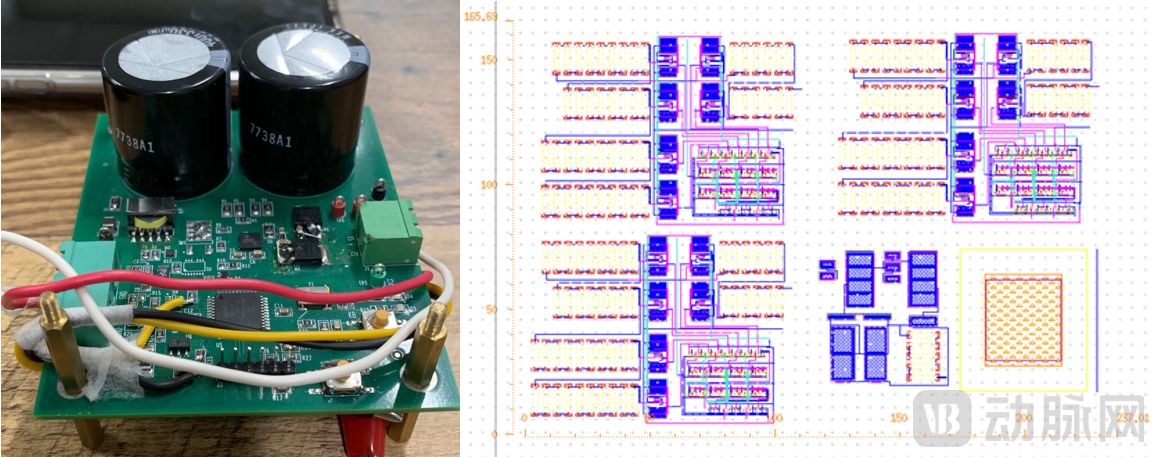
2017 Singular Medical's First High-Pressure Module (Left) and First Sensing Chip Tape-Out (Right)
We purchased implantable cardiac electrode leads and used them with our own circuitry to conduct the first large-scale canine animal experiment in Shanghai. After the doctors implanted the leads into the heart chambers of beagle dogs via veins and connected them to our circuit, ventricular fibrillation was successfully eliminated in the beagles.
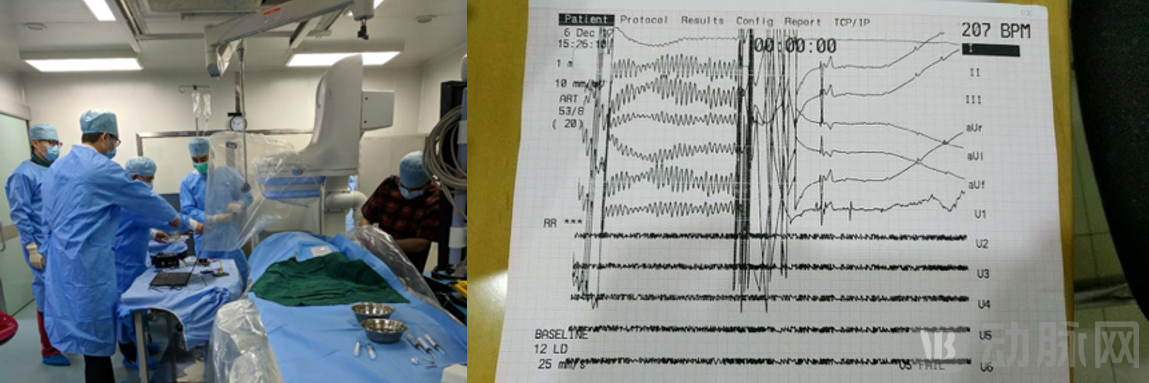
December 6, 2017: First Animal Experiment Successfully Defibrillated
Here is a postscript: In the following four years, we experienced five instances where the key bare die (DIE) of the high-pressure module was discontinued or the supplier could not provide goods due to their relationship with major companies. However, we have been continuously improving this module. Now,Singular Medical's high-pressure module has been reduced from the size of a palm to just the size of a thumbnail. Almost all key components have been replaced, and the core control is our self-developed timing control, truly mastering the autonomy of R&D and production.
Afterward, our second-generation prototype was entirely handmade in the garage using some simple equipment, like a lathe, a small stamping machine, and a small injection molding machine, hoping to validate a straightforward "full implantation system."
In August 2018, during the second animal experiment, we not only achieved 400MHz wireless communication and were able to see the ECG signals transmitted back by the ICD device on our own software interface, but also used both a simple electrode lead made in the garage and a purchased electrode lead to successfully induce and defibrillate fibrillation in the experimental dogs during two separate tests.
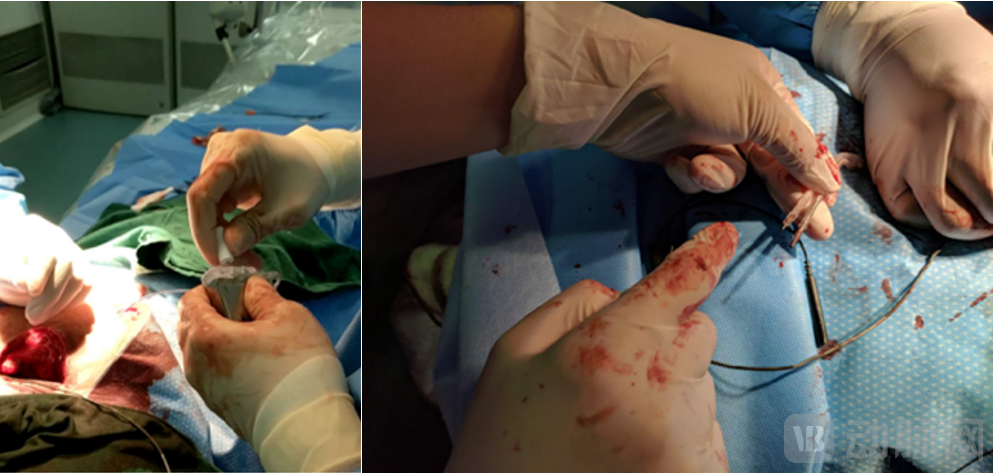
August 2018 Second Animal Experiment - Lead Insertion Prototype
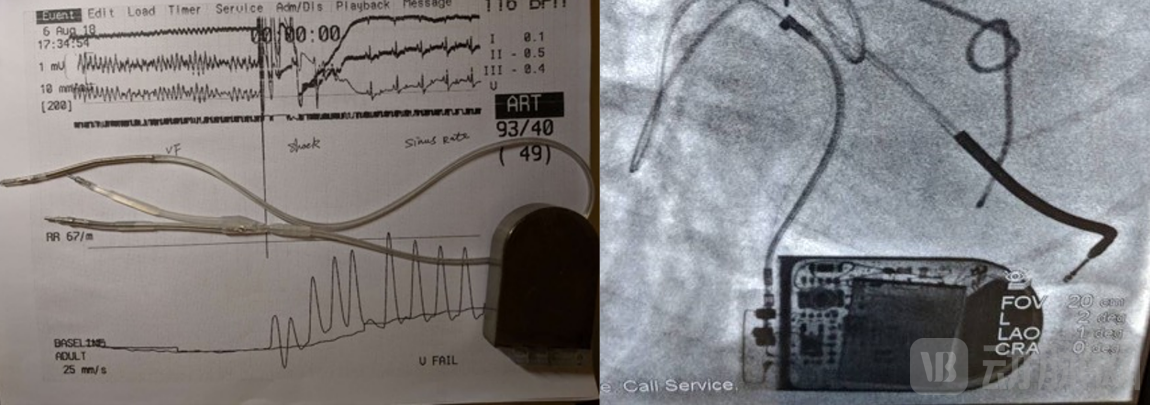 August 2018 Second Animal Experiment Prototype
In September 2019, we developed the third prototype of the ICD, which began to truly resemble an ICD product in terms of circuit architecture, casing, and craftsmanship. Our research focus this year was on the pacing function.
In the third animal experiment, we completed fibrillation induction in multiple ways and tested the VVI (ventricular pacing, ventricular sensing, demand pacing) function, which was the key focus of our research that year, along with some advanced functions such as low-current defibrillation impedance testing. We also attempted to complete a defibrillation threshold measurement (DFT test) and conducted multiple tests of external defibrillation.
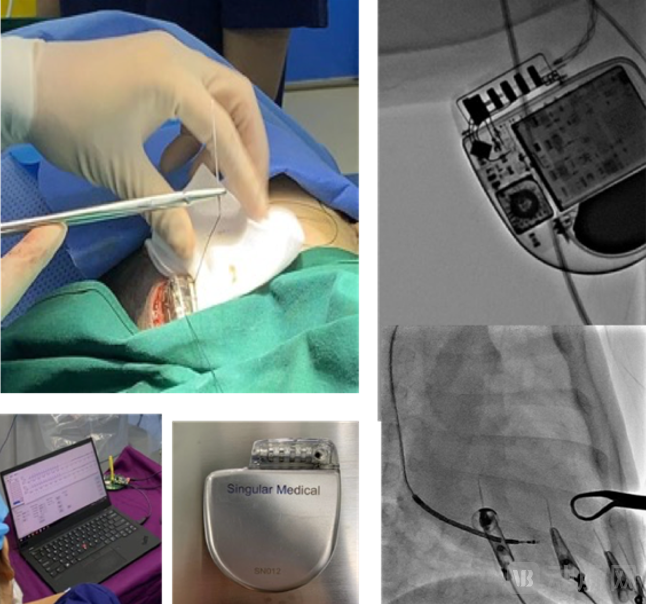
September 2019, Third Animal Experiment
Precisely because of the "ignorance is bliss" exploration in the past three years,Singular Medical's ICD design has almost no overlap with foreign companies in terms of technical pathways, especially in high-voltage charge and discharge, pacing, and sensing systems.The core designs of large companies are mostly formed many years ago and have been encapsulated into dedicated chips; whereas our system design is based on current semiconductor technology, maximizing the use of mature commercial chips to implement our system.
In terms of ICD sensing and recognition algorithms, we utilize many methods from expired patents, ensuring that these methods have been clinically used for many years and do not involve infringement. We adopt various approaches such as cardiac simulators and databases to test these algorithm combinations, ultimately selecting the best ones to achieve optimal results.
At the beginning of 2020, the COVID-19 pandemic struck, and some of our operations in the U.S. and within China could not proceed as usual. The validation of the Suzhou clean room facility, originally scheduled for completion in February 2020, was delayed due to supplier issues. It wasn't until the end of September 2020 that equipment delivery and validation were finally completed. The impact on our U.S.-based R&D center was even more severe—our team was unable to work in the office for an entire year, and external collaborations and supply chains were significantly disrupted.
But during this period, we still developed the fourth version of the ICD prototype. This product was completely produced by ourselves in Suzhou, and at that time, we planned to move towards clinical application.
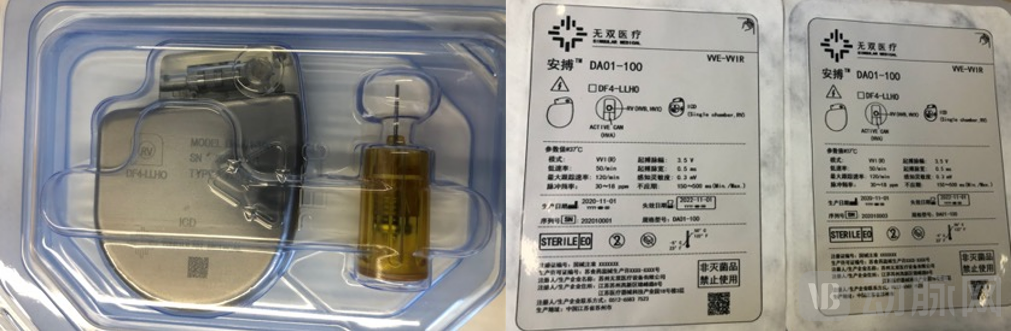
ICD Samples Produced at the Suzhou Plant in 2020
However, after discussing with some experts, we all believe that there are still areas where the current ICD can be improved.First, the shape of this version of the ICD is more prominent under the skin for thinner patients; it would be better if the ICD had a more rounded and streamlined design. Second, in July 2020, the FDA approved a Bluetooth-connected ICD product for the first time. It would be ideal for our ICD products to include Bluetooth functionality instead of the previously used 400MHz communication. Third, MRI compatibility design for ICD products is crucial, as clinical practice heavily relies on MRI examinations.
The company's board of directors decided that we would wait for a year to bring a higher-quality new generation product to the clinical stage.
Finally, we formed the 2021 edition of the ICD.This product features a streamlined design, is MRI-compatible (yet to be verified), and comes equipped with Bluetooth functionality.This year, we hired several retired CRM cybersecurity experts to build an advanced cybersecurity system for Singular Medical. The system aligns with the most advanced international concepts in various aspects, including special Bluetooth wake-up methods, key exchange, encryption, and more.
Moreover, in early 2021, we collaborated with a U.S.-based law firm specializing in medical device intellectual property to review the design of the ICD (including its appearance). Based on thorough research of other companies' patents, we are able to provide a written document certifying that the product does not infringe on any patents.
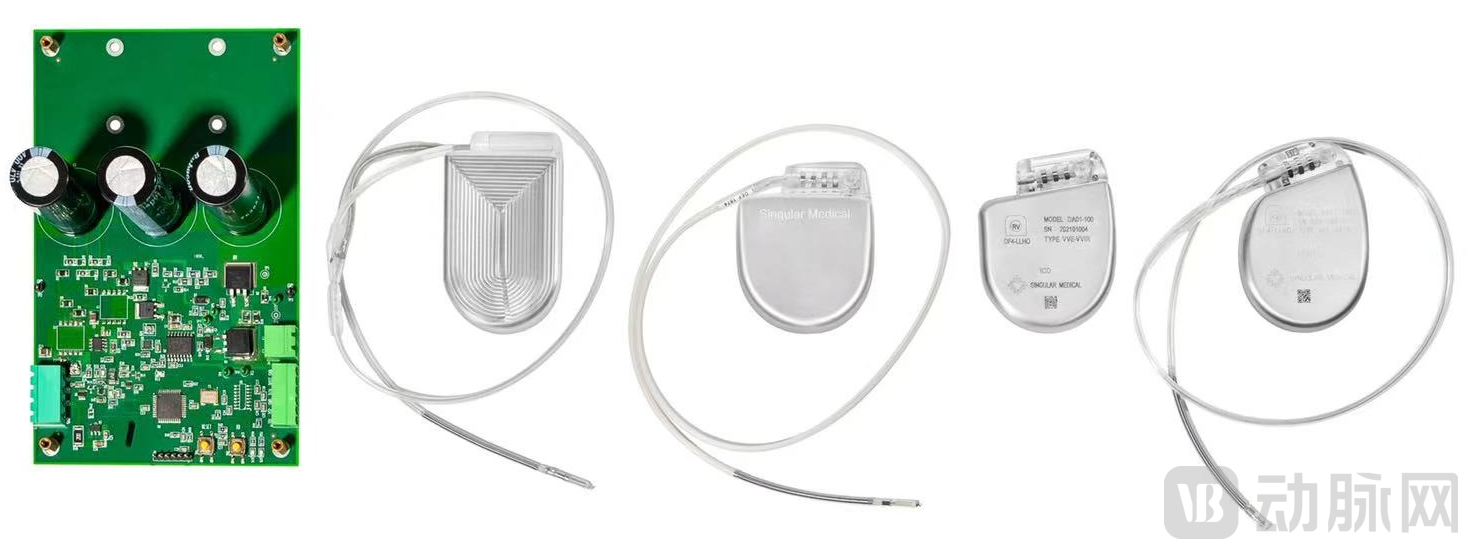
Evolution of Singular Medical ICD Prototype (2017–2021)
Singular Medical's product development path and breakthroughs have been methodical and traceable. In all aspects of product development, validation, manufacturing processes, and production, Singular Medical fully owns independent intellectual property rights and has achieved a certain level of leadership. The company has grown from an initial team of two to now having two teams in the U.S. and China with 100 employees, establishing a strong talent barrier.
Subsequently, the company will continue product development and iteration based on the ICD platform technology under the support of a professional CRM team, achieving high-standard industrialization.
VCBeat: In recent years, China has been strongly advocating for the substitution of domestically produced products. In the high-end ICD market, will clinicians and investors pay for domestically produced ICD devices? The introduction of 1.5-level prevention for sudden cardiac death (adding four major high-risk factors—non-sustained ventricular tachycardia, frequent premature ventricular contractions, low ejection fraction, syncope or pre-syncope—to internationally recognized primary prevention indications) further identifies the target population for ICD implants. How does this help in promoting and applying ICD products?
Ping Li Chuan:First, we need to clarify why we are discussing domestically produced alternatives. The most fundamental needs of doctors, patients, and health insurance are affordability while ensuring safety and effectiveness. If domestically produced medical devices can bring cost savings and meet patient needs, they will certainly be willing to use them. Secondly, multinational giants such as Boston Scientific and Medtronic have been established in China for many years. Medical associations and companies have also been promoting ICD technology and heart rhythm management knowledge at the grassroots level, cultivating a group of doctors proficient in ICD technology.
In China, where medical resources are unevenly distributed, high-end medical equipment and technology are concentrated in first-tier cities, and there are fewer grassroots hospitals capable of performing pacemaker and defibrillator implantation surgeries. As medical resources shift downward, during the process of localization of high-end medical devices, the market focus often does not lie in central hospitals.The Future of Heart Rhythm Management May Lie in Small Tier-3 Hospitals in Second-Tier Cities. This is also our opportunity to expand the incremental market, as a small spark can start a prairie fire.
Internationally recognized primary prevention targets high-risk populations who have not experienced cardiac arrest. Secondary prevention is for survivors who have experienced cardiac arrest and have a strong desire to have an ICD implanted after facing death. Some experts believe that the indications for ICD devices in European and American guidelines are too broad, which may lead to a certain degree of overuse.
The original intention of China's 1.5-level prevention was to identify the most dangerous patients and have them receive ICD implants as early as possible.In China, the population eligible for primary prevention or 1.5-level prevention far exceeds that of secondary prevention.
In the "Chinese Expert Consensus on the Clinical Application of Implantable Cardioverter Defibrillators" published in 2021, there are three key points:
1. Focus on Class I indications, our mission.
2. ICD 1.5-Level Prevention, In China, Globally.
3. Single-chamber with comprehensive ICD function.
Singular Medical's ICD is designed for 1.5-level prevention.。The group of patients at high risk for sudden cardiac death is large enough in China. With the clear clinical guidelines and the implementation of DRG, we are very confident in promoting our ICD products.
VCBeat: In the entire defibrillation field, AEDs are undoubtedly the most focused, and WCDs (Wearable Cardioverter Defibrillators) are also gaining strong momentum. I know Singular Medical is also developing WCDs, so what are your views on the WCD market?
Pingli Chuan:In recent years, AED devices have experienced rapid development, driven by local policies and the approval of domestic brands. Based on experience from the United States, the advancement of AEDs promotes the development of ICDs and raises public awareness about sudden cardiac death and defibrillation.AED addresses public safety, while ICD is "an ambulance inside the body," targeting individual health.
According to the latest "AHA/ACC/HRS Guideline for the Management of Patients with Ventricular Arrhythmias and the Prevention of Sudden Cardiac Death," for patients who need to have their ICD devices removed due to infection or other reasons, the guideline gives a Class IIa recommendation for the use of WCD; for other patients at high risk of SCD but not suitable for ICD implantation—such as those awaiting heart transplantation, having had a myocardial infarction within the past 40 days, newly diagnosed non-ischemic cardiomyopathy, LVEF ≤35%, revascularization treatment within the past 90 days, myocarditis, secondary cardiomyopathy, systemic infection, etc.—these fall under Class IIb recommendations in the guideline.
Currently, there is no WCD product that has achieved commercialized clinical application in China.
In my opinion, the most challenging aspect of the WCD should be the clinical pathway. For a patient at risk of sudden cardiac death, whether they are using an ICD or a WCD device, they are entrusting their life to it, and the clinical validation process for this is extremely serious.
Currently, the only commercialized WCD device in the world was approved by the FDA in 2001. A search on the FDA's official website shows that the first WCD completed a non-randomized clinical trial involving 289 cases across 16 centers in July 2001. In August this year, the FDA approved Kestra's ASSURE WCD system, based on clinical results from two groups totaling 130 + 13 cases. However, after receiving approval, Kestra is still required to supplement the data with over 5,000 enrolled patients within 24 months.
Such a recent, ready-made clinical pathway will be highly instructive for our development of the WCD device. At the same time, the FDA clinical experience of the WCD and the FDA-approved S-ICD (Subcutaneous ICD) clinical design will provide very important insights for our ICD clinical trials.
Currently, Singular Medical has three WCD products under development, namely patch-type, shirt-type, and vest-type, which can be applied in different scenarios.In the R&D of WCD, our advantages lie in years of accumulation in battery and capacitor suppliers and cardiac rhythm management technology. Our high-voltage module is small enough, and the overall volume is even smaller than that of Element Science's products.
From the perspective of product layout, we focus on the prevention of individual cardiogenic sudden death, and WCD is a supplement to the ICD product.
VCBeat: Looking back at the past five years of trials and tribulations, Singular Medical has planted the "seeds" of patents and products. What moves will we make in the next five years?
Pingli Chuan:In the next five years, we will continuously verify the clinical effectiveness of ICD products and improve the product based on clinical needs. Moreover, we willAccelerate the development of innovative pacemakers and ICM systems to achieve full coverage of the CRM product line.. At the same time, we hope to achieve this through self-research and cooperation with friendly companies.Accelerate the layout of WCD and neuromodulation products related to arrhythmia.。
Moreover, since 2020, we have been actively exploring and laying out plans in digital healthcare, including AI diagnostics, remote follow-ups, and more, with the hope of having products to showcase by 2022.
References:
《Mehra, R. Global public health problem of sudden cardiac death.. Journal of electrocardiology. 2007, 40 (6 Suppl): S118–22. PMID 17993308.》
Chinese Expert Consensus on the Clinical Application of Implantable Cardioverter Defibrillators (2021)
2017 AHA/ACC/HRS Guideline for the Management of Ventricular Arrhythmias and Prevention of Sudden Cardiac Death
《P010030 Lifecor, Inc. WCD® 2000 System Summary of Safety and Effectiveness Data》
《P200037 Kestra Medical Technologies, Inc. ASSURE Wearable Cardioverter Defibrillator (WCD) System Summary of Safety and Effectiveness Data》