

TowardPi Medical Secures $30M Series B Funding and Files for IPO, Spearheading the Rise of Domestic High-End Ophthalmic Devices

TowardPi
High-end Ophthalmic Medical Device Developer
VCBeat learned第一时间 that TowardPi (Beijing) Medical Technology Co., Ltd. ("TowardPi" for short), a leading company in China's ophthalmic medical device industry, has recently completed a 200-million-yuan B round of financing. This round of financing was led by two star industry capitals, Aibomedical and Fosun Health (ranking不分先后), with Ruihua Capital and Source Insight Capital following the investment. Existing shareholders Chang Development, Shuimu Ventures, and Zhongguancun Frontier Fund continued to increase their investment.
TowardPi Medical originates from the technology transfer of Tsinghua University's Department of Electronic Engineering. Its core team consists of more than ten Tsinghua alumni and executives from globally renowned high-end manufacturing enterprises., incubated by Beijing Tsinghua Industrial Development Research Institute, Global Health Industry Innovation Center (GHIC), and Zhongguan Village Life Science Park. The company was founded in October 2017 and is committed to the independent research, development, and production of a full range of high-end ophthalmic medical devices and core optoelectronic components.
To date, TowardPi Medical has completed 5 rounds of financing in the 4 years since its establishment, with the financing scale exceeding 300 million RMB in 2021 alone.In the field of high-end ophthalmic equipment manufacturing, TowardPi has received high recognition from the capital market. Among them,The continuous optimism of industrial capital also proves the huge business opportunities in the field of high-end ophthalmic equipment.
Next, this article will interpret why TowardPi Medical has been continuously favored by capital from four dimensions: the ophthalmic medical device track, enterprise development, innovative cooperation practices, and investment logic.
"The eye is a very special human organ. Due to its complex optical properties, the diagnosis and treatment of its diseases rely heavily on equipment. In terms of market space, the annual sales of China's ophthalmic medical devices (non-consumables) industry is nearly 15 billion RMB, with a compound annual growth rate (CAGR) of nearly 15%." Wang Yingqi, General Manager of TowardPi, told VCBeat that ophthalmology is one of the departments with the most diverse types of equipment—while the main types of equipment in general departments range from 5 to 10, there are more than 30 types in ophthalmology.
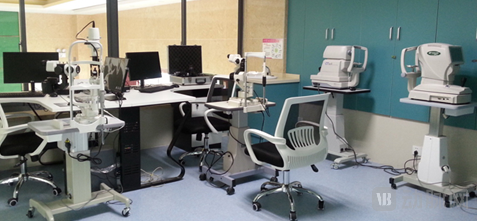
(Various common types of ophthalmic equipment densely arranged in the examination room. Photo provided by the company)
Currently, 400 million patients in China are suffering from various eye diseases, with nearly 300 million being nearsighted. As China's society ages and modern lifestyles change, the burden of ophthalmic diseases in China will become increasingly prominent. Since ophthalmology is the most equipment-dependent discipline among all medical specialties, the usage and demand for ophthalmic devices will continue to rise.
After decades of development, China's ophthalmic medical device industry mainly exhibits the following two characteristics.
1. Extremely high import monopoly rate.According to incomplete statistics, the market share of imported ophthalmic equipment suppliers accounts for a staggering 98% in terms of sales revenue. Even when calculated by sales volume, this proportion reaches 95%. This is a very rare situation amidst the current wave of domestic substitution in medical devices in China. Looking at the top brands in ophthalmic medical equipment, most are long-established high-end manufacturing giants from Germany, Japan, and the United States: ZEISS, Alcon, Topcon, Heidelberg, Canon, and others. Take ZEISS as an example: its femtosecond laser products account for nearly 60% of the market share, ophthalmic surgical microscopes account for nearly 70%, and ophthalmic OCT accounts for nearly 30%.
Behind the ultra-high import monopoly rate lies an extremely high technical barrier.:The research and development and manufacturing of ophthalmic medical devices is a typical "easy to enter, difficult to master" and "low-end with low barriers, high-end with high barriers" field. The huge technological gap has carved out a wide moat for high-end import suppliers, leaving domestic ophthalmic device suppliers struggling to make progress.
Second, the下沉 market has not been activated, with an excessively high proportion of高端 categories.In the general medical device field, the volume of the下沉市场 (lower-tier market) is usually higher than that of the high-end market, but the ophthalmic medical device sector is an exception. Taking the most basic devices like slit lamps and tonometers as examples, even these small essential devices for first and second-tier hospitals show a market share of over 70% by quantity for imported products, despite their unit prices being several times higher than domestically produced ones. By value, the market share of imported products exceeds 90%.
High-end/mid-to-large sized equipment is mainly concentrated in secondary and above hospitals, occupying the vast majority of the ophthalmic equipment market capacity. Of the annual 15 billion yuan in ophthalmic medical device sales, six major categories—femtosecond lasers, ophthalmic surgical microscopes, optical biometers, ophthalmic OCT, phacoemulsification and vitrectomy machines, and ultra-widefield fundus cameras—account for up to 75% of sales. Among these, the import market share for femtosecond lasers and vitrectomy products reaches 100%, while the import market share for the remaining products is also over 95%.
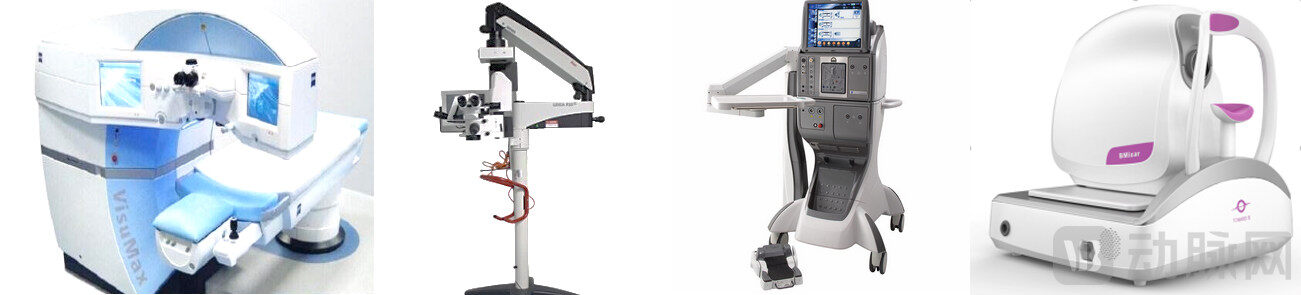
(From left to right: SMILE laser, ophthalmic surgical microscope, phacoemulsification and vitrectomy machine, and ophthalmic OCT. Photo provided by the company)
The reason for this is that the technical strength of domestically produced traditional ophthalmic medical devices has a significant gap compared to imported products. However, nowadays, high-end ophthalmic medical device manufacturers represented by TowardPi are accelerating efforts to reverse this situation.
Unlike traditional Chinese-produced ophthalmic medical devices that focus on low performance, low price, and the strategy of starting to replace imported equipment from grassroots-level hospitals, TowardPi's first two high-end ophthalmic OCT products launched in September this year — "Beiming·Kun" and "Yaoguang·Xing" — emphasize the hard power of product performance.
Specifically, "Beiming Kun" is TowardPi Medical's flagship OCT product. It is currently the world's only commercially available 400,000-scan swept-source OCT. In terms of the key OCT metric—scan speed—it surpasses similar products by more than double. Its single imaging scan length reaches 24mm. At a rate of 400,000 scans per second, its imaging depth still reaches 6mm, with an axial resolution as high as 3.8μm. All of the above parameters are exclusive among currently available products on the market.
Currently, "Beiming Kun" is being used by major well-known ophthalmic medical institutions in China for clinical academic research, and it has also produced the world's first batch of ultra-widefield OCTA images that do not require stitching. "It is no exaggeration to say that the performance leap of 'Beiming Kun' is already sufficient to change the existing clinical diagnosis process for diseases such as diabetic retinopathy and retinal artery and vein occlusion, making it a groundbreaking product in the field of ophthalmic diagnostics," said Zhou Jian, Vice President of TowardPi's Global Business Division.
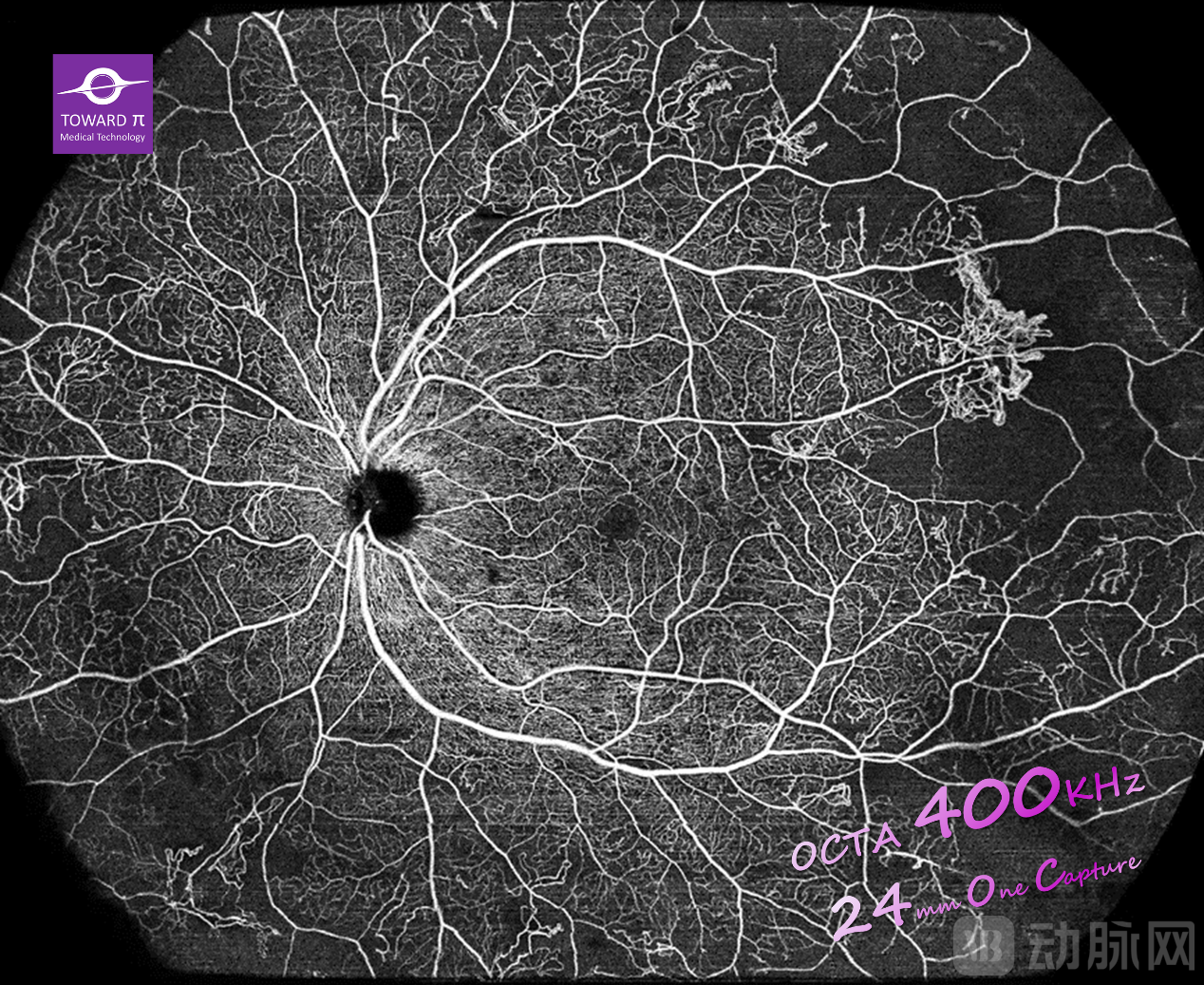
24mm Ultra-Wide Angle OCTA Image Captured by TowardPi (Patient)
"Yaoguang·Star" is TowardPi Medical's mainstream OCT product. Unlike the ultra-high performance of "Beiming·Kun," "Yaoguang·Star" focuses on the function of "one OCT meeting all clinical diagnostic needs" with its "panoramic anterior and posterior segment integration." "Yaoguang·Star" boasts a scanning speed of 100,000 scans per second, with an imaging depth of up to 14mm, which is currently the deepest imaging depth in the field of ophthalmic OCT. This depth allows "Yaoguang·Star" to be used not only for posterior segment tomography and blood flow imaging but also for excellent panoramic anterior segment imaging. Its anterior segment imaging capability even surpasses that of expensive dedicated anterior segment OCT devices. Therefore, "Yaoguang·Star" has become the world's only multifunctional, high-performance OCT product with "panoramic anterior and posterior segment integration," favored by users from secondary and tertiary hospitals as well as private hospitals.
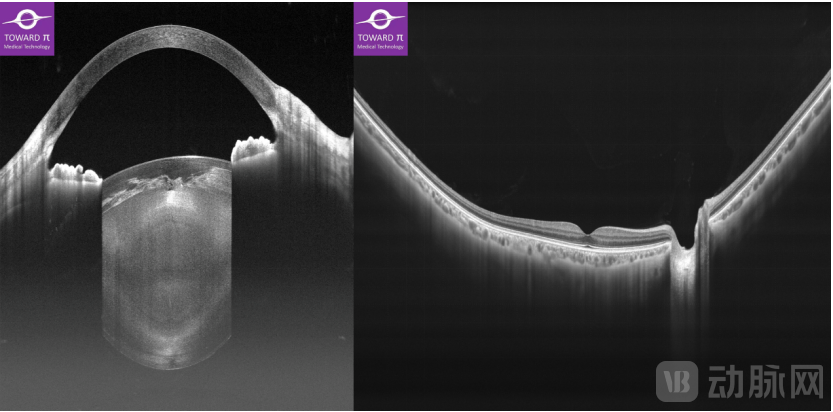
(Panoramic anterior and posterior segment integrated OCT tomographic image captured by "Yaoguang·Star" Enterprise供图)
As of now, TowardPi's ophthalmic OCT products have been piloted in over 150 hospitals, including most of the top-tier tertiary hospitals in China. Starting from formal sales in September 2021, within just one quarter, despite the product pricing being on par or even slightly higher than mainstream imported products, the company has achieved tens of millions of yuan in terminal sales, capturing a 5% market share. In its first year of sales, achieving a 5% market share within just one quarter is an outstanding performance in the field of ophthalmic medical devices.
In addition to ophthalmic OCT products, TowardPi Medical has numerous product lines at different stages.
The gold standard for diagnosis in the optometry field — swept-source optical coherence biometers — has been a complete blank slate for domestically produced equipment in China. "This has led to ZEISS's MASTER-700 product becoming almost synonymous with the concept of swept-source optical coherence biometers. However, TowardPi's 'Meridian' series panoramic swept-source optical coherence biometer has broken this monopoly," said Wang Yingqi.
The single-shot imaging depth of the "Ziwu" series has reached 45mm, leading its peers. More crucially, "Ziwu" can achieve real-time, dynamic panoramic axial visualization imaging. "Real-time dynamic panoramic axial imaging" is also TowardPi's exclusive key technology. With the premise of leading product technology standards, and in response to the pricing needs of the myopia prevention and control market, TowardPi Medical has significantly reduced the cost of swept-source optical biometry through self-developed underlying components and technological breakthroughs. This makes it competitive in the myopia prevention and control sector and provides technical feasibility for standardizing data related to myopia prevention and control among Chinese teenagers, offering commendable social significance.

("ZiWu" Real-time Dynamic Panoramic Axial Imaging of the Eye, Provided by the Company)
Currently, the "Ziwu" series products have entered the clinical trial stage.
In addition, TowardPi has three heavyweight product lines under development, which will be launched from 2022 to 2023. Due to confidentiality reasons, they cannot be disclosed in this article, but Wang Yingqi stated: "The first product in each product line will be a technologically leading, or even revolutionary, high-end product."
TowardPi's confidence and底气 stem from its strong team. According to Wang Yingqi, TowardPi's current team规模 exceeds one hundred people and is still rapidly expanding. The R&D team accounts for over 50% of the total, with硕博士学历人才 making up 70% of the R&D team. Over the past four years, the company has invested more than 100 million yuan in R&D. TowardPi has established three R&D centers in Beijing, Shanghai, and Nantong, along with two production bases in Beijing and Suzhou.
In this regard, Wang Yingqi stated: "There are no shortcuts in the research and development of high-end equipment and production manufacturing. Our team must be strong enough to have the capability to compete head-on with top international manufacturers on every product line."
TowardPi's vision is not limited to the Chinese market. In March this year, TowardPi Medical Global Division was established, with Zhou Jian, a star manager in the ophthalmology industry, serving as vice president. Currently, CE and FDA registration certificates for multiple products from TowardPi Medical are in the application process. In October this year, the "Beiming Kun" series made its first overseas appearance at the European Society of Cataract and Refractive Surgery (ESCRS, the world's second-largest ophthalmology academic conference), becoming the center of attention at the event.
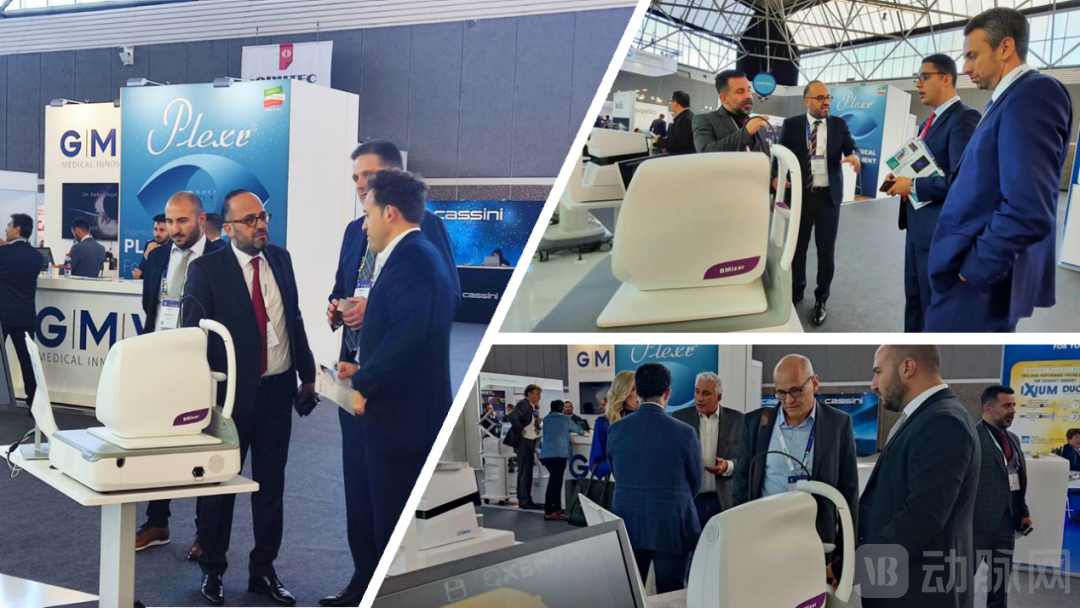
("Beiming Kun" exhibited at the ESCR in Amsterdam, drawing significant attention. Image provided by the company.)
In addition to focusing on technology research and development, TowardPi also places great emphasis on innovative achievements in clinical frontline settings. It has jointly established an ophthalmic medical-engineering transformation and innovation laboratory with the Global Health Industry Innovation Center of Tsinghua University's Institute of Industrial Research.
"TowardPi is not only an ophthalmic medical device supplier but also a technology transfer platform cultivated by Tsinghua University. We hope to leverage the strengths of enterprises and universities to fully explore new ideas and concepts from doctors, allowing more innovative ideas originating from the clinical frontlines and at the early stages of clinical development to grow into world-leading scientific and technological achievements. This innovation platform will be equipped with a team of elite engineers and clinical physician consultants, fully supporting the excellent technology transfer projects of doctors," said Wang Yingqi.
According to Wang Yingqi, the first globally pioneering technology incubated by TowardPi is the "23G Ophthalmic Fiber OCT Endoscope" technology jointly developed by TowardPi and Tsinghua Changgung Hospital. This product is currently the world's only ophthalmic fiber OCT endoscope close to commercialization completion. It can achieve imaging performance similar to desktop OCT devices at a size of 0.6mm (23G). In the future, it is expected to be widely used in vitreoretinal surgery to improve surgical quality and provide cross-sectional image navigation for doctors during operations.
The Global Health Innovation Center of Tsinghua University's Institute of Industrial Research (hereinafter referred to as the "Center") is an outstanding incubation platform for scientific and technological achievements initiated by the Beijing Tsinghua Industrial Development Research Institute. TowardPi Medical Technology grew and developed from here four years ago. Today, in order to better facilitate the medical-engineering transformation of new clinical technologies, the Center has jointly established an ophthalmology medical-engineering innovation lab with TowardPi. Both parties will work closely together to industrialize more clinically innovative technologies originating from doctors, creating new value for the field of ophthalmology.

(Tsinghua Industry Research Institute - Global Health Industry Innovation Center Corporate Photo)
On the morning of December 10, 2021, TowardPi Medical and Aibobi Medical, the investor of this round, held a strategic cooperation signing ceremony. Aibobi Medical is a leading supplier of artificial crystals and orthokeratology lenses in China, possessing strong technical capabilities and brand influence in the field of ophthalmic high-value consumables. TowardPi Medical and Aibobi Medical will carry out clinical academic cooperation in equipment-consumables in the field of optometry, jointly promoting technological advancements in this area.

(TowardPi Medical and Aibo Medical Strategic Cooperation Signing Ceremony Photo provided by the company)
TowardPi Medical has also signed a long-term strategic cooperation agreement with Fosun Health, the investor of this round. Fosun is a leading enterprise in China's healthcare industry and has heavyweight industrial resources in the field of optometry. Both parties will work closely together in the field of juvenile myopia prevention and control, contributing to the standardization of myopia prevention and control data for Chinese teenagers.
The rapid development of TowardPi Medical is a microcosm of China's ophthalmic medical device industry. We believe that, under the backdrop of the rapid growth of China's manufacturing industry and long-term favorable policies, more outstanding domestically produced ophthalmic medical device companies will emerge in the near future to become top-tier brands in China and even globally, creating benefits for ophthalmologists and patients.
Introduction to the new co-investors in this round:
Ruihua Capital:The equity investment business focuses on key areas such as healthcare, new energy, and semiconductors, aiming to provide comprehensive value-added services for enterprises.
Source Wisdom Capital:Based in China's public welfare sector, aiming to promote the development of modern public welfare, and help businesses achieve greater social public welfare value.