

Big Vision Medical Secures Tens of Millions in Series A+ Funding to Accelerate Development and Deployment of AI-Powered Ophthalmic Hardware and Software Systems

Big Vision
Developer of Artificial Intelligence Analysis and Diagnosis Products for Ophthalmic Imaging
VCBeat (WeChat ID: vcbeat) learned at the first time,Suzhou Big Vision Medical Technology Co., Ltd. (hereinafter referred to as: Big Vision) has recently completed a multi-million yuan A+ round of financing, with investors being SND Ventures and Agric Development Capital. WinCapital and Zhiyin Capital served as financial advisors.The rapid acquisition of a new round of financing by Big Vision Medical demonstrates the recognition and affirmation from investment institutions of Big Vision Medical's technological advantages and enterprise development in the field of ophthalmic AI.
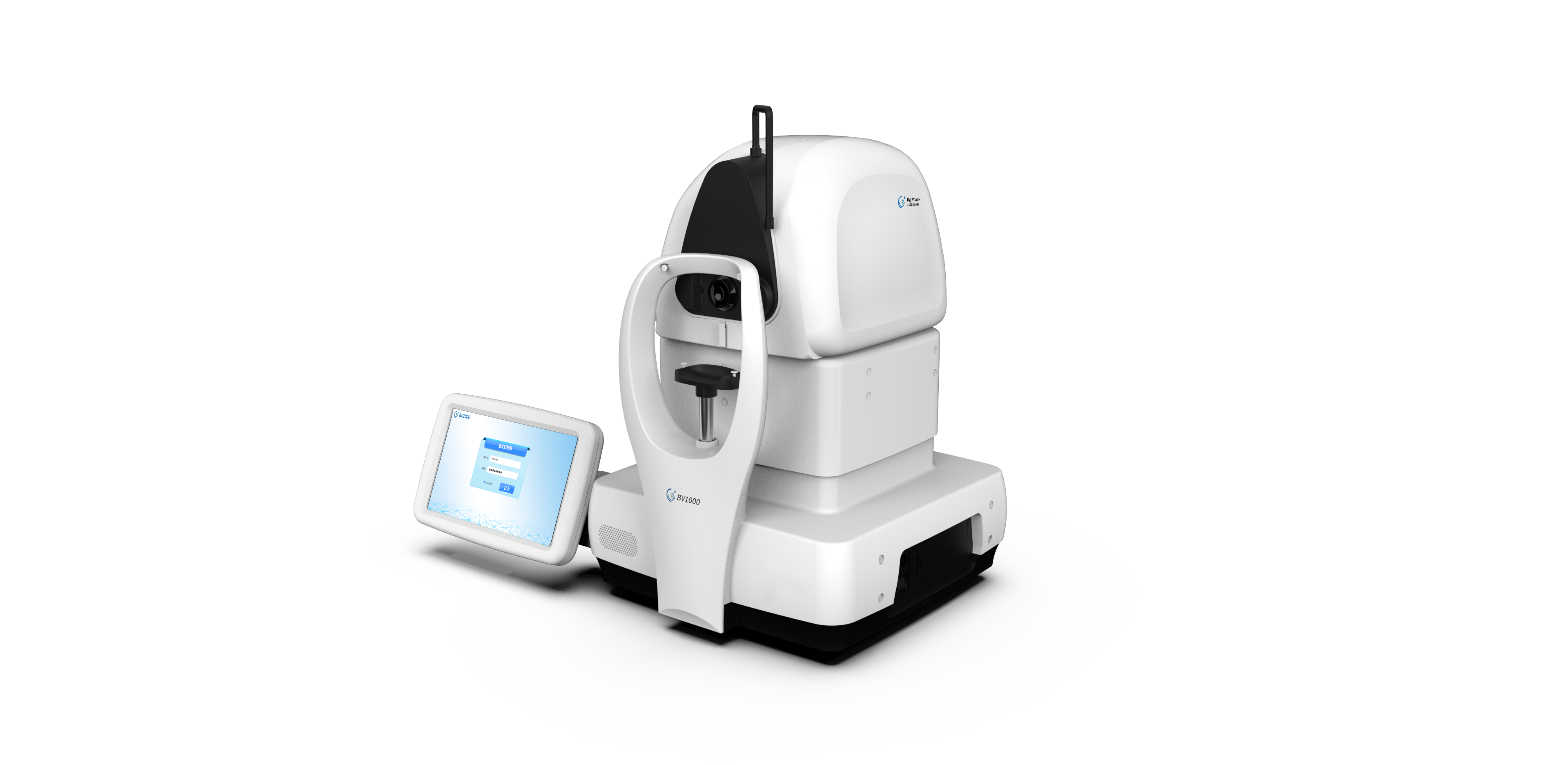
Big Vision was founded in 2015 at the Suzhou Innovation Park, focusing on the research, development, production, and sales of AI analysis systems for ophthalmic imaging and auxiliary diagnostic systems. In 2018, Big Vision released MIAS, the industry's first dual-modal ophthalmic imaging artificial intelligence-assisted diagnosis system, and has now initiated the testing and certification process for a Class III medical device registration certificate.MIAS 3000 is expected to become the world's first ophthalmic OCT imaging auxiliary diagnosis system to obtain a Class III medical device registration certificate.; Big Vision's independently developed next-generation fully automatic artificial intelligence OCT BV1000 was launched for sale in 2020 and has already been applied in nearly a hundred hospitals; In 2021, the deployment of BV1000 in hospitals continued to accelerate, with sales revenue exceeding ten million yuan. Big Vision has made remarkable achievements in ophthalmic AI technology innovation, filing over 70 patent applications, of which more than 30 have been granted as invention patents; In 2020, it won the first prize of "Wu Wenjun Artificial Intelligence Technology Invention Award," the highest award in China's artificial intelligence field.
Dr. Chen Xinjian, founder of Big Vision Medical, is a recipient of national-level talent awards, the chief scientist of the National Key Basic Research Program for Young Scientists (973 Program) by the Ministry of Science and Technology, and the principal investigator of the National Key Research and Development Program.Dr. Chen Xinjian graduated from the Institute of Automation, Chinese Academy of Sciences, with a Ph.D. in Pattern Recognition and Intelligent Systems. He has conducted research in the field of artificial intelligence for medical imaging at renowned institutions such as Microsoft Research Asia, the University of Pennsylvania in the United States, and the U.S. National Institutes of Health (NIH). In 2012, Dr. Chen Xinjian was awarded a national-level talent title and returned to China to join Soochow University as a specially appointed professor and doctoral supervisor, establishing the Medical Image Analysis and Processing Laboratory. After achieving fruitful scientific research results, Dr. Chen Xinjian resolved to "write his research achievements on the land of the motherland" and founded Suzhou Big Vision Medical Technology Co., Ltd. in 2015, where he has been tirelessly working on AI-powered ophthalmology diagnosis and treatment.
Compared with MIAS released in 2018, the product form of Big Vision has advanced from algorithm software to an integrated hardware and software solution. This is a strategic choice made by Big Vision Medical based on market demand. China has a huge base of patients with eye diseases, and with the aggravation of population aging, age-related, metabolic, and high myopia-related fundus diseases have become the primary cause of irreversible blindness in China, accounting for 54.7% of all patients with blinding eye diseases. Due to the low public awareness of fundus diseases and insufficient and uneven distribution of ophthalmic medical resources at the grassroots level, currently only 10% of patients with fundus diseases receive standardized treatment. Many patients with fundus diseases are already in the late stage of the disease when they seek medical attention, missing the best treatment opportunity. Early screening for fundus diseases and adequate standardized treatment can effectively save patients' vision and change their treatment outcomes.
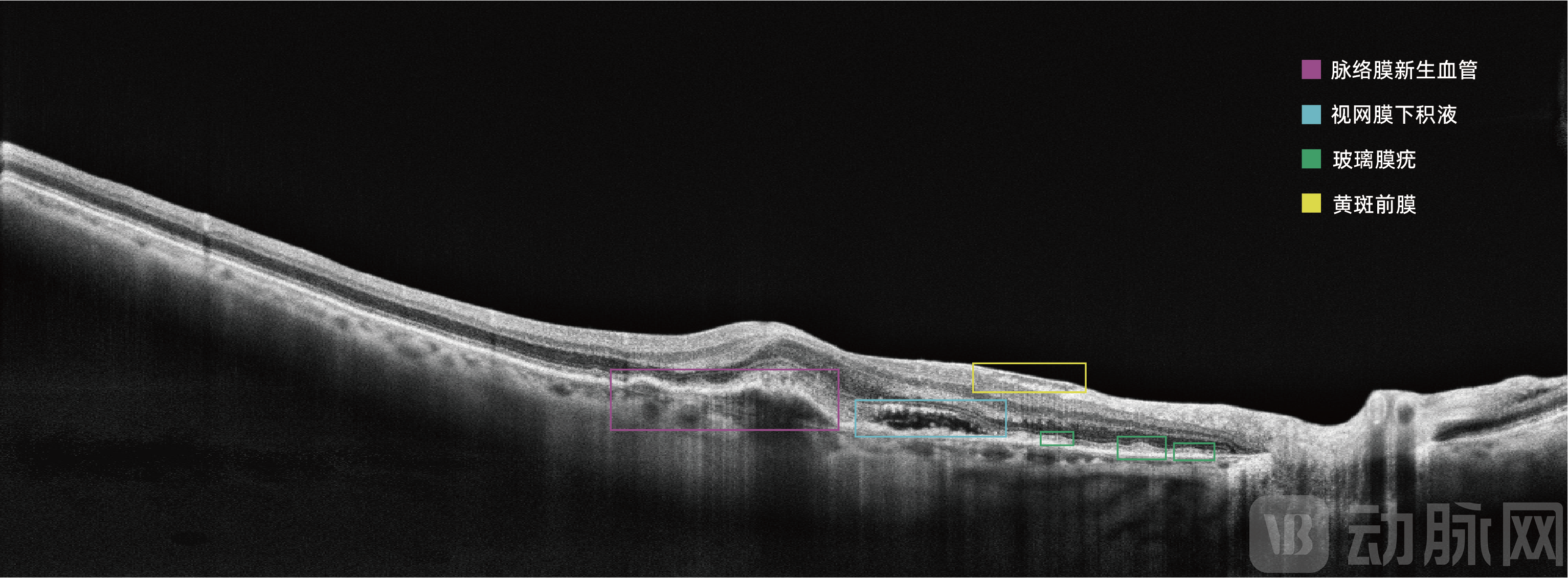
OCT is an authoritative examination device for the clinical diagnosis and treatment of fundus diseases. However, traditional OCT operation steps are complex, and image interpretation relies on highly skilled professional doctors, which limits the widespread application of OCT at the grassroots level. Empowering with advanced ophthalmic AI technology is an effective way to address the insufficient ophthalmic medical resources at the grassroots level in China. Big Vision's fully automatic artificial intelligence OCT achieves automatic pupil positioning and focusing, reducing unsuccessful captures caused by unskilled manual operations. Through voice prompts closely integrated with the examination process, it alleviates the burden on operators to guide patients and provides a more user-friendly patient experience. The device integrates Big Vision’s industry-leading ophthalmic AI algorithms to accurately identify and automatically annotate pathological lesion areas, providing valuable diagnostic information for grassroots ophthalmologists. The fully automatic artificial intelligence OCT BV1000 developed by Big Vision Medical truly equips grassroots ophthalmology with an easy-to-use and efficient OCT.
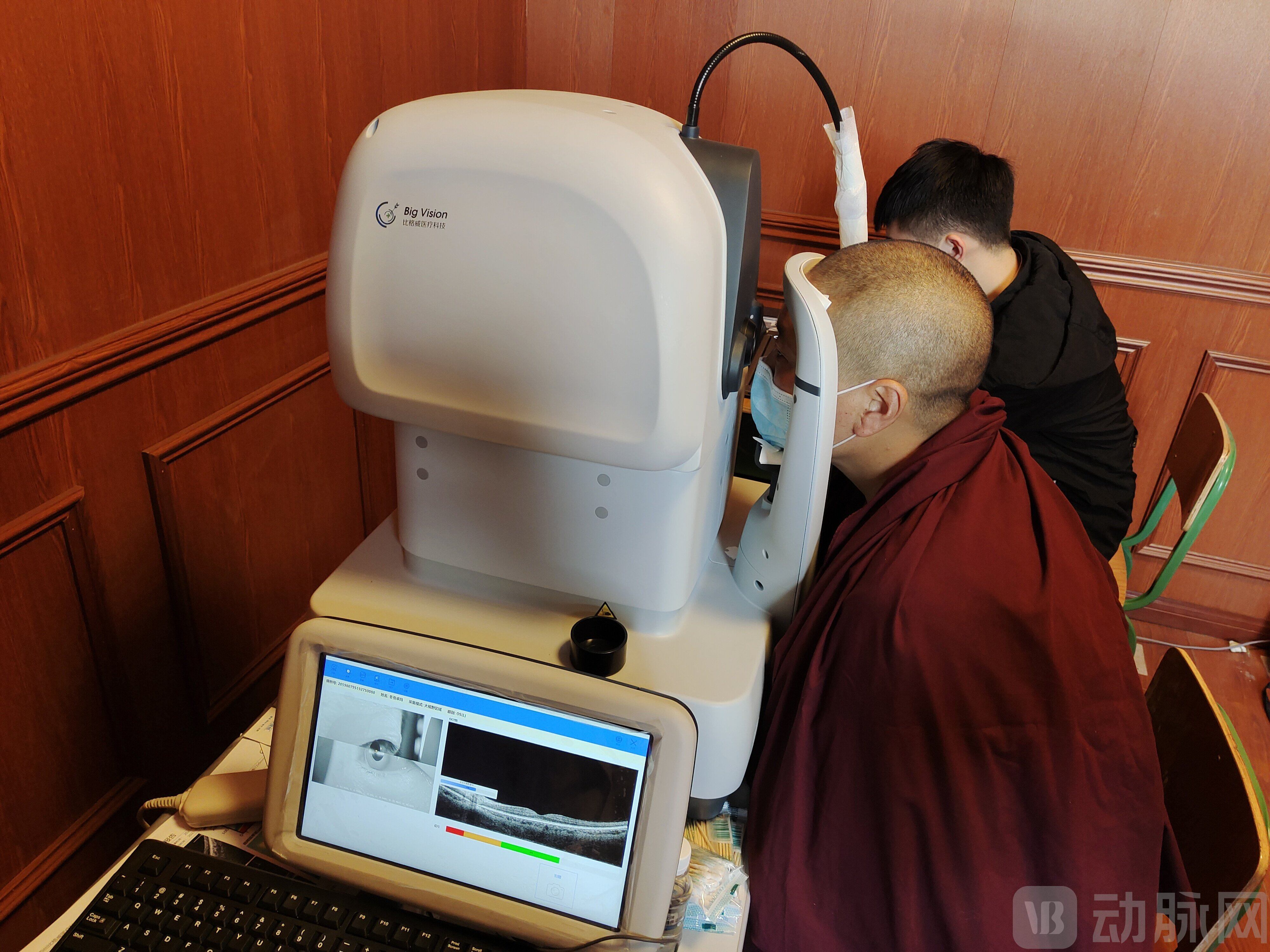
In July 2021, during the charitable screening event "Sichuan-Tibet-Qinghai Brightness Project Tagong Light Journey" organized by Wenzhou Medical University, Big Vision Medical provided support with its fully automatic artificial intelligence OCT. It conducted retinal examinations for more than 2,000 Tibetan compatriots, with the highest number of examinations in a single day reaching 281 people. The speed, efficiency, and stability of BV 1000 were fully tested and received unanimous praise from the medical team leader, doctors, and Tibetan compatriots. After more than a year of market promotion, the implementation of Big Vision Medical's BV 1000 in hospitals has been continuously accelerating. It has currently been applied in nearly a hundred hospitals, including Wenzhou Medical University's affiliated Eye Hospital, Zhongshan Aier Eye Hospital, Longchuan County People's Hospital, Yangxi County People's Hospital, and Xi'an Metallurgical Hospital.
Big Vision's Fully Automatic AI OCT Provides a Comprehensive Solution for Grassroots Ophthalmology and Ophthalmic Medical Associations Through an Integrated Hardware-Software Product Technology Approach; AI Empowers the Device Hardware, While the Device Hardware Offers Data Interfaces for AI, Driving Advancements Through Dual Mechanisms and Highlighting Product Superiority. The Successful Development of Fully Automatic AI OCT Has Enabled Big Vision Medical to Build a Professionally Diverse and Highly Collaborative Technical Team, Accumulating Extensive Experience in the Development of Ophthalmic Equipment Software and Hardware. Big Vision Is Strategically Expanding Its Line of Intelligent Ophthalmic Examination Devices, Rapidly Advancing the R&D of a Series of AI Ophthalmic Hardware Including AI Vision Screening Instruments, AI Dry Eye Analyzers, AI Biometers, and AI Corneal Topographers.
MIAS 3000 is expected to become the world's first OCT imaging auxiliary diagnostic system for ophthalmology to obtain a Class III medical device registration certificate.
As an innovative enterprise deeply engaged in ophthalmic AI, Big Vision took a differentiated path from the very beginning. Currently, most ophthalmic AI products on the market focus on auxiliary diagnosis of diabetic retinopathy based on fundus color photography. While developing AI for diabetic retinopathy, Big Vision Medical was the first to conduct AI research on ophthalmic OCT imaging and successfully developed a mature product.
Fundus color photography captures two-dimensional images of the retina, while OCT (Optical Coherence Tomography) acquires three-dimensional structural information of the retina. The retinal structural layer information contained in OCT images is rich and complex, making the development of AI algorithms more challenging compared to fundus color photography. Big Vision Medical has been continuously researching the classification, recognition, and lesion segmentation algorithms for more than ten types of fundus diseases, such as age-related macular degeneration (AMD), achieving a series of innovative results. In this technical field, the company has applied for over 70 patents and has been granted more than 30 invention patents.
Dr. Chen Xinjian told the reporter that one of the successful experiences of Big Vision's medical technology innovation is the extensive and in-depth industry-university-research cooperation innovation with universities and ophthalmic medical institutions. In 2016, Big Vision Medical and Suzhou University established the "Soochow University Big Vision Medical Joint Research and Development Laboratory" to jointly apply for and participate in national key research and development projects, making full use of the scientific research advantages of universities. This has enabled Big Vision Medical to continuously improve in product development, talent cultivation, and team building, accelerating the transformation of scientific research achievements.
Active collaborations with renowned ophthalmic medical institutions in China, such as the Zhongshan Ophthalmic Center of Sun Yat-sen University, Beijing Tongren Eye Center, Shanghai First People's Hospital, and the Eye Hospital of Wenzhou Medical University, have brought Big Vision a wealth of real-world AI application demands and research topics in ophthalmology. In terms of imaging types, Big Vision’s AI research covers not only OCT and fundus color photography but also extends to fundus fluorescein angiography, corneal confocal microscopy, slit-lamp imaging, and corneal topography. Regarding disease categories, the research includes age-related macular degeneration (AMD), diabetic retinopathy, glaucoma, high myopia, central serous chorioretinopathy, retinopathy of prematurity (ROP), corneal neuropathy, keratoconus, corneal ulcers, and ocular trauma. Big Vision’s research in the field of ophthalmic AI is highly comprehensive, consistently placing the company at the forefront of the industry with technology that ranks among the most advanced internationally. It has published over a hundred papers in authoritative international journals such as IEEE TMI, IEEE TIP, and IOVS. Dr. Jianxin Chen co-authored the specialized book "Retinal Optical Coherence Tomography Image Analysis," published by Springer, a globally recognized academic publisher.
MIAS and BV 1000, developed by Big Vision, were successively awarded as "Excellent Artificial Intelligence Products in Jiangsu Province," and the company received the Second Prize of Jiangsu Provincial Science and Technology Award in 2019. To meet the development needs of the artificial intelligence medical device industry, the National Medical Products Administration established the Standardization Technical Committee for Artificial Intelligence Medical Devices in 2019. Suzhou Big Vision Medical Technology Co., Ltd. became one of the first members of this committee and participated in the review of relevant standards for artificial intelligence medical devices.
In 2020, "Intelligent Medical Image Analysis and Its Clinical Diagnostic Applications," co-developed by Big Vision, won the first prize of the "Wu Wenjun Artificial Intelligence Technology Invention Award." The Wu Wenjun Artificial Intelligence Science and Technology Award, established by the Chinese Association for Artificial Intelligence, is known as the "Highest Award in China's Intelligent Science and Technology Field." This marks the first time that the award has granted the first prize to a medical imaging AI project in its ten-year history. Currently, MIAS 3000, an ophthalmic OCT image-assisted diagnostic software developed by Big Vision, has initiated the testing and certification process for a Class III medical device registration certificate.Expected to become the world's first approved Class III medical device registration certificate for ophthalmic OCT imaging auxiliary diagnosis system。
In Dr. Chen Xinjian's vision, the product layout of Big Vision not only includes AI algorithms and smart hardware, but in the future eye health ecosystem, connected and shared cloud platforms will play a more fundamental role.
The eyes are the most sophisticated organs in the human body, and there is a wide variety of ophthalmic examination equipment, which generates more imaging data than many other specialties. Meanwhile, eye health spans the entire life cycle of a person, with different key areas of focus at various stages of life. Currently, many ophthalmic examination devices remain as isolated data islands; the collected data, aside from being used for publishing research articles and sharing at conferences, lacks alternative utilization channels. As a result, a vast amount of valuable medical data is often discarded when the equipment reaches the end of its service life.
Dr. Chen Xinjian told the reporter, "In the digital age, I strongly agree with the viewpoint of Academician Wang Jian, the founder of Alibaba Cloud: data will become a resource more important than land. The role of data in the digital age is equivalent to electricity in the electric power era." Data can only be mined and maximized in value when it is connected. To this end, Big Vision Medical has built a unified eye health cloud platform architecture and data interface, achieving connectivity with over 30 types of equipment from various manufacturers, including fundus color photography, corneal topography, biometers, slit lamps, optometry devices, and vision screening instruments. End users can view their own historical examination data and images at any time in their WeChat-based eye health records, while medical institutions can also track the eye health status of end users over the long term. At the same time, the establishment of big data in ophthalmology will play a very important role in predicting disease progression, evaluating treatment effects, and developing new treatment methods.
In 2018, General Secretary Xi Jinping made important instructions on the myopia prevention and control work for children and adolescents. The Ministry of Education, the National Health Commission, and seven other departments jointly issued the "Implementation Plan for Comprehensive Myopia Prevention and Control in Children and Adolescents," elevating myopia prevention and control for children and adolescents to a national strategy. Optometry clinics and optometry centers have played an important role in the myopia prevention and control work for children and adolescents. However, many optometry centers have been transformed from traditional eyewear stores and have shortcomings in terms of personnel, professional standards, and examination equipment, requiring support from comprehensive technical platforms. The Bright Lemon Eye Health Management Platform developed by Big Vision not only integrates ophthalmology professional knowledge graphs but also helps standardize diagnostic and treatment processes for optometry centers. It has been successfully implemented in more than ten optometry centers, including Nantong Xijian Ophthalmology and Shaoxing Zhongyi Ophthalmology.
Founded in 1986, Panzhihua Dagguangming Eyewear Co., Ltd. has gained significant recognition and influence in China's optometry industry. After experiencing Big Vision's medical products, Panzhihua Dagguangming Eyewear became the first company in the optometry industry to introduce fully automatic artificial intelligence OCT. In the view of Xue Kejun, chairman of Dagguangming Eyewear, many patients with eye diseases often go to optometry centers for examination when they notice a decline in vision or blurred sight. As a veteran who has dedicated his entire life to the optometry profession, he is unwilling to let any patient with an eye condition slip through his fingers. This is precisely...Big Vision's Initial Aspiration: "To Detect Every Pair of Problematic Eyes as Early as Possible and Provide the Best Treatment Solutions"。
The completion of this round of financing will add new momentum to Big Vision Medical's efforts to accelerate product implementation.
This time, Big Vision's investorsZhou Zhongqiang, Head of Gaoxin Venture Capital Jingu CapitalIt is reported that Big Vision is at the forefront of the ophthalmic AI field. Its integrated software and hardware product approach provides a complete solution for primary ophthalmology, and the market has preliminarily validated Big Vision's truly feasible AI commercial model.
This time, Big Vision's investorsXu Hua, the person in charge of AgricapitalBig Vision's data advantage, combined with founder Dr. Chen Xinjian's profound expertise in the field of AI-based diagnosis of fundus diseases, gives Big Vision a significant technological edge in the ophthalmology AI sector, with vast potential and future development opportunities.