

Pfizer's Inotuzumab Ozogamicin, China's First CD22-Targeted ADC, Receives NMPA Approval

Pfizer
Pharmaceutical R&D Developer
On December 22, the official website of the National Medical Products Administration (NMPA) showed that Pfizer's application for the injection of Inotuzumab Ozogamicin (formerly known as: Inotuzumab Ozogamicin) was approved by the NMPA for marketing in China. It is indicated for the treatment of adult patients with relapsed or refractory precursor B-cell acute lymphoblastic leukemia (ALL). This is the first antibody-drug conjugate (ADC) targeting CD22 to be approved for marketing in China. Previously, this marketing application was included in the priority review by the Center for Drug Evaluation (CDE) due to its "obvious therapeutic advantage as an innovative drug."


Inotuzumab ozogamicin is an antibody-drug conjugate developed by Pfizer and Celltech. It consists of a monoclonal antibody (mAb) targeting CD22 linked to the cytotoxic agent calicheamicin. The CD22 antigen is expressed on the cancer cells of more than 90% of patients with B-ALL.
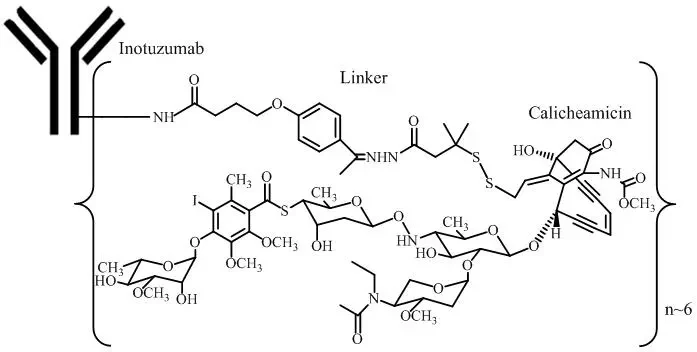
In June 2017, Inotuzumab Ozogamicin was first approved for marketing in the EU; subsequently, in August 2017, it received FDA approval (brand name: Besponsa) for the treatment of relapsed or refractory precursor B-cell acute lymphoblastic leukemia and had previously been granted FDA Breakthrough Therapy designation.

The FDA approval was primarily based on the results of the Phase III clinical trial (INO-VATE ALL) of Inotuzumab Ozogamicin. This was a randomized, open-label, international, multicenter Phase III study designed to compare the efficacy and safety of Besponsa with standard chemotherapy. The trial enrolled 326 adult patients with relapsed or refractory B-cell ALL, who were randomly divided into two groups to receive either Besponsa or chemotherapy.
Results showed that the complete remission rate (CR) was 80.7% (95% CI: 72%-88%) in the Besponsa group and 29.4% (95% CI: 21%-39%) in the chemotherapy group. Among patients achieving complete remission, the minimal residual disease (MRD) negativity rate was 78% (95% CI: 68%-87%) in the Besponsa group and 28% (95% CI: 14%-47%) in the chemotherapy group. Additionally, the median overall survival (mOS) was 7.7 months (95% CI: 6.0 months-9.2 months) in the Besponsa group and 6.2 months (95% CI: 4.7 months-8.3 months) in the chemotherapy group. However, in terms of safety, the drug’s label includes a black box warning regarding potential hepatotoxicity.