

Divamics Builds Leading AI Drug Design Platform to Tackle High-Barrier Molecular Physics Models

Divamics
AI Drug Discovery Platform
"My greatest wish is to introduce an advanced algorithm process for frontline drug research and development. If we only stay in the algorithm development of related fields, I would feel a bit regretful." Dr. Zheng Zhen, who was then a senior scientist at QuantumBio, a U.S.-based pharmaceutical design software company, decided to return to China to start his own business after careful consideration and revealed his inner thoughts.
Dr. Zheng Zheng, an expert in computer-aided drug design and machine learning as well as the inventor of the core algorithm of the project, originally came from a pharmaceutical background. After obtaining his bachelor's degree from the Department of Pharmacy at Peking University, he applied to pursue a Ph.D. in Chemistry at the University of Florida under the guidance of Professor Kenneth Merz, a globally top-tier expert in computational chemistry. In the context of the clearly divided labor in the U.S. drug R&D chain, Dr. Zheng, as an algorithm scientist in the field of drug design, focuses on back-end software development, and rarely has the opportunity to directly engage in frontline drug R&D processes. Nevertheless, he has always maintained a strong interest in drug research and development.
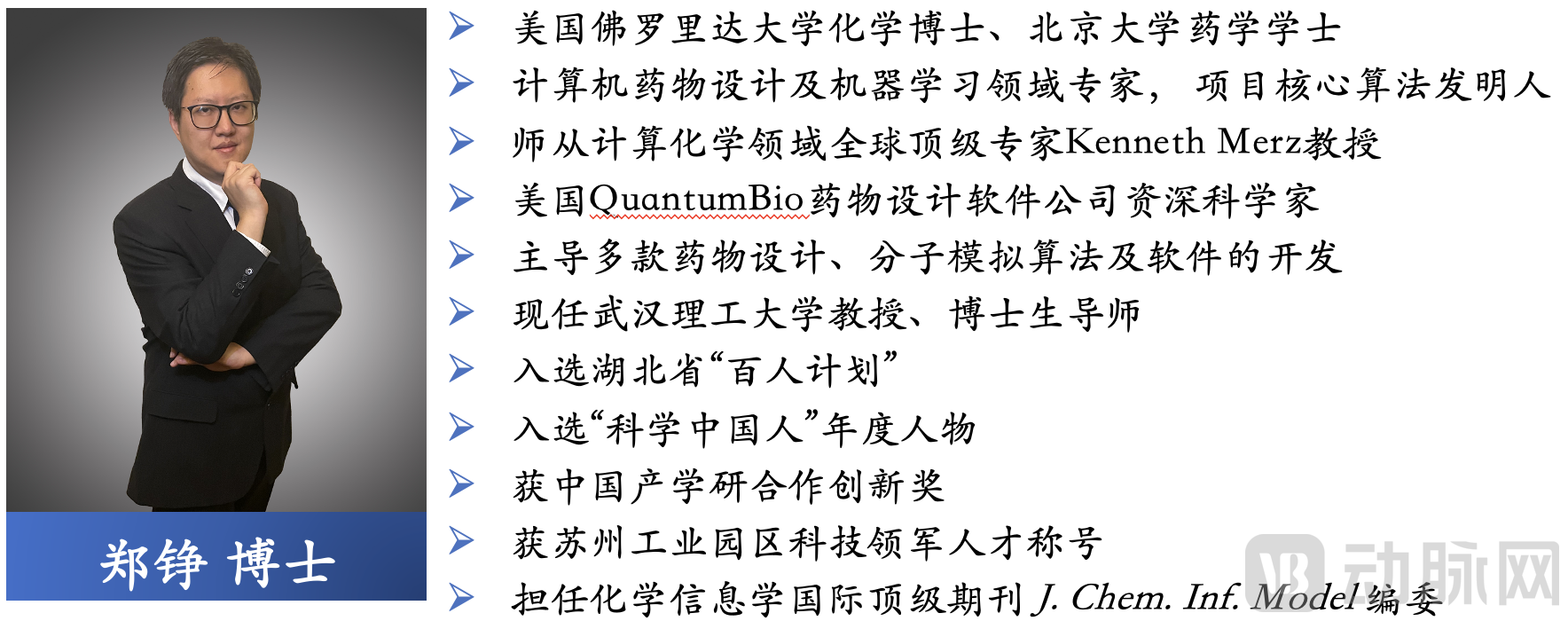
"During the period of developing drug design software in the United States, our iterative updates to algorithms often relied on experimental feedback from real drug molecular systems. However, for large pharmaceutical companies, data security is particularly sensitive and confidentiality systems are strict, so we could hardly obtain any data of practical value from our collaborating clients. On the other hand, drug design software companies in the U.S. typically do not conduct large-scale related experiments internally. As a result, the final algorithm development still depended on the databases we built internally. This naturally limited the speed and effectiveness of algorithm development." Dr. Zheng Zhen remarked, "Therefore, I really want to establish my own R&D team, combining the experience we’ve accumulated in algorithm development with our understanding of pharmaceutical systems at the molecular level, and devote ourselves to frontline drug research work."
After returning to China, Dr. Zheng Zheng founded Divamics Inc. (referred to as Divamics) in 2021. With artificial intelligence, quantum mechanics, and molecular mechanics algorithms as the core technologies, the company empowers new drug development through simulation computing. By integrating self-innovated next-generation molecular simulation AI core algorithms with artificial intelligence models, the company has established an internationally leading AI-driven drug discovery platform. The computational modules cover the entire preclinical drug discovery process, including target selection and validation, lead compound search, design optimization, and drug-likeness prediction. In the same year, Dr. Zheng Zheng was awarded the title of Leading Scientific Talent in Suzhou Industrial Park for this project.
Combining physical models, parallel computing, and AI technology to build a powerful computing platform
As a scientist with over a decade of experience in the research and development of computer-aided drug design algorithms, Dr. Zheng Zhen noted that in the era of big data, AI technology has rapidly penetrated various application scenarios across production and daily life, which in turn has spurred the emergence of multiple machine learning algorithm development frameworks and libraries. The abundance of mature development frameworks and libraries has significantly reduced the difficulty of developing new algorithms and software in the AI pharmaceuticals field, leading to the rapid creation of AI software and algorithm platforms applicable to various stages of the drug development process within just a few years.
On the other hand, artificial intelligence algorithms are essentially statistical models. Due to the varying data characteristics at each stage of drug development and the differing levels of understanding within systems science for corresponding fields, AI technology has made certain progress in areas such as lead compound discovery at the molecular level, structure-activity relationship analysis of drugs, and prediction of some pharmaceutical properties. However, when faced with issues in the drug development process that involve limited data availability, low data reproducibility, and complex model principles, AI technology has yet to fully realize its potential.
At the same time, in molecular-level research for drug development, computational chemists have a powerful set of computational tools, namely molecular dynamics simulation methods based on physical models such as molecular mechanics and statistical thermodynamics.Physical ModelThe advantage lies in the high computational simulation accuracy for spatial and temporal changes of complex biomolecular systems during physiological processes. Compared with pure AI algorithms, it has higher scalability and universality. However, the construction of physical models is more challenging, and the computational cost of related algorithm software is also higher.
Most of the software platforms used in the industry are based on physical model engines developed in Europe and America. In the industry, there are high-tech companies like Schrödinger Inc that invest substantial financial resources, manpower, and time into developing simulation software based on physical models. After significant investment, these efforts can indeed yield good results. However, such high-cost algorithm research requires a robust financial system for support. Small and medium-sized pharmaceutical companies face the challenge of how to reduce development costs if they want to engage in drug discovery based on this approach. Divamics believes that combining AI algorithms with physical models can help lower computational costs.
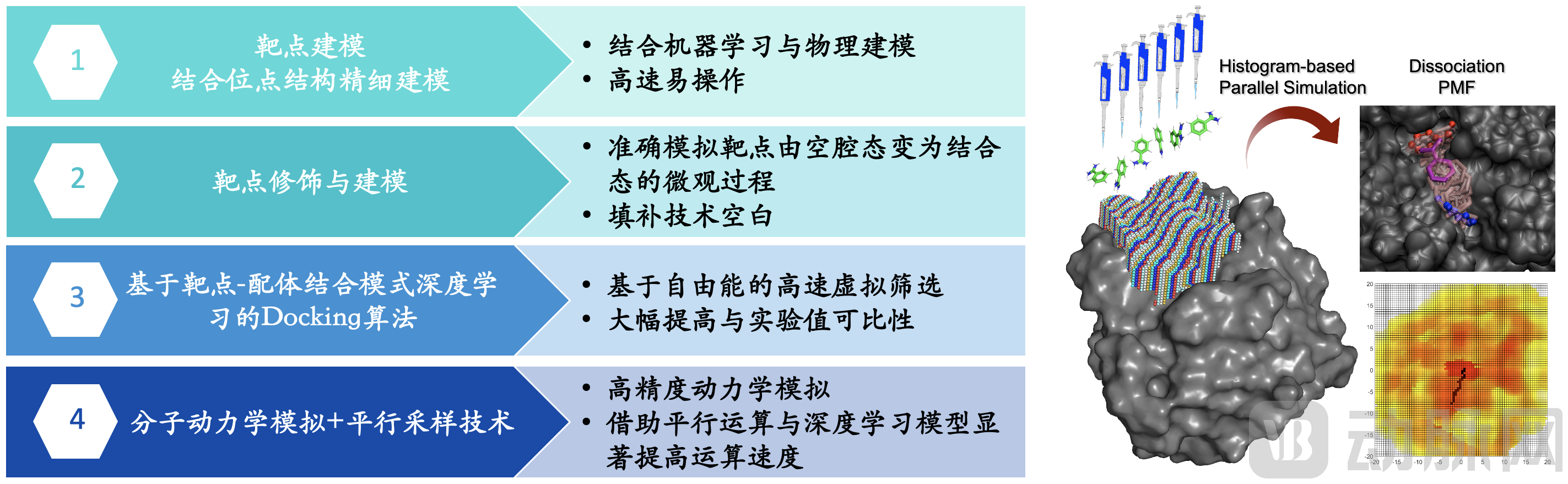
Based on the above approach, Divamics has integrated the advantages of multiple algorithms to build a powerful computing platform. This platform combines various industry-leading technologies such as physical models, AI algorithms, and parallel computing techniques, and has pioneered several AI drug design algorithms that can significantly improve the speed and success rate of drug development. The construction of molecular free energy simulation algorithms has always been a strength of the Divamics team. Before returning to China to start his business, the company's founder, Dr. Zheng Zheng, led the development of the "Movable Type" algorithm software, which underwent rigorous internal testing by several large pharmaceutical companies and received positive feedback. It also achieved excellent results multiple times in global large-scale double-blind testing challenges.
In the new generation of molecular simulation technology developed by Divamics, the algorithm divides the space between the binding site of a disease-related target and the edge of the "pocket" into a series of continuously distributed small spaces. Using the Monte Carlo sampling method, it independently performs parallel calculations of the partition function for each space, thereby obtaining a free energy curve or surface for a ligand moving from the receptor's binding site to the edge of the pocket. This method eliminates the difficulty of overcoming energy barriers in free energy calculations while significantly improving computational speed through parallel sampling across continuous spaces. It is reported that compared to the time required for traditional physical model simulations of potential drug binding processes, Divamics' algorithm platform can enhance computational speed by 10 to 15 times.
Algorithm Assists in Drug Development for "Difficult-to-Drug Targets" Related Diseases, Divamics Accelerates Preclinical R&D Process for New Drugs
After completing the construction of the algorithm platform, Divamics first attempted to collaborate with pharmaceutical companies through a co-development model to jointly advance new drug research and development, using computation to drive experiments, significantly reducing R&D trial-and-error costs, and improving R&D efficiency and success rates. Dr. Zheng Zheng told VCBeat: "In the entire process of new drug R&D, the AI algorithm platform of Divamics first entered the field of drug development for diseases related to 'difficult-to-drug targets,' which is one of the most challenging areas in drug development. Its creativity is groundbreaking, going from 0 to 1."
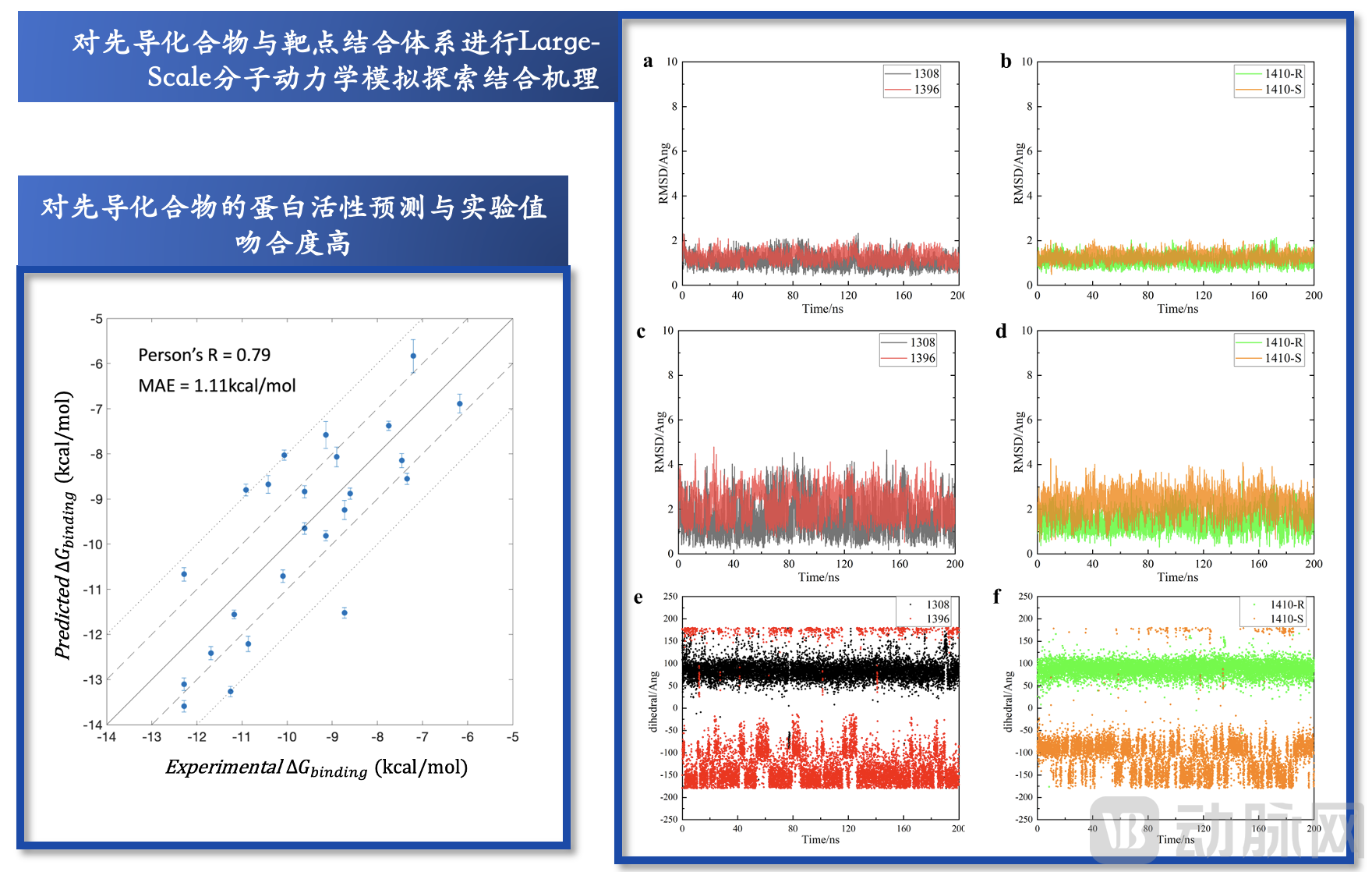
Divamics utilizes multi-scale screening and simulation methods to model the pathogenic mechanisms of target proteins and the binding process of drug-target interactions, performing corresponding absolute free energy calculations. The company empowers various stages of the drug discovery and preclinical research pipeline by exploring drug mechanisms at the molecular level, drug metabolism, mechanisms of drug interactions, and the principles of drug off-target effects. After completing the development of its algorithm platform and refining the algorithm workflows used in drug discovery research, Divamics' next business step is to collaborate deeply with relevant experimental teams to empower the entire preclinical research process for new drug development. By leveraging advanced computational platforms, the company aims to significantly reduce trial-and-error costs, improve the efficiency of subsequent experimental processes, and increase the success rate of new drug discovery. Currently, Divamics has established commercial partnerships with several biopharmaceutical companies both domestically and internationally, achieving multiple milestone advancements. By integrating into the global innovative drug R&D system, the company is committed to advancing new drug development through collaboration.
Currently, Divamics has also initiated a new round of financing to expand its technical team in order to adapt to the company's increasingly saturated business volume. Additionally, the funds will be used to promote the company’s technological platform in the market, aiming to develop and expand new drug pipelines.