

Abbott and Omron Enter the Wearables Arena at CES: Professional Players Target a $100B Health Tech Market

Abbott
Provider of Health Diagnostic Products and Health Diagnostic Management Solutions

Abbott
Diagnostic and pharmaceutical product manufacturers
At the recently concluded 2022 International Consumer Electronics Show (CES), Abbott showcased the latest version of its Continuous Glucose Monitoring System (CGM) — FreeStyle Libre 3. As the world's smallest and thinnest glucose sensor, it not only enhances user experience but also demonstrates Abbott's technical strength as a professional medical device manufacturer. Meanwhile, Omron Healthcare unveiled its new remote diagnosis service and Bluetooth-enabled blood pressure monitor at CES, aiming to promote cardiovascular health for every consumer.
In the past two years, the impact of the pandemic has made people pay more attention to their health conditions than ever before. According to a survey by Fortune, the market size of wearable devices has reached 36.3 billion US dollars, with a compound annual growth rate of 15.4%. It is predicted that by 2028, the market size will exceed 110 billion US dollars.
Emerging markets with huge growth potential have naturally attracted investors' attention. Both startups and tech giants are continuously investing in related software and hardware. In previous years, companies like Apple, Xiaomi, and Huawei, which target mass consumer markets, dominated this field. How can professional players like Abbott and Omron break through the barriers in the wearable market?
As a global leading healthcare company, Abbott clearly does not align with the positioning of merely creating a basic product for data collection. Abbott has set its sights on the diabetes field, choosing it as the breakthrough point. Diabetes is a globally prevalent disease. According to statistics from the International Diabetes Federation, the number of people living with diabetes worldwide was approximately 425 million in 2017, and this figure is expected to reach 629 million by 2045. China has the largest number of people with diabetes globally, with 114 million reported in 2017, and this number is projected to reach around 150 million by 2045, indicating a massive market.
As early as 2008, Abbott released a continuous glucose monitor (CGM) called the FreeStyle Navigator, which received FDA approval. Its sensor could be implanted in the abdomen or on the back of the arm, with a continuous usage duration of approximately 5 days. It required calibration using a fingerstick glucometer within the first 10 hours of use and was only available by prescription. This was less than a year after the release of the first-generation iPhone, and Abbott had already created a product that, even by today's standards, appears conceptually relevant.
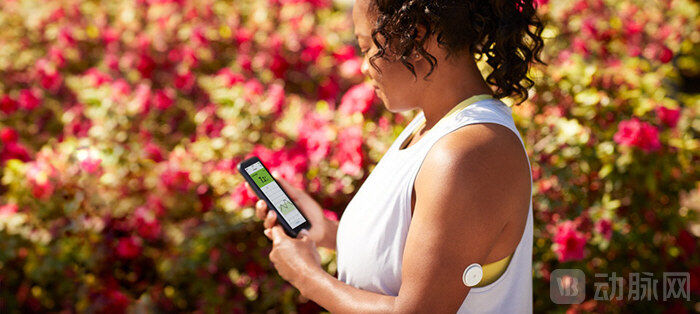
Through the Navigator project, Abbott verified the reliability of its technology route for measuring interstitial glucose through subcutaneous implantation, which is centered on wired enzyme technology. The Navigator project started in 2008 and was no longer updated after 2011. From that point on, Abbott began developing a new generation of CGM products. At this time, Jawbone released the first smart bracelet, UP, at the TED Global Conference. It could only provide a few functions such as motion tracking, and due to battery issues, it was recalled just one week after going on sale and the release was postponed by a year.
In 2017, Abbott released the first generation of FreeStyle Libre (domestic name in China:瞬感). The sensor of this product is very small, equivalent to only two stacked quarters, making it the smallest wearable blood glucose monitoring device at the time, with a battery life of up to 14 days. Of course, the biggest selling point of the product is that it does not require fingerstick calibration. Sensors of such products may produce abnormal sensitivity results due to the influence of foreign body reactions or enzyme activity decline, as well as mechanical wear on the outer film of the sensor caused by human activities leading to position drift. Therefore, most similar products require initial calibration with fingerstick blood glucose values at specific times after implantation. During use, recalibration is also required at regular intervals to compensate for errors. Abbott's ability to achieve calibration without fingerstick blood is inseparable from the stability of product manufacturing and the accumulation of wired enzyme technology.
For diabetic patients, setting aside economic factors, the most resisted aspect of their health management is frequent blood sampling. Abbott's product perfectly solves this user pain point. A year later, Abbott's FreeStyle Libre gained recognition from the Centers for Medicare and Medicaid Services (CMS) in the United States and was included in the scope of U.S. medical insurance reimbursement. During the same period, the number of users of Abbott's FreeStyle Libre reached more than 400,000, including patients from 21 countries such as France, Japan, the United Kingdom, and the United States, who could receive partial or full reimbursement when using the product.
Following this, Abbott also launched the upgraded product FreeStyle Libre 2, which features Bluetooth connectivity for glucose alarm functionality. This generation of the product received FDA approval in June 2020, and its applicable age range was expanded from adults over 18 years old to include users aged 4 years and above.
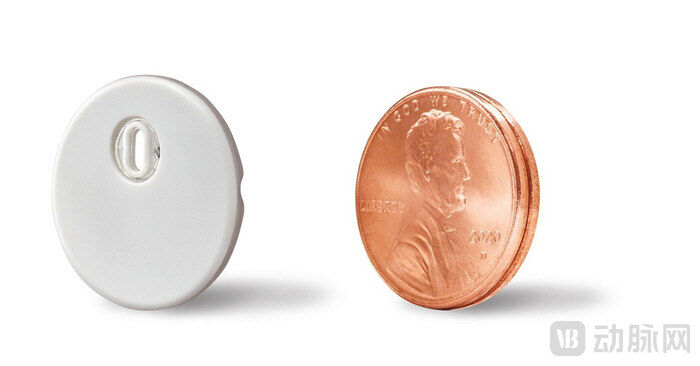
Abbott's FreeStyle Libre 3, showcased at CES this year, not only further reduces the sensor size to that of a nickel but also expands its health management services. For instance, the collected data is integrated into Abbott’s diabetes management system, LibreView (service names may vary by region), and presented in easy-to-understand analyses and clear reports to assist users in making daily treatment decisions. Blood glucose readings can also be shared with family members to help them monitor the patient’s treatment progress. Currently, FreeStyle Libre 3 has received European CE certification and will only be available in the U.S. market after obtaining FDA approval.
Of course, Abbott wants to do more than that. With the technical accumulation of the FreeStyle Libre series, Abbott announced at CES that they are developing a wearable device called Lingo, which aims to help users track key indicators in their bodies (including glucose, ketones, lactate, or alcohol) to help them better understand and manage their overall health.
Although Lingo is based on glucose monitoring sensor technology, it is ultimately aimed at general users rather than for medical purposes. It is built on the foundation of Libre Sense Glucose Sport, a wearable device designed for professional athletes. This device tracks athletes' glucose data over 14 days, allowing coaches to monitor their physical condition and adjust training intensity and nutritional supplementation accordingly.
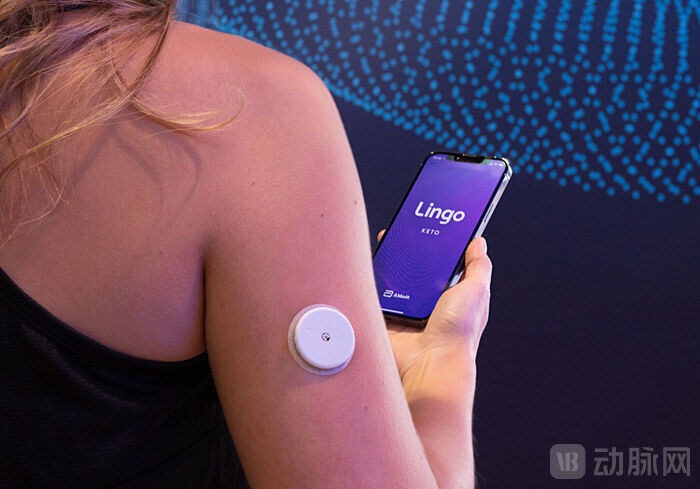
This product, derived from CGM technology and specifically designed for athletes, has been introduced by Abbott to a broader consumer audience. At CES, Abbott's CEO stated: "Diabetes management remains Abbott's top priority, but data and experience from 3.5 million users indicate that we can do better and serve more people. In the future, Lingo will measure additional biomarkers such as glucose, ketones, lactate, and alcohol, all of which are crucial components of metabolic health. Lingo will provide in-depth and meaningful interpretations of these metrics. For example, Lingo will be able to detect when a person is in ketosis and adjust weight loss plans in real time. The lactate sensor will measure lactic acid buildup in the body to extend recovery time. Lingo can even help prevent drunk driving and monitor alcohol consumption. Our bodies are constantly telling us how they're doing and how we can assist them. In the past, we couldn't understand, but with Lingo, it’s time to listen to what our bodies are saying."
Starting from the professional medical field, accumulating technology and data to create products for the mass market. Following the same path as Abbott is Omron. As a brand specializing in remote blood pressure monitoring and personal health management, Omron Healthcare also launched its new remote medical service, Bluetooth-enabled blood pressure monitors, and mobile applications at CES. As a significant upgrade to all Bluetooth-enabled blood pressure monitors, Omron also showcased its latest OMRON Connect APP application at CES. This application can now connect to all Omron Bluetooth-enabled devices and acts as a personal heart health coach, providing in-depth analysis of blood pressure readings, guiding hypertension management, and encouraging users to make behavioral changes.
Currently, Omron's remote medical services cover VitalSight in the United States, Hypertension Plus in the United Kingdom, and HeartVoice in Singapore. VitalSight is a remote healthcare service provided by doctors to patients at high risk of hypertension, which does not require Wi-Fi or cellular data connection. Patients receive a blood pressure monitoring kit delivered to their home, including an Omron Bluetooth-enabled digital blood pressure monitor and a pre-configured data center system for securely sharing measurements with their doctors and care teams digitally. VitalSight integrates with the doctor’s Electronic Medical Record (EMR) system, providing deeper insights into patient conditions and helping improve cardiac health.
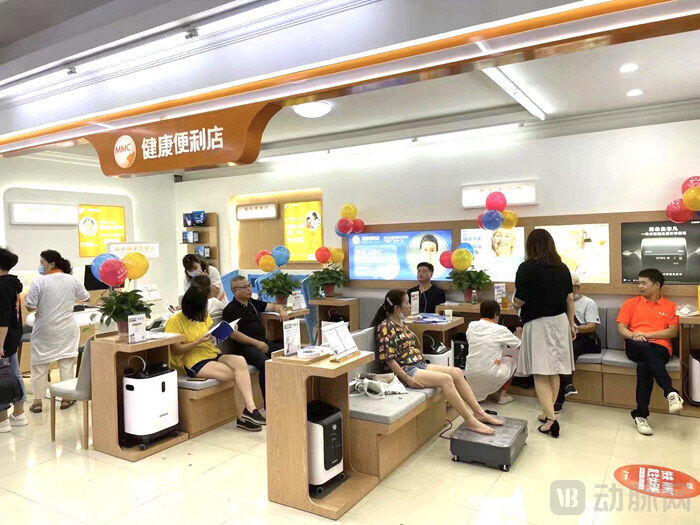
Since 2019, Omron Healthcare (China) Co., Ltd. has collaborated with several well-known chain pharmacies in China to jointly build MMC Health Convenience Stores. By deeply integrating intelligent technology and utilizing medical equipment as professional as those used in hospitals, they provide consumers with free health experience programs such as blood pressure measurement, arterial stiffness warning, and lung function analysis. As of early November 2021, Omron Healthcare had reached cooperation agreements with 80 chain pharmacies across China, successfully operating 37 MMC Health Convenience Stores. These stores have benefited nearly 70,000 people through "multi-point proximity" health testing services.
It is worth mentioning that Omron Healthcare had previously launched the HeartGuide, a watch-style blood pressure monitor, and the Complete, the first blood pressure monitor with built-in ECG monitoring. Both devices received significant attention from consumers due to their FDA certification.
For professional medical field manufacturers represented by Abbott and Omron, they are no longer satisfied with existing customers. Leveraging years of brand heritage and technical accumulation, they have upgraded their product services and extended them to a broader consumer base. In the face of these brands with significant achievements in professional fields, the trust that ordinary consumers place in them is a factor that other consumer brands must consider. So, how do they achieve this?
When it comes to wearable devices in China, Xiaomi, Huami, and Huawei are names that cannot be ignored. These three companies share a very similar technological approach in the wearable category. In their early stages, they mainly focused on smart bands, which, due to limitations in technology, size, and cost, could only offer basic functions such as monitoring movement, fitness, and sleep. Despite their simple features, these products were affordable and still achieved good sales.
With the development of hardware and software technologies such as sensors and operating systems, the functions of wearable devices have gradually become more diverse.
For example, in addition to basic exercise data collection, the Xiaomi Watch S1 also supports all-day heart rate and blood oxygen measurement, providing early warnings when potential issues may arise. The Huami Amazfit GTR 3 Pro is equipped with Huami's self-developed BioTracker 3.0 PPG biotracking optical sensor, enabling accurate monitoring of key health indicators such as blood pressure, heart rate, blood oxygen saturation, stress, respiratory rate, and heart health. With the function of automatically identifying arrhythmia (including atrial fibrillation), it helps users continuously monitor their heart health status and promptly alerts them to seek medical attention in case of abnormal heart health.
If the aforementioned features are just a small test, then Huami's wearable dynamic ECG recorder band truly takes one step into the professional field, having obtained China's Class II medical device certification. Through the combination of a wristband design and chest electrodes, users can achieve one-click recording during daily use, enabling real-time monitoring and recording of heart rate and ECG information. Moreover, it allows for convenient and quick acquisition and output of over-the-counter ECGs, playing a significant role in the daily monitoring and protection of heart health.
Huawei is also worth noting. On October 30, 2020, Huawei released the WATCH GT 2 PRO ECG model, which was Huawei's first smart wearable medical device to obtain a Class II medical device registration certificate from the National Medical Products Administration (NMPA). On December 23, 2021, Huawei launched the WATCH D wrist-worn ECG and blood pressure recorder, which also received Class II medical device registration certification from the NMPA. At the same time, Huawei expanded its business scope to include medical device sales and other operations. Huawei Terminal Co., Ltd. also expanded its business scope, adding the sales of medical devices (Class II medical devices) and other operations.
Whether it is Xiaomi, Huami, or Huawei, they have taken a pathConsumer MedicalizationThe path. Their advantage is having a larger audience, and with the certification from relevant national institutions, they can strengthen the confidence of this group and accelerate the conversion of these users to purchase their devices. However, whether the service after use can keep up and whether the utilization of data can further improve service quality remains to be observed.
For professional players like Abbott and Omron, upgrading existing technologies reasonably to expand the audience is the way to go.Medical ConsumerizationThis path is also an inevitable choice. Their advantage lies in the technical accumulation in professional fields and brand沉淀 in specific groups, but how to promote themselves to a broader consumer群体, and transform their technical advantages and service quality into actual user numbers, is the direction they need to work on.