

China's TONMIC Secures Hundreds of Millions in RMB in Series D+ Funding to Advance Global Commercialization of Fully Magnetically Levitated Artificial Heart CH-VAD

BrioHealth Solutions
Ventricular Assist Device Developer and Manufacturer
VCBeat learned that recently, BrioHealth Solutions has completed a D+ round of financing worth hundreds of millions of RMB. This round of financing was jointly led by CICC Qidao, PICC Capital, HV Fund, and existing investor Lead Capital. Existing shareholders such as Sequoia China, Lake Bleu Capital, and H&H Health Investment continued to increase their investments, while Jingming Capital and Guozhu Capital also participated.The company said that the new round of financing fundsIt will be used to accelerate the commercialization process of CH-VAD, an implantable ventricular assist device independently developed by BrioHealth Solutions based on the full magnetic levitation technology route in China, promoting the establishment and improvement of Ventricular Assist Device (VAD) therapy in China. At the same time, it will also further support BrioHealth Solutions' overseas clinical layout.
In November last year, the core product CH-VAD of BrioHealth Solutions was officially approved for marketing by the National Medical Products Administration (NMPA). This is the first domestically produced artificial heart with complete independent intellectual property rights to be approved by the NMPA in China. It is also the world's first full magnetic levitation artificial heart to receive NMPA approval. This marks the commercialization in China of ventricular assist devices based on a new generation global technology route (the full magnetic levitation technology route), ushering in a new era of heart failure treatment in China.
Based on the above background, 2022 will be the market launch year for CH-VAD in China. The BrioHealth Solutions team stated that they will fully utilize CH-VAD's technological superiority and the team’s professional service capabilities to cultivate the market and educate patients, promoting the establishment and improvement of the VAD therapy system in the Chinese market and enhancing the international influence of VAD treatment in China. This will allow the breakthrough product to benefit more Chinese patients and establish the leadership of full magnetic levitation technology in VAD clinical applications in China. While ensuring that Chinese patients are the first to benefit from the product, the company will also further initiate its overseas clinical strategy. Through overseas clinical trials, it aims to establish CH-VAD’s global leadership and product competitiveness, laying the foundation for global commercialization and benefiting a broader range of heart failure patients worldwide.
Why has this product from BrioHealth Solutions been repeatedly favored in the capital market and garnered widespread attention from the media and the public? We will conduct an in-depth analysis of its future development potential by examining end-stage heart failure treatment options, the evolution of global artificial heart technology, as well as the product advantages and global strategic layout of BrioHealth Solutions.
Full magnetic levitation technology has monopolized the global VAD market.
Heart failure is a major global medical challenge. According to statistics, the prevalence of heart failure among adults in China is 1.3%, corresponding to 13.7 million people. When heart failure progresses to its end stage, treatment and management options are extremely limited. Heart transplantation is recognized as an effective treatment, but currently, only a few hundred heart transplants can be performed each year in China. Compared to the hundreds of thousands of patients who could potentially benefit from heart transplantation, the impact of this procedure is minimal. With advancements in modern science and technology, Ventricular Assist Devices (VAD) have gradually become an important treatment for end-stage heart failure. In developed countries, the clinical application of VADs has progressed rapidly and they have become a widely accepted effective treatment for advanced refractory heart failure. Statistics show that the cumulative number of VAD implants worldwide has now exceeded 60,000 cases.
At the technical level, the international mainstream technology of VAD has undergone multiple evolutions. Currently, the more mainstream rotary artificial heart technology can be divided based on the rotor support method intoSliding bearings, hydrodynamic suspension (also known as "magnetic-liquid suspension"), and full magnetic suspension.Among them, the fully magnetic levitation type artificial heart is the mainstream technology that currently occupies a monopolistic position.
VAD is a high-tech medical device with extremely high R&D difficulty. Over the decades of industry development, only a handful of companies worldwide have advanced new products to clinical trials or market sales, and with technological updates, the vast majority of these products have already exited the market. Although previous VAD technologies could meet basic clinical requirements and led to VAD being listed as a viable treatment option in heart failure guidelines, the complications caused by VADs in the human body, along with other adverse effects on quality of life, have long severely restricted the application of this therapy.
Early based onPulsatile Blood PumpThe VAD, due to its insufficient durability and significant blood damage, is mainly suitable for rescuing patients with heart failure on the brink of death, serving as a bridge to heart transplantation. The very limited number of heart transplants restricts its commercial value.The introduction of the rotary blood pump has revolutionarily changed the development direction of VAD technology.The first batch of rotary blood pumps successfully launched and sold in the United States includes Abbott's HeartMate II and Medtronic's HVAD. Although these two products are based on different core technologies (among which, HeartMate II isSliding Bearing TypeVADThe representative product, HVAD isHydrodynamic Suspension (also known as "Magnetic-Liquid Suspension") VADThe representative products), but both have significantly improved durability and safety, allowing patients to live at home with a VAD for an extended period. Most patients can also achieve a normal quality of life.
Such clinical outcomes have gradually expanded the applicability of VADs to patients who do not qualify for heart transplantation, making VADs a definitive treatment option. As a result, the VAD industry has entered a development track that truly serves a large number of heart failure patients. However, this generation of VAD products is still limited by insufficient core technology, leading to higher incidences of complications such as device malfunction, stroke, and abnormal bleeding. These severe complications also significantly impact patients' quality of life and treatment costs.
The emergence of fully magnetically levitated VADs has created a broader market space for the global VAD industry. The clinical application of HeartMate III has already demonstrated the revolutionary advantages of fully magnetically levitated technology, transforming the market landscape. Abbott's fully magnetically levitated VAD product, HeartMate III, received FDA approval in the United States in October 2018 and quickly showed performance advantages surpassing other types of VADs. Clinical studies have shown that the survival rate of patients using HeartMate III is significantly higher than that of HeartMate II and HVAD, while the incidence of complications such as stroke is significantly lower. The impact of this technological advantage was so significant that Medtronic decided to cease the market sales of HVAD in June 2021, allowing Abbott to capture nearly all of the global VAD market share. Moreover, existing clinical data on HeartMate III also indicates that patient survival rates within three years remain slightly higher than heart transplantation. Although long-term clinical data is still lacking, various studies have sparked expectations within the industry that HeartMate III could rival heart transplantation.
Breakthrough Technology: CH-VAD Multiple Performance Indicators Show Global Leadership
The key technologies of the rotary blood pump, a core component of fully magnetically levitated VAD products, include the rotor support method and corresponding flow channel design. Compared with other support methods, full magnetic levitation offers the possibility to optimize flow channel design, thereby fundamentally improving the hemocompatibility of the blood pump. However, developing a fully magnetically levitated blood pump that can be implanted in the thoracic cavity faces severe challenges, causing the vast majority of similar projects to have failed to date.
BrioHealth Solutions and Abbott almost started at the same period, independently adhering to this technical pathway for R&D, and eventually achieved breakthroughs, successfully establishing their proprietary technologies. The CH-VAD Implantable Ventricular Assist System developed by BrioHealth Solutions adopts a full magnetic levitation technology approach, combining magnetic levitation design with internal pump flow path design to achieve multidisciplinary design optimization. This has resulted in a fully original blood pump design that encompasses core technologies in rotor support and fluid dynamics design, establishing CH-VAD's comprehensive advantages. Over the past decade, under the leadership of a globally visionary and technically experienced team, BrioHealth Solutions, starting from fundamental technical principles, has undergone multiple rounds of iterative development, achieving internationally leading key performance indicators. It has become a benchmark for industry technological advancement and earned a solid reputation as a technological innovator among international peers.
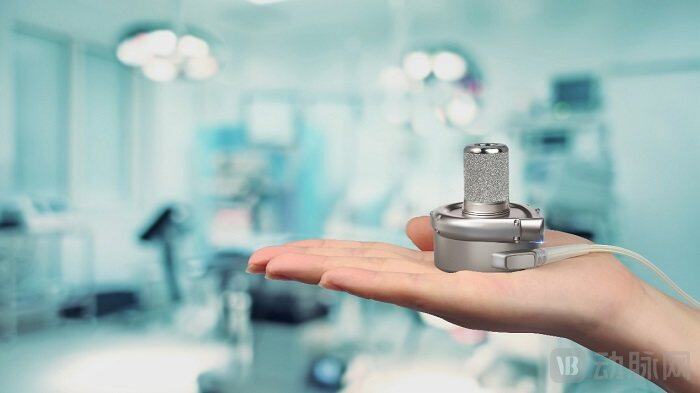
Compared with the currently widely used fully magnetically levitated VADs, BrioHealth Solutions' CH-VAD offers equivalent or potentially superior hemocompatibility, along with a smaller pump size, reduced implant invasiveness, and a thinner percutaneous cable that enhances infection resistance. Additionally, in key performance areas critical for various VADs, such as system reliability and portability, the CH-VAD has reached industry-leading standards.
Hemocompatibility has long been the most crucial performance indicator for artificial hearts. The pre-market clinical trials and a certain number of new medical technology applications completed in China for CH-VAD have all achieved highly satisfactory clinical outcomes. Follow-up results show no reported adverse events related to hemocompatibility, such as pump thrombosis, stroke, or gastrointestinal bleeding, among clinical patients. This suggests that the hemocompatibility of CH-VAD is not only superior to other categories of VADs but may also surpass existing fully magnetically levitated VAD products internationally.
Commercialization and Implementation, Boosting the Establishment and Improvement of VAD Therapy in China
As an important treatment for end-stage heart failure, today's VAD is not only a means to sustain life but also a pathway for patients to return to a healthy and active lifestyle like normal people. VAD therapy involves full lifecycle management. Current practices have shown that the key to the successful promotion and commercialization of VAD therapy lies in establishing and implementing an effective standard system centered on patient selection, multidisciplinary team collaboration, and postoperative patient management: A scientific and professional patient selection process and system significantly impact the patient’s surgical recovery and long-term quality of life; the success of VAD surgery depends on the full cooperation of a multidisciplinary team to establish a high-quality surgical system; long-term patient management is crucial to reducing postoperative adverse events and ensuring long-term quality of life. Through the establishment of this standard system, clinical outcomes can be continuously improved, enhancing the effectiveness of VAD therapy among end-stage heart failure patients, helping more patients extend their lifespan, improve their quality of life, and return to a healthy lifestyle.
BrioHealth Solutions has established successful clinical experience in China in this field, which has laid a core foundation and competitiveness for the commercialization of CH-VAD in China. In June 2017, under the cooperation between the BrioHealth Solutions team and Fuwai Hospital, CH-VAD successfully completed the first clinical application of an implantable artificial heart in China. The patient has survived for over four and a half years with a continuously high quality of life, marking a historic breakthrough in the clinical application of VADs in China. In the clinical trials that have been completed, BrioHealth Solutions has also built an excellent professional team to ensure the smooth progress of the trials, achieving outstanding clinical outcomes.
So far, among all implant cases using BrioHealth Solutions' CH-VAD, there has been no report of serious adverse events related to blood compatibility, such as pump thrombosis, stroke, or gastrointestinal bleeding. These successful clinical experiences demonstrate BrioHealth Solutions' excellent capabilities in professional services and long-term patient management, laying an excellent foundation for its commercialization. Moreover, BrioHealth Solutions continues to introduce the most cutting-edge VAD clinical experiences and project management systems from around the world into China's commercialization efforts. By incorporating advanced practices and considering the actual conditions of Chinese patients, it can help improve the overall service quality of the team and provide high-quality, comprehensive services for end-stage heart failure patients.
Overseas Clinical Layout Expected to Benefit Global Patients with Severe Heart Failure
In the most prominent place on BrioHealth Solutions' official website, there is a sentence: "Enabling more heart failure patients and families around the world to regain a healthy and joyful life." Behind this statement lies over a decade of relentless efforts by BrioHealth Solutions: from its inception, the company established a local innovation system, talent strategy, and intellectual property layout based on the global value chain, continuously promoting collaboration with renowned overseas research institutions and medical centers. The successful development of CH-VAD, BrioHealth Solutions' core product, exemplifies the company’s efficient integration of global resources to empower indigenous innovation in China and validates the initial success of its innovation-driven global talent strategy. From foundational technology to all proprietary technologies built upon it, CH-VAD possesses clear independent intellectual property rights. The related foundational technology has been granted international patent protection in regions including the United States, Europe, and Japan, laying a crucial foundation for BrioHealth Solutions’ global commercialization.
It is worth mentioning that since 2018, BrioHealth Solutions has been an invited company to the International Society for Mechanical Circulatory Support, reporting its product development progress annually. The Gordon Research Conference, a highly prestigious academic event in the global scientific community, invites the company's founder and relevant scientists to participate in exchanges every year. Since 2019, BrioHealth Solutions has become one of the most prominent artificial heart companies at this academic conference and even worldwide.
In terms of overseas clinical trial布局, in 2020, BrioHealth Solutions委托one of the most authoritative heart disease research centers internationally, the Texas Heart Institute in the United States, to complete the GLP preclinical animal试验for CH-VAD, achieving excellent results. Meanwhile, the company has also held multiple IDE pre-submission meetings with the FDA.
It is foreseeable that BrioHealth Solutions will continue this path this year, accelerating the clinical and commercialization progress of its core products in the U.S. market.
Dr. Chen Chen, founder of BrioHealth Solutions, stated: "2022 will be the market-launch year for BrioHealth Solutions. As a global breakthrough in VAD technology, we are confident and have the responsibility to apply this advanced technology to more patients with end-stage heart failure, to achieve the company's global strategic goals. We thank many top industry investors for their continued support and trust. We believe that our joint efforts can help more patients around the world 'reignite the flame of life.'"