


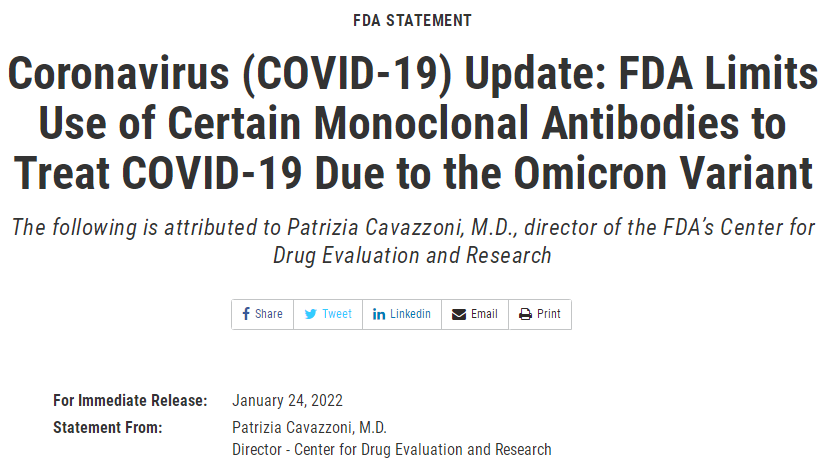
On January 24, 2022, the FDA announced that it would restrict the use of Regeneron and Eli Lilly/Junshi Biosciences' COVID-19 neutralizing antibodies because they are ineffective against the Omicron variant. They can only be used for variants that are sensitive to these COVID-19 neutralizing antibodies, such as Delta. Since GSK/Vir Biotechnology's Sotrovimab remains effective against Omicron, its use has not been restricted.
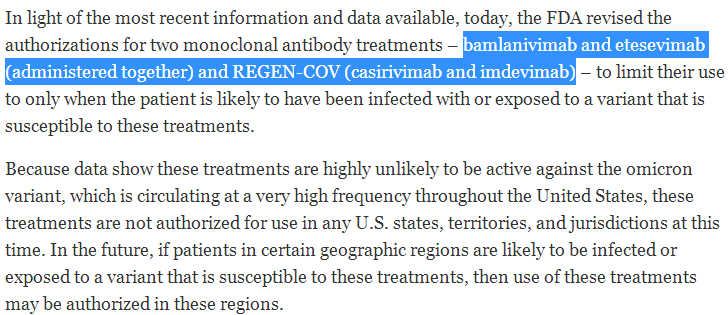
The table below shows the distribution numbers of COVID-19 neutralizing antibodies and oral medications. Previously, the distribution speeds of neutralizing antibodies from Regeneron, Eli Lilly/Junshi Biosciences, GSK/Vir Biotechnology, and AstraZeneca were similar. With the prevalence of Omicron, market share will shift towards drugs like Sotrovimab. Additionally, the distribution speed of oral COVID-19 medications will soon surpass that of neutralizing antibodies. Due to differences in mechanisms of action, Pfizer's and Merck's oral drugs are unaffected by mutant strains. Small-molecule oral drugs have inherent advantages in terms of administration convenience, production cost, and scalability.
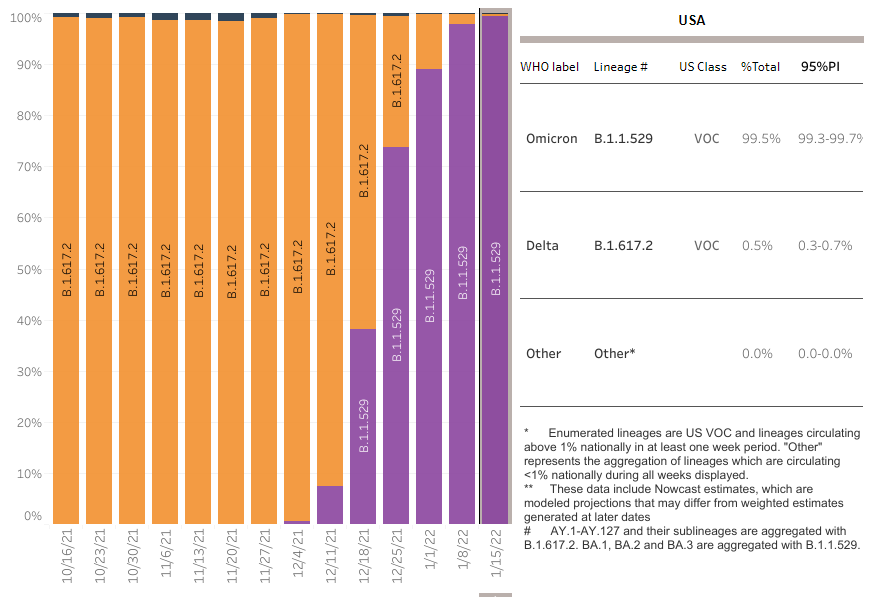
The CDC estimates that by January 15, 2022, the Omicron variant accounted for over 99% of cases, which is the key reason for adjusting the distribution of neutralizing antibodies.
Although new variants of the coronavirus continue to emerge, current evidence shows that the broad-spectrum neutralizing antibodies developed by Vir Biotechnology and Brii Biosciences are effective against all major variants. Oral medications for COVID-19 with different mechanisms of action also provide crucial tools in combating these variants.