

Innostellar Biotherapeutics' Ophthalmic AAV Gene Therapy LX101 Receives CDE IND Acceptance in China

Innostellar Biotherapeutics
Innovative Gene Therapy Drug Research, Development, and Manufacturing
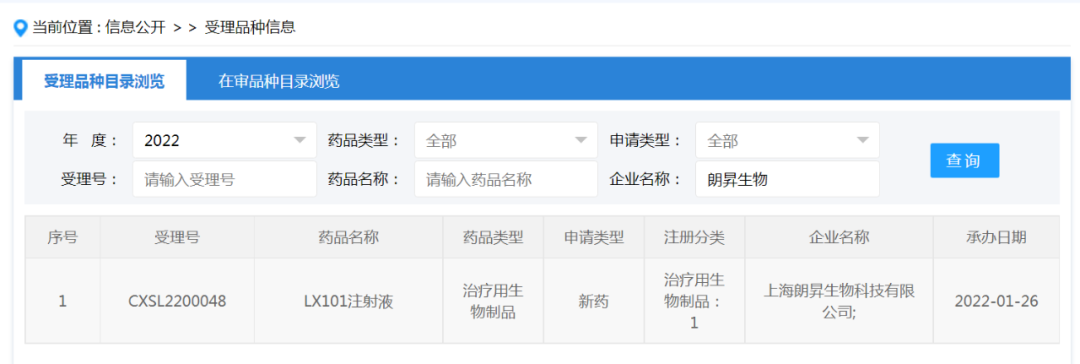
Today, according to the CDE official website, the clinical trial application for LX101 Ophthalmic Injection, an AAV2-RPE65 gene therapy formulation independently developed by Innostellar Biotherapeutics Co., Ltd. (Shanghai), has been accepted by the Center for Drug Evaluation (CDE) of the National Medical Products Administration (NMPA) (Acceptance No.: CXSL2200048).
Leber Congenital Amaurosis (LCA) is one of the earliest and most severe hereditary retinal diseases. Most LCA patients begin to experience serious visual impairment during infancy or childhood, and due to progressive retinal degeneration, they become completely blind by the age of 30-40.
Currently, there is no effective treatment for LCA. However, with the rapid development of gene therapy in recent years, this severe hereditary retinal disease has become treatable.
The first gene therapy approved by the FDA in 2017, Luxturna, is used to treat Leber congenital amaurosis type 2 (LCA2) caused by biallelic RPE65 mutations. This therapy was also approved by the EMA in November 2018. In China, the clinical trial application for LX101 ophthalmic injection represents the first investigational new drug submission for the treatment of congenital amaurosis.
● In June 2021, Shanghai Innostellar Biotherapeutics initiated the first investigator-led gene therapy clinical study in China for LCA, evaluating the overall safety and efficacy of a single subretinal injection of LX101 ophthalmic injection in treating a specific type of Leber congenital amaurosis. The first patient treatment was successfully completed on June 24 at the Ophthalmology Center of Shanghai First People's Hospital.
● On September 16, 2021, LX101 completed the first subretinal injection in an LCA patient. After bioengineering modification, LX101 carries the target gene fragment into cells affected by gene mutations to repair their function.
● In December 2021, according to publicly available information: LX101 demonstrated good safety and has shown efficacy in improving vision in multiple patients. The company stated that more patients will be enrolled in clinical trials in 2022.
● On January 26, 2022, the clinical trial application for LX101 Ophthalmic Injection was accepted by the CDE.
Research at home and abroad has shown that AAV gene therapy has the potential to treat rare, dominantly inherited diseases in the retina and other parts of the central nervous system. The recent acceptance of LX101 Ophthalmic Injection by the CDE in China also signifies that domestically developed gene therapy for ophthalmic drugs has entered the "fast track of transformation." While bringing hope of vision to patients with hereditary eye diseases, it is expected to fill the gap in China's self-developed gene therapy drugs in the LCA field.