

Gilead Reports 2021 Financial Results: Veklury Generates $5.56B, Trodelvy Nears $380M—Ushering in a New Era of Oncology Growth

Gilead Sciences
Antiviral Drug Developer
On February 1, Gilead Sciences announced its 2021 performance, with total annual revenue of $27.305 billion, a year-on-year increase of 11%. R&D investment was $5.363 billion, a year-on-year increase of 6.4%. As of December 31, 2021, Gilead had $7.8 billion in cash, cash equivalents, and marketable debt securities, which was basically flat compared to the same period last year ($7.9 billion).
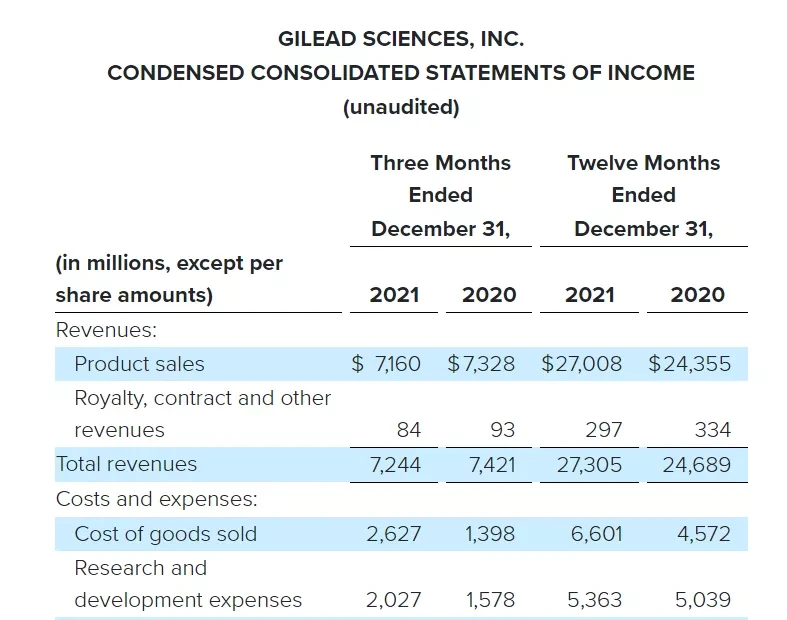
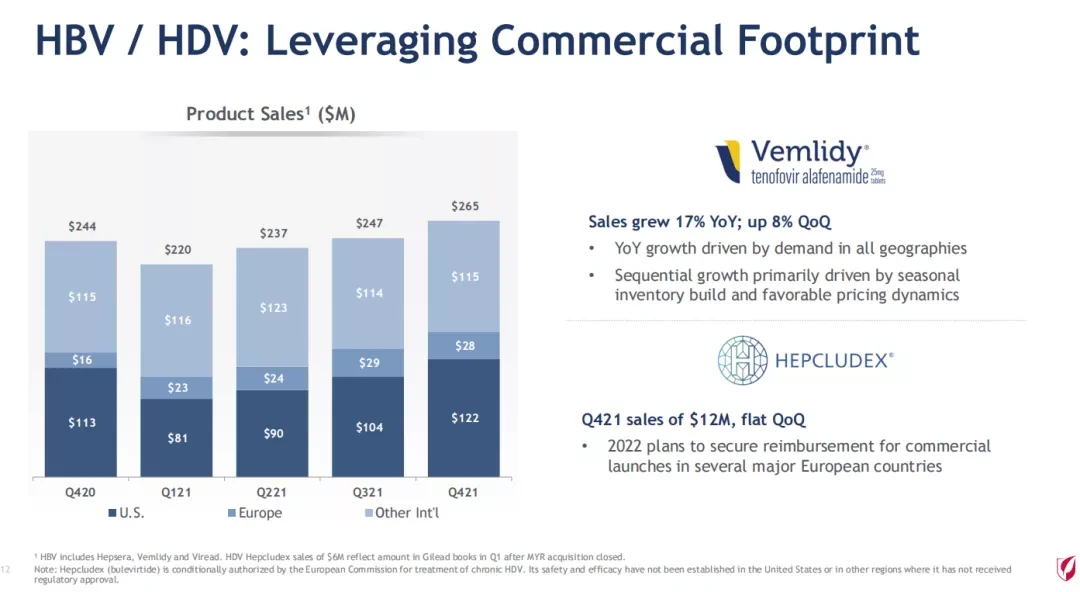
From the business performance across various disease areas, HIV sales revenue declined to $16.3 billion (-4%), mainly due to the loss of market exclusivity for some products in the United States; HCV sales revenue continued to decline due to a reduction in patients, with only $1.9 billion for the full year; HBV and HDV businesses maintained growth, increasing by 13% in 2021 to achieve $969 million in revenue, primarily driven by Vemlidy (tenofovir alafenamide) and Hepcludex. Cell therapy sales revenue maintained rapid and steady growth, reaching $871 million (+43%).
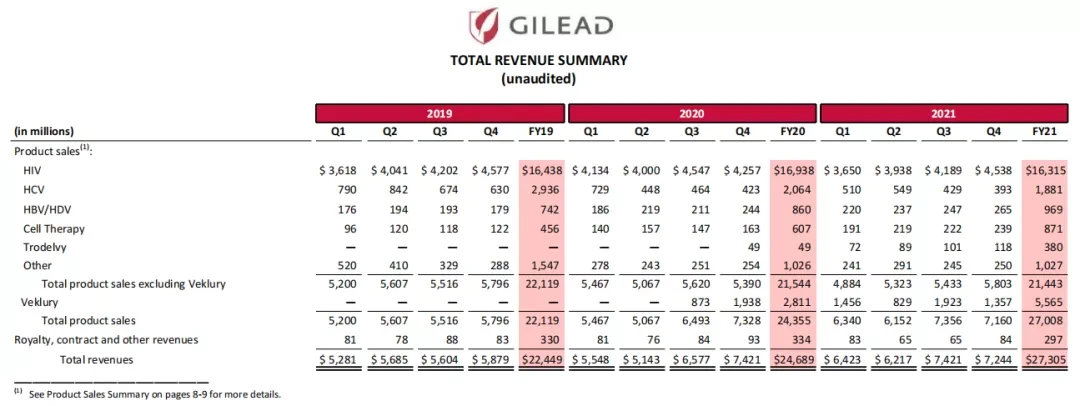
In terms of specific products, the three-in-one HIV drug Biktarvy (bictegravir/emtricitabine/tenofovir alafenamide, BIC/FTC/TAF) has become a core pillar product for Gilead Sciences. In 2021, its revenue reached $8.624 billion, representing a year-over-year increase of 19%. Cell therapy products have steadily expanded, with Yescarta (axicabtagene ciloleucel) maintaining stable growth. In 2021, Yescarta generated revenue of $695 million, marking a year-over-year increase of 23.6%.
TROP-2 ADC Drug Trodelvy (Sacituzumab Govitecan) Achieves $380 Million in Revenue in Its First Full-Year Performance After Being Acquired by Gilead Sciences, Mainly Due to the Continued Increase in Usage Among Triple-Negative Breast Cancer and Urothelial Cancer Patients; In 2021, Trodelvy Also Received Approval from Regulatory Authorities in the EU, Australia, Canada, and Other Regions, Which Is Expected to Further Drive Sales Growth.

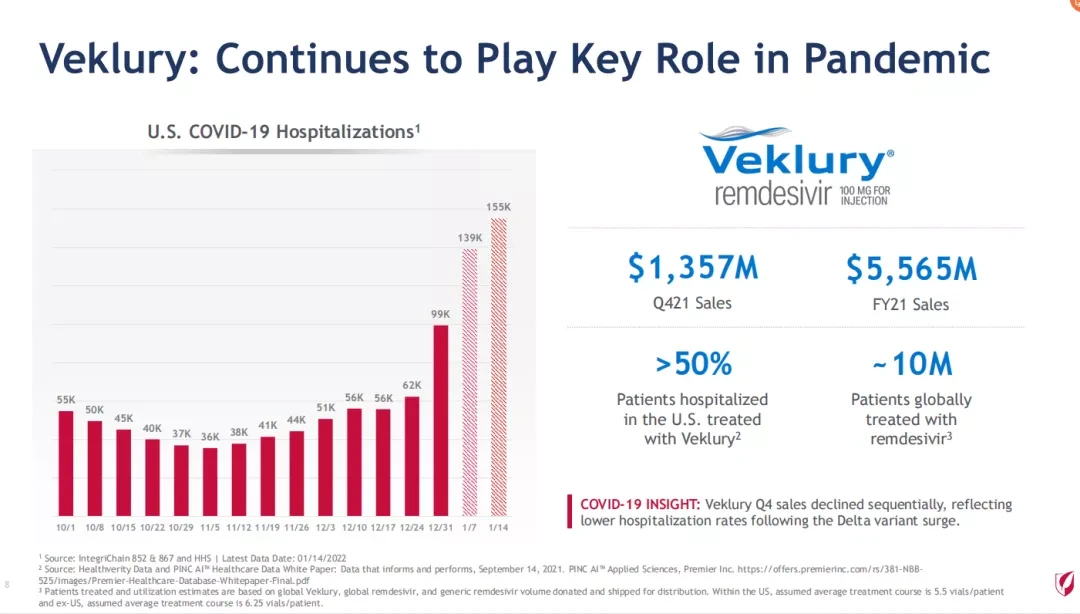
Veklury (Remdesivir Sales) Revenue Increased by 98% in 2021, Reaching $5.56 Billion. The sales performance of Veklury is correlated with the infection rate, hospitalization rate, and vaccination rate of COVID-19, as well as the availability, adoption, and effectiveness of alternative therapies for COVID-19. There was a noticeable decline in Q4 2021 compared to Q4 2020 ($1.938 billion vs. $1.357 billion).
HBV/HDV: The only growing area in Gilead's traditionally strong infectious disease business, mainly driven by increased demand for the new hepatitis B drug Vemlidy and the launch of Hepcludex in Europe. Additionally, Gilead has submitted a marketing application to the FDA for bulevirtide, a hepatitis D drug acquired for 1.45 billion euros.
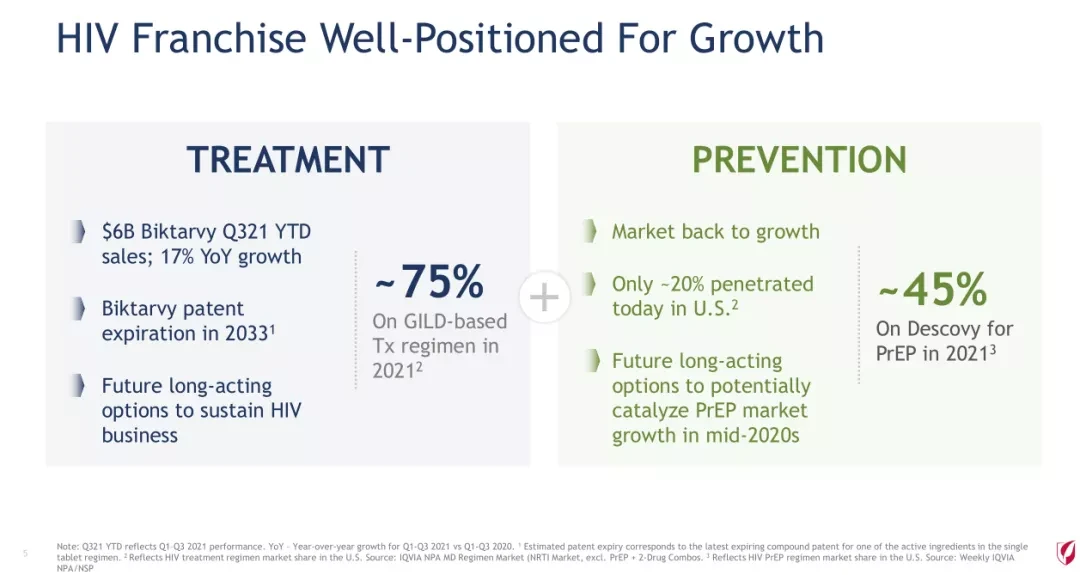
From the perspective of the overall business, HIV drugs are Gilead's foundation, while Biktarvy and Lenacapavir serve as the cornerstone. In 2021, Gilead submitted a marketing application for Lenacapavir to treat patients with multidrug-resistant (MDR) HIV-1 infection. At the same time, two Phase III prevention trials were initiated to evaluate the efficacy of Lenacapavir as a monotherapy administered every six months, with regulatory decisions for this indication expected around 2025. If approved, Lenacapavir’s six-month dosing strategy will leverage the drug’s potential advantages to help expand the overall prevention market.
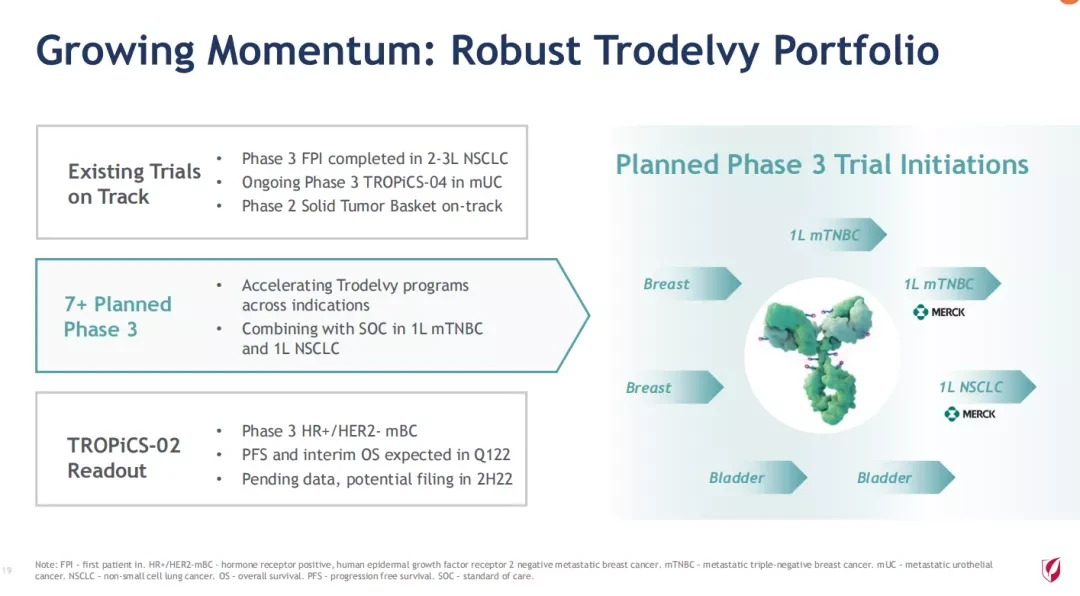
After the twists and turns of Zydelig, Gilead Sciences has also ushered in a new era of oncology. This business segment achieved over $1 billion in revenue in 2021, indicating that oncology has become a new growth area for Gilead Sciences. In 2021, after Trodelvy (Sacituzumab Govitecan) expanded its market with the approval of the triple-negative breast cancer indication in the EU, it also received marketing approval for urothelial cancer in the United States. In 2022, Trodelvy is expected to disclose key study (TROPiCS-02) data on HR+/HER2- breast cancer in the first quarter. Throughout the year, more than 15 new clinical studies are planned, including over 7 Phase III clinical trials. Additionally, Trodelvy will initiate a Phase III clinical trial in combination with Keytruda (Pembrolizumab) for the first-line treatment of locally advanced or metastatic triple-negative breast cancer and NSCLC.
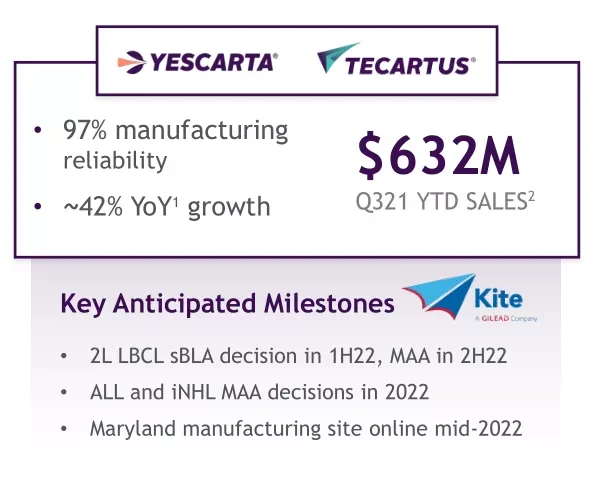
The cell therapy field represents Gilead Sciences' strategic high ground in the oncology sector. On one hand, with two products, Gilead continues to steadily expand its market presence. Yescarta’s sales reached $690 million in 2021, marking a 23% increase from the previous year, while Tecartus achieved $170 million in revenue during its first full fiscal year. In 2021, Yescarta became the first CAR-T cell therapy to report 5-year survival data for both indolent lymphoma and refractory large B-cell lymphoma, demonstrating long-term survival benefits, while also gaining regulatory approval in China. Additionally, Yescarta disclosed several compelling data points, including a 78% complete response rate as first-line treatment for newly diagnosed high-risk large B-cell lymphoma. In 2022, Gilead is poised to receive multiple regulatory decisions on new indications, including second-line treatment for diffuse large B-cell lymphoma not otherwise specified (DLBCL), ALL, and iNHL.
At the same time, Gilead Sciences continues to invest heavily in off-the-shelf cell therapies. In August 2021, Kite, a subsidiary of Gilead Sciences, and Appia Bio announced a collaboration and licensing agreement to develop hematopoietic stem cell (HSC)-derived cell therapies for the treatment of hematologic malignancies. This collaboration will leverage Appia Bio's "ACUA" allogeneic cell therapy technology platform to develop constant natural killer T-cell (CAR-iNKT) therapies expressing chimeric antigen receptors. Gilead will pay up to $875 million in upfront payments, equity investments, additional milestone payments, and tiered royalties.
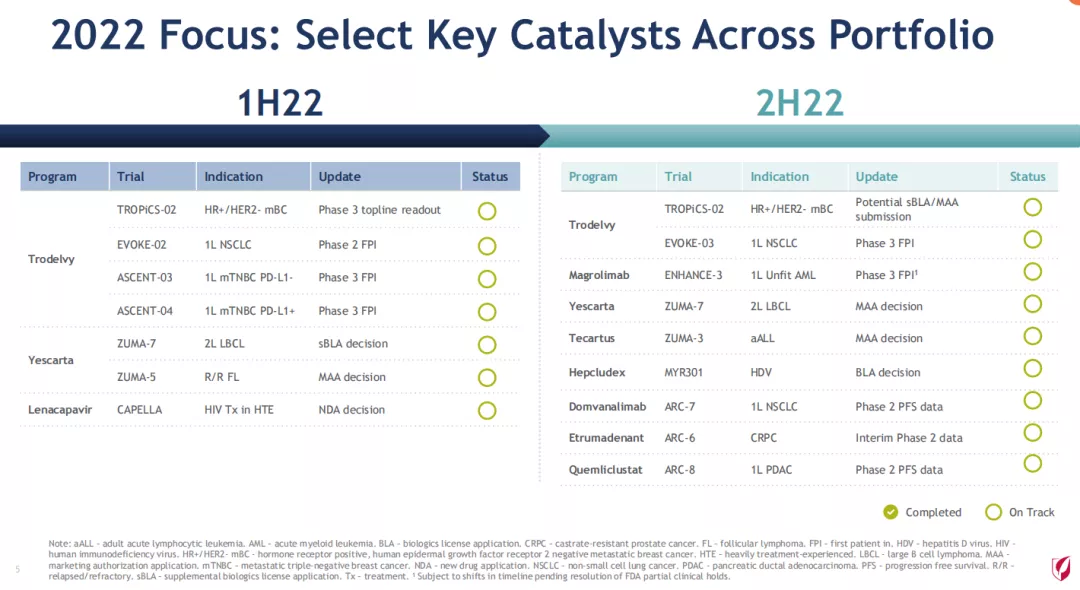
In 2022, Gilead Sciences will again reach key milestones for critical products, including Trodelvy, Yescarta, and Lenacapavir, which are expected to continuously expand product advantages and contribute to new sales growth for Gilead.
The expansion of new businesses is not always smooth sailing. At the beginning of 2022, due to a significant imbalance in the number of Suspected Unexpected Serious Adverse Reactions (SUSARs) reported by researchers across different study groups, the U.S. FDA placed a partial clinical hold on Gilead Sciences' combination study of the CD47 antibody magrolimab and azacitidine. Additionally, Gilead voluntarily withdrew the PI3Kδ inhibitor Zydelig (idelalisib) for two indications: relapsed follicular B-cell non-Hodgkin lymphoma (FL) and relapsed small lymphocytic lymphoma (SLL). In the field of cell therapy, the patent dispute between Gilead and Bristol-Myers Squibb remains unresolved, despite a favorable ruling in 2021; however, Bristol-Myers Squibb continues to seek a review of that decision.
In terms of the R&D product pipeline, Gilead Sciences continues to build a rich portfolio of products in the fields of oncology, antiviral, and inflammatory diseases. In 2021, Gilead completed the acquisition of MYR GmbH and reached research agreements for new products and combination therapies with Arcus Biosciences, Merck (Keytruda, Islatravir), Appia Bio, and others. Currently, Gilead has increased the number of projects (including combinations) in clinical development to 55.
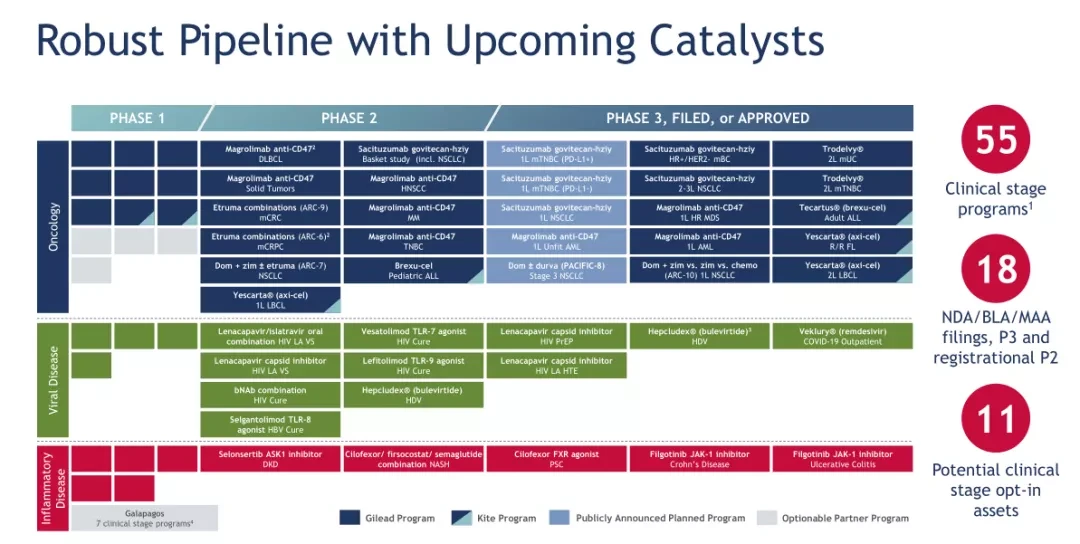
Looking ahead, Gilead Sciences hopes to continue expanding its leadership in virology, anticipating a stable or growing HIV business; broadly expand its oncology operations, offering a world-class oncology portfolio that reaches approximately 30% of total revenue. Additionally, by 2030, Gilead aims to secure more transformative medical therapies.