

Xi'an-Based EYENABLE Breaks Global Monopoly with Proprietary Crosslinked Polyisobutylene IOL Material

Eyedea
Ophthalmic Medical Device R&D Developer
The development of the intraocular lens track seems to be fraught with "contradictions."
The first layer of contradiction lies in the world's highest number of cataract patients and a surgical rate far lower than that of developed countries.
According to an ophthalmology industry report by Dongxing Securities, China has a large base of patients with eye diseases, and the incidence of cataracts is particularly high among elderly patients. The prevalence of cataracts reaches 80% in the population aged 60-89, and rises to 90% in those over 90 years old, making China one of the countries with the highest number of blind and visually impaired individuals globally.
The only effective treatment for cataracts is the implantation of artificial intraocular lenses. However, the cataract surgery rate in China is relatively low.
According to Aibornod's 2021 semi-annual report, with the increasing attention to national vision health in China, the average annual compound growth rate of cataract surgeries in China from 2012 to 2018 was approximately 16.9%. By 2018, the number reached about 3.7 million cases, corresponding to a CSR (cataract surgical rate per million population) of 2,662. In contrast, developed countries like the United States and France had already achieved a CSR of 10,000 for cataract surgeries as early as 2011, and India had surpassed 5,000. There is still significant room for growth in China’s cataract surgery CSR.
According to the aforementioned report by Dongxing Securities, in the ophthalmic surgery sub-sector, implantable products (such as intraocular lenses and glaucoma surgical products) are expected to have an average annual compound growth rate of 6% over the next five years, becoming the fastest-growing sub-sector.
The vast market growth space naturally holds infinite appeal for companies in China. For instance, Eyedea, established in 2010, launched the first domestically produced foldable intraocular lens with independent intellectual property rights and advanced refractive functions in 2014. Meanwhile, Haohai BioScience, a giant in China's medical aesthetics industry, has completed its coverage of the entire industrial chain for intraocular lens business—from raw material manufacturing, R&D, and production to sales—through seven acquisitions in recent years.
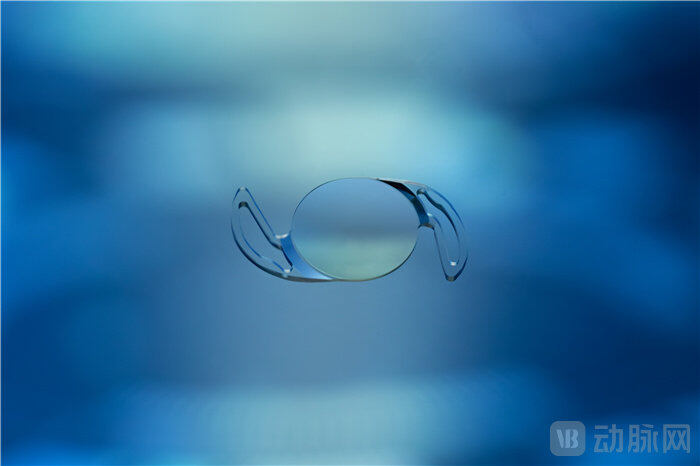
But regrettably, the vast majority of the global intraocular lens market is still occupied by foreign brands. This has become the second layer of contradiction in the development of intraocular lenses.
Taking the 2017 market data as an example, Alcon (USA) holds a global market share of 31%, Johnson & Johnson (USA) holds a global market share of 22%, Bausch + Lomb (USA) holds a global market share of 6%, and Zeiss (Germany) holds a global market share of 4%. Even when focusing on the Chinese market, foreign brands represented by Alcon, Johnson & Johnson, and Bausch + Lomb are present across low-, mid-, and high-end markets, while domestically produced enterprises currently only have room to maneuver in the mid- and low-end markets.
How Can Chinese Companies Break the Deadlock? The Material Development of Intraocular Lenses Might Be a Right but Difficult Path.
At the end of 2021, news that "the world's latest generation of cross-linked polyolefin intraocular lenses had entered clinical trials" spread rapidly within the industry.
What are the performance advantages of this new artificial lens material? Why is it necessary to iterate on the material? What kind of company is Eyedeal Medical Technology Company Limited (hereinafter referred to as Eyedea), the firm behind the research and development? What is the current clinical progress of this artificial lens? What are the future market strategies? With these questions in mind, VCBeat visited Eyedea, located at the foot of the Qinling Mountains, and interviewed Guo Guangxu, the founder of Eyedea, along with core members of the R&D team, in an attempt to find answers.
"Look, that's the Qinling Mountains, the company is located at the foot of the Qinling Mountains."
The vehicle was driving on the road. Bathed in sunlight, everything in sight was dyed a golden yellow. To the left of the vehicle's direction of travel, the majestic Qinling Mountains quietly basked in the warm winter breeze.
About half an hour later, the vehicle stopped in front of a four-story building with orange tiles. A few cars were parked in the small yard.
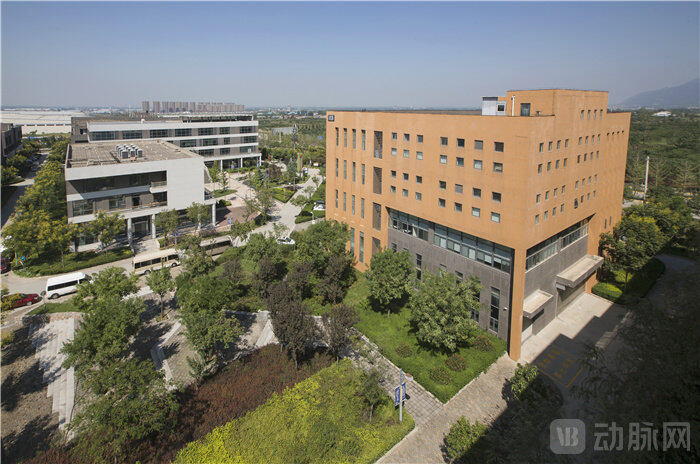
Step onto the stairs, walk into the hall, and start winding around from the left side. Pass through the precision workshop, spiral upstairs, and put on a sky-blue protective suit and cap. Through transparent glass windows, the busy figures of researchers in the same protective suits are clearly visible.
In this space that is not particularly vast, approximately 30,000 artificial lenses will be produced each month in the future.
Slowly moving to the third floor, we arrived at the inspection workstation. An intraocular lens clearly displayed every detail after being magnified dozens of times by the equipment.
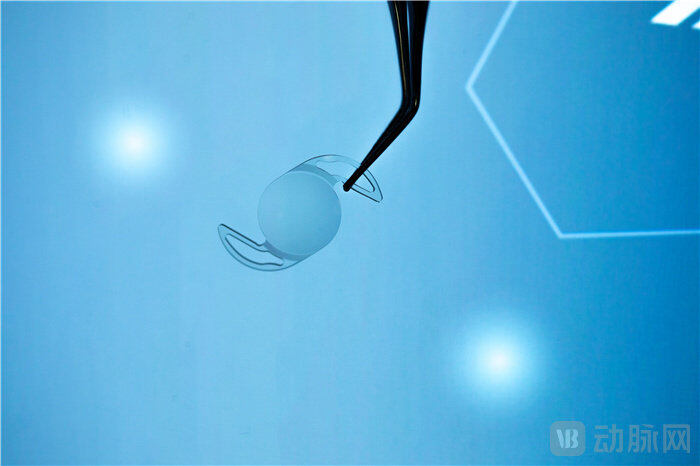
"This step mainly involves appearance inspection. Since the intraocular lens is very small in size, it is usually magnified 20 times before measurement to ensure that every product leaving the factory is qualified."
Accompanied by the staff's introduction, the group continued upward, passed through rows of desks, and pushed open the door to the office of Guo Guangxu, the founder of Eyedea.
The office is not large, and the furnishings are not complicated. There are floor-to-ceiling windows on two sides. Near the innermost wall sits a desk and an office chair. Against another wall, a long sofa and three single sofas surround a brown coffee table. On it is a set of tea utensils, seemingly showcasing the owner's taste.
Rewind to a day before, VCBeat met this humorous and interesting founder, who told us about his connection with intraocular lenses.
In the 1980s and 1990s, going to Guangdong and Shenzhen was the dream of the young generation at that time. Guo Guangxu was one of them.
"After graduation, my first job was actually quite stable, a position within the system. But I always had a dream, which was to go south. Because at that time, I thought it was particularly cool to go to big cities like Shanghai or Shenzhen to strive for success."
At that time, Robust (Lever Style), already a leading enterprise in China's beverage industry, extended the first olive branch to Guo Guangxu.
It has been proven that Guo Guangxu's performance was commendable. Even after Robust was acquired by Danone in 2000, Guo Guangxu continued to "survive" within the company due to his outstanding achievements.
But obviously, the young man who once dreamed of going south and aspired to make a big splash in a metropolis was not satisfied with this.
In 2005, the "restless" seed buried in Guo Guangxu's heart continued to take root and sprout.
"At that time, I was like a person trapped in a transparent beverage bottle, seemingly fierce and full of风光, but in reality, I couldn't stretch my arms. I kept thinking about getting out and doing something on my own.""From Guo Guangxu's tone, one can still sense the courage, anticipation, and a hint of excitement he felt at the time about writing a new chapter in his life."
But after leaving, where should one go?
Finance became one of the industries Guo Guangxu targeted. During the process of searching for investment targets, a patent related to the synthesis of new materials for intraocular lenses came into Guo Guangxu's view.
At the end of 2013, introduced by a friend in the industry, Guo Guangxu "accidentally" came across the synthesis patent for cross-linked polyolefin intraocular lens material, and purchased this patent in 2014. In 2015, Eyedea was established in Xi'an.
The medical device industry, especially the research and development of raw materials, has always been a field with high barriers, where effort and reward are not necessarily proportional. At that time, Guo Guangxu did not expect that the prototype of the next-generation artificial lens material would actually be successfully developed and produced in his hands.
The source of courage for Guo Guangxu to leap from beverages and finance to medical devices can be summarized in four words: youthful vigor.
"The first two phases of my career went relatively smoothly, but I always felt that making money alone seemed to be missing something. So I kept thinking about whether I could get involved in some high-tech ventures."Moreover, I am a person with a relatively bold personality. If I don't do it, fine; but if I do it, I will do it to the best of my ability. That's my style." As his voice trailed off, the room echoed with Guo Guangxu's hearty laughter.
However, the subsequent arduous R&D journey might perfectly illustrate why Guo Guangxu used the phrase "young and headstrong" to describe himself at that time.
"Have you seen my white hair? It's all turned white in recent years!"
What Guo Guangxu said is true. The hair of this hearty founder is indeed half black and half white.
"This line of work is too exhausting. In recent years, I've only been able to sleep three or four hours a day on average," said Guo Guangxu. "Our R&D staff often hold meetings until 4 a.m. because research and development isn’t something you can fully control. Even a minor parameter might require hundreds of adjustments over half a year."
The difficulties behind the research and development of new materials are best articulated by Dr. Yang Zhou, the leader of Eyedea's R&D team.
According to Dr. Yang Zhou, the main R&D challenges are concentrated in the manufacturing process. "We only have the patent for the material synthesis, but the process conditions for subsequent large-scale production still need to be explored from scratch."
Taking the elimination of streaks as an example, non-uniform reactions such as shrinkage and curing during the production process can potentially cause defects within the material, resulting in streaks. The method to eliminate streaks involves continuously experimenting by adjusting parameters, which essentially means continuous trial and error.
Possible solutions lie hidden in the countless late-night brainstorming sessions of R&D teams and in the densely written parameters on whiteboards.
After hundreds of trials, the research and development team finally identified a specific parameter in the curing reaction. Through gradual adjustments, the texture in the product was reduced from 80% to 30%, and finally down to 5%.
"This process is actually very easy to make people feel overwhelmed. At the beginning, there was almost no yield. After managing to produce a hundred, all of them turned out to be defective and had to be thrown away, then the cycle went on endlessly. Although the chemical formula is clear, there are still many variables in practice. You can only speculate on the reasons for failure and keep trying and making corrections." Dr. Yang Zhou remarked.
After 7 years of trial and error, Eyedea has finally successfully launched a new generation of cross-linked polyolefin intraocular lenses. This naturally caught the attention of the capital.
However, when investors were extending olive branches to Eyedea, they found that a capital had already taken the lead.
This capital is PAG (Pacific Alliance Group).
It is reported that PAG is one of the largest independent alternative investment management groups in Asia, ranking 50th on the US PEI300 list (2020). (In this list, there are a total of 201 institutions headquartered in the United States, accounting for two-thirds; 50 institutions are headquartered in Europe, and only 47 are in Asia.)
But these, in Guo Guangxu's eyes, are just a string of numbers. What he values more is whether this investment institution, this investor, suits his temperament.
Guo Guangxu accepted PAG's investment for two reasons: first, a member of PAG’s investment team responsible for this project has an academic background in material development, ensuring professionalism; second, PAG's investment team demonstrated genuine sincerity.
At the end of 2019, a PAG investment team visited Xi'an to meet with Guo Guangxu. At that time, Guo Guangxu was not strongly inclined to accept investment.
In 2020, the outbreak of the COVID-19 pandemic disrupted people's living habits. Even after the normalization of epidemic prevention and control, travel remains a matter that requires careful consideration.
In such a situation, the PAG investment team still came to Xi'an several times to communicate with Guo Guangxu.
This sincerity moved Guo Guangxu and also moved the R&D team of Eyedea.
"When talking about this experience, the outspoken founder couldn't help but get a little excited, 'During the pandemic, they still insisted on face-to-face contact with us. This persistence truly moved me.'"
So, what are the unique features of this new generation of artificial lens that has凝聚着许多人心血?
VCBeat learned that the product system of intraocular lenses is complex, and according to different standards, intraocular lenses can be divided in various ways.
For example, according to the placement location, they can be divided into anterior chamber fixed intraocular lenses, iris fixed intraocular lenses, and posterior chamber fixed intraocular lenses; based on the size of the surgical incision, they can be classified into rigid intraocular lenses and foldable intraocular lenses; and by function, they can be divided into multifocal intraocular lenses, trifocal intraocular lenses, accommodative intraocular lenses, and aspheric intraocular lenses, among others.
And if we only look at the materials, the materials for intraocular lenses include PMMA (polymethyl methacrylate), silicone rubber, hydrophilic acrylate, hydrophobic acrylate, memory materials, etc.
Among them, PMMA was the first material suitable for intraocular lens manufacturing. It has good stability, transparency, anti-aging and anti-environmental change properties, acid and alkali resistance, and excellent biocompatibility, making it an ideal material for intraocular lenses.
However, as a rigid material, PMMA cannot be used to manufacture foldable intraocular lenses adapted for small incisions. Moreover, relevant studies have shown that contact between PMMA and corneal epithelial cells can lead to permanent damage to the corneal epithelial cells.
Therefore,More idealThe artificial lens needs to seek a material with high stability, high biocompatibility, and high elasticity.
So, can cross-linked polyolefins meet the above requirements?
First, as a material used for the manufacturing of optical products, its optical properties should naturally be considered.
According to Dr. Yang Zhou, a high-quality optical material needs to meet two conditions simultaneously: a high refractive index and low dispersion. However, in reality, these two properties are difficult to achieve at the same time – meaning, for general optical materials, if the refractive index is high, the dispersion tends to be high, and if the refractive index is low, the dispersion tends to be low.
But "cross-linked polyolefins have both a high refractive index and low dispersion."
"Diamond is a material with a high refractive index and low dispersion because over 99% of its carbon atoms are quaternary carbons (carbons bonded to four other carbon atoms are called quaternary carbons). In comparison to the chemical structure of diamonds, the molecular structure of cross-linked polyolefins contains more than 20% quaternary carbon structures, which is the main reason for their higher refractive index and lower dispersion," explained Dr. Yang Zhou.
Secondly, cross-linked polyolefins also possess high elasticity and high stretchability.
According to Dr. Yang Zhou, the small-incision intraocular lens implantation not only features minimally invasive, painless, and fast postoperative recovery but also reduces surgically induced astigmatism.Cross-linked polyolefins perform well in terms of elasticity; therefore, cross-linked polyolefin intraocular lenses can pass through small incisions. Even a 6.5 mm large optical surface lens made of this material can pass through a 2-millimeter incision.
Moreover, the excellent elasticity of cross-linked polyolefins makes it possible to manufacture intraocular lens products with large optical surfaces.
"The natural lens of the human eye has a diameter of approximately 8-10mm, while most artificial intraocular lenses currently available on the market have a diameter of around 6mm. At night, when the pupil dilates, it can exceed the imaging range of the artificial lens, resulting in halos in the field of vision." Pointing to a diagram of the human eye structure posted on the office wall, Dr. Yang Zhou introduced, "Cross-linked polyolefin is an artificial lens material that allows for both a large optical area and implantation through a small incision."
Finally, cross-linked polyolefin is also a homogeneous material, which can eliminate the whitening phenomenon caused by the phase separation of copolymer materials after long-term implantation.
"Common copolymer materials, due to the different reaction speeds of each monomer, may lead to some monomers reacting faster while others react slower. When an intraocular lens made from such non-uniform material is implanted in the eye, it may gradually begin to phase separate and whiten," said Yang Zhou. "However, cross-linked polyolefin, as a homogeneous material, does not produce phase separation. Therefore, in terms of long-term stability, cross-linked polyolefin is indeed an ideal material for intraocular lenses."
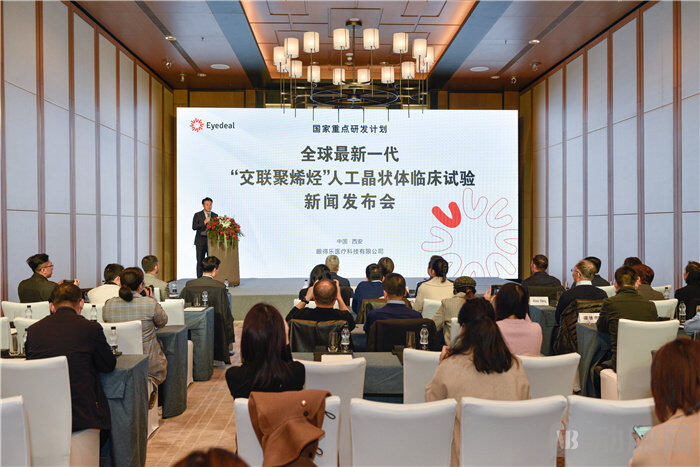
Cross-linked Polyolefin Intraocular Lens Release Event
Currently, the multi-center clinical trial of this cross-linked polyolefin artificial lens is jointly conducted by Professor Yun'e Zhao from the Eye Hospital of Wenzhou Medical University, Professor Yongzhen Bao from Peking University People's Hospital, Professor Hong Yan from Xi'an No. 4 Hospital · Shaanxi Provincial Eye Hospital, Professor Hongsheng Bi from the Affiliated Eye Hospital of Shandong University of Traditional Chinese Medicine, Professor Mingzhi Zhang from the Joint Shantou International Eye Center of Shantou University and The Chinese University of Hong Kong, Professor Xiaobo Xia from Xiangya Hospital of Central South University, Professor Hui Song from Tianjin Eye Hospital, Professor Zhengzheng Wu from Sichuan Academy of Medical Sciences & Sichuan Provincial People's Hospital, and Professor Wei Fan from West China Hospital of Sichuan University.
After the early stage of product development ended, discussions about marketization strategies began to be put on the agenda.
Where is the market entry point? Guo Guangxu turned his attention to centralized procurement.
Whatever the reason, let's start by talking about the centralized procurement itself.
Among the internet buzzwords of 2021, "soul-cutting price negotiation" certainly has its place.
From this, we can not only appreciate the popularity of centralized procurement but also glimpse the extent of price reductions achieved through it.
As mentioned earlier, cataracts are the leading cause of blindness globally, and China is one of the countries with the highest number of blind and visually impaired patients. Cataract patients account for 32.5% of the population in China. However, at the same time, the penetration rate of intraocular lens implantation in China is low. The type of surgeries has gradually shifted from a basic demand for preventing blindness to a higher demand for refractive cataract surgery. Additionally, the majority of the market share for mid-to-high-end intraocular lenses is occupied by foreign brands.
Against this backdrop, it seems reasonable for intraocular lenses to be included in the volume-based procurement scope.
According to relevant statistics from Dongxing Securities, the coverage rate of volume-based procurement provinces for intraocular lenses reached 70.97%. As of September 2020, there were a total of six volume-based procurement projects for soft (foldable) intraocular lenses across China, covering two provincial alliance projects, three provincial projects, and one municipal project, making it the medical consumable with the highest regional coverage rate in current volume-based procurement practices.
High coverage rate means that after winning the centralized procurement bid, there will be a vast market for intraocular lenses.
However, winning the centralized procurement bid is no easy task. The intense price negotiation alone is enough to make most companies hesitate, not to mention the need to ensure product quality while significantly reducing prices.
However,Indeed, some companies have ridden this wave, and their sales have skyrocketed.
For example, in the artificial lens bulk procurement conducted in Anhui Province in August 2019, the A1-UV model product of Eyedea, as the only Chinese-produced product that made it to the shortlist at the time, saw its sales increase by 1.65 times after winning the bid. In that year, the average monthly revenue from August to December for this product was 709,600 yuan, representing a 53.61% growth compared to the average monthly revenue of the first seven months.
However,It is worth noting that among the products winning bids in the volume procurement of intraocular lenses, foreign brands still account for the majority.
According to the aforementioned report by Dongxing Securities, in the results of China's artificial crystaline procurement, international giant Alcon had 20 products selected; Bausch + Lomb and Johnson & Johnson (Vision Care, Inc.) had varieties selected in all five negotiations. Among Chinese brands, basic products from Haohai Biotech were selected with an average price reduction of about 40-50%; Aiborn mainly targets the mid-to-high-end market, with relatively lower procurement volumes and smaller price reductions.
But this does not mean that domestically produced brands have no room to maneuver in the artificial crystal collection market.
The main reason lies in the fact that, from the perspective of the inclusion rules and pricing rules for centralized procurement, "cost-effectiveness" is one of the most important keywords. Even though the product's previous market share is to some extent taken into consideration, domestically produced products with recognized quality can still obtain alternative qualification. This rule setting has actually, to a certain extent, promoted the development of domestically produced artificial crystalline lens brands.
To pursue the ultimate cost-performance ratio, controlling costs is the most important thing.
In Guo Guangxu's view, having self-developed intraocular lens materials is the best way to control costs.
"In the past, we bought materials from others and then processed them, with the initiative in their hands. Now, we own patents for material synthesis and production processes, and the initiative is in our own hands," said Guo Guangxu. "With our own materials, Eyedea's intraocular lens products not only perform well but also have a high cost-performance advantage."
In fact, for Eyedea, the self-developed materials not only enable the cross-linked polyolefin intraocular lens products to "qualify" for centralized procurement with a cost-performance advantage, opening up the domestic market in China, but also help it advance into overseas markets.
As for the specific plan, Guo Guangxu appears to be very clear-headed:"In the future, Eyedea will become a material supplier and establish material-related cooperation with overseas brands."Rather than producing products to directly compete with giants like Alcon in the market. This is undoubtedly like hitting a rock with an egg, which is neither realistic nor very smart."
In Eyedea's future business planning, the focus is clearly not limited to the single product line of artificial crystalline lenses.Next, Eyedea will gradually begin to expand into other areas of optometry, such as OK lenses." Guo Guangxu revealed, "Of course, the most important task for Eyedea at present is to perfect the development of artificial crystals."