

Pfizer 2021 Financial Report: $36.8 Billion from COVID-19 Vaccine, mRNA Strategy Unveiled, CEO Cautious on Acquisitions
Pfizer
Pharmaceutical R&D Developer
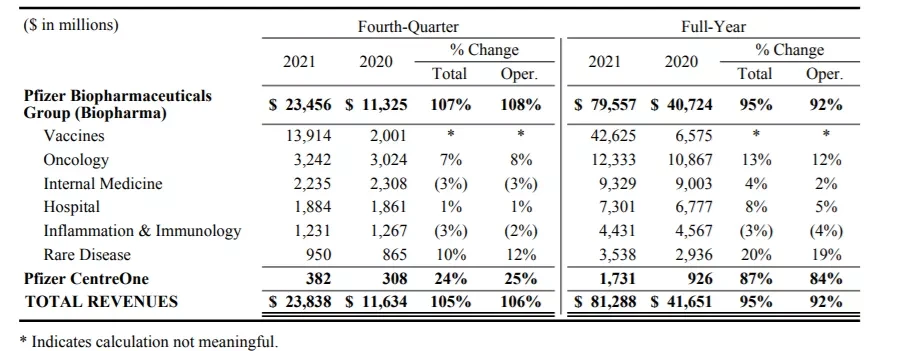
On February 8, Pfizer announced its financial report for 2021, with a total annual revenue of $81.288 billion, increasing by 95% year-on-year. Excluding the revenue from the COVID-19 vaccine Comirnaty and the oral COVID-19 drug Paxlovid, the total annual revenue was $44.4 billion, up 6% year-on-year. The R&D investment was $13.829 billion, increasing by 47% year-on-year.
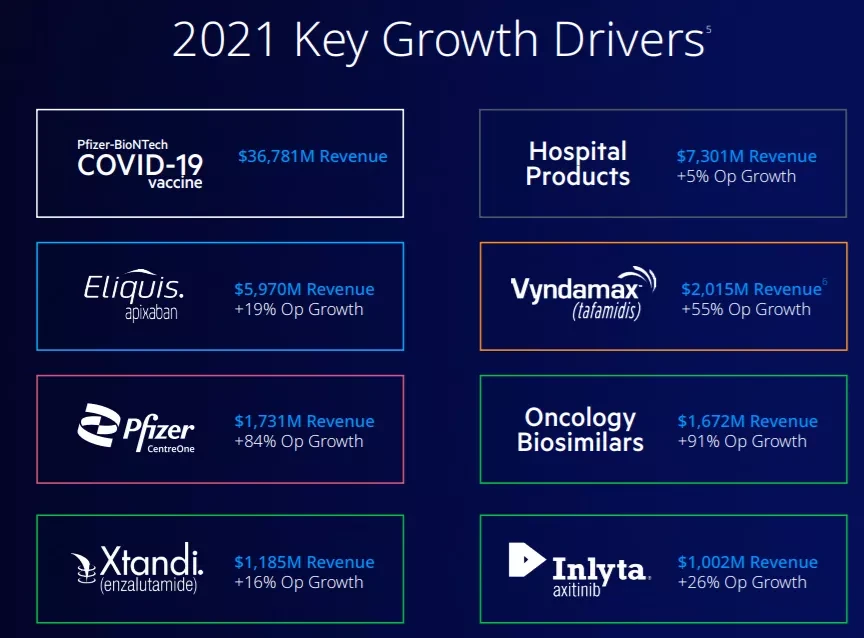
Pfizer's dazzling achievements are naturally attributed to the significant boost brought by the COVID-19 vaccine Comirnaty (BNT162b2). In its Q3 2021 earnings report, Pfizer raised the full-year revenue forecast for Comirnaty from $33.5 billion to $36 billion, and the final actual revenue for 2021 was $36.78 billion. Thus, Comirnaty has created a myth in the history of pharmaceutical sales. Humira, the global top drug, took nearly 20 years after its launch to finally break through the $20 billion annual sales mark in its last year before losing market exclusivity, while Comirnaty achieved $36 billion in revenue in its first year on the market.
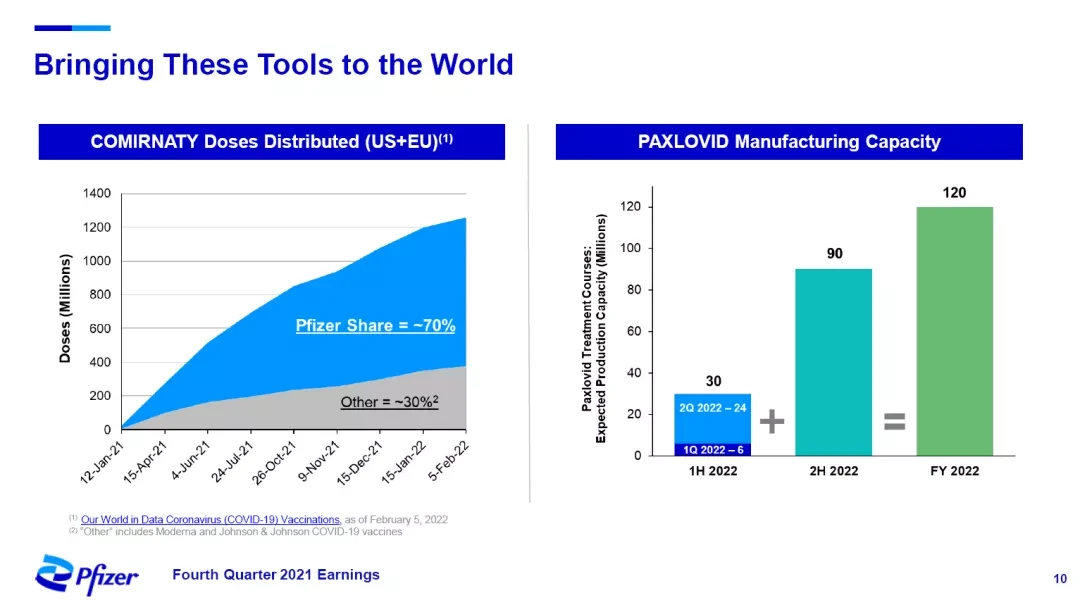
In addition to Comirnaty, Pfizer's oral COVID-19 medication Paxlovid (nirmatrelvir + ritonavir) also received FDA Emergency Use Authorization on December 23, 2021, generating $76 million in revenue within a week. According to information disclosed by Pfizer, the production capacity of Paxlovid in 2022 is expected to reach 120 million treatment courses to supply authorized countries.
Pfizer is currently a pure giant focused on innovative pharmaceutical businesses. Excluding COVID-19 related products, Pfizer's current business mainly focuses on areas such as oncology, vaccines, immunology, and cardiovascular. The products providing strong momentum for the company’s revenue growth in 2021 are mainly mature products like Eliquis (Apixaban), Vyndaqel/Vyndamax, Inlyta (Axitinib), Xtandi (Enzalutamide), etc.
A few years ago, Pfizer's core product Ibrance (Palbociclib) still generated $5.4 billion in revenue, but with only 1% growth in 2021, its market share in the CDK4/6 space is being eroded by Eli Lilly and Novartis. Another key product, Xeljanz (Tofacitinib), also halted its growth momentum after receiving a FDA black box warning in 2021.
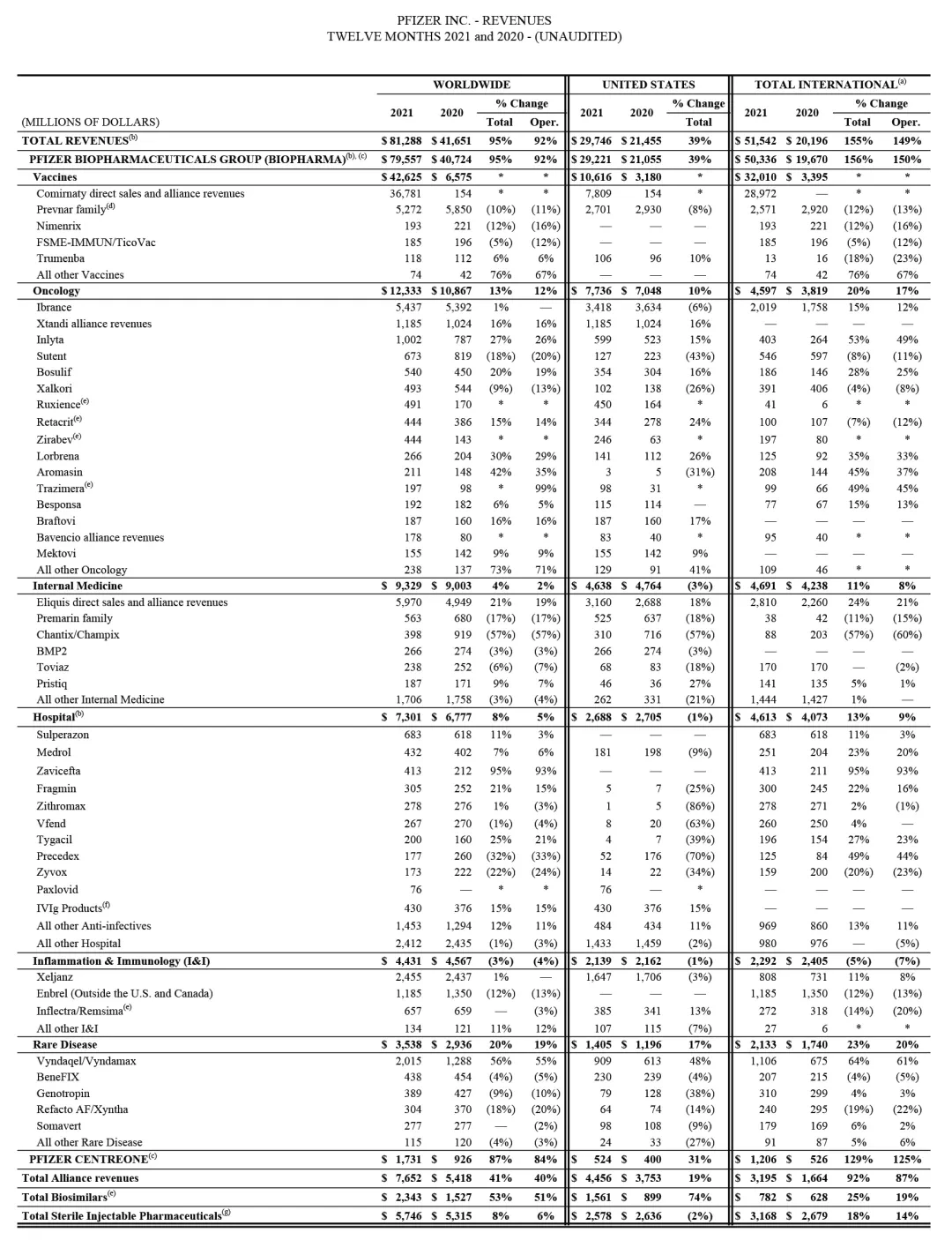
Compared to the uncertainty in the innovative drug market, the biosimilar business is thriving in the hands of giants like Pfizer and Amgen. Relying on products such as Inflectra/Remsima (infliximab), Retacrit (epoetin alfa), Ruxience (rituximab), Zirabev (bevacizumab), and Trazimera (trastuzumab), Pfizer's biosimilar business achieved $2.343 billion in revenue in 2021, representing a year-on-year increase of 53%.
Overall, Pfizer can be said to be the biggest winner under the COVID-19 pandemic in the past two years. It has achieved great wealth with a single product, Comirnaty. Moreover, Pfizer predicts that the income brought by COVID-19 will not be temporary but will last for a long time.
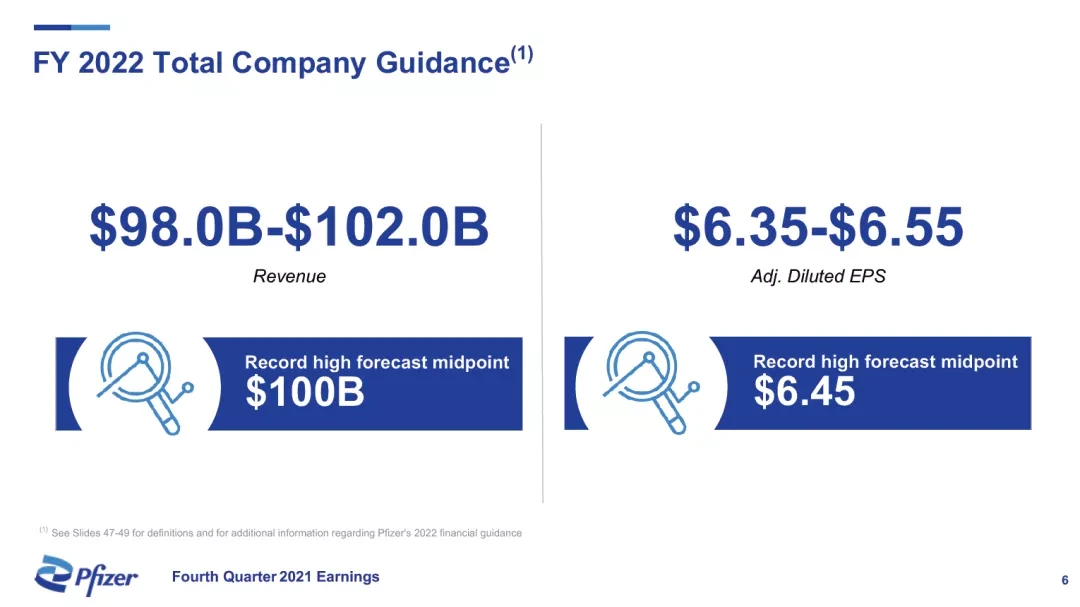
Pfizer also set its revenue guidance for 2022 at $98 billion to $102 billion, which is almost equivalent to the combined revenue of two Pfizers in previous years. The expected revenue for Comirnaty is $32 billion, and for Paxlovid, it is $22 billion.
The growth game of the giants is actually about repeated mergers and acquisitions for expansion and streamlining to focus on core assets. Pfizer, with substantial financial resources, began various moves to acquire assets and make strategic layouts in 2021, including:
- On July 22, a $2.45 billion collaboration was reached with Arvinas, the leader in protein degradation drug development, to acquire global rights to ARV-471.
- On August 23, a $2.26 billion acquisition of Trillium was announced, targeting CD47 assets.
- On October 6, a $610 million collaboration was reached with Voyager Therapeutics to utilize its AAV capsid platform for developing gene therapies for neurological and cardiovascular diseases.
- On November 9, an agreement was reached with Biohaven for the two migraine drugs Rimegepant and Zavegepant, with a total transaction value of $1.24 billion.
- On December 13, it was announced that a definitive agreement had been reached with Arena to acquire all of its outstanding shares at $100 per share, with a total transaction value of approximately $6.7 billion. Assets in the fields of gastrointestinal diseases, dermatological conditions, and cardiovascular diseases were acquired, including etrasimod, an oral S1PR modulator in Phase III.
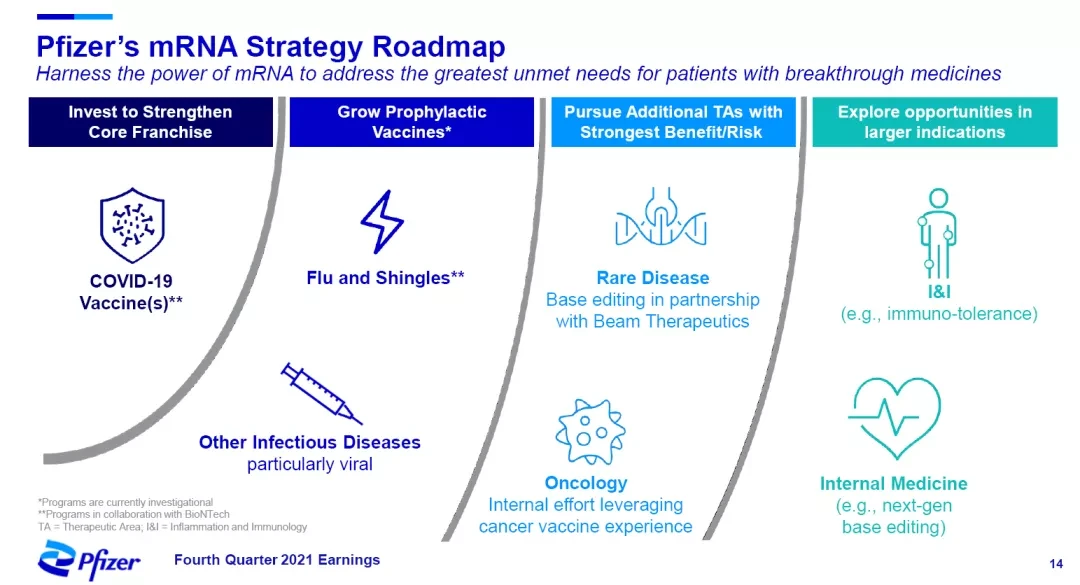
Since entering 2022, Pfizer has been making moves more frequently, announcing four deals in two days in mid-January, focusing on cutting-edge technologies such as AI drug discovery, bispecific antibodies, and in vivo gene editing (see: Pfizer reaches four collaborations in two days, involving AI drug discovery, in vivo gene editing, etc.). After Comirnaty, Pfizer has shown even greater favor towards mRNA technology and will continue to vigorously advance its mRNA strategy in the future. A development blueprint has already been presented to investors.
Pfizer, once dubbed the "Universal Mega Pharmaceutical Company," has engaged in numerous large-scale mergers and acquisitions to continuously expand its size. Today, Pfizer might have more reason than ever to embark on a new path of acquisition and expansion. On one hand, it boasts substantial cash flow; on the other hand, recent stock performances of Biotech companies have been lackluster. However, during an investor conference call, Pfizer's CEO Albert Bourla expressed a restrained attitude towards acquisitions, stating that he does not wish to repeat the past strategy of growth through mergers and acquisitions. "If we do consider mergers and acquisitions, Pfizer aims to find targets that can offer greater profit returns. Pfizer now operates like a massive machine in production, R&D, and commercialization. The company has many tasks at hand, including shutting down certain production operations while continuing to strengthen and consolidate its R&D centers and registration teams. These actions are providing excellent momentum for the company’s development. Now is not the time to halt this momentum; considering transactional mergers and acquisitions would be our last priority." Whether Pfizer will truly follow Bourla’s words remains to be seen.