

AIXWAY Deep Dimension Submits IPO Prospectus: Pioneering Micron-Level Metal 3D Printing for High-Precision Custom Manufacturing

Aixway3D
Provider of Key Precision Metal Components for Medical Devices
3D printing technology has been hailed as the core of the fourth industrial revolution, making the process from product design to manufacturing just a button away—"print."
Compared with traditional subtractive manufacturing processes, 3D printing technology involves the layer-by-layer processing of digital three-dimensional models by 3D printing equipment, continuously melting and stacking materials such as metal powders layer by layer.AccumulationBonding, eventually forming the desired part.
Data shows that 3D printing can manufacture components with complex geometric structures, enabling integrated production. Moreover, the additive manufacturing method used in 3D printing does not increase costs due to structural complexity. Additionally, 3D printing can achieve honeycomb lattice structures that are difficult to process with traditional techniques, significantly reducing the weight of 3D-printed products while ensuring performance. Based on the rapid solidification characteristics of 3D printing, these products exhibit excellent mechanical properties and guaranteed strength.
For manufacturing enterprises, 3D printing technology eliminates the need for molds and shortens the production process, significantly reducing the R&D and manufacturing cycles of new products. Moreover, since materials are added layer by layer, 3D printing produces almost no material waste during production, achieving a material utilization rate of over 90%.
For designers, 3D printing will break the structural and conceptual limitations imposed by traditional manufacturing methods, allowing for more innovative product structures.
It can be said that 3D printing technology not only changes the processes of traditional manufacturing but also breaks the monopolistic model of traditional industrial chains, leading to a new transformation in global manufacturing.。
Aixway3D, a leading company in the metal 3D printing industry, is currently providing exclusive micron-level metal 3D printing services for numerous fields such as medical, aerospace, microelectronics, precision molds, and detection.
It is reported that Aixway3D, incubated by the Fraunhofer Institute for Laser Technology (Fraunhofer ILT) in Germany, is a high-tech enterprise composed of senior experts from China and Germany. It is committed to providing services such as full-size product printing covering the entire process chain of leading laser additive manufacturing, technological development, scientific research cooperation, and equipment research and development.
It is worth mentioning that the principle of metal 3D printing technology is mainly divided into two major categories: powder bed fusion and directed energy deposition.The Fraunhofer Institute for Laser Technology, which incubated Aixway3D, is the inventor of the Laser Powder Bed Fusion (LPBF) technology, also known as Selective Laser Melting (SLM).Currently, more than 80% of metal 3D printing uses this technology.
Backed by leading laser metal powder bed additive manufacturing technology, Aixway3D has also developed exclusive micron-level metal additive manufacturing technology, filling the market gap for small, high-precision additive manufacturing components. This addresses the pain points of metal 3D printing in the field of high-precision structural parts, significantly optimizing the accuracy and roughness of metal 3D printed parts while enabling support-free printing.
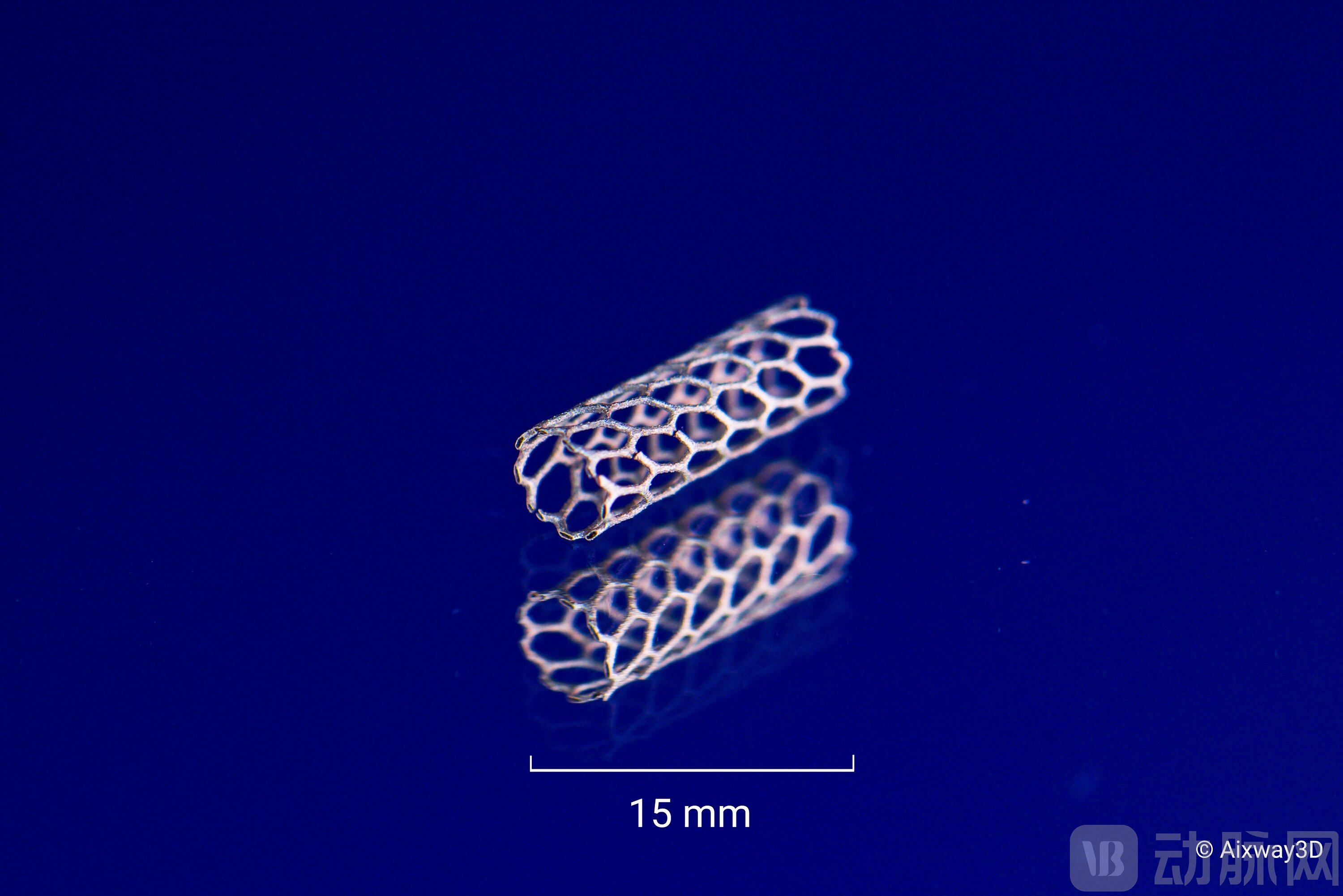
(Aixway3D's micrometer-level metal 3D printed components, photo provided by the company)
Aixway3D stated: "Relying on a strong team of experts, the company has established close cooperative relationships with major research institutes, universities, and enterprises in the field of global advanced manufacturing. Clients include Lufthansa Technik Group, China National Machinery Research Academy, and others."
Today, metal 3D printing technology has been gradually applied in the medical field, such as 3D printed orthopedic implants, 3D printed interbody fusion devices, and 3D printed artificial vertebral bodies.
Compared with traditional precision machining and manufacturing, metal 3D printing technology can create structures with higher complexity or structures that are difficult to produce using traditional manufacturing methods, such as sandwich thin-walled structures, complex internal flow channel structures, and more.
At the same time, metal 3D printing technology can liberate the designer's imagination. In the process of traditional manufacturing, designers need to innovate based on the manufacturing capabilities of conventional techniques. In the metal 3D printing process, however, designers do not need to consider too many limitations of manufacturing capability and can directly design the optimal solution.
In addition, compared with traditional precision machining and manufacturing, metal 3D printing technology can respond quickly, not only shortening the process from design to manufacturing but also omitting many traditional processing steps, saving processing procedures and production time.
In terms of components, traditional precision machining and manufacturing require welding and other secondary processing of numerous parts to create components; whereas metal 3D printing technology can achieve integrated molding without the need for further processing.
In terms of personalized medical care, traditional precision machining and manufacturing cannot customize production according to the individual needs of patients due to factors such as cost. Moreover, some medical devices require secondary processing or trimming by doctors. However, metal 3D printing technology can produce personalized instruments tailored to each patient's specific condition without increasing manufacturing costs for customized production.
Based on the many advantages of metal 3D printing technology in the medical device field, Aixway3D currently mainly provides key precision metal components for medical devices, including implants, interventional product parts, core components of wearable devices, and core components of surgical robots.。
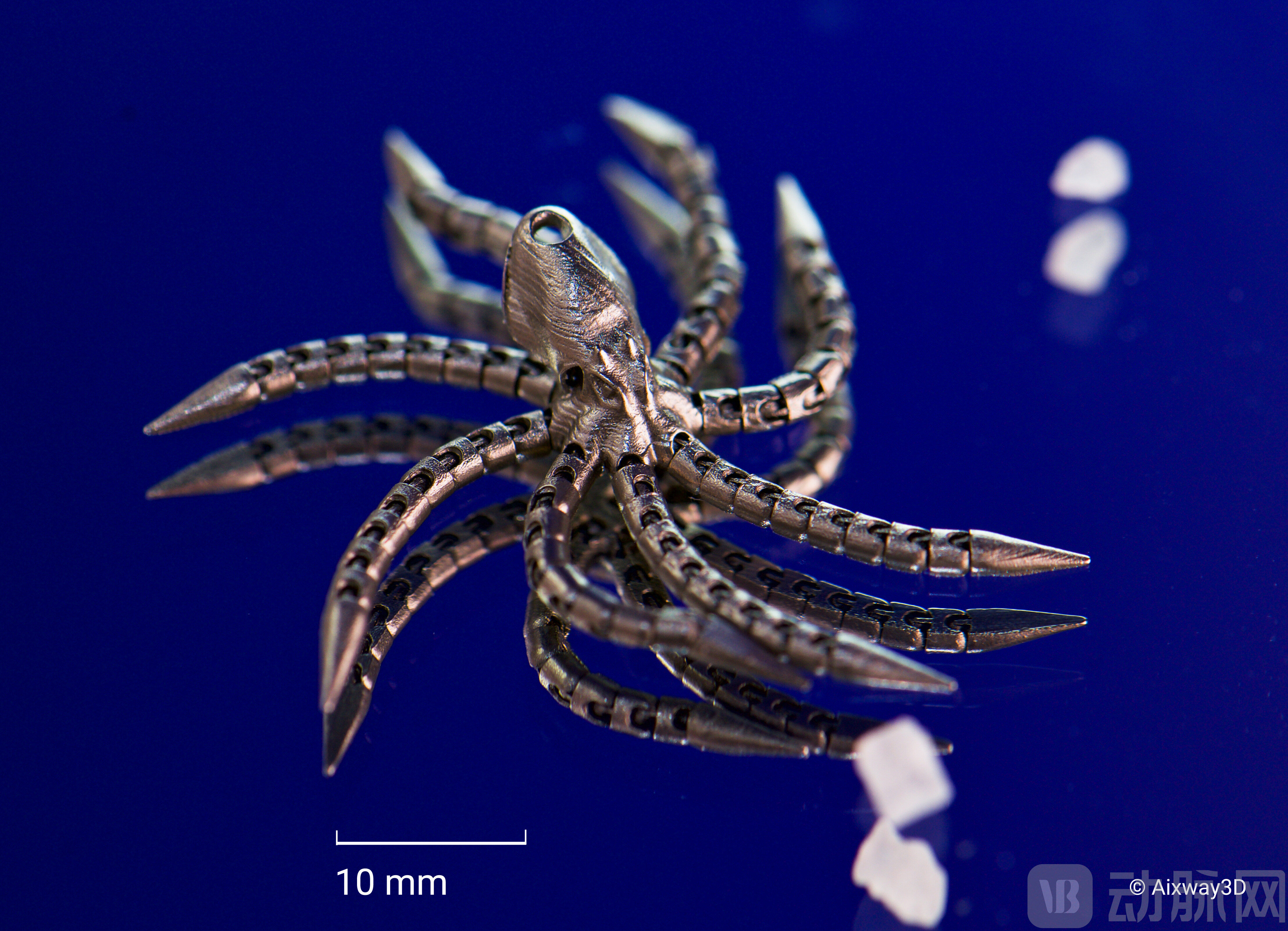
(Aixway3D's micrometer-level metal 3D printed components, photo provided by the company)
Among them, Aixway3D has achieved micron-level printing with a variety of metal materials, including pure tungsten, nickel-titanium memory alloy, cobalt-chromium alloy, nickel-based alloy, titanium-based alloy, iron-based alloy, stainless steel, mold steel, precious metals, and more.
Yin Yijun, Marketing Director of Aixway3D, stated: "In the medical device field, most components have high requirements for precision and surface quality. These components also possess various functionalities, such as connection, elastic contact, and support fastening. These functional requirements necessitate that the components exhibit excellent mechanical properties, such as compression resistance, tensile strength, and minimal deformation."
In response to the above requirements, Aixway3D has developed an exclusive micro-scale metal 3D printing technology capable of precisely controlling the laser spot, enabling the precision of metal components to reach the micro-level. This meets the needs of the vast majority of products in the medical device field.
According to the introduction, the typical printing accuracy in the metal 3D printing industry is 20-150 microns, with a surface roughness Ra value of 7-20 microns, and support structures are required for angles less than 45 degrees.Aixway3D, relying on its self-developed micrometer-level printing technology, achieves a precision of 2-5 micrometers, with a surface roughness Ra value of 0.8-1 micrometer, and most components above 10 degrees can be formed without support.
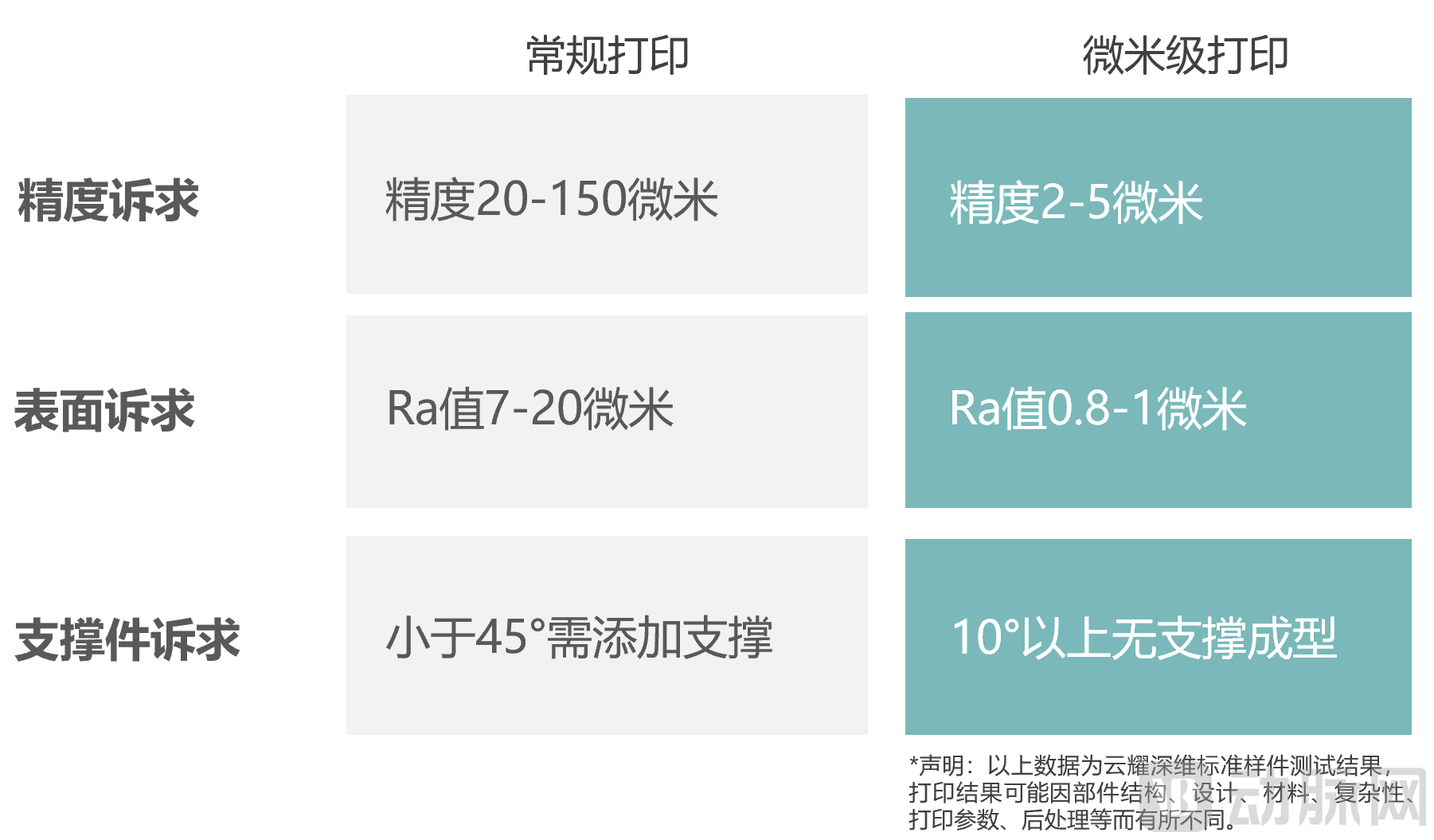
(Photo provided by Aixway3D)
Yin Yijun stated: "In terms of high precision, micron-level metal 3D printing technology can accurately control the laser spot, ensuring a consistently stable distribution of the laser spot across the entire surface, with a flat powder layer thickness of up to 5 microns (About one-twentieth the thickness of a hair"), achieving 3D one-step printing and forming of complex precision structural metal materials."
In terms of surface roughness, the laser powder bed fusion technology used by Aixway3D slices the 3D data model of the part into layers using specialized software. After obtaining the contour data of each cross-section, the ultra-fine metal powder is directly heated by a laser, causing it to fully melt and then rapidly cool and solidify, ultimately creating a three-dimensional solid part. Leveraging the advantages of this manufacturing principle, micron-level metal 3D printed components achieve an ultra-smooth surface.
In terms of support structures, micron-level metal 3D printing achieves support-free forming at over 10 degrees for most components through a special powder spreading system and manufacturing process, reducing costs related to materials, labor, and time. At the same time, it effectively addresses the challenge in metal printing where some support structures cannot be removed, which could otherwise render parts unusable.
Based on the advantages of micron-level metal 3D printing technology, Aixway3D will drive another innovative revolution in the medical device field.
According to reports, Mr. Shen Liyaowei, founder and CEO of Aixway3D, studied under the inventor of laser powder bed fusion technology and has independently led several world-first related projects. He has extensive experience in equipment development, process development, and product innovation in the field of metal 3D printing.
It is also based on this that Li Yaowei Shen led the team to independently develop micron-level metal 3D printing, and has applied for related patents.
Among them, the core team of Aixway3D mainly comes from the invention institution of laser metal powder bed additive manufacturing technology —— Germany Fraunhofer Laser Institute. Meanwhile, its R&D team consists of experts and high-end talents in the fields of technology, equipment, process, materials, and software in laser additive manufacturing, covering many professional fields such as mechanical manufacturing, mechanical design, mechatronics, automation, material science, and software engineering.
This R&D team, composed of interdisciplinary experts, not only possesses extensive R&D experience but also has strong innovative capabilities. Yin Yijun stated: "Aixway3D's metal 3D printing technology is advancing its R&D efforts to improve efficiency, reduce costs, and achieve higher precision printing in order to meet more and higher demands. In the future, Aixway3D..."WillContinue to advance towards full-scale metal 3D printing and provide comprehensive metal printing services to more customers."