

Wellsees Files IPO Prospectus: Pioneering Integrated Solutions in Orthokeratology with Cross-disciplinary Expertise and Largest GMP Rigid Lens Facility in South China

Wellsees
Innovative Ophthalmic Medical Device Developer
The eyes are the windows to the soul. Eighty percent of human interaction with external information relies on our eyes, thus their importance is self-evident.
A previous research report from the World Health Organization revealed that the number of myopia patients in China has reached 600 million, with the myopia rate among adolescents ranking first in the world. China has become the country with the highest myopia prevalence globally. More concerning is the situation among adolescents — results from a national survey on myopia among children and adolescents showed that in 2018, the overall myopia rate was 53.6%, while in 2019 it was 50.2%. Due to home quarantine and online classes during the pandemic, the overall myopia rate among children and adolescents in China saw a slight increase in 2020 compared to 2019. In addition to the high prevalence, the proportion of high myopia among children and adolescents in China is also on the rise.
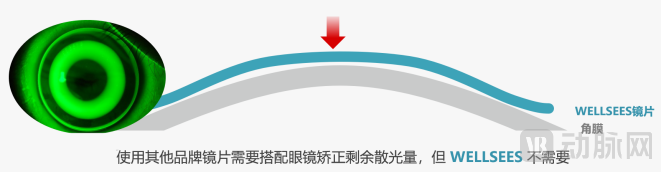
One of the methods to prevent myopia is wearing orthokeratology lenses, commonly known as "OK lenses." Orthokeratology originated in the United States and, after decades of development, has been applied in 34 countries worldwide. These lenses are designed with a special reverse geometry shape, and their inner surface consists of multiple arc segments. The uneven distribution between the lens and the tear film generates hydrodynamic effects that alter the corneal geometry.
In June 2018, the "Myopia Prevention and Treatment Guidelines" released by the National Health Commission pointed out that long-term wear of orthokeratology lenses can slow the progression of axial length in adolescents by approximately 0.19 millimeters per year. The awareness of orthokeratology lenses in slowing vision deterioration is gradually increasing.
According to data from the Ophthalmology and Optometry Branch of the China Association for Medical Devices Industry, the usage of orthokeratology lenses in China was 640,000 pairs in 2018, with an industry penetration rate of only about 1%. The penetration rate among Chinese adolescents in schools was merely 0.61%. In contrast, in developed countries and regions, especially in East Asia where physiological structures are relatively similar to those of China, the average penetration rate of orthokeratology lenses exceeds 5% and is showing a rapidly increasing trend.
According to data from VCBeat, the penetration rate of orthokeratology lenses in China is expected to reach around 2% in 2023, with a compound annual growth rate of 30%. Considering the current imbalance in development between cities and regions in China, it is estimated that in higher consumption areas such as first- and second-tier cities, the industry penetration rate could reach 5%-10%. In short, by 2023, the terminal market size of orthokeratology lenses in China is expected to reach 23.7 billion yuan.
A hundred-billion-dollar market has attracted countless heroes to compete. However, there are only a few listed companies in China specializing in orthokeratology, with a highly fragmented market, rapid annual growth, and vast room for expansion for high-tech enterprises. Among them, Wellsees (Shenzhen Wellsees Technology Co., Ltd.) has emerged as a rising star.
Recently, VCBeat interviewed Zhang Jing, founder and CEO of Wellsees, and co-founder Professor Wang, to see how the young company Wellsees is navigating the market for one-stop services in rigid contact lenses.
Wellsees, founded in November 2019, is one of the few companies in China that masters the full-process technology of contact lens design, processing, and fitting.Its mission is to create higher-quality products through innovative technology, making teenagers' eyes healthier and brighter.
"The name Wellsees is derived from the English word 'wellsees.' On one hand, we hope our users can maintain healthy eyes and enjoy clear and bright vision," Zhang Jing told VCBeat. "On the other hand, through our innovative technology, we aim to integrate industry, academia, and research in the Guangdong-Hong Kong-Macao Greater Bay Area, promote the development of China's optometry industry, and provide a better optical experience for all users with myopia."
It is worth mentioning that the three co-founders of the company have maintained over 10 years of communication and cooperative relationships, which can effectively drive the rapid progress of projects and the company.

Founder and CEO Zhang Jing,MBA in Business Administration from Shanghai University of Finance and Economics, former core positions at Huawei and Mindray Bio-Medical Electronics, over 17 years of experience in large-scale enterprise service management, extensive experience in operation and management of medical device companies, as well as entrepreneurship and management experience in ODM enterprises for mobile healthcare intelligent products.
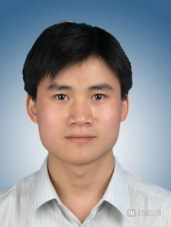
Co-founder Professor Wang,Dr. [Name] is an associate professor at Shenzhen University. He holds a Ph.D. in Computer Science from the Hong Kong Polytechnic University and completed his postdoctoral studies at Tsinghua University's Shenzhen Graduate School. Serving as an associate professor in the College of Mechatronics and Control Engineering at Shenzhen University, he has a strong and solid research background. Recognized as an overseas high-level talent under Shenzhen’s Peacock Plan, he has led multiple fundamental research projects related to artificial intelligence and visual processing, including projects funded by the National Natural Science Foundation of China, Guangdong Provincial Natural Science Foundation, and major basic research initiatives in Shenzhen. He has published over 50 high-quality international academic papers, been granted more than 20 Chinese invention patents, and filed over 50 patent applications. At Wellsees, he is responsible for the development of optical imaging instruments, image algorithm development, and the creation of a big data AI fitting system.

Co-founder Ji Jiashu is an associate professor in the Department of Optometry at the Hong Kong Polytechnic University and the chairman of the academic committee. He holds a master's and doctoral degree in physiological optics and vision science from the United States. He is also an organizing member of international ophthalmology conferences (including ARVO and IMC) and a member of the advisory board for research in human and animal optometry, with over 110 academic papers published in international ophthalmology journals and conferences. At Wellsees, he is responsible for optometric research, myopia prevention and control technology development, and the continuous transformation of industry-academia-research collaboration.
Wellsees' main core management team is composed of professors from the Hong Kong Polytechnic University and Shenzhen University, working alongside top talents in the medical device industry. The remaining core management members are graduates of prestigious universities such as the Beijing Institute of Technology and Jishou University, and they are top professionals in the industry with decades of experience in the medical device field.
Since Wellsees' products involve Class II and Class III medical devices, the comprehensive capabilities of the team are held to high standards. "The requirements include expertise in optometry, optical engineering design, high-precision processing, image recognition, big data AI processing, electromagnetic compatibility for Class II active products, and more. Our company has integrated a cross-disciplinary, cross-field professional team to provide an overall solution, empowering our partners with professionalism and efficiency. Moreover, we can continuously conduct technology research and innovation in the field of eye health, which is also one of our core competencies," added Zhang Jing.
Wellsees not only has a professional background in optometry, image recognition, and AI big data industries, but also boasts a highly capable R&D team with a strong entrepreneurial spirit.Also has the largest GMP rigid endoscope production base in South China.In 2021, Wellsees built a 1500-square-meter GMP production base in Longgang, Shenzhen, and completed the acceptance. According to Zhang Jing, Wellsees has planned 12 production lines with a maximum capacity of 500,000 pieces per year.
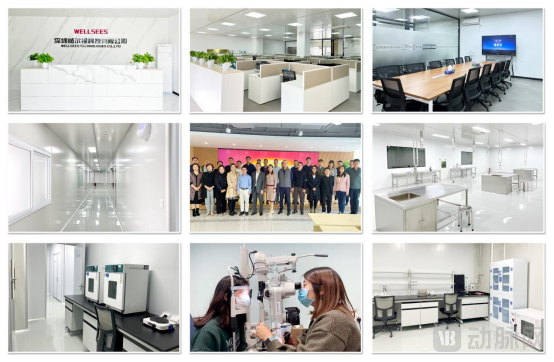
Wellsees Longgang Production Base, photo provided by the company
Full-lens Toric Orthokeratology Lens
The Only One to Correct Myopia and Variable Astigmatism Simultaneously
Wellsees Launches China’s First Full-Lens Toric Design Ortho-K Lens, Eliminating the Need for Trial Lenses and Achieving Better Myopia Control. It is Also the Only Ortho-K Product That Can Simultaneously Correct Myopia and Variable Astigmatism. According to Ophthalmic Statistics, at Least One-Third of People with Myopia Have Astigmatism Issues.
"As a medical product, Wellsees not only achieves excellent results in myopia and astigmatism correction, but also fully considers user comfort and safety," Zhang Jing added. "By using the most advanced high oxygen permeability materials and personalized positioning arc design, we improve the success rate of fitting and enhance patient comfort."
The portable corneal topographer is an innovative product of Wellsees, primarily addressing issues in traditional corneal detection.Service Scenarios and Service QualityProblem.
Traditional corneal topographers are placed in hospitals, with service scenarios limited to a department radius, greatly restricting the service area and being user-unfriendly.
"In the context of the pandemic, if people have to go to the hospital for optometry, they also need to get a nucleic acid test in advance, which is very troublesome and will invisibly lead to the loss of some users," Professor Wang added.
During the pre-fitting examination process, due to the active and lively nature of teenagers, their rapid eye movements often result in blurry or obstructed corneal data images, leading to poor data quality.
"But based on such data, optometry centers are still able to prescribe and fit lenses. Why?" Professor Wang paused. "Because there is an unspoken rule: although the imaging may be blurry, trial lenses are available, so users can simply try them multiple times. However, this leads to two problems. First, the initial optometry data will be inaccurate, making it impossible to provide high-quality corrective treatment later on, and the quality of follow-up data tracking will suffer. The eyes have a certain adaptability and may tolerate ill-fitting lenses, but this can actually cause harm to the eyes. Second, repeated trials will extend the time and economic costs for both users and optometry institutions."
In response to the above issues, Wellsees has launched a portable corneal topographer.
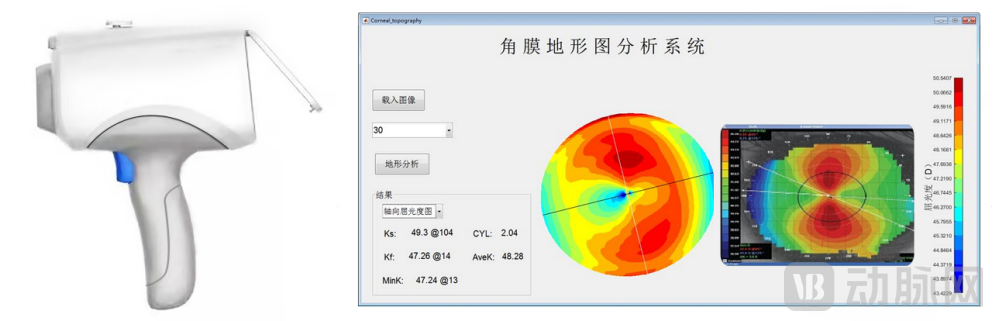
The ProductLightweight and portable, can shoot video,SystemHigh Frame Selection Accuracy.Not restricted by venue, suitable for multiple scenarios and different time periods, capable of expanding fitting channels and customer acquisition numbers. Low price, high cost-effectiveness.
The intelligent AI fitting system is Wellsees' smart fitting solution.

Wellsees Intelligent AI Fitting System Fitting Process, Image Provided by the Company
According to Professor Wang, the Wellsees AIOK fitting system can be based on optometric data.Fully generate all design data, with all parameters optimized and adjustable.
No trial lenses needed, clean and hygienic. It’s convenient for users, reduces the service cycle, and improves the efficiency of fitting. Moreover, this product breaks the fixed pattern of "one device fits a specific model."Compatible with mainstream corneal topographers on the market. The algorithm can be iteratively updated based on big data, continuously optimizing the design.
Regarding future plans, Zhang Jing stated that Wellsees' short-term goal is to complete the NMPA Class III medical device registration for rigid contact lenses: orthokeratology lenses, RGP, and scleral lenses, as well as the Class II medical device registration for corneal topography devices. The company will first expand into Southeast Asian markets such as Singapore and Vietnam. After obtaining the necessary certifications, it will build and expand a nationwide sales network based in South China, Central China, and Southwest China, covering more than 80% of ophthalmic hospitals and ophthalmology institutions in China. This aims to achieve a production and sales scale of over 500,000 lenses, contributing to the effective prevention and control of myopia among Chinese teenagers.
References:
VCBeat "An Article to Show You the 2020 Orthokeratology Lens Market Size and Development Prospect Analysis: Will Reach 5%-10% in 2023"