

Takeda China Successfully Hosts Its First Rare Genetic and Hematologic Diseases Summit, Launches VPRIV® (Velaglucerase Alfa) for Gaucher Disease Patients

Takeda
Biopharmaceutical Manufacturer
ShanghaiPR Newswire / February 26, 2022 -- Today, the first Rare Genetic and Blood Diseases Summit hosted by Takeda China officially opened in Beijing and Shanghai. Themed "Leading the Frontier·Takeda's Love for Rare," the summit aims to create a nationwide academic exchange platform, bringing together clinical medicine experts, pharmacologists, policy experts, patient organization representatives, and other relevant parties to discuss core issues such as cutting-edge treatment options for rare diseases, the establishment of diagnostic and treatment systems, and patient disease management, exploring new approaches to rare disease diagnosis and treatment in China. On the same day, Takeda announced its innovative Gaucher disease treatment drug, Vpriv® (Velaglucerase Alfa for Injection).a) has officially become commercially available, and plans to collaborate with MagnaCare Health to launch the "We Love New Life" patient assistance program, providing more treatment options for Chinese patients with Gaucher's disease.
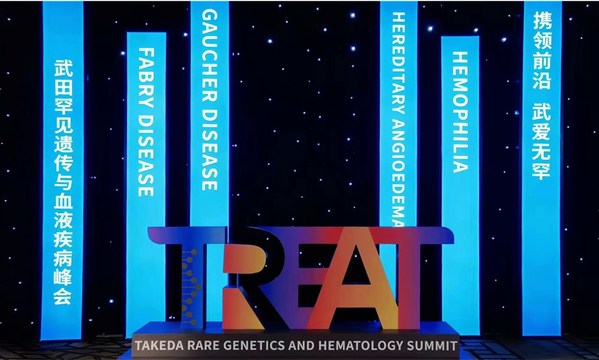
Takeda China's First Rare Genetic and Blood Diseases Summit
Mr. Li Lin Kang, Executive Chairman of the China Rare Disease Alliance, Professor Liu Xin Min, President of Peking University First Hospital, and Professor Wu De Pei from the First Affiliated Hospital of Soochow University, as the chairmen of this summit, joined over 240 domestic and international guests to participate in this grand event through online and offline interactions.
Pooling Wisdom from Multiple Sources to Build a Rare Disease Diagnosis and Treatment System with Chinese Characteristics
Rare diseases are one of the major medical challenges faced by humanity. According to statistics, among the more than 7,000 known rare diseases, less than 5% have treatment options. China has approximately 20 million rare disease patients.[1], but for a long time, due to the lack of corresponding treatment experience for rare diseases among most medical staff, these patients generally face dilemmas such as low diagnosis rates, high misdiagnosis rates, and low treatment rates. Therefore, systematically advancing the innovative development of China's rare disease diagnosis and treatment system is one of the key focal points of this summit.
During the conference, the attendees conducted in-depth discussions on topics such as the construction of a hierarchical medical system for hemophilia, the development of multidisciplinary diagnosis and treatment for Fabry disease, the practice of newborn screening for rare diseases, and advances in the diagnosis and treatment of Gaucher disease.
Professor Wu Depei, Director of the Department of Hematology at the First Affiliated Hospital of Soochow UniversitySaid: "Exploring a development model and path for rare diseases that fits China's national conditions is an important topic to promote the development of diagnosis and treatment of rare diseases in our country. Taking hemophilia as an example, currently, China has gradually improved the regional collaboration network for hemophilia diagnosis and treatment, and initially established a hierarchical diagnosis and treatment system for hemophilia, which has played a positive role in improving the ability of hemophilia diagnosis and treatment and patients' disease management."
Professor Xinmin Liu, President of Peking University First HospitalSaid: "I am very pleased to share experiences and conduct in-depth discussions on the collaborative diagnosis and treatment of rare diseases with peers in the industry at this summit. I believe that by summarizing the experience in diagnosing and treating difficult and rare diseases, continuously exchanging ideas, integrating medical resources, and supporting with Internet-based network medicine, we can build a MDT multi-disciplinary diagnosis and treatment platform. By promoting clinical thinking and pathways for rare diseases that fit China's national conditions, we will certainly gradually improve the overall clinical and academic level of rare diseases in China."
Accelerating the Introduction of Innovative Therapies Vepure® Officially Benefits Patients
At this summit, Takeda shared the company's therapeutic innovations in the fields of rare immune diseases, rare blood disorders, lysosomal storage disorders, and hereditary angioedema, while systematically outlining its future development strategy in the rare disease sector. On the same day, Takeda announced the launch of its long-term enzyme replacement therapy (ERT) drug, Vpriv® (velaglucerase alfa for injection), for patients with Type 1 Gaucher disease.a) to achieve commercial accessibility, and plans to collaborate with MagnaMed Health to simultaneously launch the "Care for a New Life" patient assistance program, providing stronger payment guarantees for Gaucher disease patients in China. Enzyme replacement therapy is the standard treatment method recommended by authoritative guidelines/consensus both in China and internationally for Type 1 Gaucher disease patients. By specifically supplementing the enzyme lacking in the patient's body, it can reduce the accumulation of glucocerebroside in the body, improve clinical symptoms and signs, and maintain normal growth and development.Cultivation.In April 2021, Viprivra® (Velaglucerase alfa for injection)a) Approved by the China National Medical Products Administration for use in1Long-term enzyme replacement therapy for Gaucher disease patients brings new hope to Gaucher disease patients in China.
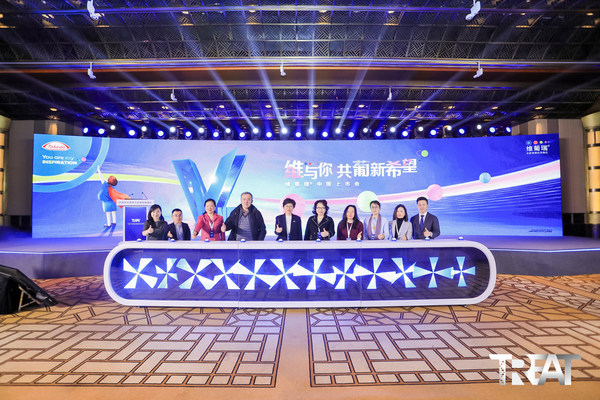
Vepure® China Launch Event - Shanghai
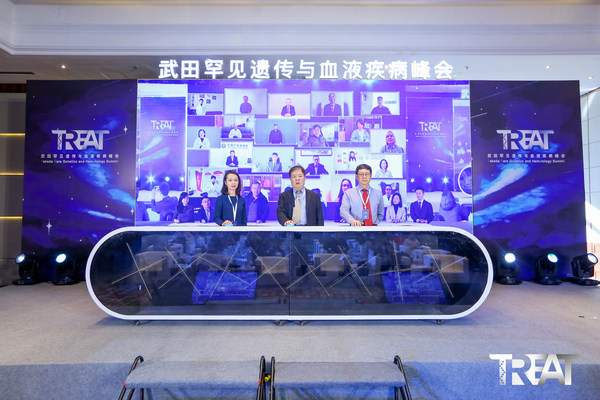
Vepure® China Launch Event - Beijing
Mr. Guohong Shan, President of Takeda ChinaStated: "As a global innovative biopharmaceutical company based on values and prioritizing patients, Takeda has long been deeply engaged in the field of rare diseases, continuously committed to accelerating R&D innovation, striving to bring more innovative therapies to patients with rare diseases in China. Thanks to a series of favorable policies such as the acceleration of the review and approval of rare disease drugs in China, Takeda has expedited the introduction of six innovative therapies in the rare disease field into China in recent years. Meanwhile, we always pay close attention to the actual needs of Chinese rare disease patients, making unremitting efforts to improve their quality of life and help them return to healthy lives as soon as possible. In the future, Takeda will continue to work hand in hand with all parties to jointly lead the cutting-edge development of the industry and promote the continuous progress of the rare disease cause in China."
Gaucher's disease is a rare autosomal recessive genetic metabolic disorder caused by gene mutations that lead to a deficiency or reduction in the activity of glucocerebrosidase in the body. This results in the accumulation of substrates in macrophages of the liver, spleen, bones, lungs, and even the brain, causing pathological changes in tissues and organs that progressively worsen, leading to various corresponding symptoms such as hepatosplenomegaly, anemia, thrombocytopenia, bone lesions, etc.[2]。
Explore Multi-Level Medical Security to Focus on Protecting a Life Without "Rare"
Improving Access to Medications and Enhancing Medical Security: A Key Focus for Rare Disease Patients. At this summit, Takeda supported the Cord Rare Disease Development Center and the Chinese Fabry Disease Patient Association in releasing "Insights into Diagnosis, Treatment, and Policy from the Perspective of the Chinese Fabry Disease Community." Based on the actual needs of patients, the report explores how to further strengthen multi-layered medical security. Experts at the conference noted that in recent years, the Chinese government has been actively promoting improvements in medication security for rare disease patients. The coverage and support for rare disease medications under the national medical insurance system have been continuously enhanced. Particularly, the 2021 National Reimbursement Drug List (NRDL) marked the first time high-cost treatments for rare diseases were included, opening a "door of hope" for more rare disease patients.
Mr. Li Lin Kang, Executive Chairman of the China Rare Disease AllianceSaid: "In recent years, with the implementation of a series of favorable policies, more than 60 orphan drugs have been approved for marketing in just a few years, and over 40 orphan drugs have been included in China’s National Medical Insurance Drug List. It can be said that the rare disease patient community has received unprecedented attention from all sectors of society, and their quality of life and safety have been greatly improved. We believe that in the future, through the joint efforts of the government, medical experts, pharmaceutical companies, patient organizations, and other parties, we can collectively explore new approaches to innovation in China’s rare disease field, continuously enhancing the sense of gain, happiness, and security for patients with rare diseases in China."
On the day of the summit, four parallel sub-forums were held on bleeding disorders, Gaucher's disease, Fabry disease, and hereditary angioedema. Attending experts engaged in in-depth discussions focusing on current disease status and cutting-edge diagnosis and treatment topics.
[1] Starting from March, the first batch of 21 rare disease drugs will be subject to a reduced VAT rate of 3%:http://www.gov.cn/fuwu/2019-02/14/content_5365508.htm.
[2] Red Blood Cell Disease (Anemia) Group of the Hematology Branch of the Chinese Medical Association. Expert Consensus on the Diagnosis and Treatment of Gaucher Disease in Chinese Adults (2020) [J]. Chinese Medical Journal, 2020, 100(24): 1841-1849.
Statement