

Guangdong LSD Treatment Collaboration Group Launches to Advance Sustainable Ecosystem for Rare Diseases

Sanofi
Pharmaceutical R&D Developer
Shanghai, February 28, 2022 /PRNewswire/ -- To further improve the comprehensive diagnosis and treatment capabilities for rare diseases in Guangdong Province, gradually achieving early diagnosis, early treatment, and standardized management of rare diseases.
The goal is to establish the Guangdong Provincial Rare Disease Diagnosis and Treatment Collaboration Network for Lysosomal Storage Diseases (LSDs) in Guangzhou today. Twenty core hospitals have become the first batch of member units of the collaboration group, aiming to use LSDs, a treatable and diagnosable group of rare diseases, as an entry point to "lead by example" and explore ways to enhance the diagnosis and treatment capabilities of rare diseases in Guangdong. This is also the third LSDs diagnosis and treatment collaboration group established in China, following Jiangsu and Tianjin. Sanofi is one of the supporters of this project.
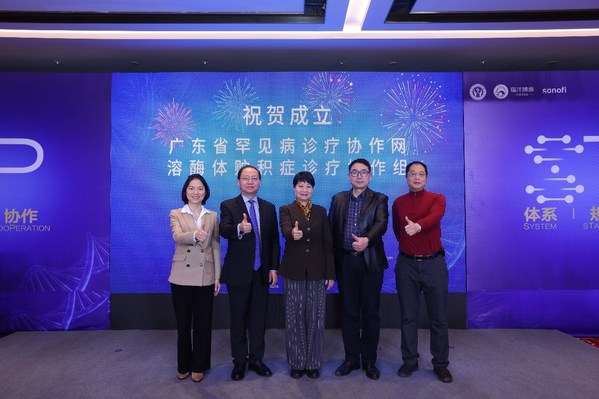
The Diagnosis and Treatment Collaboration Group for Lysosomal Storage Disorders of the Guangdong Provincial Rare Disease Diagnosis and Treatment Network has been officially established.
United Efforts to Enhance Guangdong's Rare Disease Screening, Diagnosis, Treatment, and Management Capabilities
Lysosomal Storage Disorders (LSDs) are a group of rare inherited metabolic diseases, including Pompe disease, Gaucher disease, and Fabry disease, among others. Effective enzyme replacement therapies for these conditions have been approved and marketed in China, making them one of the few groups of rare diseases that are both diagnosable and treatable. However, like most rare diseases, due to a lack of public awareness and limited diagnostic capabilities among primary care physicians, patients often fail to receive timely and accurate diagnosis and treatment, leading to delays in their condition. For instance, over 80% of patients with Pompe disease have been misdiagnosed at some point, and more than 90% need to visit multiple hospitals before receiving a confirmed diagnosis. About 42.4% of patients require 1 to 5 years to be diagnosed, 13% take 6 to 10 years, and 2.2% need over 10 years to finally receive a correct diagnosis.[1]If patients do not receive timely and effective early diagnosis and standardized intervention, it may lead to disability or even endanger their lives. Therefore, how to enhance the ability of grassroots doctors to diagnose and treat rare diseases has become a challenge facing China's rare disease prevention and treatment work.
In 2019, with the support of the Guangdong Provincial Health Commission, the Guangdong Rare Disease Diagnosis and Treatment Collaboration Network was established, creating a smooth and comprehensive collaboration mechanism for the relatively centralized diagnosis and treatment and two-way referral of rare disease patients in Guangdong Province. To date, 25 hospitals have participated in the work of the Guangdong Rare Disease Diagnosis and Treatment Collaboration Network. As of October 2021, medical institutions in the collaboration network have registered 14,250 cases in the "China Rare Disease Diagnosis and Treatment Service Information System."
Chen Li, Inspector of the Health Commission of Guangdong Province, said"The International Rare Disease Day is approaching. Strengthening the management of rare diseases and caring for patients with rare diseases is an unshirkable responsibility for the whole society, especially for health workers. As the frontier of reform and opening-up, Guangdong Province is continuously exploring medical assistance and security mechanisms for rare diseases to establish a multi-level security system for rare diseases. The Lysosomal Storage Disorders Diagnosis and Treatment Collaboration Group established today is one of the six single-disease diagnosis and treatment collaboration groups for rare diseases that were first established in the province, marking that the prevention and control work of rare diseases in Guangdong Province is gradually being refined and implemented. By innovating working mechanisms, Guangdong is creating its own model for the diagnosis and treatment of rare diseases."
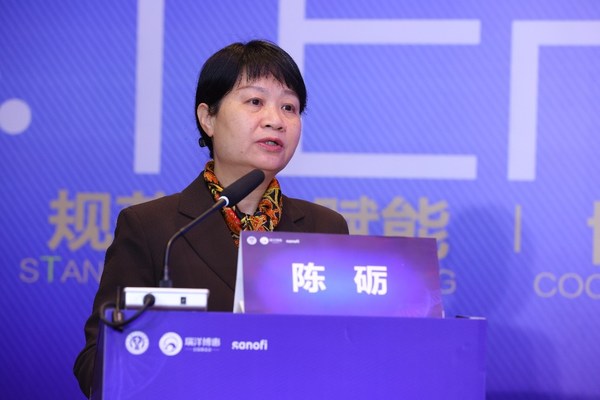
Chen Li, Inspector of the Health Commission of Guangdong Province
Professor Haiwei Huang, Head of the Lysosomal Storage Disorders Diagnosis and Treatment Collaborative Group of the Guangdong Rare Disease Diagnosis and Treatment Network, Department of Neurology, First Affiliated Hospital of Sun Yat-sen University"The Department of Neurology at the First Affiliated Hospital of Sun Yat-sen University is a national key clinical specialty and also the regional medical center for neurological diseases in China. Relying on this, a collaborative group for the diagnosis and treatment of lysosomal storage disorders under the Guangdong Rare Disease Diagnosis and Treatment Network has been established in collaboration with 20 medical institutions across the province. This will form a three-level expert linkage system at the provincial, municipal, and district levels, establish diagnostic and treatment norms for each disease type, as well as a patient referral mechanism, fully integrate resources from the collaborative network and expert teams of various disease types, and safeguard patients' rights to medication. The establishment of the collaborative group can further help alleviate the three major challenges currently faced by patients: 'difficult diagnosis, difficult treatment, and difficult management.' It represents a groundbreaking milestone for improving the diagnosis and treatment capabilities of rare diseases in Guangdong Province and even throughout China, as well as ensuring long-term benefits for local patients."
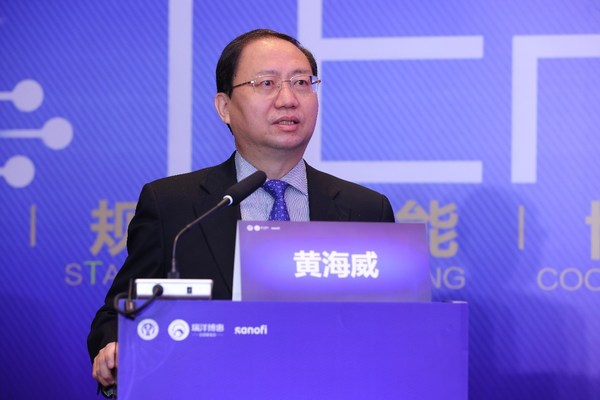
Professor Haiwei Huang, Head of the Lysosomal Storage Disorders Diagnosis and Treatment Collaboration Group of the Guangdong Rare Disease Diagnosis and Treatment Network, Department of Neurology, First Affiliated Hospital of Sun Yat-sen University
Steady progress: The standardized management of the Lysosomal Storage Disorders Diagnosis and Treatment Collaboration is gradually being extended nationwide in China.
In February 2019, the Office of the National Health Commission of China issued a notice to establish a national network for the diagnosis and treatment of rare diseases, selecting 324 hospitals to form a collaborative network for rare disease diagnosis and treatment. Responsibilities and management mechanisms were clearly defined, including establishing collaboration mechanisms, implementing standardized diagnosis and treatment, and strengthening quality control, in order to promote the development of rare disease diagnosis and treatment in China.
Under the guidance of this national policy, China's Lysosomal Storage Disorders Diagnosis and Treatment Capacity Building Project (STEP Project) was also born. In October 2020 and March 2021, Jiangsu Province and Tianjin City respectively established local Lysosomal Storage Disorders diagnosis and treatment collaboration groups. Multi-level linked working groups and clinical diagnosis and treatment expert teams were formed to formulate and implement corresponding diagnosis and treatment standards, empowering grassroots doctors to strengthen their ability to screen, diagnose, treat, and manage these diseases. The Guangdong Province Lysosomal Storage Disorders Diagnosis and Treatment Collaboration Group is the third provincial diagnosis and treatment collaboration group established under the support framework of this project.
Nowadays, the STEP program has initially achieved results. Taking Jiangsu Province as an example, with the development of the diagnosis and treatment collaboration team's work, multiple patients with rare diseases have benefited from this system, receiving timely diagnosis and treatment. After local grassroots hospitals discover suspected cases of rare diseases, they immediately communicate with the leading hospital of the collaboration team. The leading hospital evaluates the patient’s condition and then provides corresponding diagnosis and follow-up treatment guidance.
Li Lin Kang, Executive President of the China Rare Disease Alliance"It marks another breakthrough in China's rare disease prevention and treatment efforts as Guangdong Province has established a lysosomal storage disorder diagnosis and treatment collaboration group, following Jiangsu and Tianjin. We look forward to this model being extended to more provinces, promoting the early detection and diagnosis of rare diseases, helping doctors to treat and manage effectively, and comprehensively enhancing China's level of rare disease prevention and treatment for the benefit of more patients."。”
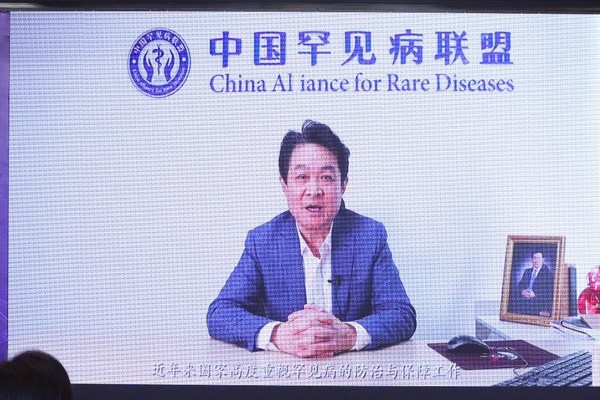
Executive Chairman of the China Rare Disease Alliance, Mr. Li Lin Kang
Local Exploration of the Last Mile in Drug Security: Building a Sustainable Ecosystem
While improving the comprehensive diagnosis and treatment level of rare diseases, the medication security for patients with rare diseases also needs to be prioritized. As more and more patients with rare diseases are able to access and afford medications, clinicians will also gain more confidence in continuously enhancing the screening, diagnosis, treatment, and management capabilities for these patients.
In addition to promoting the comprehensive diagnosis and treatment capabilities for rare diseases across the province, relevant departments in Guangdong Province are also exploring innovative approaches to alleviate the medication challenges faced by patients with rare diseases.At the same time,Based on the actual conditions of different regions in Guangdong Province, various areas are actively exploring rare disease protection models with regional characteristics. Examples include inclusive commercial health insurance guided by the government and led by the market, which effectively connects with the city’s social medical insurance: such as Guangzhou's "Sui Sui Kang" and Foshan's "Ping An Fo", which provide medication coverage for patients with rare diseases.
The diagnosis, treatment, and payment processes for rare diseases are interdependent and form a cohesive system. Exploring the establishment of a guarantee mechanism for rare disease medications by integrating medical insurance, policy-based commercial health insurance, social assistance, charitable support, and other resources to achieve a multi-level comprehensive security model for rare disease medications will also help address challenges in the diagnosis and treatment of rare diseases. This will further improve the sustainable development ecosystem for rare diseases and benefit China's efforts in the prevention and control of rare diseases.
Lily Xie, General Manager of Sanofi Specialty Care Global Business Unit in ChinaSaid: "The implementation of the STEP program in Guangdong is inseparable from the support of governments at all levels, the China Rare Disease Alliance, cooperative hospitals, and clinical expert teams. Sanofi is a global leader and pioneer in the field of rare disease treatment. Over the past 20 years, we have expedited the introduction of innovative and high-quality drugs, while actively collaborating with the government, academic societies, and various partners to jointly enhance the diagnosis and treatment level of rare diseases in China and explore diversified security models. This year also marks the 40th anniversary of Sanofi's entry into China. Looking ahead, we will continue to work with the government, experts, and partners to build a sustainable rare disease ecosystem, together lifting up patients with rare diseases."‘China"Dream."
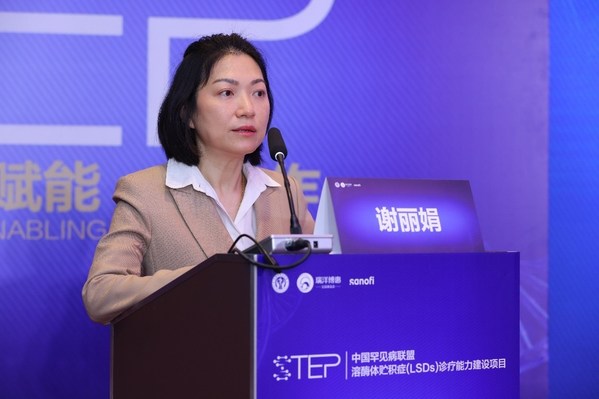
General Manager of Sanofi Specialty Care Global Business Unit in China, Ms. Lijuan Xie
[1]Pompe Rare Disease Care Center and Beijing Pain Challenge Foundation jointly produced. Research execution and report writing: Dong Dong, Chinese University of Hong Kong "2018 Pompe Patient and Family Survey Report"
About Sanofi China
Sanofi is a global leading innovative pharmaceuticals and healthcare company with the mission of "Chasing Scientific Miracles, Revitalizing the Radiance of Life." As one of the first multinational companies to enter China after the reform and opening-up, Sanofi established its office in China in 1982. Currently, it operates 12 offices with diverse models, 3 production bases, 4 major R&D centers, and 1 digital innovation hub. Its diversified business covers pharmaceuticals, human vaccines, and consumer healthcare. Walking hand in hand with China, Sanofi is committed to accelerating the introduction of innovative drugs and vaccines into China, continuously transforming medical practices to benefit more Chinese people, while also creating a better life for its partners, communities, and employees.
For more information, please visitwww.sanofi.cn, or follow the "Sanofi China" WeChat Official Account.
About Sanofi
Sanofi is a global leading innovative pharmaceuticals and healthcare company. Our mission is to pursue scientific miracles and rejuvenate the brilliance of life. Sanofi's footprint spans over 100 countries worldwide, committed to transforming medical practices and turning the impossible into possible. We provide potentially life-changing healthcare solutions and vaccines that prevent fatal diseases to people around the world, while placing sustainability and social responsibility at the core of our ambitious strategy.
Sanofi Forward-Looking Statements
This press release contains forward-looking statements as defined in the Private Securities Litigation Reform Act of 1995, as amended. Forward-looking statements are not statements of historical fact. These statements include estimates and forecasts regarding the marketing potential and other potential of the product, or forecasts and estimates regarding potential future revenues of the product. Such forward-looking statements can generally be identified by words such as "expects," "anticipates," "believes," "intends," "estimates," "plans," and similar expressions. While Sanofi's management believes that the expectations reflected in this forward-looking statement are reasonable, investors are cautioned that these forward-looking statements and information are subject to numerous risks and uncertainties, many of which are difficult to predict and generally beyond Sanofi’s control, which may cause actual results and developments to differ materially from those expressed, implied, or predicted in the forward-looking information and statements. These risks and uncertainties include, among other things, decisions or delays by regulatory authorities, or decisions by relevant agencies on matters that may affect the availability or commercial potential of the candidate product, the possibility that approved products may not achieve commercial success, including inherent uncertainties in research and development, future clinical data and analysis, including data and analysis obtained post-marketing, unexpected safety, quality, or manufacturing issues, general competition, risks related to future litigation associated with intellectual property and the ultimate outcome of such litigation, as well as fluctuating economic and market conditions, including the impact of the COVID-19 pandemic on us, our customers, suppliers, and other business partners, as well as the financial condition of any of these parties, including its impact on our employees and the global economy. Significant impacts of the COVID-19 pandemic on any of the above parties may also negatively affect us. This situation is rapidly evolving and may lead to additional impacts that we are currently unaware of, exacerbating previously identified risks. These risks and uncertainties also include those detailed in Sanofi’s filings with the U.S. Securities and Exchange Commission (SEC).SEC) and the French Financial Markets Authority (AMF) has been discussed or clarified in the report, including those listed in Table20-FSanofi Annual Report (as of2020Year12Month31"Risk Factors" and "Forward-Looking Statements" in Japanese"Caution". Unless there are applicable legal requirements, Sanofi does not assume the obligation to update or modify any forward-looking information or statements.
Media Contact
Name: Rongrong Zhou
Phone: +86 13916829506
Email:Audrey.Zhou@sanofi.com