

Big Vision Medical: Harnessing AI to Unlock Opportunities in the Billion-Dollar Ophthalmology Market

Big Vision
Developer of Artificial Intelligence Analysis and Diagnosis Products for Ophthalmic Imaging
The disruption of industries by technology has never ceased. This phenomenon also exists in clinical medicine, where the medical AI sector is particularly well-known to the public.
In the past year, medical AI products have been continuously entering the market. Among them, radiology, empowered by AI technology, has gradually evolved from morphological descriptions to in-depth functional studies, providing more critical information for clinical diagnostic decision-making.
The development of AI in medical imaging has also spurred the growth of various niche fields such as chest AI and ophthalmology AI. Fundus imaging, due to its significant clinical reference value in diagnosing a wide range of ophthalmic diseases as well as systemic conditions like hypertension and arteriosclerosis, has become a popular and even preferred direction for AI applications.
Founded in 2015, Suzhou Big Vision Medical Technology Co., Ltd. (hereinafter referred to as "Big Vision") is one of the pioneers exploring the ophthalmology AI track. It has currently launched the dual-modal ophthalmic imaging artificial intelligence-assisted diagnosis system MIAS and the fully automatic artificial intelligence OCT BV1000, which have been widely praised and recognized by the market.
So specifically, in this increasingly competitive field, how does Big Vision Medical gradually stand out? What are its distinctive features? Recently, through a conversation with Dr. Chen Xinjian, the founder of Big Vision Medical, VCBeat attempted to address the above questions.
With Only Tens of Thousands of Ophthalmologists, How to Solve the Problem of Eye Disease Diagnosis and Treatment?
Recipient of national-level talent awards, Chief Scientist of the National Youth 973 Program under the Ministry of Science and Technology, and Principal Investigator of the National Key R&D Program—these are the accolades that surround Dr. Chen Xinjian. From this perspective, Dr. Chen Xinjian has long achieved remarkable success in the field of scientific research.
However, amidst numerous achievements and accolades, Dr. Chen Xinjian has resolutely chosen to dive into the entrepreneurial wave. Behind this decision lies his long-standing初心 of bringing scientific research results out of the laboratory and to the public.
Ultimately, Dr. Chen Xinjian chose to engage in the field of ophthalmic AI not only because of his extensive research in medical imaging artificial intelligence over the years but also due to the large population of eye disease patients and the mismatched supply of medical resources.
On one hand, as the only organ in the human body that allows direct non-invasive observation of blood vessels and nerves, the clinical diagnostic value of fundus examination of the eye is self-evident. However, this delicate organ, whether in diagnosis or treatment, is highly reliant on equipment.
It is reported that in the aspect of fundus image acquisition, fundus cameras and ophthalmic OCT are common devices. Among them, ophthalmic OCT can provide three-dimensional tomography and three-dimensional angiography of the eyeball with micron-level resolution, which is the gold standard for the diagnosis of many ophthalmic diseases. However, correspondingly, it also requires strong system integration, physical optics, and software algorithm development capabilities behind it.
In addition, traditional OCT devices mostly have problems such as complicated operation steps, film reading relying on highly skilled doctors, and high costs, which also limits the market application of OCT devices and the popularization of eye disease screening.
On the other hand, despite China having an extremely large population of patients with eye diseases, there are currently fewer than 50,000 ophthalmologists in the country. Among them, the number of ophthalmologists specializing in imaging is even scarcer, which clearly makes it difficult to meet the growing demand for eye disease diagnosis and treatment.
The emergence of AI can obviously alleviate the imbalance between supply and demand by assisting doctors in reviewing images.
Soft and hard coordination, fully open the market
In product development, Big Vision has seemed somewhat unconventional from the very beginning.
At present, most ophthalmic AI products assist in the diagnosis of eye diseases through color fundus photographs. However, Big Vision has taken a different approach by focusing on AI research for ophthalmic OCT images and launching the MIAS ophthalmic OCT image-assisted diagnosis system.
Compared with ordinary two-dimensional fundus color photography, the three-dimensional tomographic imaging presented by OCT equipment can not only perform tomographic scanning of the fundus retina, but also clearly display structures at different levels and conduct objective, quantitative measurement and analysis. Therefore, it occupies an important position in ophthalmic imaging examinations.
However, the rich imaging information contained in OCT images also means the high difficulty of AI algorithm development. And Big Vision's ability to overcome this obstacle is obviously inseparable from the support of its team strength and technical accumulation.
It is reported that Dr. Chen Xinjian began to focus on the research of artificial intelligence in ophthalmic imaging and auxiliary diagnosis during his time at the University of Iowa in 2011. The monograph *Retinal Optical Coherence Tomography Image Analysis*, co-authored by Dr. Chen Xinjian and Director Chen Haoyu, an ophthalmology expert, was published by Springer, a world-renowned scientific academic publisher, in 2019.
Another co-founder and chief scientist of Big Vision Medical Technology, Li Jiang, is a tenured professor at Old Dominion University in the United States, and has achieved abundant scientific research results in the fields of machine learning, data mining, and image processing.
Solid team strength support has enabled Big Vision to reach a world-leading level in the research of AI for medical imaging. It is reported that, specifically in the field of ophthalmic AI, Big Vision has already published over 100 papers in numerous international authoritative journals and won the first prize of the "Wu Wenjun Artificial Intelligence Technology Invention Award," the highest honor in China's artificial intelligence sector in 2020.
In addition, Big Vision Medical and Soochow University established the "Soochow University Big Vision Medical Joint R&D Laboratory" in 2016, fully leveraging the university's scientific research advantages to ensure sufficient resource accumulation for Big Vision Medical in product development, talent cultivation, and team building.
All of the above have ensured that Big Vision Medical continues to make breakthroughs in the research and development of ophthalmic AI products, achieving a series of innovative results, while also overcoming the development of AI algorithms for OCT imaging. It is reported that the MIAS system can currently assist in diagnosing 18 common fundus diseases, effectively alleviating the current imbalance between the supply and demand of medical resources.
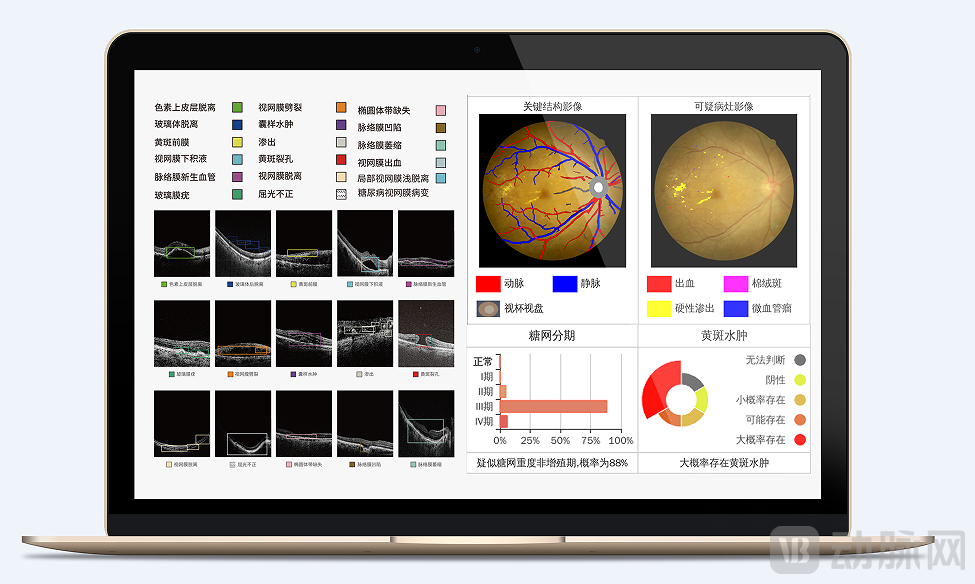
Ophthalmology OCT Imaging Auxiliary Diagnosis System MIAS
Although the product technology and performance were outstanding, the team encountered new problems when promoting it to the market.
Since the product developed by Big Vision is an AI product for ophthalmic OCT imaging, its practical application will inevitably be limited by the popularity of OCT devices. However, ophthalmic OCT equipment costing millions obviously exceeds the affordability of most medical institutions. Because of this, MIAS has faced challenges in entering the market.
In order to address the issue of equipment constraints, Dr. Chen Xinjian led his team down the path of independently developing ophthalmic OCT devices. They built a highly efficient and well-coordinated R&D team composed of PhDs and Masters from renowned institutions such as Harbin Institute of Technology and Changchun Institute of Optics, Fine Mechanics and Physics. Based on substantial technological accumulation and through dedicated technical efforts, they achieved remarkable success. The successful development of the fully automatic AI-based OCT has provided Suzhou Big Vision Medical Technology Co., Ltd. with extensive experience in both software and hardware development for ophthalmic devices.
It is reported that Big Vision's independently developed next-generation fully automatic artificial intelligence OCT BV1000 was launched for sale in 2020 and has been applied in nearly a hundred hospitals. Its intelligent operation guidance function not only significantly reduces the learning curve for staff operating the equipment but also improves the work efficiency of physicians.
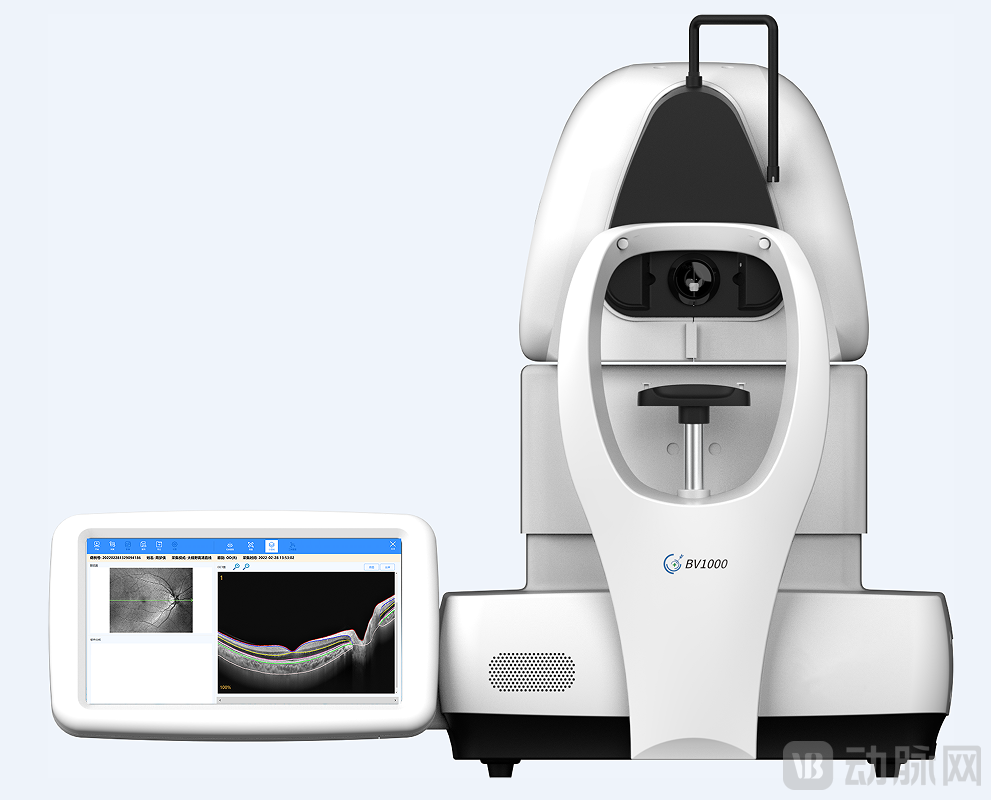
Big Vision Medical New Generation Fully Automatic Artificial Intelligence OCT BV1000
An excellent proof is that during the public welfare screening of the "Sichuan-Tibet-Qinghai Brightness Project Tagong Brightness Action" organized by Wenzhou Medical University in July last year, the OCT BV1000 developed by Big Vision conducted fundus examinations for more than 2,000 Tibetan compatriots. The maximum number of people examined in one day reached 281, far exceeding the detection efficiency of traditional OCT equipment. Its high efficiency and stable performance have been fully tested.
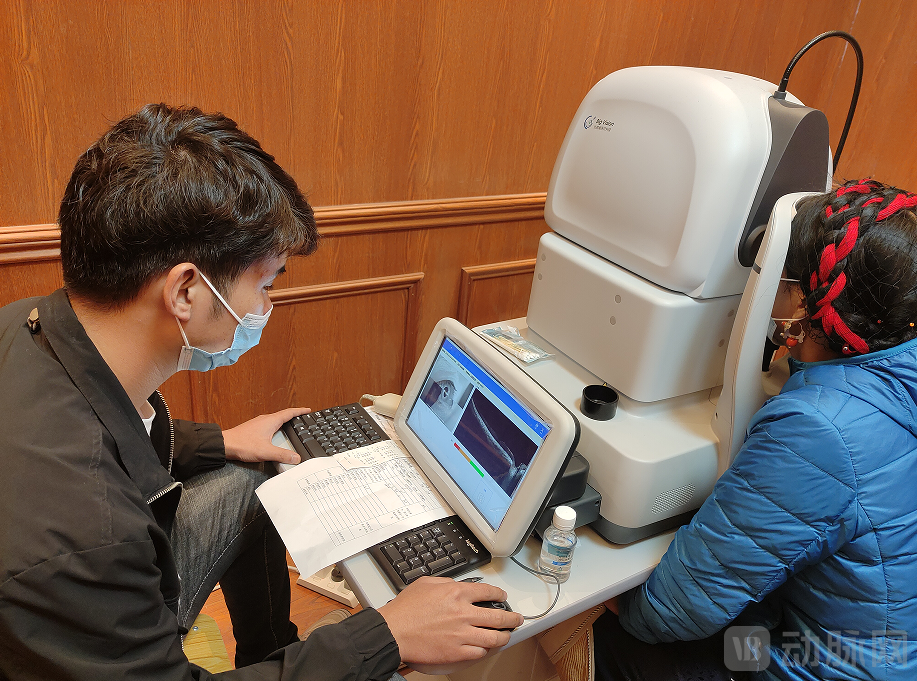
In addition, the device is also integrated with Big Vision's self-developed AI algorithm for ophthalmic OCT imaging, which can accurately identify and automatically label disease lesion areas. In terms of cost, compared with traditional OCT devices, the price of Big Vision’s self-developed OCT BV1000 has been significantly reduced, making it easier to popularize at the grassroots level and thereby tapping into a larger下沉市场 (下沉市场 needs clarification or context-specific translation).
Building an Intelligent Ophthalmic Examination Ecosystem
As an innovative company deeply engaged in the field of ophthalmic AI, AI research on ophthalmic OCT images is the starting point for Big Vision, but it is not the endpoint of its future development.
It is reported that in order to enhance the professional capabilities of optometry centers, eyewear stores, grassroots ophthalmology services, and ophthalmology clinics, Big Vision Medical has launched the Liangning Eye Health Management Platform, a SaaS system. This platform not only integrates ophthalmology knowledge graphs and intelligent device connectivity to assist institutions in improving their professional service levels, but also features comprehensive operational management solutions for optometry centers, thereby optimizing store operations.
Under the current steady and rapid progress of the company, Big Vision Medical already has corresponding plans for future development.
First, continue to advance in-depth AI research in ophthalmology. Based on OCT and fundus images, AI can automatically identify non-ophthalmic diseases such as hypertension and diabetes. In this aspect, Big Vision has already made strategic arrangements. Building on previous OCT AI products, the company is further utilizing artificial intelligence technology to develop intelligent diagnostic recognition for hypertension, Alzheimer's disease, and neurodegenerative diseases.
Secondly, the full-line layout of intelligent ophthalmic examination equipment. It is reported that at this stage, Big Vision Medical is rapidly advancing the R&D of a series of AI ophthalmic hardware devices, including AI vision screening instruments, AI dry eye analyzers, AI biometers, and AI corneal topographers.
It can be seen that, for the future, Big Vision will gradually build up an intelligent ophthalmic examination ecosystem. But behind this, it is not only the full-line layout of ophthalmic equipment but also includes data connection and sharing. Usually, due to the wide variety of ophthalmic examination equipment, the imaging information generated by each device is not only vast but also prone to forming data silos, making it difficult to maximize the value of the data.
To this end, Big Vision Medical has built a unified eye health cloud platform architecture and data interface, which can achieve intelligent data connection for dozens of mainstream devices. This function is also reflected in the Liangning Eye Health Management Platform launched by Big Vision Medical.
From this perspective, in addition to the AI software and hardware devices that have already entered the market at this stage, Big Vision has already embarked on a service-oriented business model. Meanwhile, under the strategy of coordinated software and hardware development and the joint advancement of products and services, Big Vision Medical has also garnered significant attention from the capital markets.
Just last December, Big Vision successfully completed a multi-million yuan A+ round of financing, with investors being Su High-Tech Venture Capital and Agri-Development Capital. The completion of this round of financing not only demonstrated the recognition and affirmation of investment institutions towards Big Vision's technical advantages and enterprise development in the field of ophthalmic AI but also added new momentum for Big Vision to accelerate product implementation.
At this stage, the application for the Class III medical device registration certificate for Big Vision's OCT imaging AI-assisted diagnostic system is proceeding actively. Meanwhile, a new round of financing plan has also been initiated. Looking ahead, we wait with anticipation to see where Big Vision will go in the future.