

China's First AI-Developed HBsAg-Lowering Candidate Drug Enrolls First Patient in Clinical Trial

Holy Haid
AI Drug Discovery Company
BeijingMarch 9, 2022/PR Newswire/ -- On March 8, 2022, Holy Haid Artificial Intelligence Drug Research and Development Co., Ltd. (hereinafter referred to as“Holy Haid”)The first AI big data-driven drug to reduce hepatitis B surface antigen, HDM-8421034, has completed the enrollment of its first patient in a clinical trial at Beijing Tsinghua Changgung Hospital.。
The CRO company responsible for this clinical trial is Shanghai Aisha Medical Technology Co., Ltd. This is another piece of good news regarding the trial following the successful convening of the project kick-off meeting on February 21, fully demonstrating the attention and anticipation from a wide range of hepatitis B patients for this curative drug for hepatitis B.
This TimeClinical trials areThe First in ChinaThe Clinical Paradigm of AI and Big Data-Driven Functional Cure for Hepatitis B Approved for Clinical Trials. This clinical trial is a prospective, randomized controlled study exploring the inhibitory effect of HDM-8421034 combined with nucleos(t)ide analogs on hepatitis B surface antigen in chronic hepatitis B patients previously treated with nucleos(t)ide analogs. The principal investigator is Professor Wei Lai from the Liver, Gallbladder, and Pancreas Center at Beijing Tsinghua Changgung Hospital.
Positive Response May Bring Clinical Cure Hope for Hepatitis B Patients
Approximately 33% (about 2 billion) of the global population has been infected with the hepatitis B virus (HBV), and about 5% of the population (350-400 million) are chronic HBV carriers. In areas with a high incidence of hepatitis B, up to 80% of primary liver cancer cases are associated with HBV infection. Around 25% of individuals chronically infected with hepatitis B virus (more than 1 million annually) eventually die from HBV-related end-stage liver diseases, such as liver failure associated with cirrhosis and hepatocellular carcinoma (HCC). HBV replicates within the liver, increasing the risk of HCC development in HBV-infected individuals. Studies show that the risk of developing HCC is 10-100 times higher in HBV-infected individuals compared to those uninfected.
Currently, there are two main classes of antiviral drugs used in clinical practice: one is α-interferon (including regular interferon and pegylated interferon [Peg-IFN] α-2a or α-2b); the other is nucleos(t)ide analogues (NUCs), including lamivudine (LAM), adefovir dipivoxil (ADV), entecavir (ETV), telbivudine (LDT), and tenofovir disoproxil fumarate (TDF).
In recent years, with the development and application of antiviral drugs, the basic goal of continuously suppressing viral replication has been achieved, while the clearance of HBsAg is considered the ideal goal of antiviral therapy. However, a large amount of clinical research data shows that the cure rate with current antiviral drugs is low, with the natural clearance rate of HBsAg being less than 3%. The vast majority of patients in clinical practice require long-term antiviral treatment and find it difficult to discontinue medication. Holy Haid adopts a "repurposing old drugs" R&D strategy, utilizing its self-developed Thunder AI system, the China-Israel joint think tank, and a retrospective analysis of real-world data conducted with Professor Wei Lai from Beijing Tsinghua Changgung Hospital. This analysis found that HDM-8421034 is highly correlated with HBsAg clearance in the population.
Clinical RecruitmentThe advertisement attracted widespread attention from many patients, doctors, and industry professionals as soon as it was released. A large number of patients actively contacted to register, and the enrollment of the first patient was completed one week after the start of the launch conference.
Innovation Never Stops, Creating a New Paradigm for Clinical Research
As the initiator of this research, Dean Weilai Wei stated that this study is fundamentally a research paradigm in the field of hepatitis B treatment driven by big data and artificial intelligence to discover new drug functions. It involves identifying drugs related to the disappearance of hepatitis B surface antigen from those widely used in real-world clinical settings, followed by clinical validation.
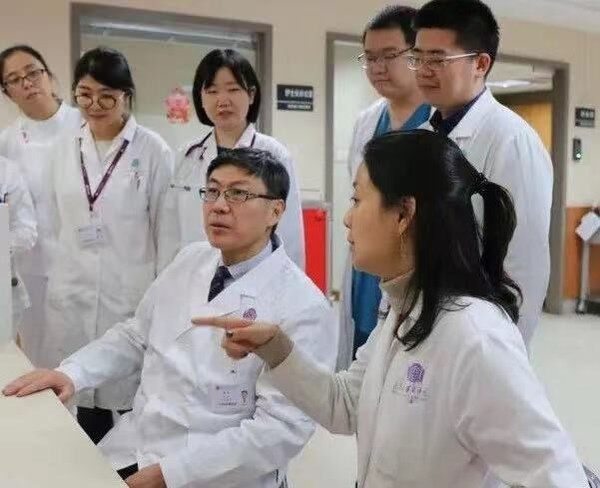
This change not only transforms the traditional drug development process, which starts from petri dishes, cells, and animal models before moving to human trials, but also allows AI-driven drug discovery from real-world data to draw more on the actual experience of safety from drugs already widely used in clinical practice.
President Wei Lai said:“Although we are using drugs that have been approved for clinical use for many years, we will still conduct the research in strict accordance with the clinical trial standards, following the "Good Clinical Practice for Drug Clinical Trials" (2020 No. 57), and adhere to ethical principles, ensuring patient safety and research compliance.。”