

Senfeng Medical Files IPO Prospectus: Pioneering High-End Implantable Devices with Antibacterial and Biodegradable Metal Innovations

Silvan Medical
Orthopedic Medical Device R&D Developer
"Artificial prostheses and internal fixation devices used for the treatment of skeletal and joint trauma and diseases need to have sufficient strength and stiffness. Ideally, they should also possess excellent antibacterial properties. Some internal fixation products are best able to be self-absorbed after the injury or illness has healed, eliminating the pain and cost associated with a second surgery for removal. It is hoped that the new materials and implants developed in recent years through the collaboration of medical and engineering fields can meet the above requirements and be put into production and application as soon as possible, benefiting patients."Academician Dai Kerong, founder of Senfeng Medical, discussed it as follows.
The orthopedic implant consumables market has a compound annual growth rate of up to 15.8%. Among these, orthopedic trauma products have consistently held the largest share of China's orthopedic implant consumables market. However, as Academician Kerong Dai mentioned, antibacterial properties have become an essential aspect in the research and development process of orthopedic implants, alongside strength and stiffness.
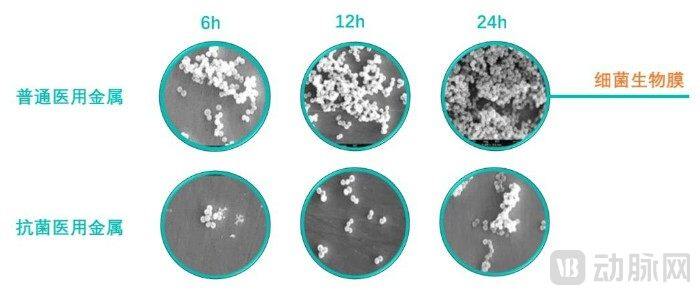
Relevant studies show that the two main reasons for joint prosthesis failure are aseptic loosening and infection. Approximately 18% of implant failures are due to aseptic loosening, and 20% are attributed to infection. Infections at the implant site caused by bacteria lead to the formation of deposits on the implant surface. These deposits not only provide an attachment surface for bacterial adhesion and proliferation but also contribute to the development of protective extracellular substances—biofilms—that make it difficult to eliminate bacteria on the attached surface.
Therefore, the ideal implant should be able to promote osteogenesis and prevent bacterial adhesion, thereby reducing the patient's bacterial infection rate.
In recent years, with the continuous development of the industry, surface coating processes, 3D printing technology, and innovations in new materials for implants have become important factors driving the growth of the orthopedic implant consumables market. However, on one hand, the research and development of high-end core materials for orthopedic implant devices in China still relies mainly on imports, with a weak foundation. On the other hand, orthopedic implant consumables need to be implanted into the human body, so the requirements for biocompatibility, mechanical compatibility, corrosion resistance, wear resistance, and other properties of product materials naturally continue to increase.
Therefore, to make a breakthrough in this technology, it is necessary to accumulate technical experience.
Developing Innovative Medical Metal Materials to Overcome the "Bottleneck" Challenge of Orthopedic Implants
In August 2019, Prof. Yang Ke, a well-known expert in the field of medical metal materials in China, and Academician Dai Kerong, a renowned orthopedic clinical expert, jointly founded Suzhou Senfeng Medical Instrument Co., Ltd. (hereinafter referred to as "Senfeng Medical").Committed to the development of innovative medical metal materials, focusing on the creation of high-end implantable medical devices with independent intellectual property rights, primarily for orthopedic implants.
"Technically, antibacterial titanium alloy or antibacterial metal materials are a short-term breakthrough for us. We pay more attention to the research and development of degradable metal materials, at the same timeOur technical route mainly follows these two paths—antibacterial and biodegradable."Yu Yachuan, Director of Commercial Development at Senfeng Medical, told VCBeat."
Despite the implementation of surgical process management and the use of antimicrobial agents, applying antimicrobial coatings on orthopedic implant surfaces can reduce postoperative infection rates to a certain extent. However, relevant studies still indicate that while plasma-sprayed titanium coatings exhibit excellent mechanical properties and biocompatibility, they lack osteoinductive capability. Due to biological inertness, implants cannot achieve osseointegration with living bone tissue, potentially leading to aseptic loosening.
Orthopedic implants still need to find new breakthroughs to address the current pain points in the industry.
Senfeng MedicalAdopted the results of the National 973 Project (research by the Yang Ke team) on inherent antibacterial metals and biodegradable magnesium alloy technology, and fully utilized the performance advantages of these two innovative materials to develop orthopedic implant products with originality.While demonstrating the advantages of the materials, meet customer needs and solve pressing problems in clinical practice.
These two novel materials exhibit excellent biocompatibility and surpass conventional titanium alloys and antibacterial-coated orthopedic products in mechanical properties, antibacterial performance, and biosafety.
Among them, the antibacterial metal medical implant materialsIt has biological functions such as promoting osteogenesis, promoting vascularization, strong broad-spectrum antibacterial properties, and preventing bacterial infections, showing broad application prospects in the medical field. Meanwhile, the innovative materials and technologies adopted in this project have obtained national invention patents. The metal materials include bulk antibacterial stainless steel, bulk antibacterial titanium alloy, and bulk antibacterial cobalt-based alloys, among others, offering a wide range of antibacterial metals to fully meet medical needs.
Biodegradable Magnesium Alloy Medical Implant MaterialsFree of toxic elements such as rare earths, it can degrade and disappear after being implanted in patients while simultaneously creating an alkaline environment to induce tissue growth. Its mechanical and biological properties are superior to those of degradable polymer materials, without limitations in mechanical performance, meeting the requirements of the applied products. Moreover, Senfeng Medical's patented surface treatment technology can control the degradation rate of the implanted material within the patient’s body, effectively avoiding secondary economic, physical, and psychological harm to patients caused by factors such as infection or implant removal.
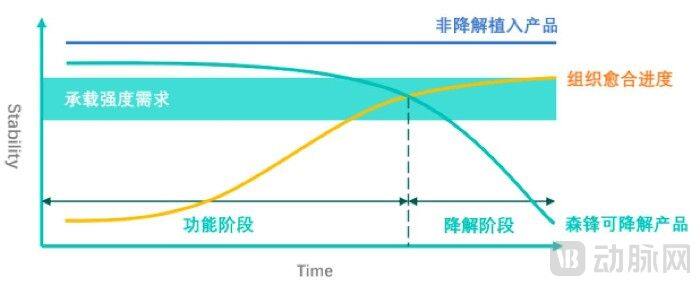
Degradation Rate of Biodegradable Magnesium Alloy Medical Implant Materials
Grasping Both Antibacterial Metals and Biodegradable Magnesium Alloys, Continuously Expanding into Multiple Fields
Senfeng Medical's antibacterial orthopedic trauma implant devices include bone pins, bone plates, bone screws, and intramedullary nails, belonging to the third class of medical devices.
Trauma implants made of antibacterial titanium alloy not only retain the material and design characteristics of ordinary titanium alloy products but also add antibacterial (infection prevention) and osteogenesis-promoting biological functions. This is a global first, and its clinical significance has been fully recognized by a wide range of orthopedic clinicians.
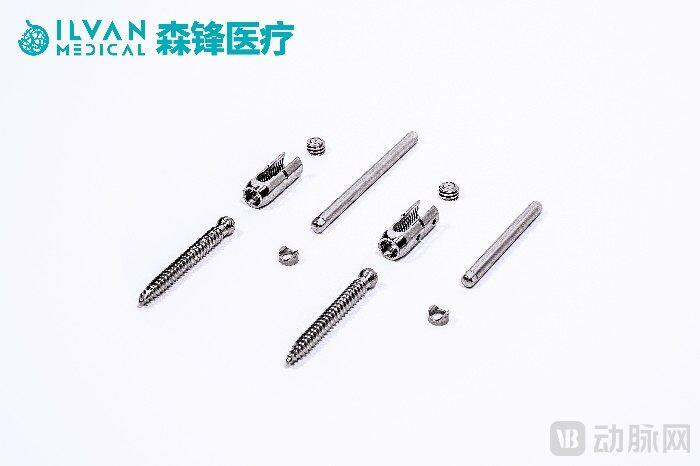
Currently, Senfeng Medical has developed a full range of antibacterial titanium alloy trauma products and has obtained biological test data and antibacterial performance animal test data. Four new material trauma products—bone pins, bone plates, bone screws, and intramedullary nails—are expected to receive CE certification by May 2023.
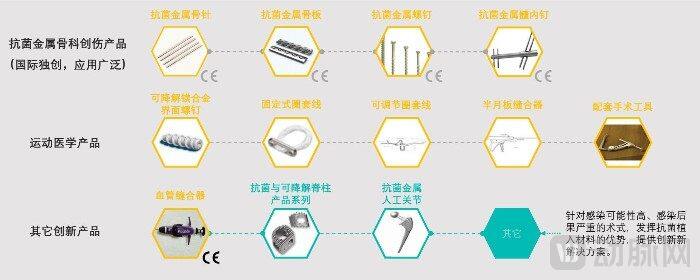
Senfeng Medical Current Product Line
Its biodegradable magnesium alloy interface screws have certain advantages in mechanical properties and degradation performance, surpassing non-degradable counterparts and polymer-based degradable products that cause acidic accumulation. Meanwhile, the team effectively controlled the in vivo degradation rate of the product through surface treatment technology, matching it with the clinical healing rate and preventing non-uniform degradation.
The degradable magnesium alloy interface screws developed by Senfeng Medical are widely used implant products in the field of sports medicine, applicable for anterior cruciate ligament fixation in the knee, rotator cuff injuries, and other ligament injuries.
In the field of sports medicine, Senfeng Medical has achieved full coverage of its product line. Its products include biodegradable magnesium alloy interface screws, anterior cruciate ligament reconstruction surgical tools, inherently antibacterial titanium alloy bone pins, meniscus suture anchors, and loop sutures.
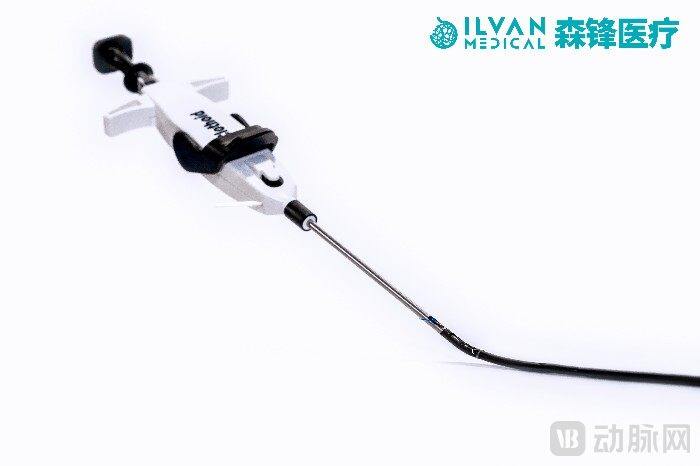
At the same time, Senfeng Medical has also set its sights on the vascular closure device market. Senfeng Medical believes that vascular closure devices are widely used in fields such as cardiology and vascular surgery, but the current market is monopolized by imported products, presenting numerous opportunities. On the other hand, leveraging the company's own advantages in material innovation, it can enter the market for next-generation vascular closure devices made from new materials. Currently, with the aim of paving the way for its own new material closure devices and collecting market data, Senfeng Medical has developed a similar alternative product to the currently imported ones.
Yu Yachuan told VCBeat"For doctors, an implant that can significantly reduce the infection rate is highly attractive. This is also why we will continue to focus on the antibacterial field in the short term. Our next step is to explore biodegradable materials, as they can create additional effects at the implant site, including antibacterial properties, local pH balance, bone formation promotion, and inhibition of bone resorption."
The development of these two technologies is particularly significant for the current orthopedic market. First, implant-related infections are a major challenge faced by both the industry and clinicians today, and our materials and technology can provide solutions, including suppressing inflammatory responses and offering antibacterial effects. Second, the incidence rates of osteoporosis and osteoarthritis in China are very high, and the bone-promoting effects of our materials can offer value-added solutions for these conditions. Lastly, our technology can also inhibit bone resorption, which is clinically highly significant. In the future, we will continue to focus on these areas as we develop our company's product pipeline."
In the future, Senfeng Medical will further provide solutions in the fields of energy devices (RF, ultrasound, power resection), intelligent devices, and customized surgical tools, leveraging its advantages in new material implantable devices.
Experts in Metallic Biomaterials Collaborate with Orthopedic Clinicians to Drive Product Innovation
The orthopedic implant consumables industry is a multidisciplinary field that involves clinical medicine, materials science, surface technology, mechanical manufacturing, and other multidisciplinary knowledge and practices. The orthopedic implant consumables industry inevitably requires new technologies, new materials, and new processes as driving forces to promote industrial development.
Senfeng Medical's founding team brings together top experts in biomedical materials, orthopedic clinical experts, and a highly experienced design team for orthopedic implant products in China.
Founder Yang Ke is a fellow of the International Union of Biomaterials and Engineering, and serves as a second-level research fellow at the Institute of Metal Research, Chinese Academy of Sciences.Yang Ke Puts Forward the Innovative Idea of Biofunctionalization of Medical Metal Materials for the First Time InternationallyEngaged in the research and development of new medical metal materials such as antibacterial metals, biodegradable metals, biofunctional metals, and MRI-compatible metals. Published over 500 articles, authorized with more than 100 invention patents, achieving multiple biomedical functions in medical metal materials including antibacterial properties, promoting bone formation, enhancing vascularization, inhibiting smooth muscle hyperplasia, anticoagulation, anti-tumor effects, and prevention of urinary tract stones.
Dai Kerong, the co-founder, serves as a foreign correspondent academician of the French National Academy of Medicine and an academician of the Chinese Academy of Engineering. He currently holds the positions of Lifetime Professor at the Ninth People's Hospital affiliated with Shanghai Jiao Tong University School of Medicine, Director of the Shanghai Joint Surgery Clinical Medical Center, Director of the Digital Medicine Clinical Transformation Engineering Research Center of the Ministry of Education, and Director of the 3D Printing Technology Clinical Transformation Research and Development Center. He also serves as the Director of the Stem Cell and Regenerative Medicine Transformation Base at the Shanghai Jiao Tong University Translational Medicine Research Institute. Meanwhile,Dai Kerong established the first orthopedic biomechanics laboratory in a hospital in China.
The birth of Senfeng Medical perfectly combines Yang Ke's advantages in engineering with Dai Kerong's strengths in the medical field, enabling the orthopedic implant consumables market, which urgently needs new technologies, materials, and processes, to continuously see the emergence of innovative products.
Not only that, but the core team members of the company also have a profound understanding of the supply chain. Wei Xiang, General Manager of Senfeng Medical, and Yu Yachuan, Director of Business Development, collaborated on supplier integration. From a management perspective, we have standardized every process, including process flowcharts, to ensure the stability of raw material quality and sufficient production capacity.
In the orthopedic implant market, Senfeng Medical seems to have made preparations in terms of technology, raw materials, and talent. With mastery of new processes, new materials, and new technologies, Senfeng Medical undoubtedly has more possibilities for development in the medical device market in the future.
At the end of the conversation, Yu Yachuan said:"We plan to obtain the Class III registration certificate for antibacterial metal material orthopedic implants in the short term, and promote the antibacterial metal materials from the current group standard of the Biomedical Materials Association to become an industry standard, facilitating broader application of the materials across the industry."