

Tmod Cell Therapy Emerges as a Promising Approach to Tackle Solid Tumors with Precision and Safety

A2 Biotherapeutics
Cancer Treatment New Drug Developer
A major challenge in CAR-T cell therapy for cancer is the difficulty in precisely distinguishing between tumor and healthy tissues, especially in solid tumors where tumor-specific antigens are almost nonexistent. The product of the CEACAM5 gene—carcinoembryonic antigen (CEA)—is an attractive target for colorectal cancer because it is highly expressed in nearly all colorectal cancers and has limited expression in most healthy adult tissues. However, experimental therapies targeting CEA with high activity have been reported to cause toxic side effects, leading to severe colitis, as CEA is expressed on normal intestinal epithelial cells.
To address this type of issue, A2 Biotherapeutics has developed modular T cells (Tmod), combining a CEA-targeting CAR with a blocker module targeting human leukocyte antigen (HLA)-A*02. Research shows that CEA Tmod can selectively kill HLA-A*02-negative cancer cells both in vitro and in vivo, while sparing normal cells expressing HLA-A*02. The relevant findings were published in *Science Translational Medicine* on March 2. These data indicate that dual-receptor systems like Tmod can be used to selectively and safely target antigens expressed on both tumor cells and normal tissues.
Specifically, Tmod cells include a CAR targeting CEA and a blocker module targeting HLA-A*02. CEA is highly expressed not only on tumor cells but also on healthy tissues. The HLA-A*02 blocker prevents CAR-mediated killing of all cells expressing HLA-A*02 (including healthy cells). However, in tumor cells with loss of heterozygosity for HLA-A*02, the blocker is no longer activated, thus allowing CEA-specific CAR-mediated killing of tumor cells.
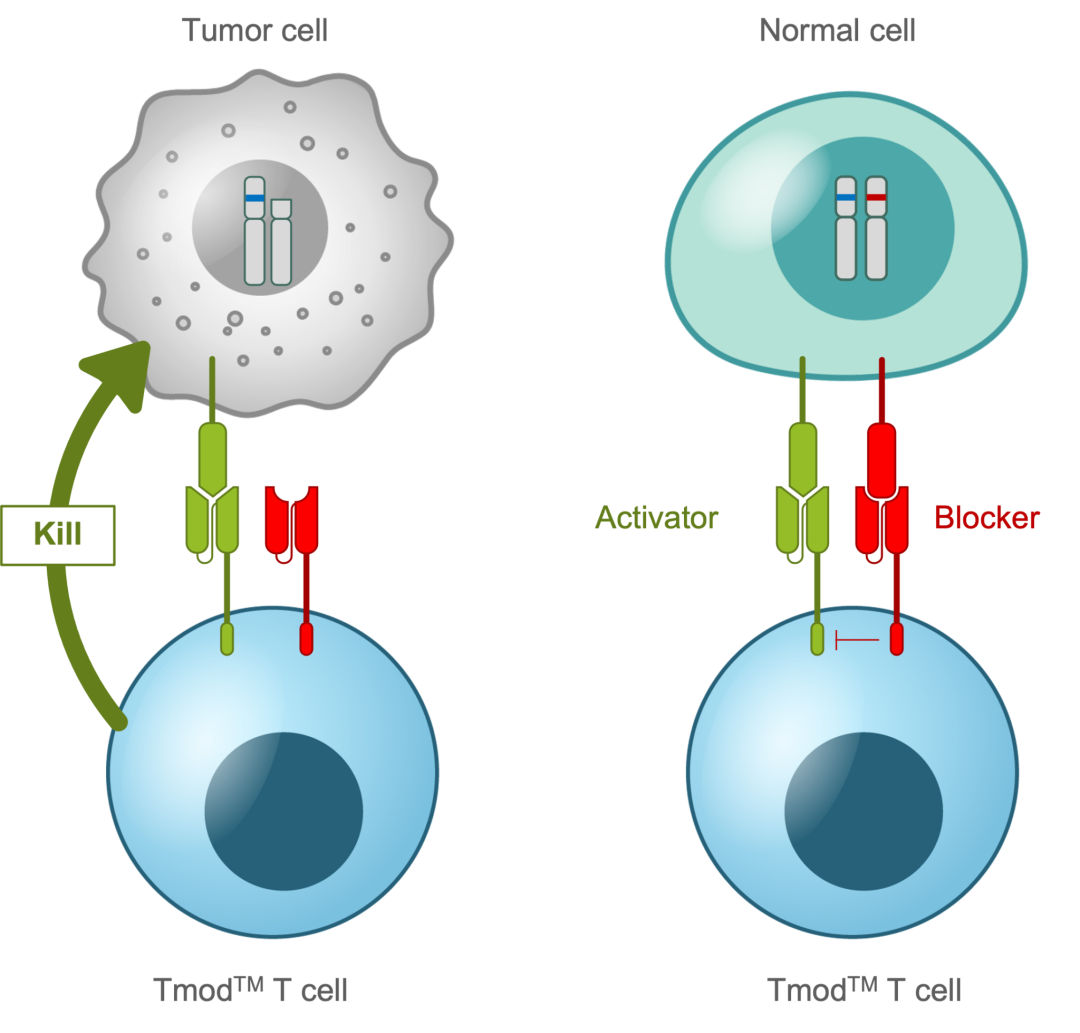
Source: A2 Bio Official Website
In vitro studies show that the sensitivity of CEA Tmod cells is comparable to that of control CEA TCR-T cells. However, unlike TCR-T, CEA Tmod cells can distinguish between CEA+A*02− tumors and CEA+A*02+ cells based solely on the expression of the blocking antigen, while TCR has no selectivity for A*02+ cells.
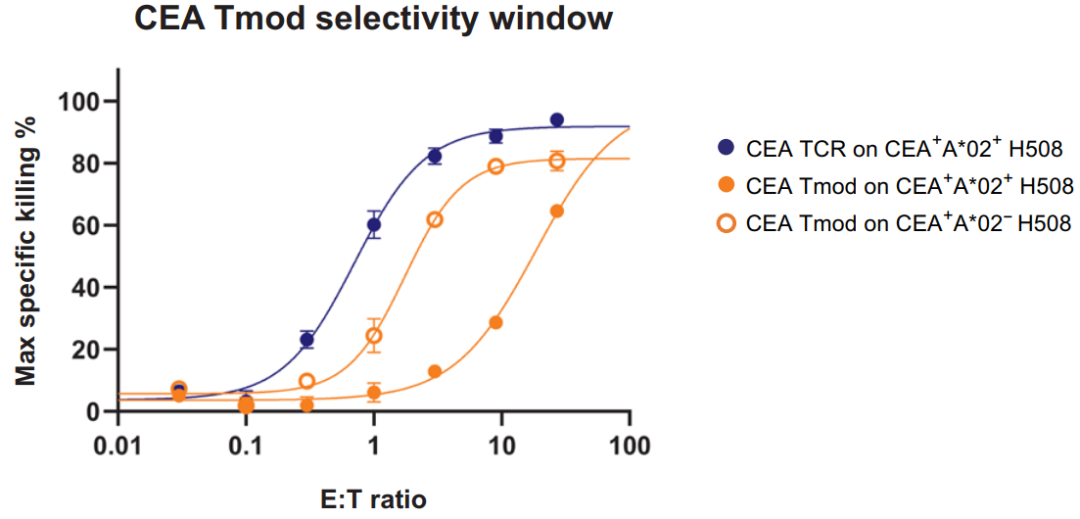
Source: Science Translational Medicine
Researchers also tested CEA Tmod cells in more complex in vitro functional assays associated with T-cell therapy. They found that the cells exhibited good reversible activation capability. Moreover, they demonstrated effective discrimination between A*02− and A*02+ cells in mixed target cell cultures, killing only the A*02− target cells, whereas conventional CEA-specific CAR-T cells eliminated both types of target cells.
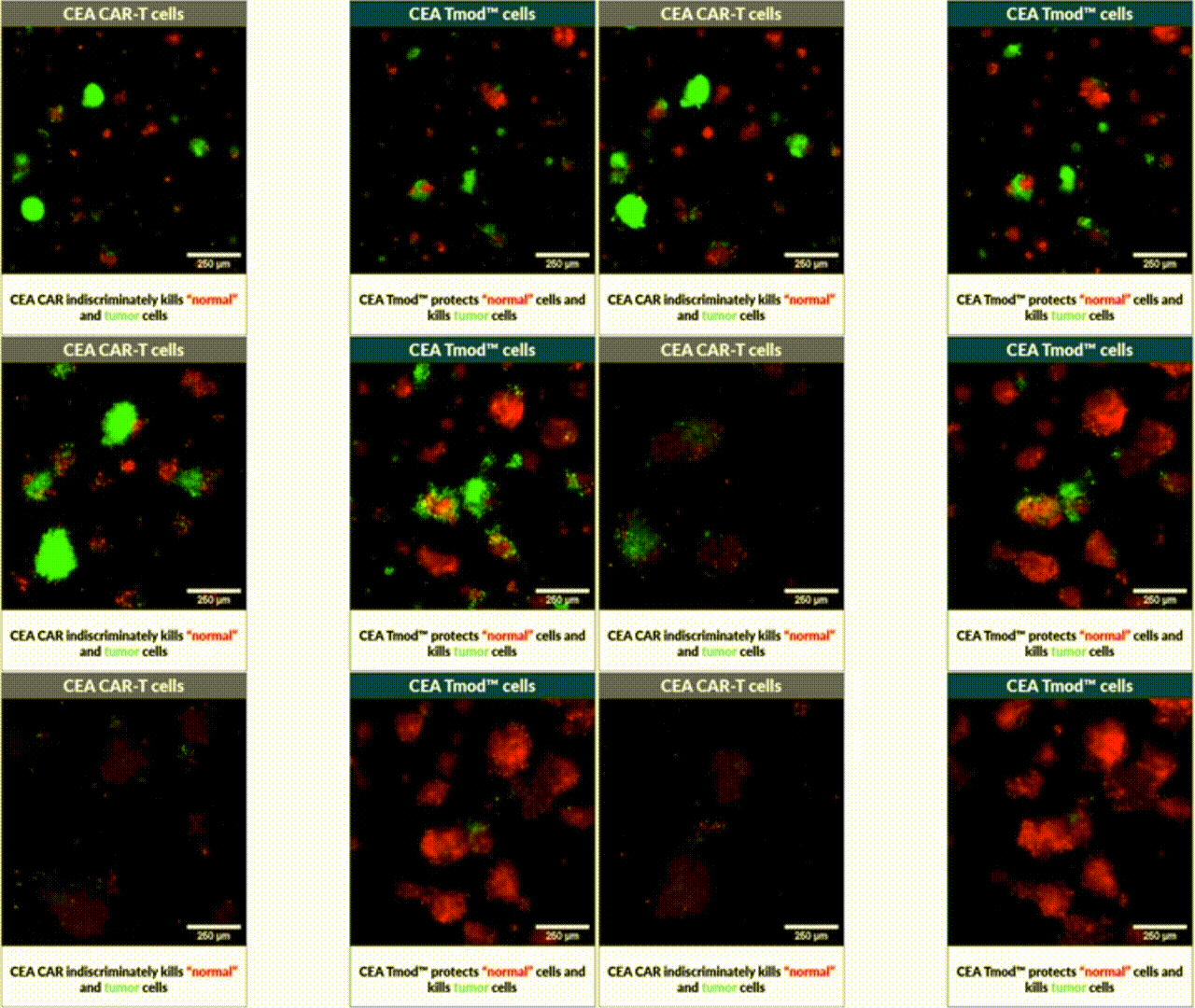
Left: CEA CAR indiscriminately kills normal cells (red) and tumor cells (green); Right: CEA Tmod protects normal cells and kills tumor cells. (Source: A2 Biotherapeutics, Inc. official website)
In vivo studies further validated the in vitro experimental results. The data showed that, in a human colorectal cancer xenograft mouse model, CEA Tmod only disrupted A*02− tumor grafts, while conventional CEA CAR-T cells indiscriminately killed both A*02+ and A*02− tumor grafts. The experiment also tested TCR-T cells. As observed in vitro, CEA Tmod cells were as effective as TCR-T cells, but the latter destroyed A*02+ tumor grafts.
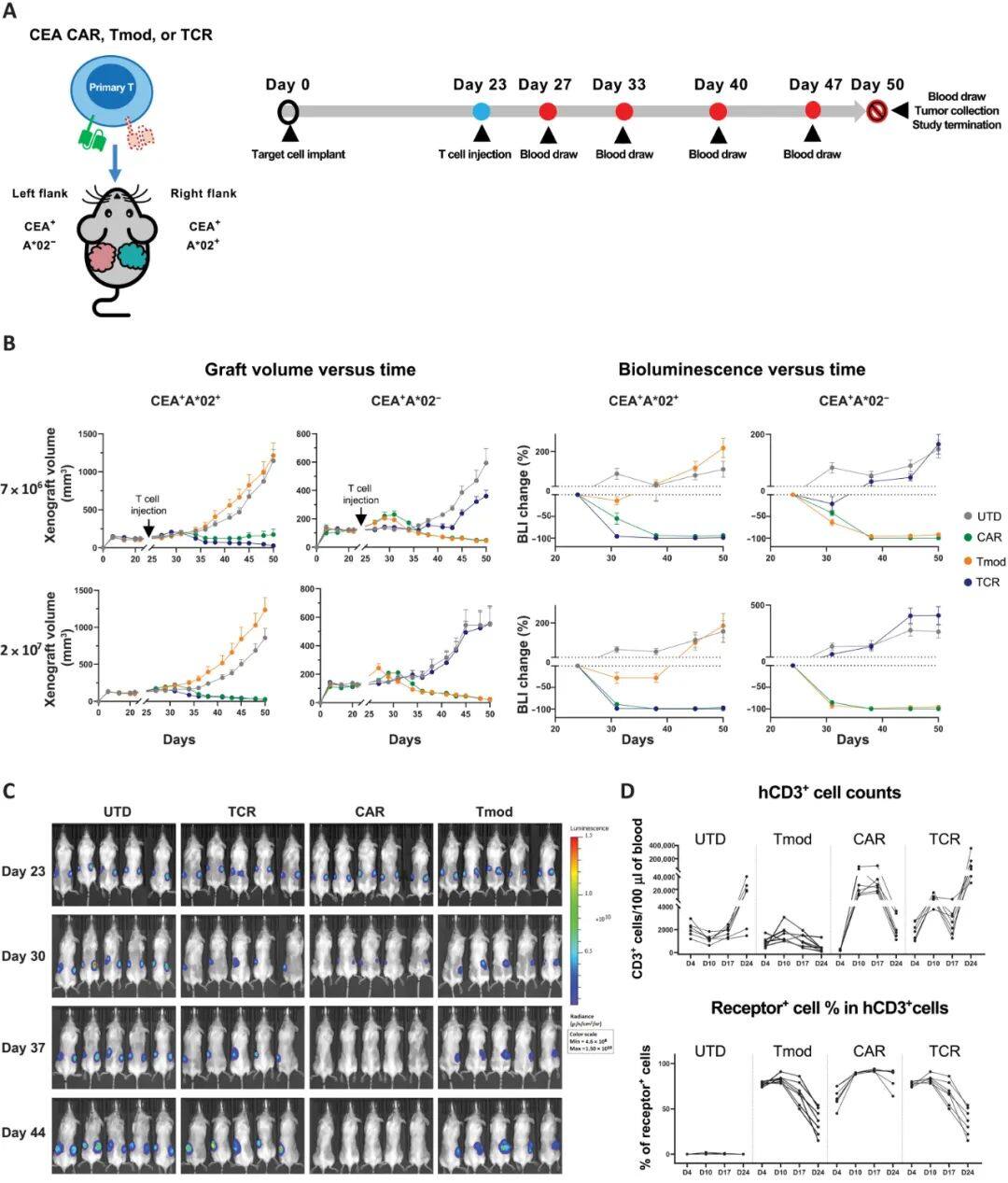
Human CEA Tmod cells selectively kill H508 CEA+A*02− xenografts in mice, but not CEA+A*02+ xenografts. (Source: Science Translational Medicine)
Overall, this study demonstrates that CEA Tmod is a promising candidate therapy for combating solid tumors by improving efficacy through the reduction of off-target effects. The overall potency of CEA Tmod cells in vitro surpasses that of TCR-T cells, which, despite showing clinical effectiveness against solid tumors, are associated with toxic side effects.
CEA Tmod is an example of the mechanism of A2 Bio's Tmod platform, and the Tmod strategy can also be extended to other types of tumor antigens and HLA alleles. In a related study published on January 28 in the Journal for ImmunoTherapy of Cancer, A2 Biotherapeutics utilized another tumor-associated antigen—mesothelin (MSLN)—paired with blockers targeting A*02 and other class I allele products, demonstrating similar effects on solid tumors in preclinical models, thereby proving the versatility of the approach.
These two published achievements are also A2 Bio's two leading CAR-T projects, A2B530 for CEA and A2B694 for MSLN, which are advancing toward clinical trials targeting various solid tumors.
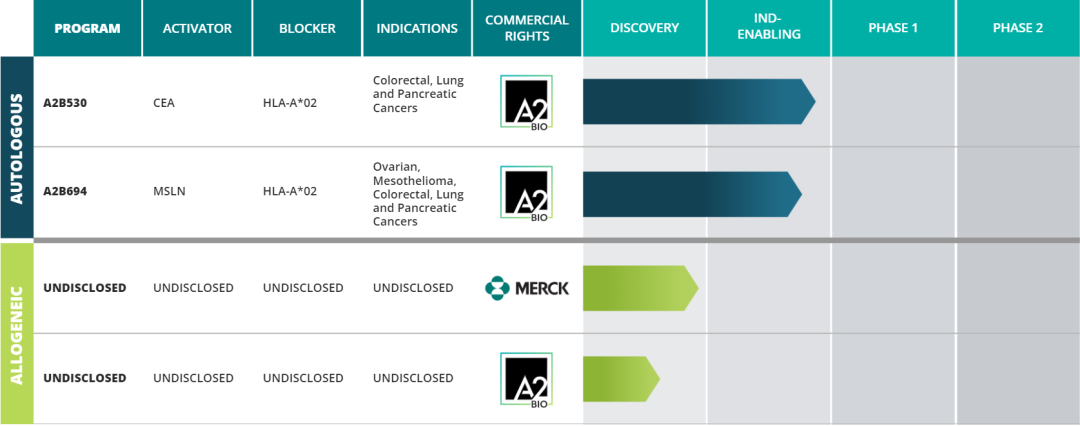
A2 Bio Pipeline (Source: A2 Bio Official Website)
In addition, since reaching an agreement in December 2020, A2 Biotherapeutics is currently collaborating with Merck to develop an allogeneic Tmod cell therapy targeting an undisclosed antigen.
References:
1# Mark Sandberg et al. A carcinoembryonic antigen-specific cell therapy selectively targets tumor cells with HLA loss of heterozygosity in vitro and invivo. Science Translational Medical. 2022
2# Talar Tokatlian et al. Mesothelin-specific CAR-T celltherapy that incorporates an HLA-gated safety mechanism selectivelykills tumor cells. Journal for Immuno Therapy of Cancer. 2022
3# A2 Bio's Activator-Blocker CAR-T Cell Therapies Show Early Promise in Solid Cancers (Source: FIERCE Biotech)