

AstraZeneca/Daiichi Sankyo Submits NDA in China for HER2-Targeted ADC Enhertu (Trastuzumab Deruxtecan)

AstraZeneca
Biopharmaceutical Manufacturer
Daiichi-Sankyo
Pharmaceutical R&D Developer
On March 21, the CDE website showed that AstraZeneca/Daiichi-Sankyo's HER2-targeted antibody-drug conjugate (ADC) Enhertu (trastuzumab deruxtecan) submitted an application for marketing authorization in China, with the indication unknown.

Enhertu is a HER2-targeted ADC designed using Daiichi Sankyo's proprietary DXd ADC technology. It consists of a HER2 monoclonal antibody linked to a topoisomerase I inhibitor payload (a derivative of exatecan) via a stable tetrapeptide cleavable linker. This product is the leading ADC in Daiichi Sankyo's oncology portfolio and also the most advanced project in AstraZeneca's ADC scientific platform.
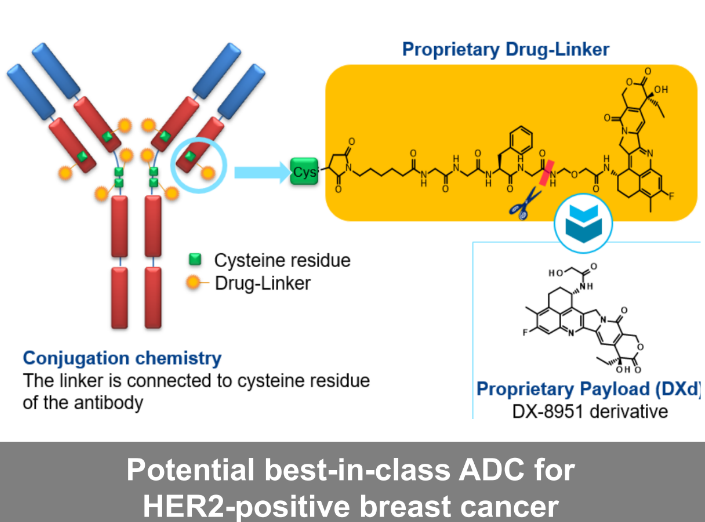
Enhertu was first approved for marketing by the US FDA in December 2019 based on the results of the Phase II DESTINY-Breast01 clinical study, for the treatment of adult patients with unresectable or metastatic HER2-positive breast cancer who have previously received two or more HER2-targeted therapies.
On January 15, 2021, the second indication was approved by the FDA for patients with locally advanced or metastatic HER2-positive gastric or gastroesophageal junction adenocarcinoma who have previously received trastuzumab-based therapy.
On January 17 this year, the FDA also accepted the supplemental Biologics License Application (sBLA) for Enhertu to treat adult patients with unresectable or metastatic HER2-positive breast cancer who have previously received anti-HER2 treatment regimens, and granted the application Priority Review status.
In China, Trastuzumab deruxtecan has been granted Breakthrough Therapy Designation by the CDE as a monotherapy for the treatment of adult patients with HER2-positive locally advanced or metastatic gastric or gastroesophageal junction (GEJ) adenocarcinoma who have received one or more prior treatment regimens.