

XinQing Medical and Beijing Anzhen Hospital Successfully Launch Joint ECMO Development Project

magAssist
Developer of Extracorporeal Artificial Heart Devices
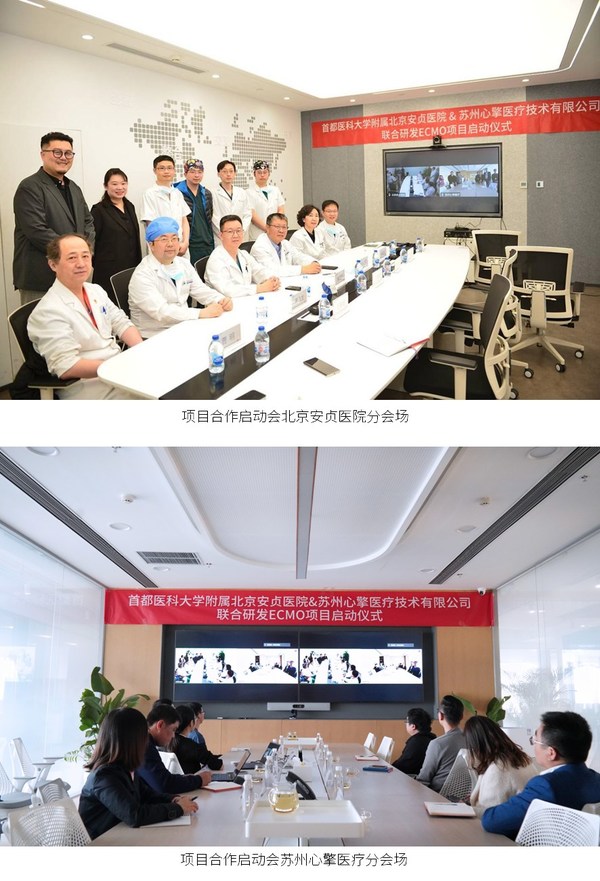
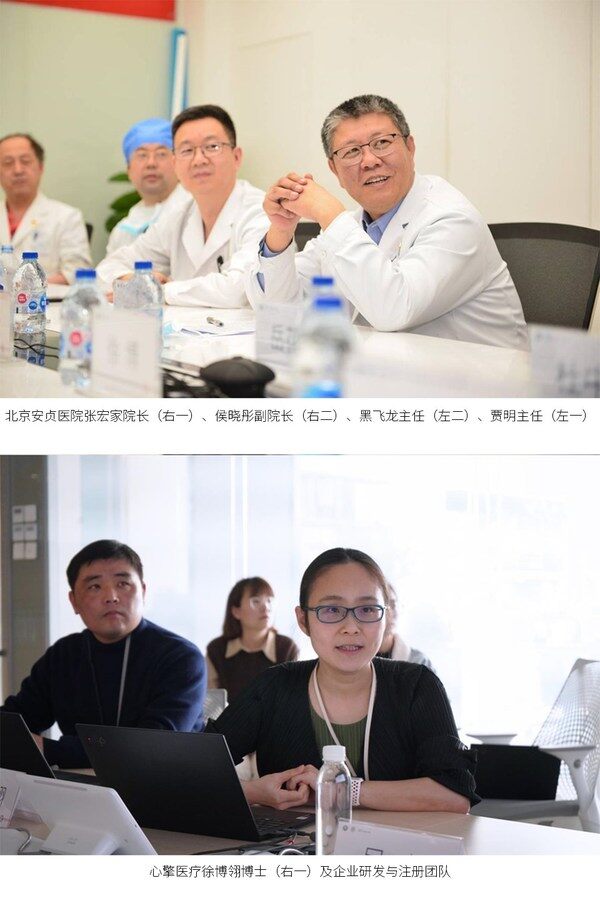
Suzhou, March 24, 2022 /PR Newswire/ -- On March 22, 2022, Beijing Anzhen Hospital, Capital Medical University (hereinafter referred to as "Anzhen Hospital") and Suzhou magAssist Medical Technology Co., Ltd. (hereinafter referred to as "magAssist") held a joint project launch meeting (hereinafter referred to as "launch meeting") for the membrane oxygenator (ECMO) and its accessories in both Beijing and Suzhou via online connection. Zhang Hongjia, Party Committee Deputy Secretary and President of Anzhen Hospital, Hou Xiaotong, Vice President and head of the cooperative project, along with the ECMO clinical expert team, and the R&D and clinical registration team led by Dr. Xu Boling, founder of magAssist, attended the launch meeting. This ECMO system is developed based on third-generation full magnetic levitation technology. The current collaboration achievements have reached or surpassed leading second-generation ECMO products available in the market in key technical indicators such as hemolysis performance, coagulation performance, gas exchange rate, and oxygenator pressure drop.
At the launch meeting, both parties first introduced the basic composition and division of their respective teams. Dr. Bo-Ling Xu from magAssist then presented and reported on the current progress of the project and the next steps in the R&D plan. Participants provided key feedback on product development tailored to clinical application scenarios, and engaged in lively discussions during the meeting, ultimately establishing clinical indicators, design objectives, and the R&D plan.
President Zhang Hongjia offered deep encouragement and support to the project at the launch ceremony of the collaboration. President Zhang stated that having equipment and consumables with full independent intellectual property rights, enriching clinical resources in China, and better serving the Chinese people are the highest goals for hospitals and enterprises jointly working on the ECMO project. By combining the strengths of hospitals and enterprises in clinical practice and research, this powerful alliance can more effectively address critical bottlenecks. Moreover, President Zhang expressed high hopes, emphasizing that continuous optimization and improvement during the clinical process are essential to developing not only products that meet current needs but also next-generation ones that fulfill future demands. This will allow domestically developed products to go global, become world-leading, and set a benchmark for technological innovation.
Vice President Hou Xiaotong also pointed out that clinical and corporate collaboration should be actively encouraged to achieve breakthrough results in addressing the "bottleneck of domestic medical technology." This cooperation must strive to become a model for medical technology innovation, jointly advancing the industrial development of medical devices in China and the transformation of clinical innovation. "If we can create products with completely independent intellectual property rights that are not constrained by foreign technologies, it would be an incredibly exciting achievement for doctors in China who have been studying artificial heart-lung technology since their medical studies. This project inspires both teams to work towards a shared vision." Vice President Hou Xiaotong expressed high hopes for the future development of this project and the two teams during his concluding remarks at the conference.
Dr. Bo-Ling Xu, founder of magAssist, stated: "Relying on the nationally influential clinical medical resources and academic foundation of Anzhen Hospital in China, magAssist is optimizing and remodeling the existing driver (a fully magnetically levitated ventricular assist system). On this basis, we are tackling the most challenging multiphase fluid mechanics technology issues in the design of a new-generation membrane oxygenator (artificial lung), striving to achieve systemic integration that supports heart and lung organ functions, enhancing the clinical performance and safety of ECMO. At the same time, we aim to enable further intelligent and personalized care, lowering the threshold for clinical training."
ECMO, "Walking" Out of the Operating Room: An Extracorporeal Life Support System
In June 2020, the National Ministry of Science and Technology released the "2020 Project Application Guidelines for the Key Special Program on Public Safety Risk Prevention and Control and Emergency Technology Equipment," allocating 20 million yuan to support ECMO research and development: "Since the outbreak of pneumonia caused by the novel coronavirus infection, the Extracorporeal Membrane Oxygenation (ECMO) system has played a crucial role in the treatment of critically ill patients. However, issues such as insufficient technological reserves and weak R&D and industrial foundations still exist. There is an urgent need to further enhance product technical performance and quality standards, strengthen enterprises' independent innovation capabilities, and better meet the demands of clinical practice and scientific research in China."
The full name of ECMO is: Extra Corporeal Membrane Oxygenation, academically known as "Extracorporeal Membrane Oxygenation Device," phonetically translated as "ECMO." ECMO is also referred to as Extracorporeal Life Support System (ECLS).Because it assists with breathing and blood circulation, it is known as life-support technology, and is the "lifeline" for patients with heart and lung failure."Last Line of Defense"。
The basic structure of ECMO includes a power pump (artificial heart), an oxygenator (artificial lung), oxygen supply tubes, a monitoring system, intravascular catheters, and connecting tubes. In clinical practice, the disposable parts are often assembled into kits, while the non-disposable parts are stored together and designed to be mobile to enhance emergency response capabilities.The most critical components are the blood pump (centrifugal pump) and the oxygenator, which serve as the artificial heart and artificial lung, respectively. They can provide prolonged cardiopulmonary support for patients with severe heart and lung failure, buying precious time for rescue.
The principle of ECMO is to draw venous blood out of the body, oxygenate it through an artificial cardiopulmonary bypass made of special materials, and then inject it into the patient's arterial or venous system, partially replacing the function of the heart and lungs, and maintaining oxygenated blood supply to the organs and tissues of the body.
ECMO is mainly divided into arteriovenous VA-ECMO and venovenous VV-ECMO. In both modes, blood drained from the venous system is oxygenated externally. In VA-ECMO, the blood is returned to the arterial system, while in VV-ECMO, it is returned to the venous system. In VV-ECMO, no cardiac support is provided.
In 2018, a total of 10,423 ECMO cases were reported worldwide, making it a relatively "niche" treatment technology. In China, ECMO therapy has rapidly developed alongside the widespread adoption of ICUs. By 2018, a total of 3,923 cases were reported by 260 hospitals across the country, with a significant increase in both the number of centers conducting ECMO and annual case volume compared to previous years. In China, there are approximately 330 million patients with cardiovascular diseases, including a large population base of chronic obstructive pulmonary disease (COPD) patients. Considering the potential future increase in the number of respiratory failure patients, the current reserve of ECMO in China is far from sufficient, especially in some grassroots areas. During the outbreak of the pandemic in 2020, China had only over 400 ECMO devices. Medical teams from all over the country that went to support Wuhan brought their own ECMO equipment. As a result, the "ECMO System Development" project has received significant attention since the COVID-19 pandemic.
Anzhen Hospital and magAssist Fully Recognize Chinese ProductionECMOThe urgency and importance of research and development aim to provide more accessible and reliable medical resources and effective treatment options for patients in China as soon as possible.
Animal experiments in this collaborative project have proven that the system runs smoothly, with performance reaching the same level as international products.
Beijing Anzhen Hospital, as one of the first institutions in China to implement ECMO technology, has developed over the past 20 years into Beijing's Extracorporeal Life Support Quality Control and Improvement Center. In 2004, it was the first to apply ECMO to post-cardiac surgery patients with low cardiac output and expanded the indications for extracorporeal life support to include acute myocardial infarction complicated by refractory cardiogenic shock, cardiac arrest, fulminant myocarditis, acute multiple trauma, critically ill pregnant women, and acute respiratory distress syndrome (ARDS) caused by various viral infections, among other critically ill patients across multiple disciplines. The ECMO team at Anzhen Hospital has successively won several major awards, including the First Prize for Science and Technology from the Beijing Medical Association, the Second Prize for Scientific and Technological Progress of Beijing Municipality, and the "Most Influential ECMO" award issued by the Chinese Medical Doctor Association. In 2018, it becameThe only one in mainland ChinaAwarded the "ECMO Center of Excellence" Gold Award by the International Extracorporeal Life Support Organization.
In recent years, under the leadership of Vice President Hou Xiaotong, the ECMO team has continuously challenged technical barriers in the field of life support, creating life miracles with ECMO on multiple occasions. After the outbreak of the COVID-19 pandemic in 2020, Beijing Anzhen Hospital immediately dispatched its ECMO team to support Beijing You'an Hospital, actively engaging in the treatment of critically ill COVID-19 patients. Over the years, while focusing on clinical breakthroughs, the ECMO team has also been committed to device development, technological innovation, and scientific research, successfully overcoming several challenges that had restricted the advancement of ECMO technology, such as lower limb ischemia and upper body hypoxia.
Based on the successful clinical testing of China's first domestically produced extracorporeal magnetically levitated artificial heart technology, magAssist has collaborated with Anzhen Hospital to develop an ECMO system that features a core system fully independently developed in China. This system is highly portable and designed for use in frontline rescue scenarios as well as for easy transport. The technical foundation and international R&D resources previously accumulated by magAssist will greatly contribute to the successful implementation of this project, achieving breakthroughs in the next-generation ECMO product technology. On February 19, 2020, the Suzhou Science and Technology Bureau announced the inclusion projects list for the "2020 Emergency Special Project for the Prevention and Control of Coronavirus Infections," and magAssist's project, "Research and Development of Extracorporeal Membrane Oxygenation (ECMO) Products for Treating Severe Cases of COVID-19," was approved for inclusion. Animal trials were conducted in 2021 to validate various performance aspects of the product and gather feedback from medical teams regarding improvements in product structure, performance, and operational methods. Animal experiments demonstrated stable system operation, with performance reaching levels comparable to international products.
The successful implementation of this project canCorrectCritical patients with respiratory and circulatory failure caused by the novel coronavirusTreatment Methods, and is expected to solveECMOThe potential risks to the healthcare system caused by complete reliance on imports, contributing to the strategic safety of China's high-end medical device supply chain.